Understanding biodiversity Normal Worksheets for Ages 3-9
4 filtered results
-
From - To
Discover the world of biodiversity with our engaging worksheets tailored for children aged 3-9. "Understanding Biodiversity" worksheets, available at Kids Academy, make learning fun and interactive. These activities help young learners explore the variety of life forms, understand ecosystems, and appreciate the importance of biodiversity in our world. Enhance your child’s cognitive and observational skills through colorful illustrations, simple explanations, and stimulating exercises. Perfect for both classroom and home learning, these worksheets foster curiosity about nature, encourage ecological awareness, and build a strong foundation for future scientific exploration. Download and inspire a love for nature today!
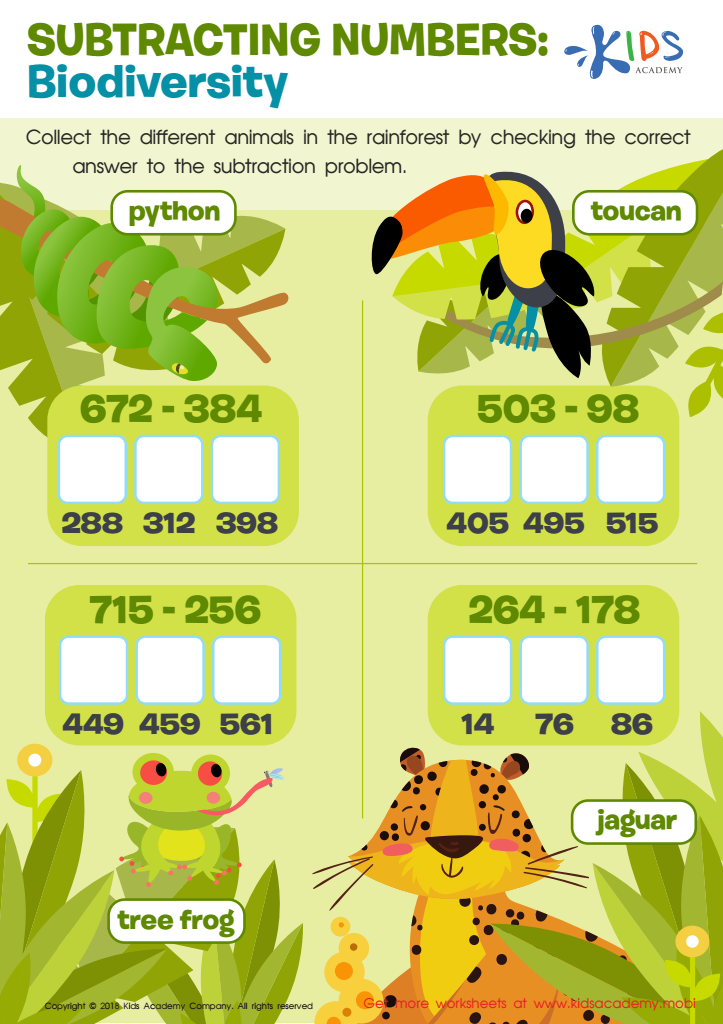
Subtracting Numbers: Biodiversity Worksheet
 Assign to My Students
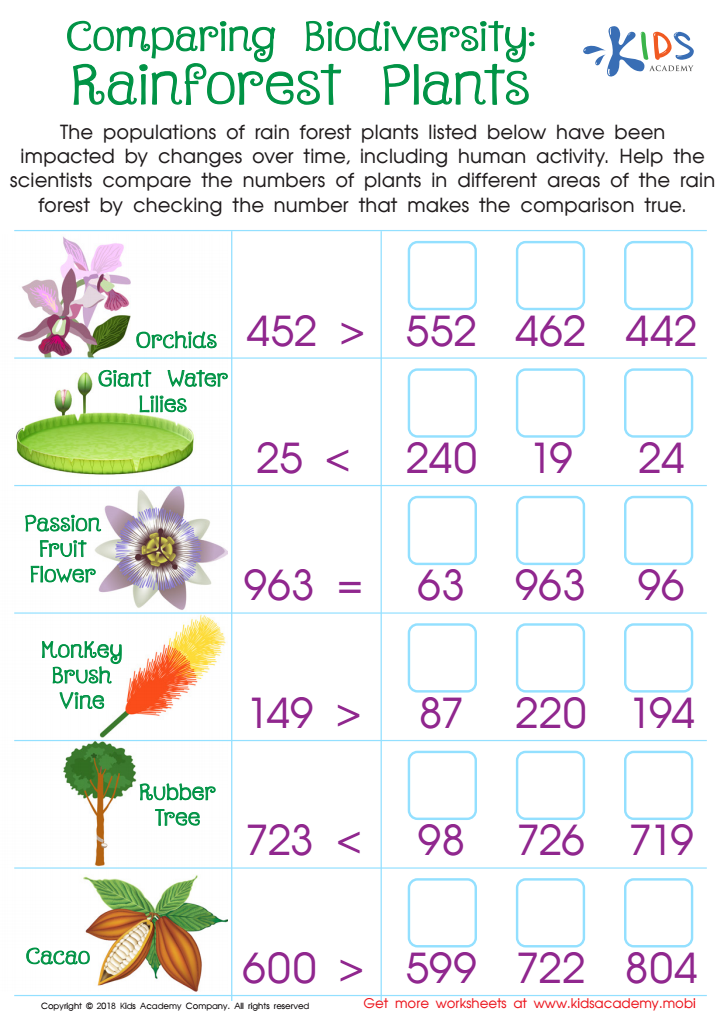
Comparing Biodiversity: Rainforest Plants Worksheet
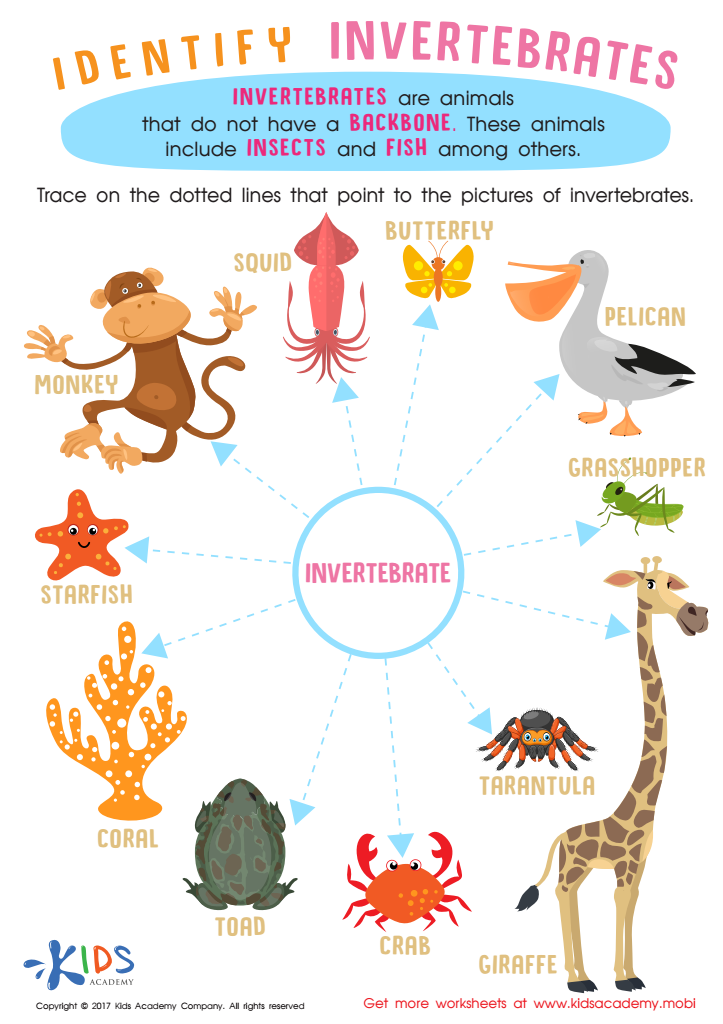
Invertebrates Worksheet for Grade 3
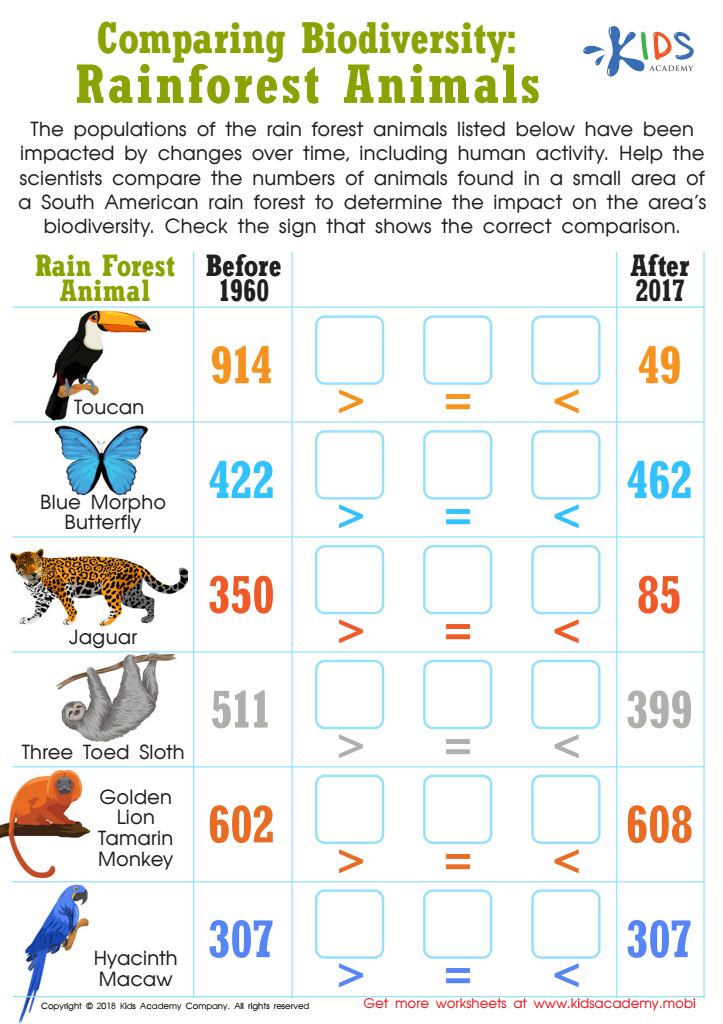
Comparing Biodiversity: Rainforest Animals Worksheet







Understanding biodiversity is crucial for young children, as it shapes their sense of wonder and respect for the natural world. For ages 3-9, nurturing an interest in biodiversity helps them appreciate the variety of life forms around them, from plants and animals to fungi and microorganisms. When parents and teachers focus on teaching children about biodiversity, they instill core values such as empathy, teamwork, and environmental stewardship.
Biodiversity education supports cognitive and emotional development. Children learn to categorize and differentiate between various species, enhancing their analytical and observational skills. Real-world exploration, be it through nature walks or interactive science projects, makes learning tangible and memorable. These activities also get children physically active and promote a connection with the outdoors.
More importantly, early education on biodiversity lays the foundation for lifelong sustainable habits. Understanding the roles different organisms play in ecosystems teaches children the importance of protecting endangered species and preserving their habitats. This awareness can inspire actions, like recycling and conserving energy, that contribute to the health of our planet.
In summary, teaching children about biodiversity helps mold mindful and knowledgeable individuals who are more likely to contribute positively to their environments. It empowers them with the appreciation, skills, and ethics needed to make a difference for future generations.








