Understanding forces Normal Worksheets for Ages 3-9
6 filtered results
-
From - To
Explore the fascinating world of forces with our "Understanding Forces Normal Worksheets," designed for children ages 3-9. These engaging resources help young learners grasp fundamental concepts such as push, pull, gravity, and friction through fun activities and interactive exercises. Perfect for parents and educators, these worksheets encourage exploration and hands-on learning, making complex ideas accessible and enjoyable for little minds. Each worksheet is designed to enhance critical thinking, motor skills, and creativity while fostering a love for science. Discover how everyday activities demonstrate the principles of force, empowering kids to observe and understand the world around them through playful learning.
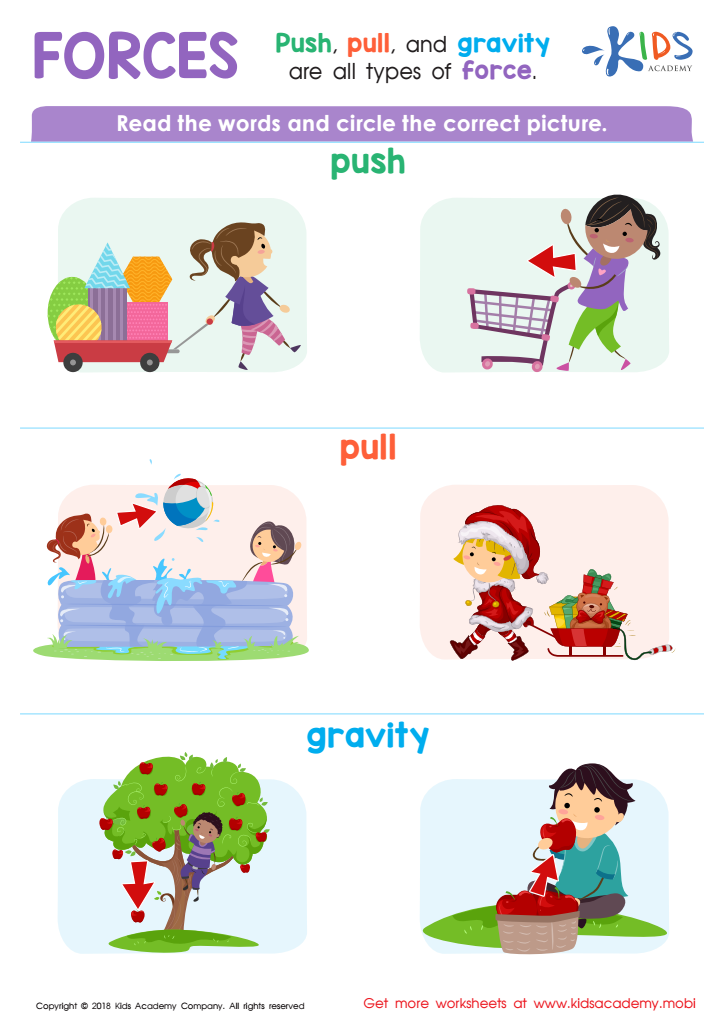
Forces Worksheet
 Assign to My Students
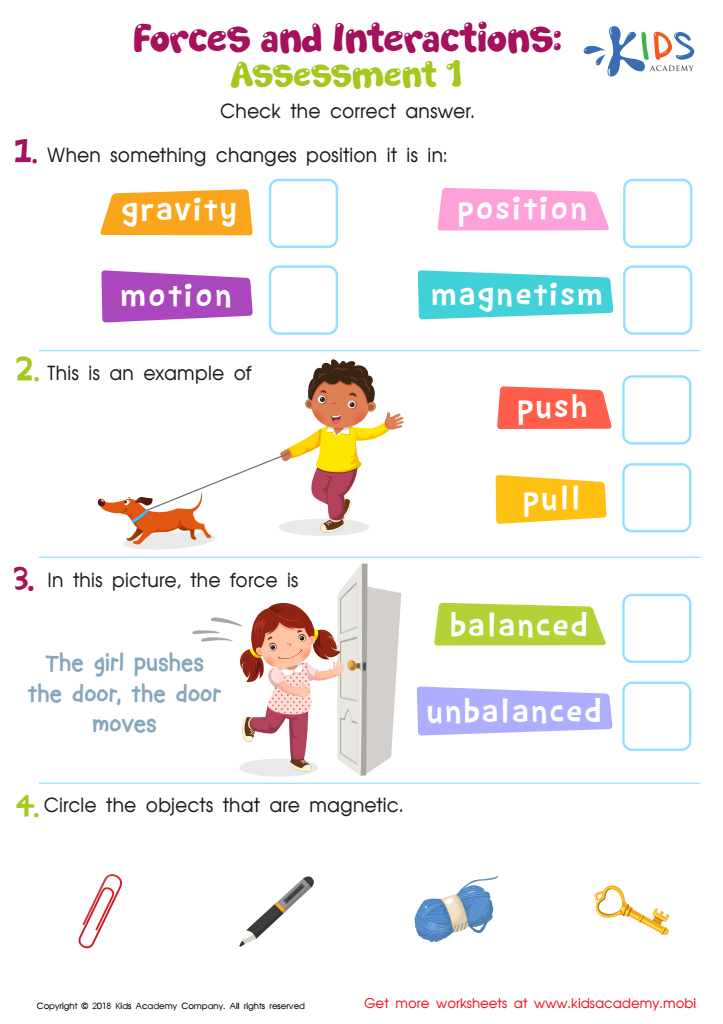
Forces and Interactions Printable
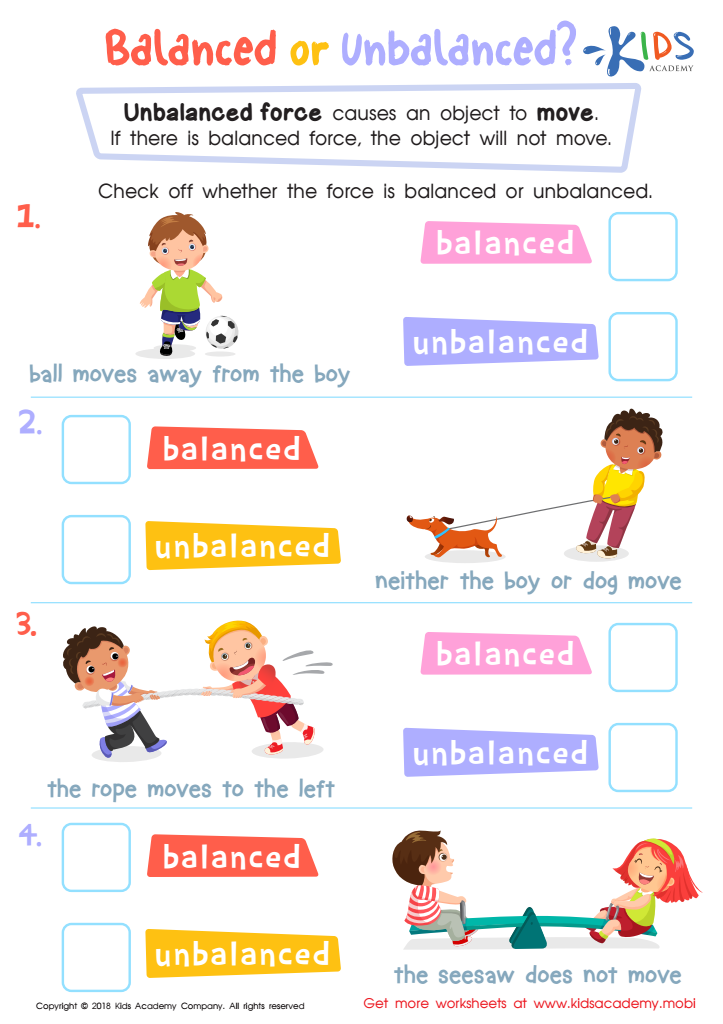
Balanced or Unbalanced Science Worksheet
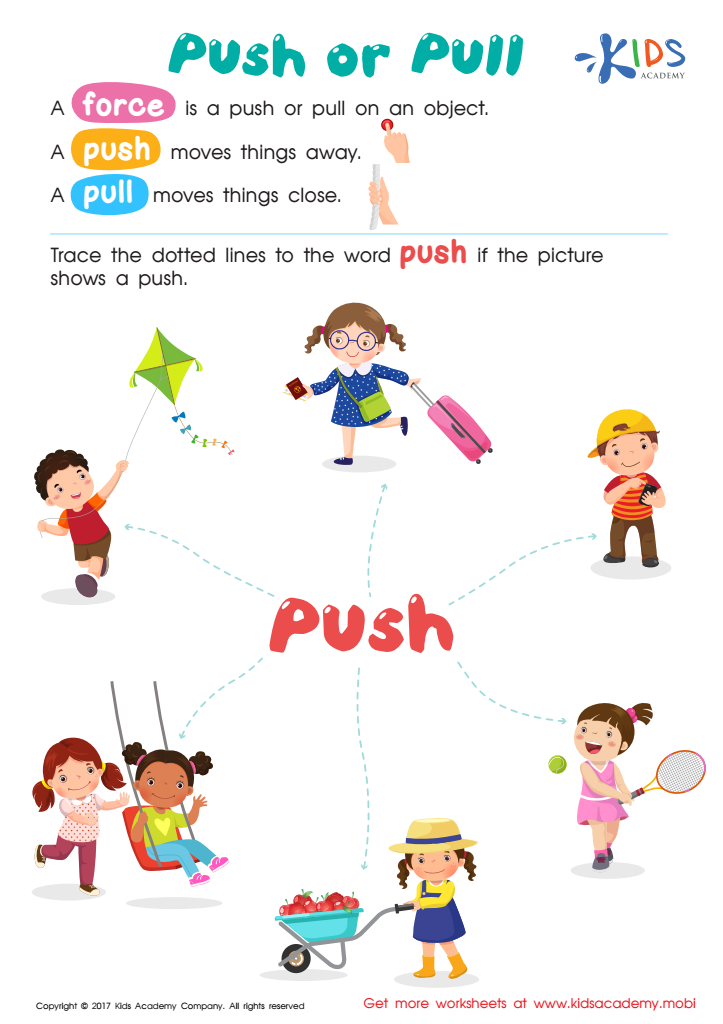
Push or Pull Worksheet
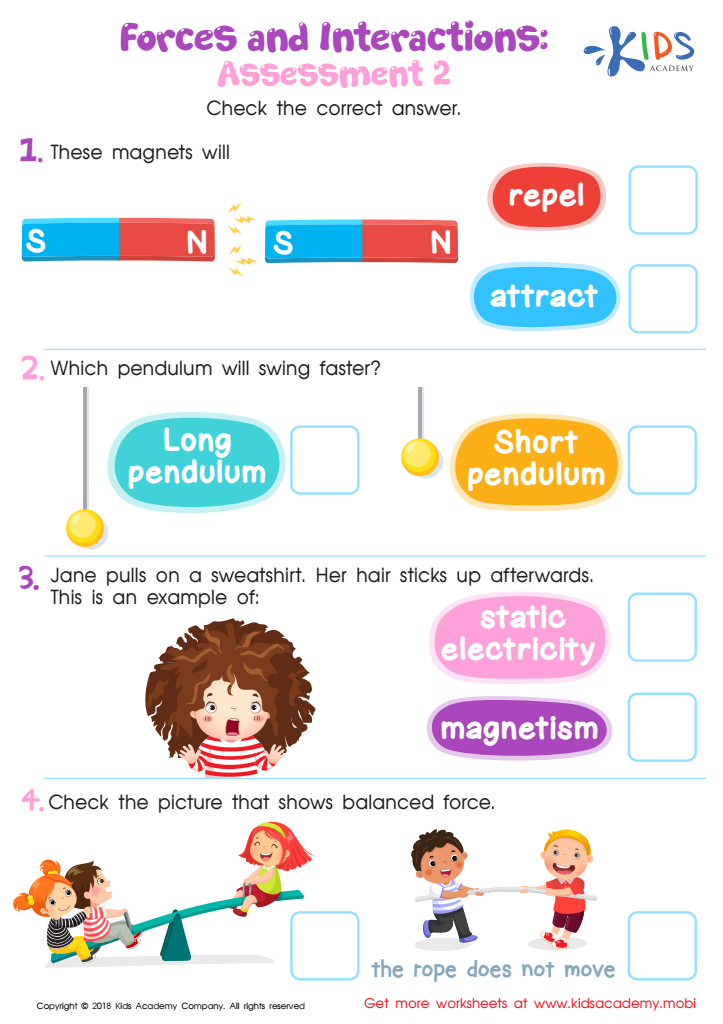
Forces and Interactions Worksheet For 3rd Grade
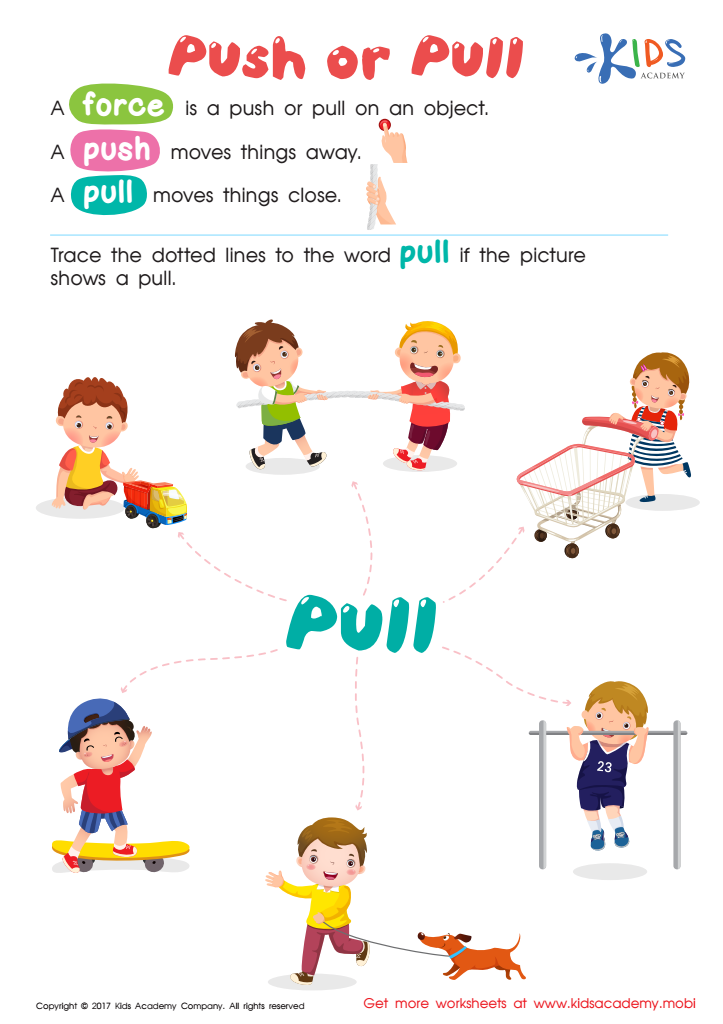
Pull or Push Worksheet








Understanding forces is crucial for children aged 3-9 as it lays the foundation for essential scientific and critical thinking skills. At this early stage, children are naturally curious about how the world works—why things move, stop, or change direction. By introducing basic concepts of forces, such as pushing and pulling, educators and parents can nurture this curiosity, helping children make sense of their everyday experiences.
Engaging in hands-on activities that demonstrate forces—like playing with toys that roll, building with blocks, or even simple experiments with magnets—allows children to explore and experiment actively. This exploration promotes not only cognitive development but also fine motor skills and coordination. Understanding forces also fosters problem-solving abilities; when children encounter challenges, such as getting a toy to roll faster or designing a bridge with blocks, they learn to think creatively and critically.
Moreover, early exposure to these scientific concepts encourages a lifelong love for learning and science. It connects to broader themes in STEM education, equipping children with the skills they'll need for future studies and careers in science, technology, engineering, and mathematics. Ultimately, when parents and teachers prioritize understanding forces, they kindle curiosity and build a strong cycling framework for lifelong learning.








