Understanding multiplication Normal Worksheets for Ages 3-9
3 filtered results
-
From - To
Dive into the world of numbers with "Understanding Multiplication Normal Worksheets for Ages 3-9." Designed to simplify the concept of multiplication, these engaging worksheets cater to young learners by using visually appealing and age-appropriate exercises. Through colorful images and straightforward tasks, children develop essential mathematical skills at their own pace. Perfect for home or classroom use, each worksheet builds a foundation in multiplication, promotes critical thinking, and boosts confidence. Foster a love for math in your child by exploring these comprehensively crafted, easy-to-follow sheets. Start their journey to becoming multiplication masters today!
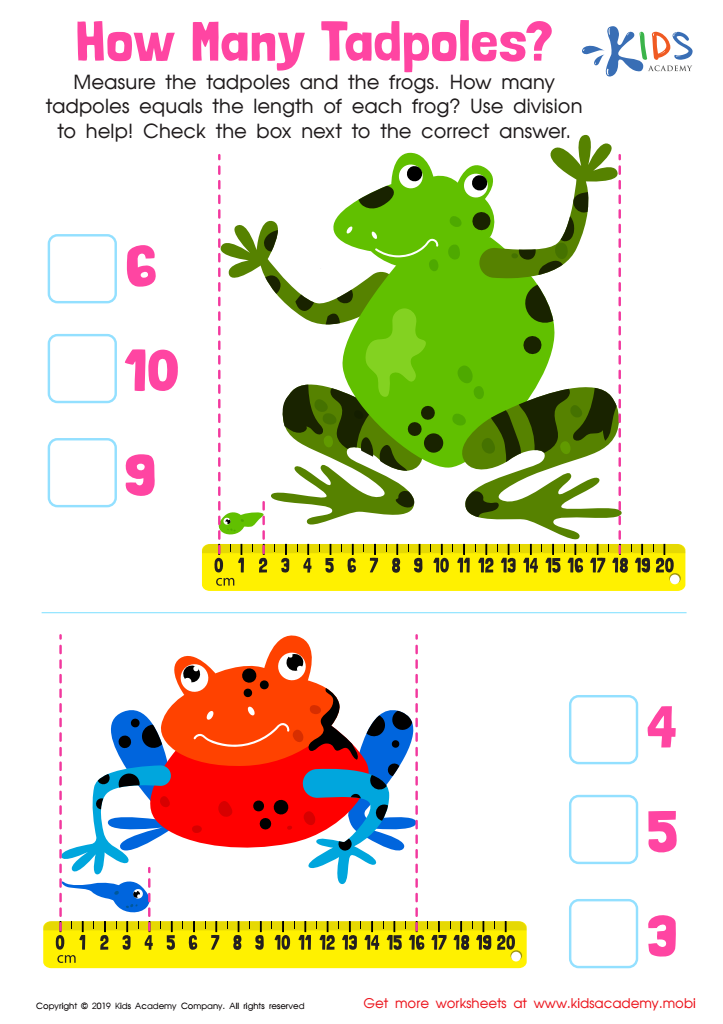
How Many Tadpoles Worksheet
 Assign to My Students
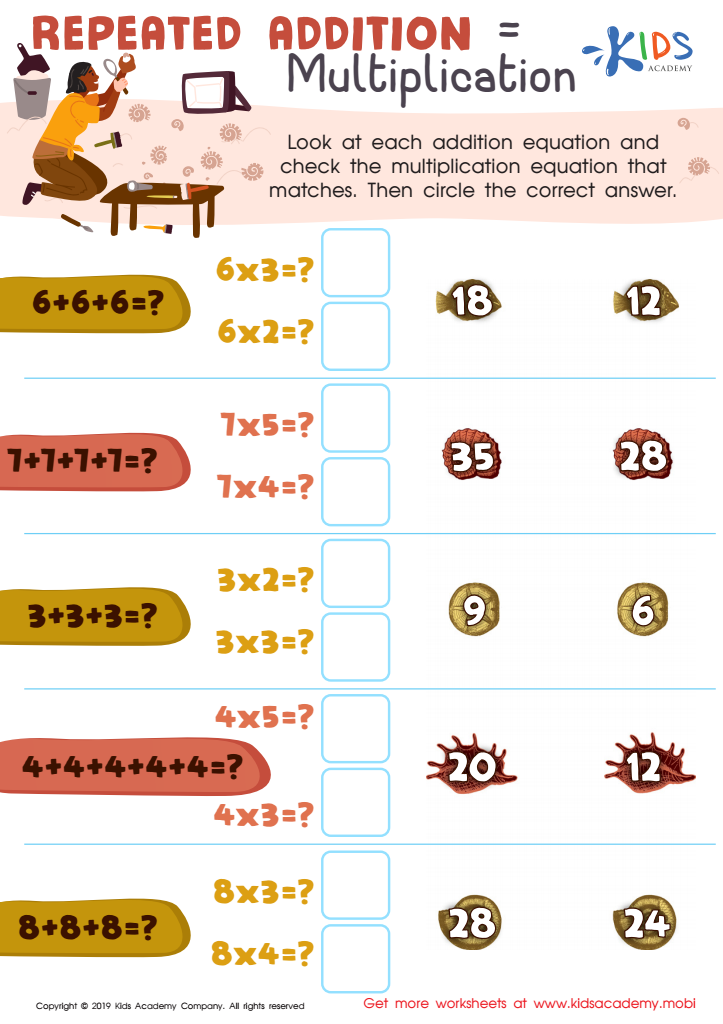
Repeated Addition = Multiplication Worksheet
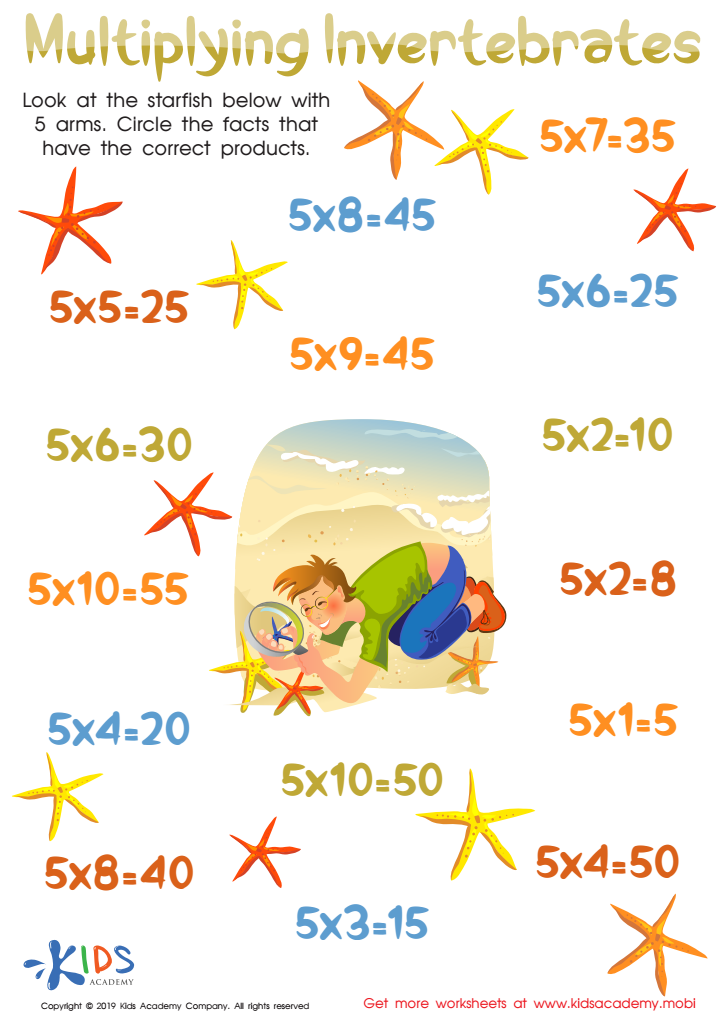
Multiplying Invertebrates Worksheet






Understanding multiplication is crucial for young children aged 3-9 because it forms a foundation for advanced mathematical concepts. Parents and teachers should prioritize this because grasping multiplication early boosts mathematical fluency, leading to greater ease in learning diverse mathematical operations. Multiplication is not merely rote memorization; it involves understanding number patterns, arrays, and groups, which enhances problem-solving skills.
Early mastery of multiplication builds confidence in students, encouraging a positive attitude toward math. It equips children with tools to quickly perform everyday tasks like estimating costs, splitting items equally, or determining quantities, laying groundwork for practical life skills. When taught creatively, such as with visual aids, story problems, or hands-on activities, multiplication promotes critical thinking and logical reasoning.
Moreover, a strong command of multiplication prepares students for progressive education stages, including division, fractions, and algebra, which are integral components of upper-grade math curricula. Inclusion of parents in this learning journey fosters a supportive home environment, reinforcing school-based learning.
Therefore, understanding and teaching multiplication comprehensively during these formative years ensure students not only perform better academically but also develop a sustained interest and proficiency in mathematics, vital for their future education and everyday life success.








