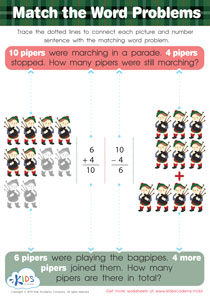
Understanding subtraction Normal Addition Worksheets for Ages 3-9
4 filtered results
-
From - To
Dive into our "Understanding Subtraction Normal Addition Worksheets for Ages 3-9" to build strong mathematical foundations for your child! These engaging, age-appropriate printables enhance skills by combining addition and subtraction concepts, cultivating a balanced numerical comprehension. Created to foster logical thinking and problem-solving abilities, our worksheets are perfect for early learners. With colorful themes and relatable scenarios, kids effortlessly grasp operations, improving accuracy and confidence. Empower your child today with fun, effective resources from Kids Academy, designed to make learning math enjoyable and accessible. Unlock their potential with hands-on practice for meaningful results!
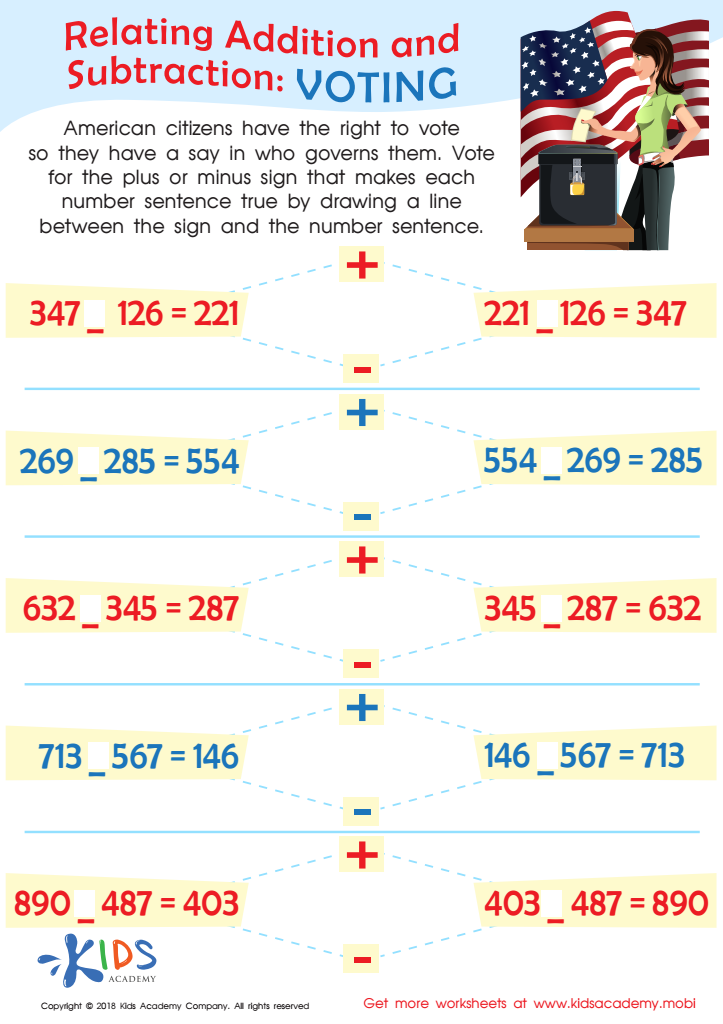
Voting Worksheet
 Assign to My Students
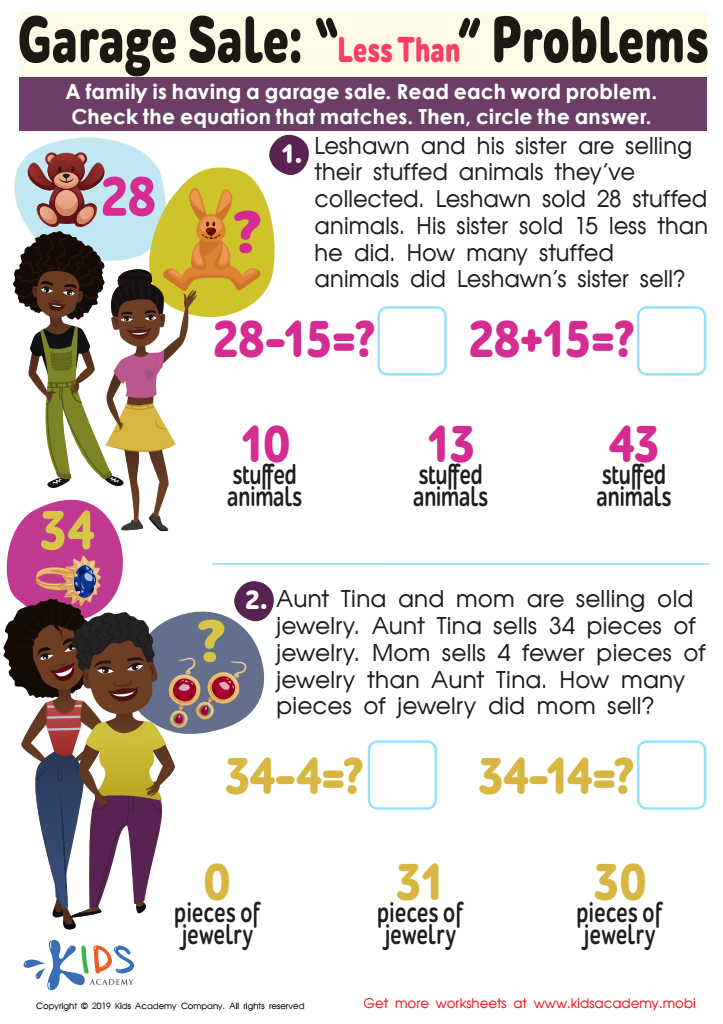
Garage Sale Less Than Worksheet
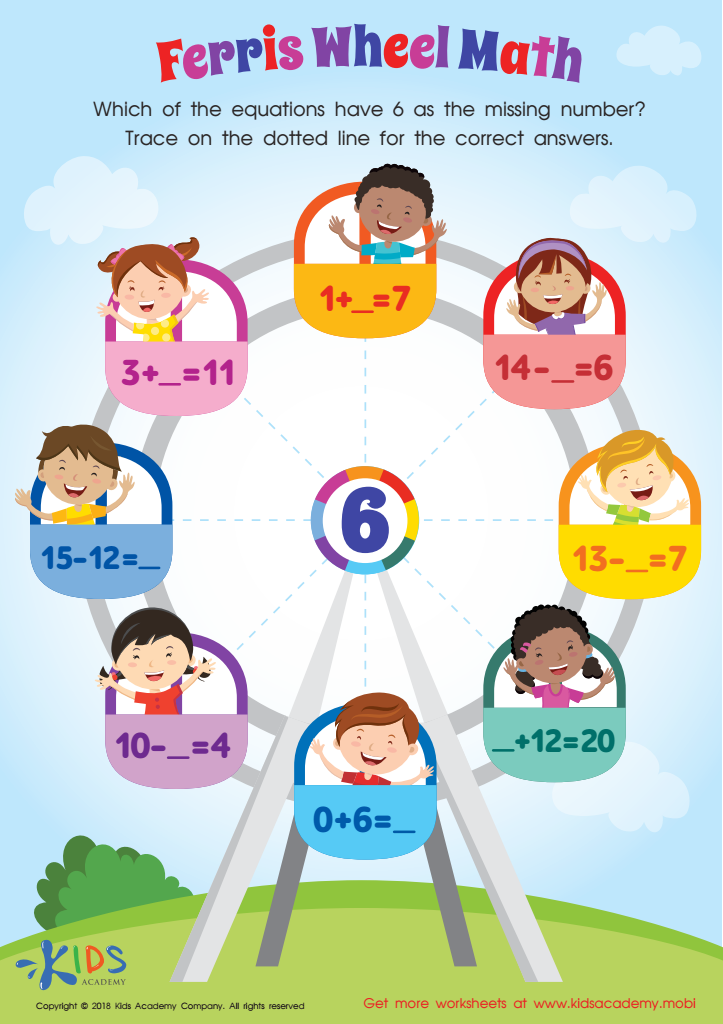
Missing Number: Ferris Wheel Math Worksheet
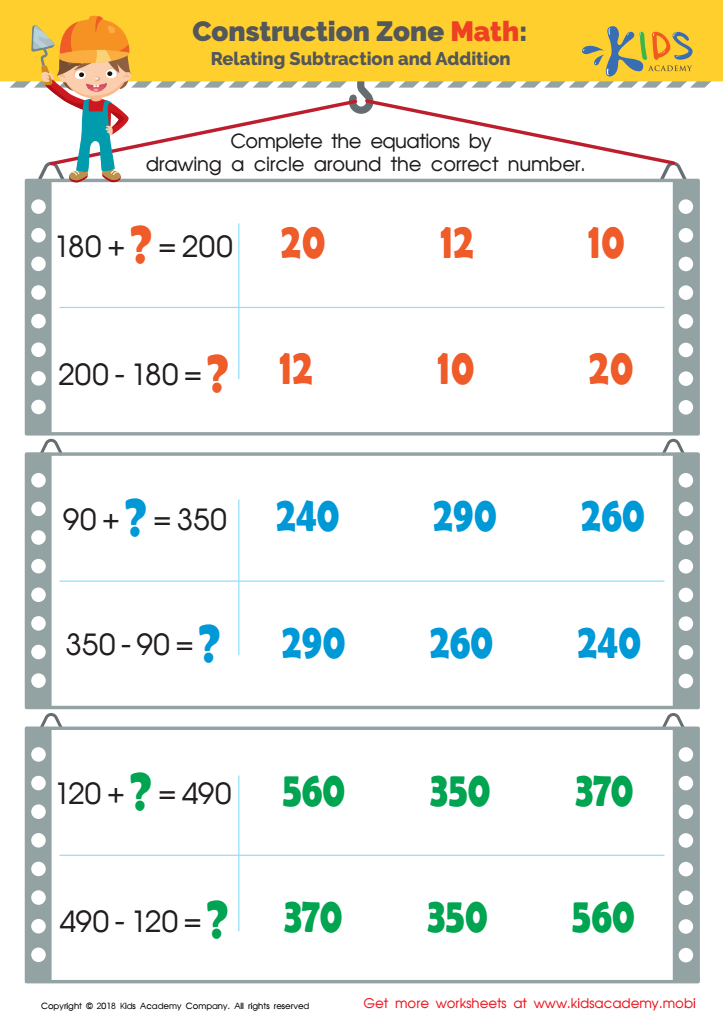
Construction Zone Math: Relating Subtraction and Addition Worksheet








Understanding subtraction is crucial for young children aged 3-9 because it forms the foundation of their arithmetic skills and overall mathematical development. At this stage, a solid grasp of subtraction helps develop logical thinking and problem-solving abilities. Just as they learn to add, which involves combining quantities, learning to subtract teaches them how to discern differences, compare quantities, and understand the concept of taking away.
Both skills are essential for everyday tasks and academic success. Early fluency in these areas boosts confidence and builds a positive attitude toward more complex mathematics in later years. Subtraction, alongside normal addition, also sharpens cognitive skills like memory and analytical thinking.
Furthermore, early math skills, including basic arithmetic, are strong predictors of future academic achievement across various subjects. Children who excel in these foundational skills are often better prepared for more advanced topics such as multiplication and division.
For parents and teachers, fostering a deep understanding of subtraction and normal addition through engaging, hands-on activities can make learning fun and relatable. Whether using visual aids, story problems, or interactive games, making these concepts accessible young makes a significant difference in a child's educational journey and lifelong relationship with math.