Differentiating shapes Normal Geometry Worksheets for Ages 3-9
3 filtered results
-
From - To
Welcome to our "Differentiating Shapes Normal Geometry Worksheets" designed specifically for children aged 3-9! Our engaging worksheets help young learners build foundational geometry skills through fun and interactive activities. Children will explore various shapes such as triangles, squares, and circles while enhancing their ability to identify, compare, and categorize them. These worksheets offer a balance of creativity and educational value, making learning enjoyable. With vivid illustrations and age-appropriate tasks, our resources support early mathematical understanding and promote critical thinking. Perfect for classrooms or home learning, our geometry worksheets make mastering shapes exciting and accessible for every child!
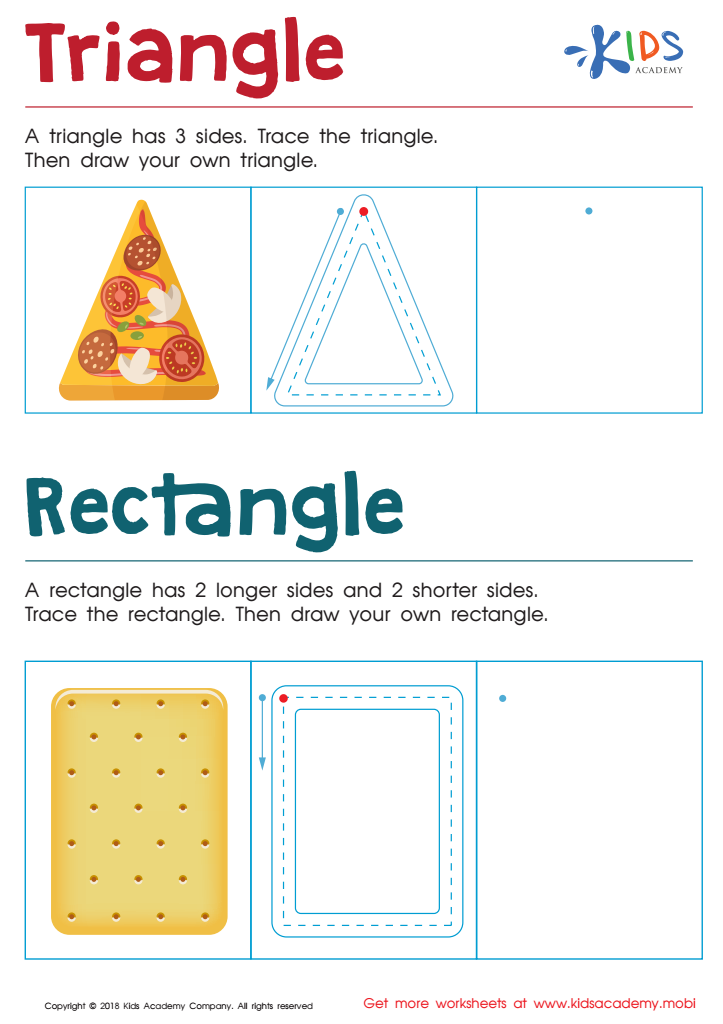
Triangle Rectangle Worksheet
 Assign to My Students











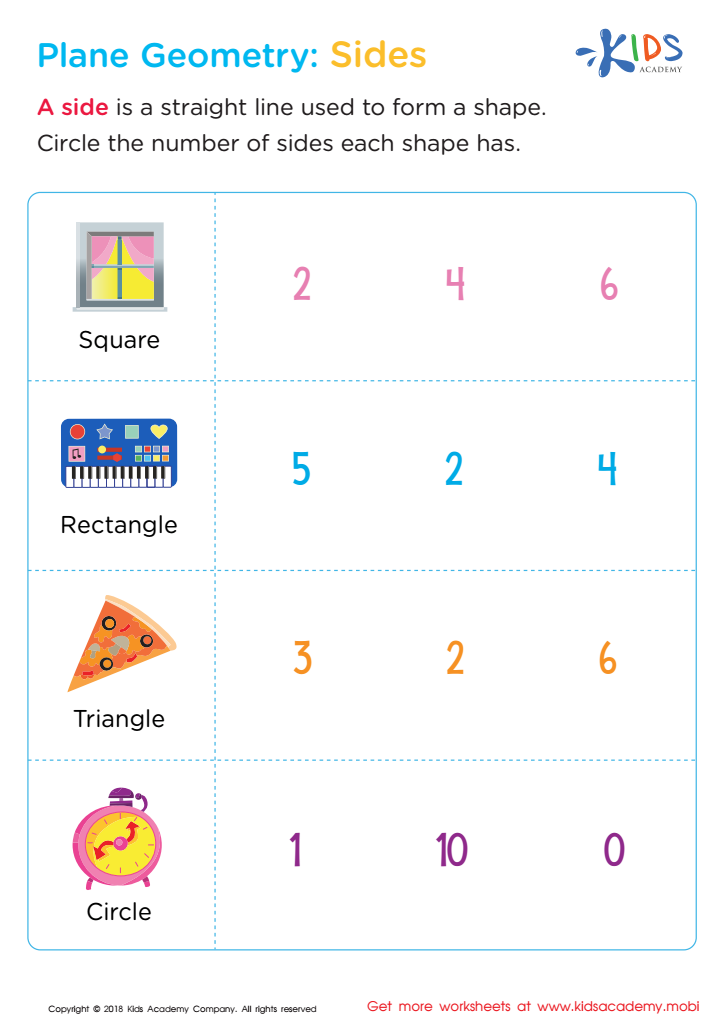
Plane Geometry: Sides Worksheet
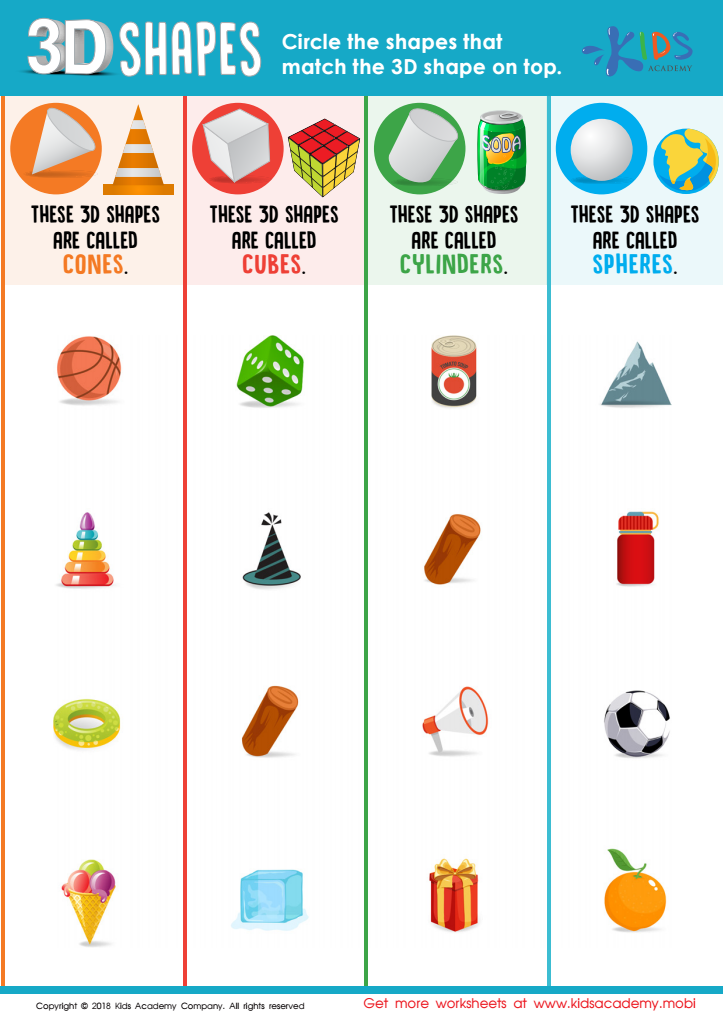
3D Shapes Worksheet








Differentiating shapes teaching for children aged 3-9 is crucial for their cognitive and spatial development. At this age, kids are naturally curious and explorative, making it the perfect stage to introduce diverse geometric concepts. Teaching shapes helps children understand their environment, fostering observational skills and encouraging critical thinking.
Differentiating shapes—explaining various characteristics such as sides, angles, and symmetry—enhances their mathematical foundation and nurtures skills that will be essential in later education. Recognizing and distinguishing shapes builds a child’s problem-solving abilities. When children can identify and classify shapes, they are better equipped to tackle more advanced math concepts in the future.
Additionally, shape differentiation supports language development. Engaging activities that involve shapes encourage children to describe and communicate observations, enriching their vocabulary. For teachers and parents, incorporating varied, hands-on experiences—like using blocks, drawing, or real-world examples—can make learning more engaging.
Finally, early exposure to geometry contributes to overall developmental milestones, impacting fine motor skills, hand-eye coordination, and even creativity as children collaborate with shapes during arts and crafts. Ultimately, prioritizing differentiating shapes lays a foundational understanding that equips children for success in both academic and everyday contexts.








