Spatial reasoning Normal Geometry Worksheets for Ages 3-9
3 filtered results
-
From - To
Unlock your child's potential with our "Spatial Reasoning Normal Geometry Worksheets" designed for ages 3-9. These engaging activities focus on developing critical spatial skills through fun exercises in geometry. Our worksheets help young learners grasp concepts of shapes, symmetry, and spatial orientation, fostering a strong foundation in math and cognitive skills. Perfect for both classroom use and at-home learning, these printables make education enjoyable for kids, while boosting their confidence in problem-solving. Explore our vast collection and watch your child excel in spatial reasoning and geometry, setting the stage for future academic success.
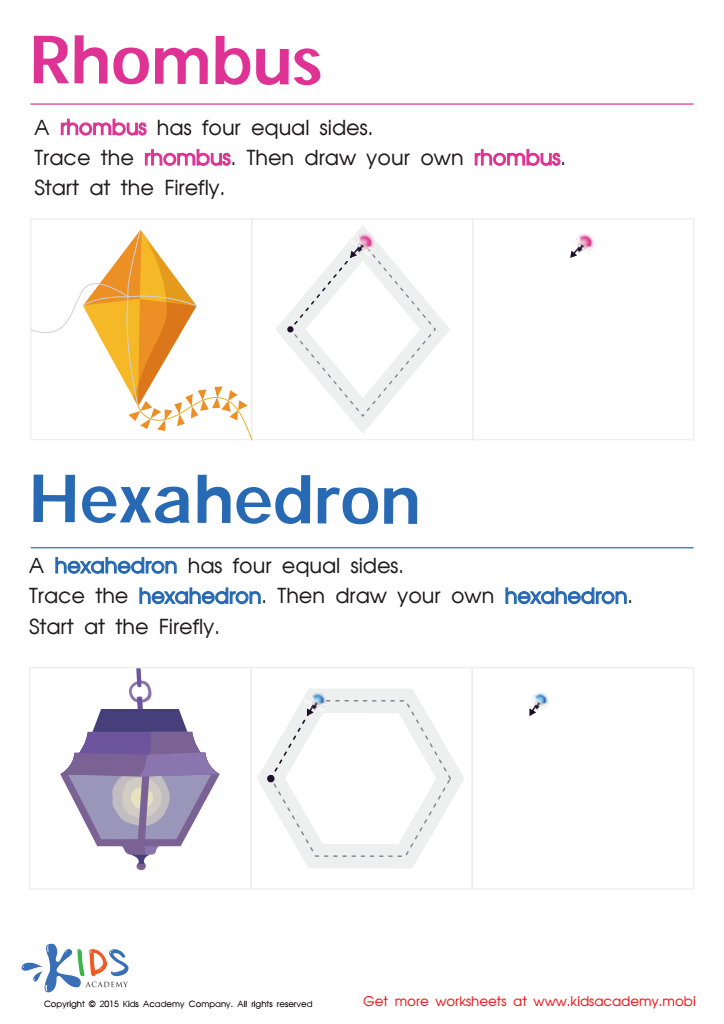
Draw a Rhombus And a Hexahedron Printable
 Assign to My Students











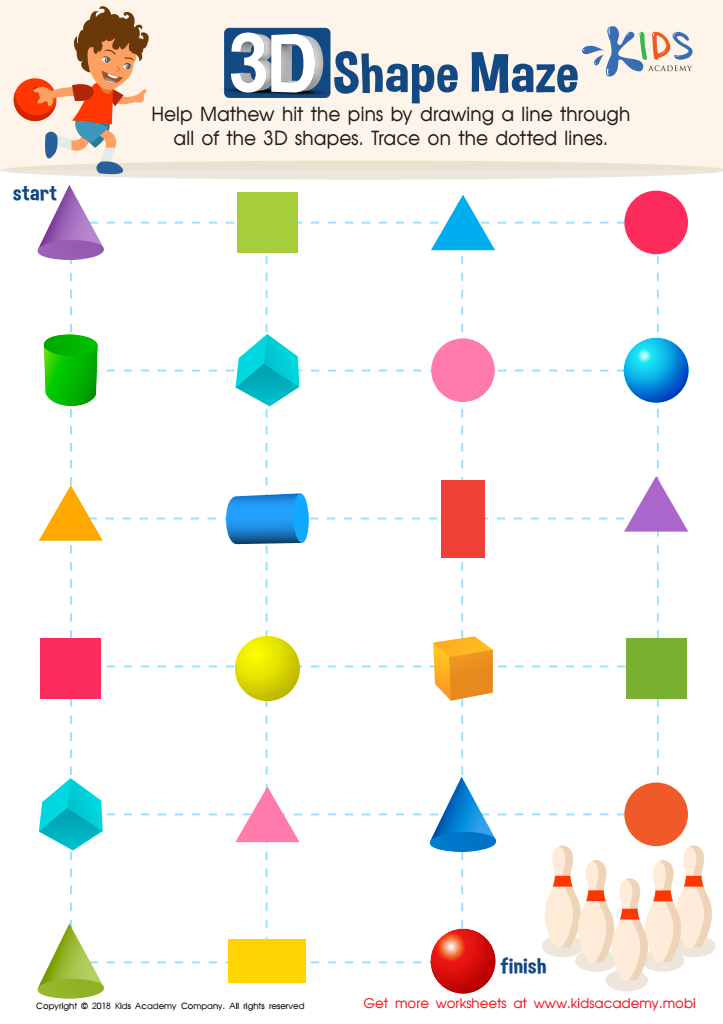
Shapes Maze Geometry Worksheet
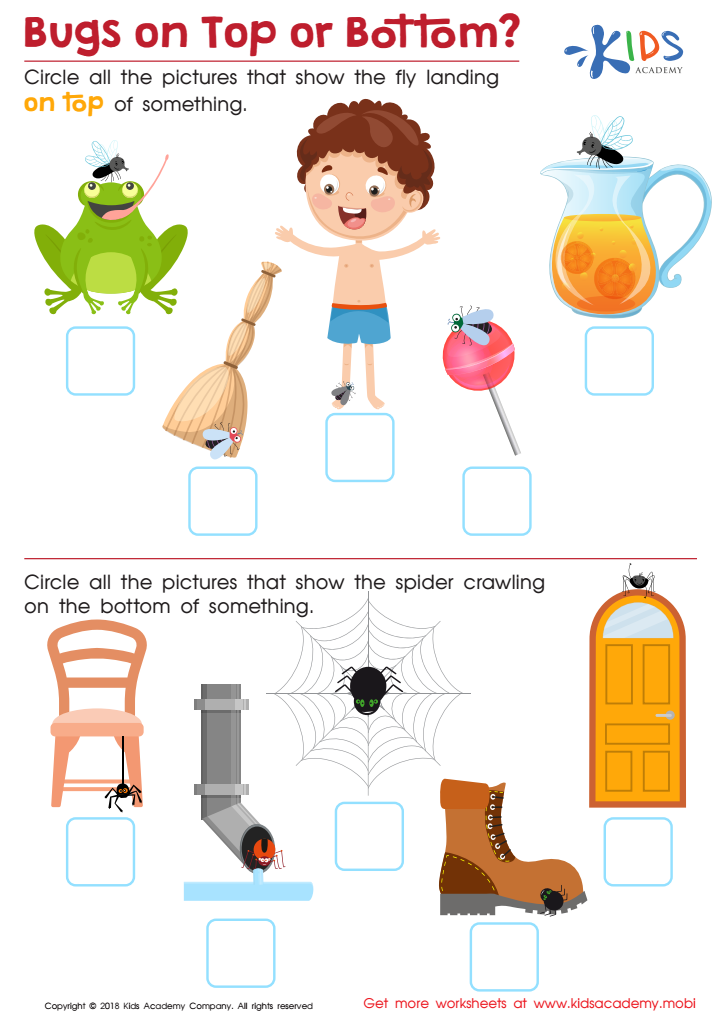
Bugs on Top or Bottom? Worksheet








Spatial reasoning is a critical cognitive skill that deals with understanding and manipulating shapes and objects in space. For children ages 3-9, developing strong spatial reasoning is pivotal for their overall intellectual growth and future academic success. This age range signifies a crucial developmental window where children's brains are highly receptive to learning and forming new connections. Parents and teachers should prioritize spatial reasoning as it is foundational for subjects like mathematics, science, and engineering, which rely heavily on geometry and spatial skills.
Engaging children in activities that enhance spatial reasoning can improve their problem-solving abilities and support the development of other important skills such as visual memory, attention to detail, and hand-eye coordination. For instance, tasks involving puzzles, building blocks, and drawing help children grasp the concepts of shapes, sizes, distances, and directions. These activities not only bolster mathematical skills but also foster creativity and critical thinking.
Moreover, strong spatial skills have been linked to better performance in STEM (Science, Technology, Engineering, Math) fields, making early spatial reasoning development a critical aspect of preparedness for future educational and career opportunities. In essence, by nurturing spatial reasoning early on, parents and teachers set a strong foundation for children's academic achievements and problem-solving capabilities, benefiting them throughout their lives.








