Understanding comparisons Normal Numbers Worksheets for Ages 3-9
3 filtered results
-
From - To
Explore our "Understanding Comparisons Normal Numbers Worksheets for Ages 3-9" designed to enhance early math skills. These engaging and interactive worksheets help children develop a strong foundation in number recognition and comparison, preparing them for more complex arithmetic. With a focus on fun, age-appropriate activities, young learners will confidently compare numbers, understand concepts like greater than, less than, and equal to, and enjoy the learning process. Ideal for both classroom settings and home practice, our worksheets support parents and educators in fostering a love for math in children from an early age.
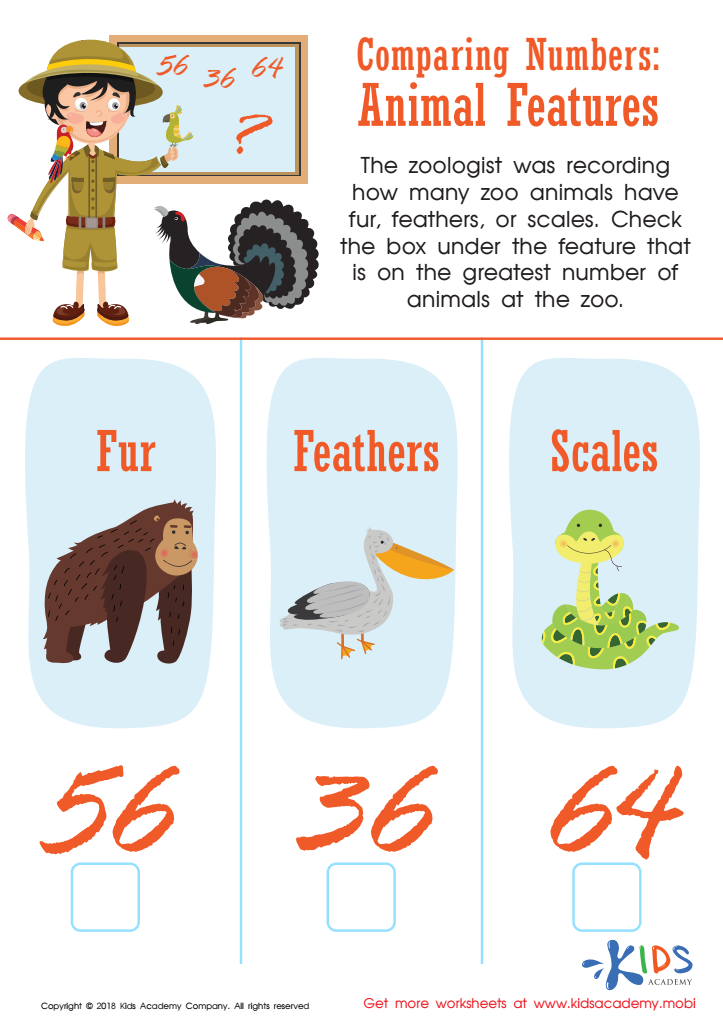
Animal Features Worksheet
 Assign to My Students
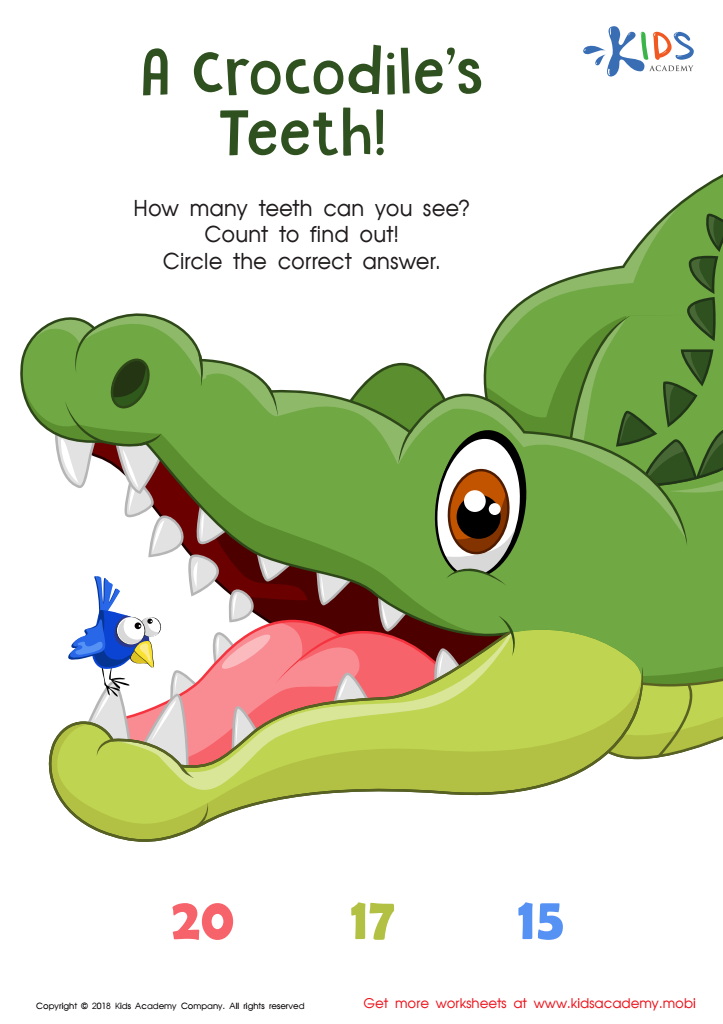
A Crocodile's Teeth Worksheet
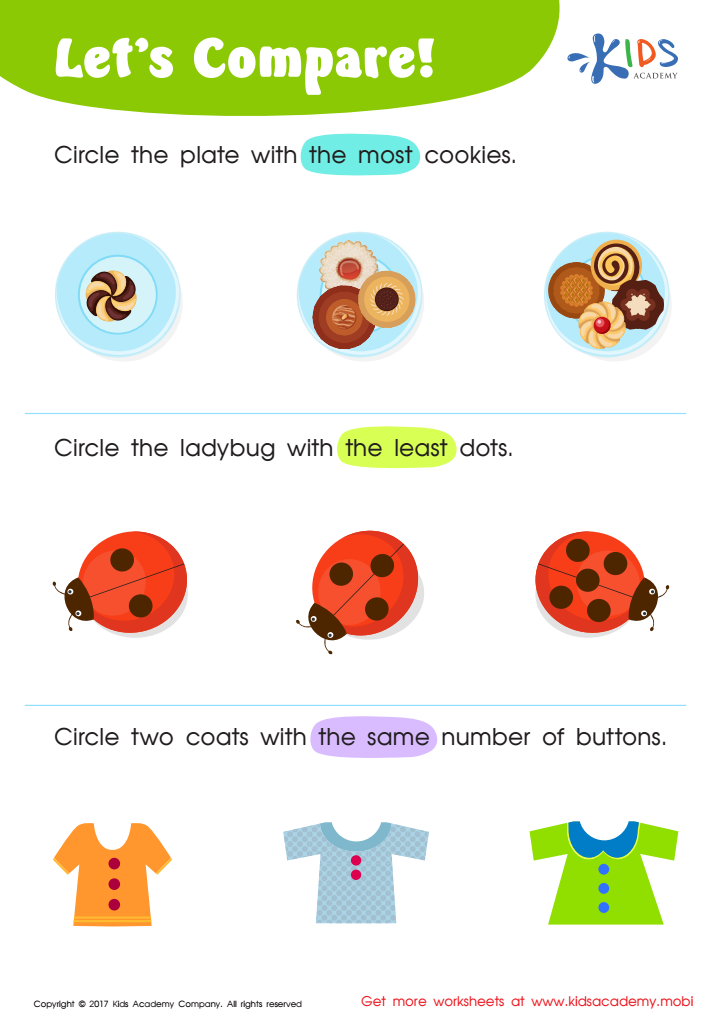
Matching: Classifying Toys by Size Worksheet








Understanding comparisons and normal numbers is crucial for children aged 3-9 because it forms the foundation for their numerical literacy and logical thinking skills. At this age, children's brains are highly receptive to learning basic math concepts, and grasping comparisons (such as bigger vs. smaller, longer vs. shorter, or more vs. less) helps them make sense of the world around them.
Firstly, these concepts support everyday activities and decision-making. For instance, discerning the difference between more and fewer cookies can teach sharing and fairness. In play, comparing sizes of blocks can build reasoning and spatial awareness.
Secondly, these skills are directly tied to academic success. Early familiarity with mathematical thinking through comparison activities promotes the understanding of more complex mathematical operations such as addition, subtraction, and eventually multiplication and division. Engaging children in comparing objects or amounts strengthens their observational skills and attention to detail, which are valuable across all subjects.
Equally important is the enhancement of their language abilities. Using comparative language in everyday interactions helps children articulate their thoughts clearly and effectively. Words like "taller," "shorter," "heavier," or "lighter" become part of their regular vocabulary, boosting overall communication skills.
Finally, understanding these concepts builds children's confidence and encourages a growth mindset. As they succeed in solving more comparisons, their confidence grows, making them more eager to tackle challenging tasks, fostering a lifelong love for learning.








