
Addition skills Normal Math Worksheets for Ages 3-9
16 filtered results
Difficulty Level
Grade
Age
-
From - To
Subject
Activity
Standards
Enhance your child's early math journey with our "Addition Skills Normal Math Worksheets" designed for ages 3-9! These engaging activities focus on building foundational addition skills through fun and interactive exercises. Our worksheets stimulate critical thinking and promote number recognition, making learning enjoyable. From simple one-digit problems to more complex challenges, each worksheet is tailored to suit various skill levels, enabling progression at the child's pace. With colorful illustrations and intuitive layouts, these resources keep young learners motivated while developing essential math abilities. Explore endless possibilities to reinforce addition skills and boost confidence as your child embarks on their mathematical adventure!
Favorites
With answer key
Interactive
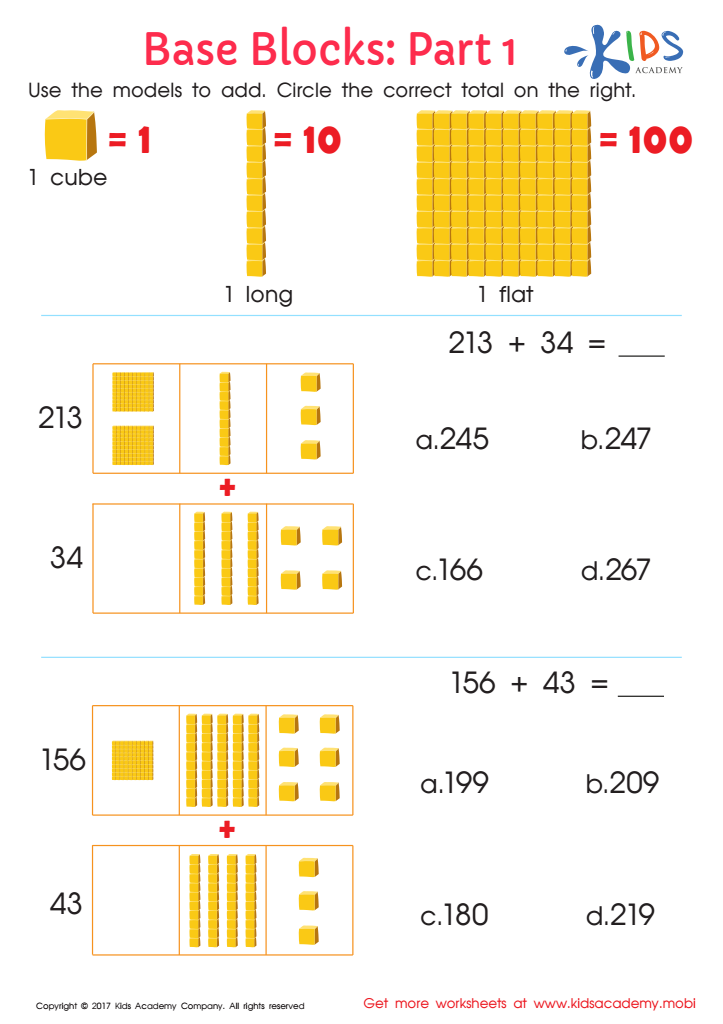
Base Ten Blocks Worksheet: Part 1
They promote numeracy and are a great substitute when kids don't have access to physical blocks.
 Assign to My Students
Base Ten Blocks Worksheet: Part 1
Worksheet
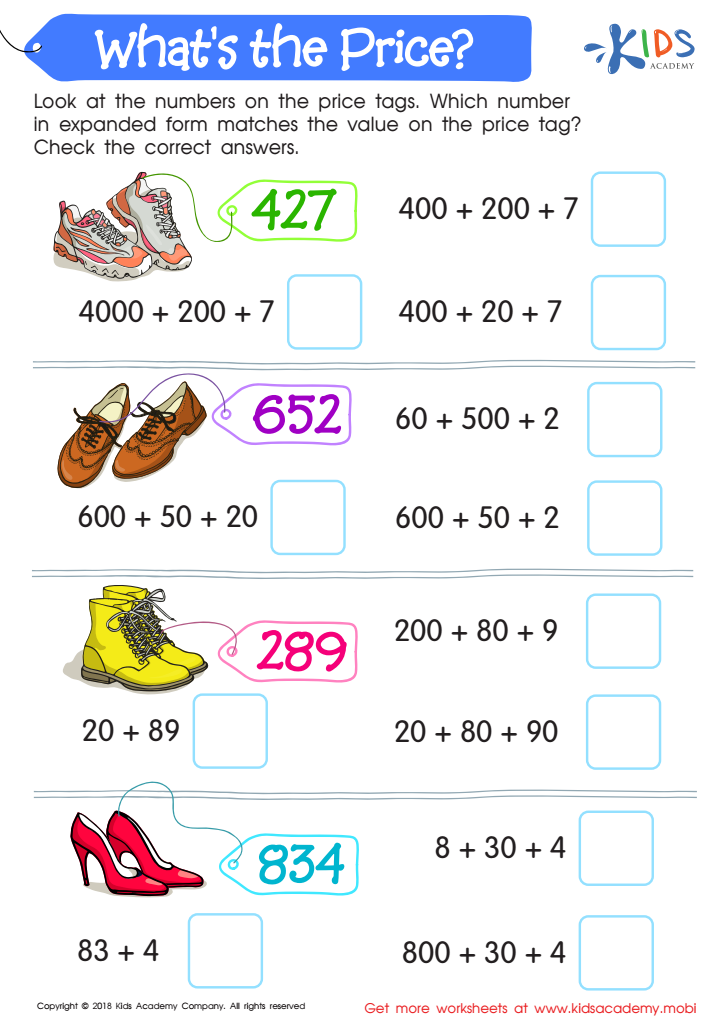
What's the Price? Worksheet
With this price tag worksheet, you and your kids can have some educational fun! Check the numbers on the tags, ask your child to work out their expanded form, and circle the correct answers. It's a great way to teach math and keep them entertained!
What's the Price? Worksheet
Worksheet
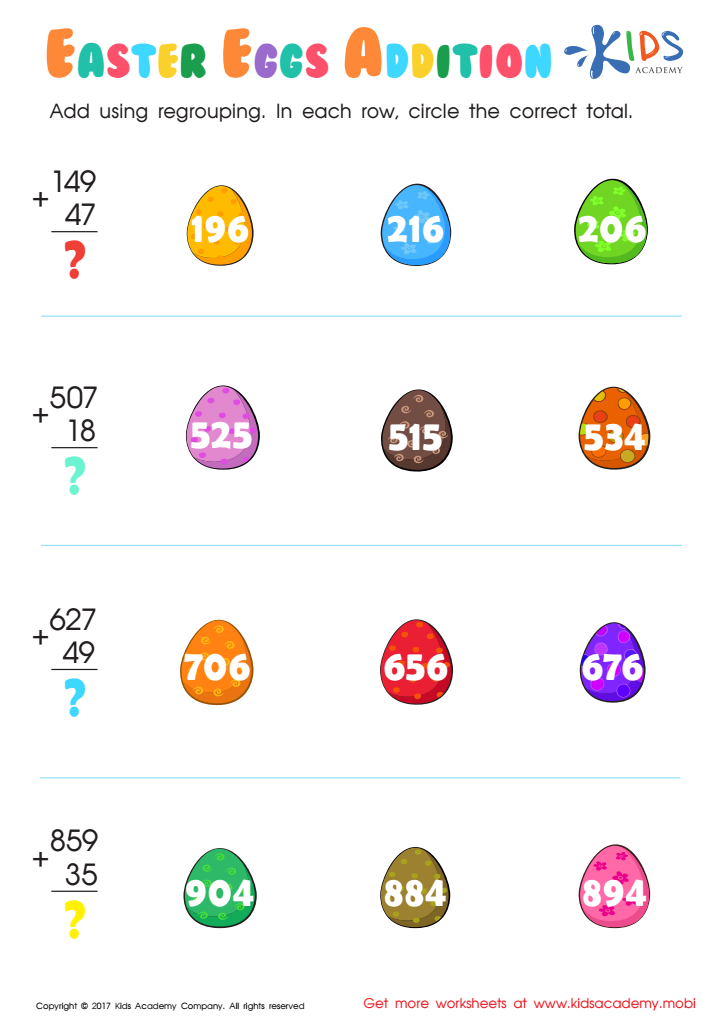
Addition with Regrouping Worksheet
Try this fun holiday-themed addition with regrouping worksheet! Kids can practice adding while regrouping using bright, colorful holiday images. It's a great way to make math exciting, and keep their interest piqued!
Addition with Regrouping Worksheet
Worksheet
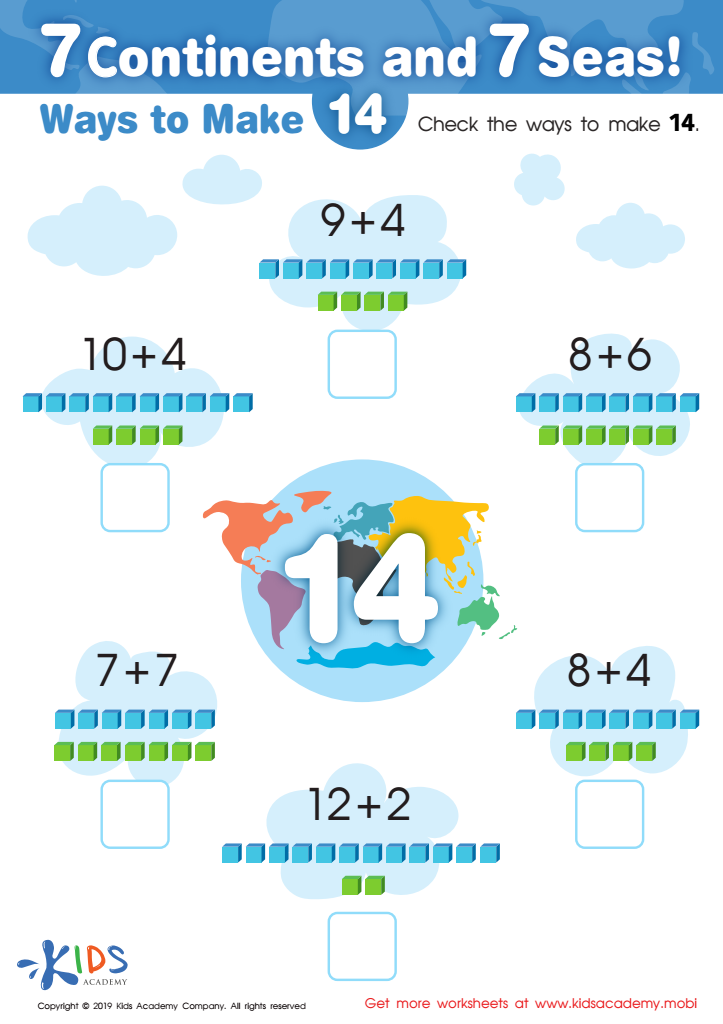
7 Continents and 7 Seas Worksheet
Remind kids of the continents and show them how different numbers can add up to the same figure. Give examples, like 2+2 =4, and 3+1 =4. Ask if they can provide other examples, then work through the simple additions in this worksheet with them. Ask them to circle all equations that make 14.
7 Continents and 7 Seas Worksheet
Worksheet
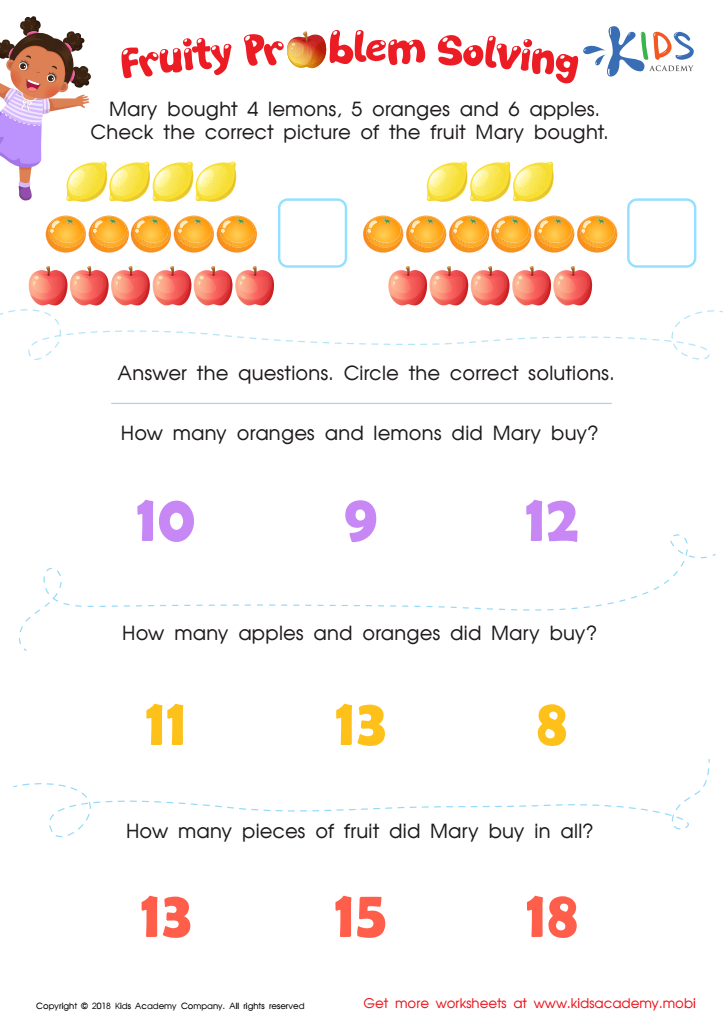
Fruity Problem Solving Worksheet
Practice addition word problems with young mathematicians using this PDF worksheet featuring fruit. As they read each problem carefully and circle the correct sums, they'll reinforce attention to detail and fine motor skills. Tangible representations are key to helping them with basic addition.
Fruity Problem Solving Worksheet
Worksheet
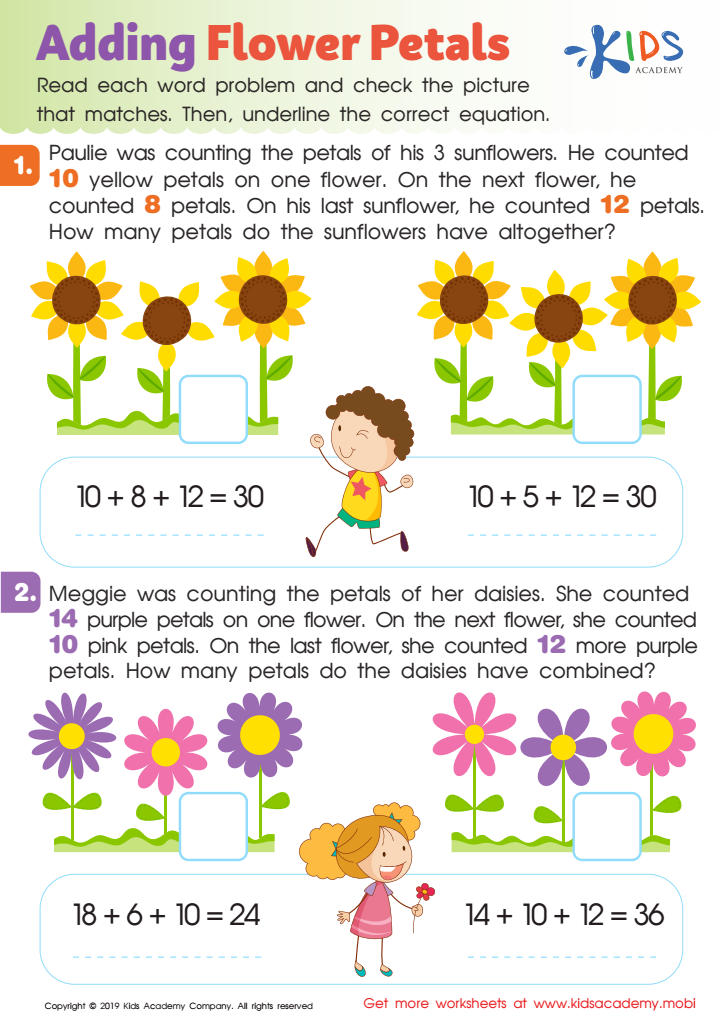
Adding Flower Petals Worksheet
This free worksheet helps little mathematicians learn to understand word problems. They'll read each one and match it to the corresponding picture. Important info is highlighted, teaching kids to look for key info when solving problems. Then they'll underline the correct number equation that matches the picture. A great way to practice problem-solving skills!
Adding Flower Petals Worksheet
Worksheet
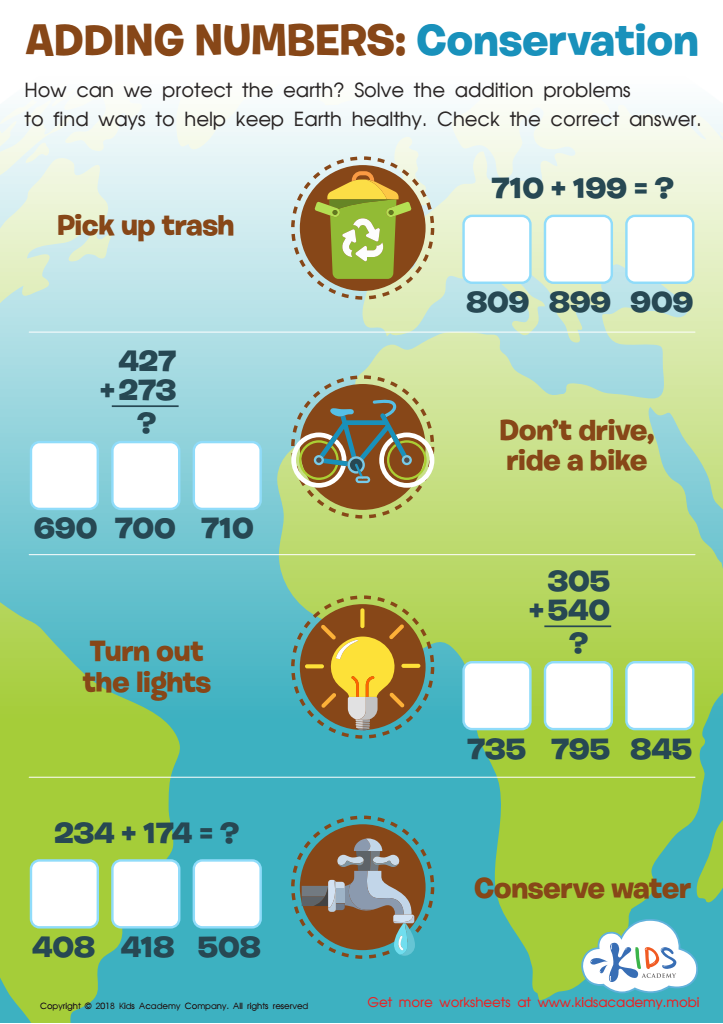
Adding Numbers: Conservation Worksheet
We all live on the Earth, which provides us with the vital necessities for survival. Unfortunately, we too often take advantage of this, causing pollution, water wastage and global warming. Help teach your kids how we can protect our planet - ask them to come up with good ideas and work together to find solutions. Challenge them to solve the subtraction problems to see what they can do to help keep the Earth healthy.
Adding Numbers: Conservation Worksheet
Worksheet
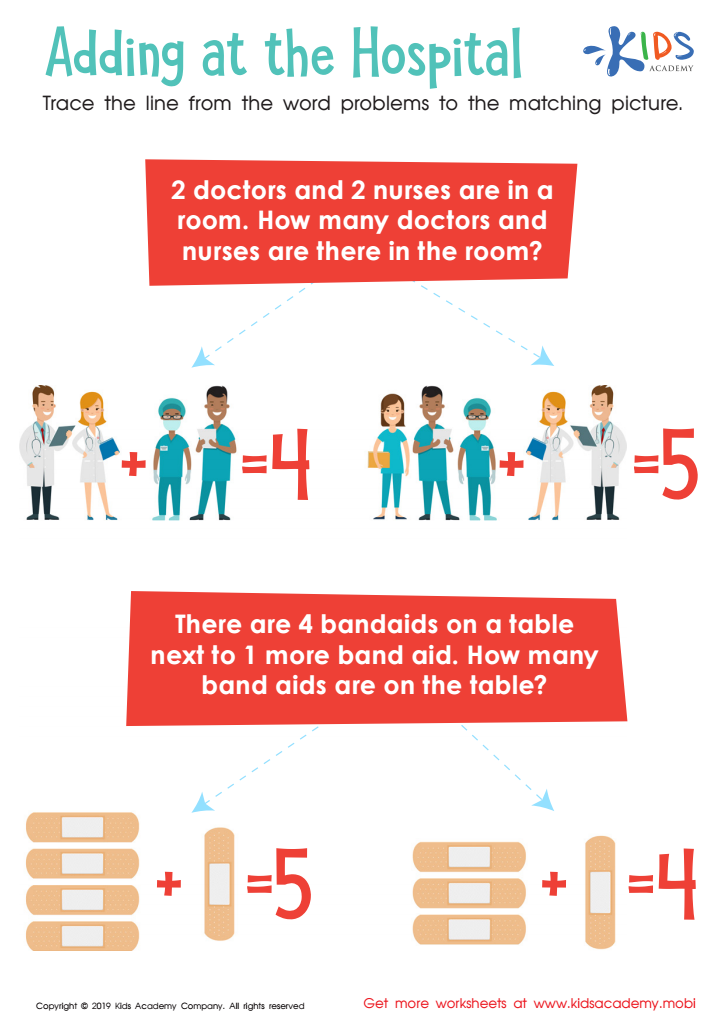
Adding at the Hospital Worksheet
A hospital visit doesn't have to be scary for kids. With this worksheet, they can count along with doctors and nurses, by reading the word problems and tracing lines to the corresponding picture. Guide them through it and you'll help them have a fun experience.
Adding at the Hospital Worksheet
Worksheet
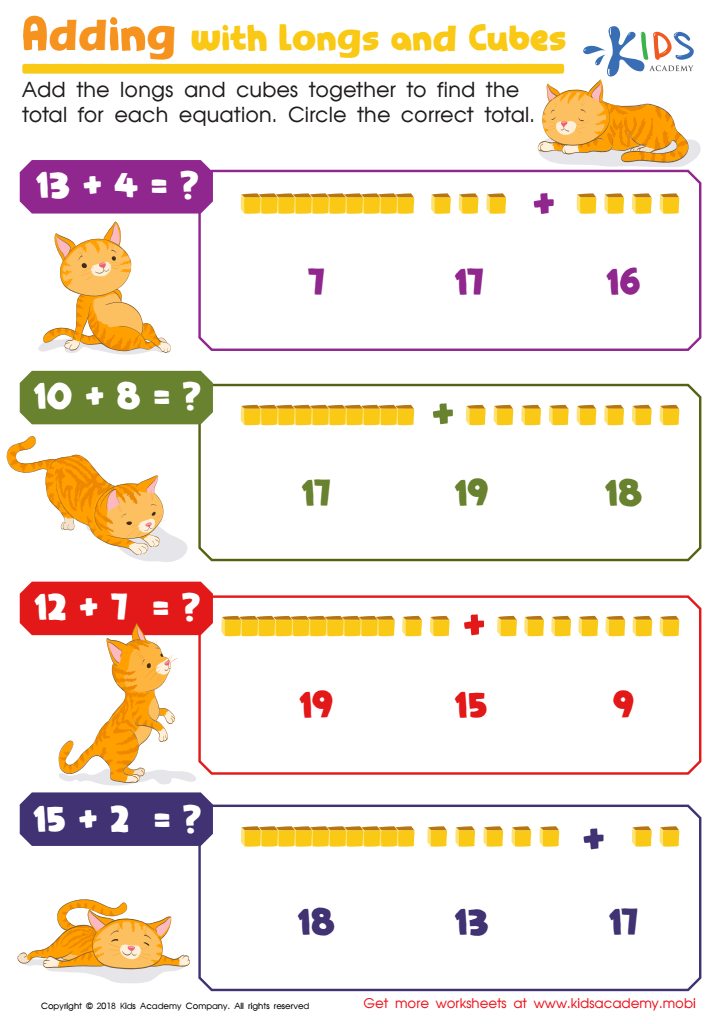
Adding With Longs and Cubes Worksheet
Math might not be your child's favorite, but they must master it to advance. If they're having difficulties or don't like it, use this worksheet to make it easier. Have them add longs and cubes together to find the total for each question, then circle the correct answer. This exercise can help make math experiences better.
Adding With Longs and Cubes Worksheet
Worksheet
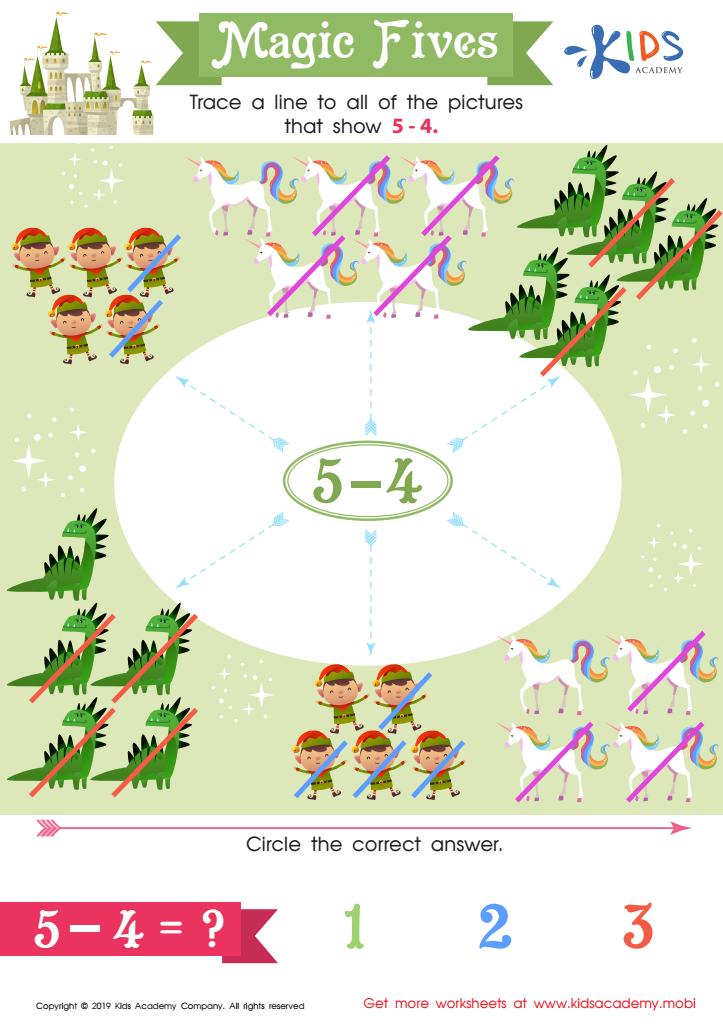
Magic Fives Worksheet
Help your students identify the objects & people in the worksheet. Point to the equation 5 -4 in the center, then get them to count the items and trace a line connecting those that add up to 5 - 4.
Magic Fives Worksheet
Worksheet
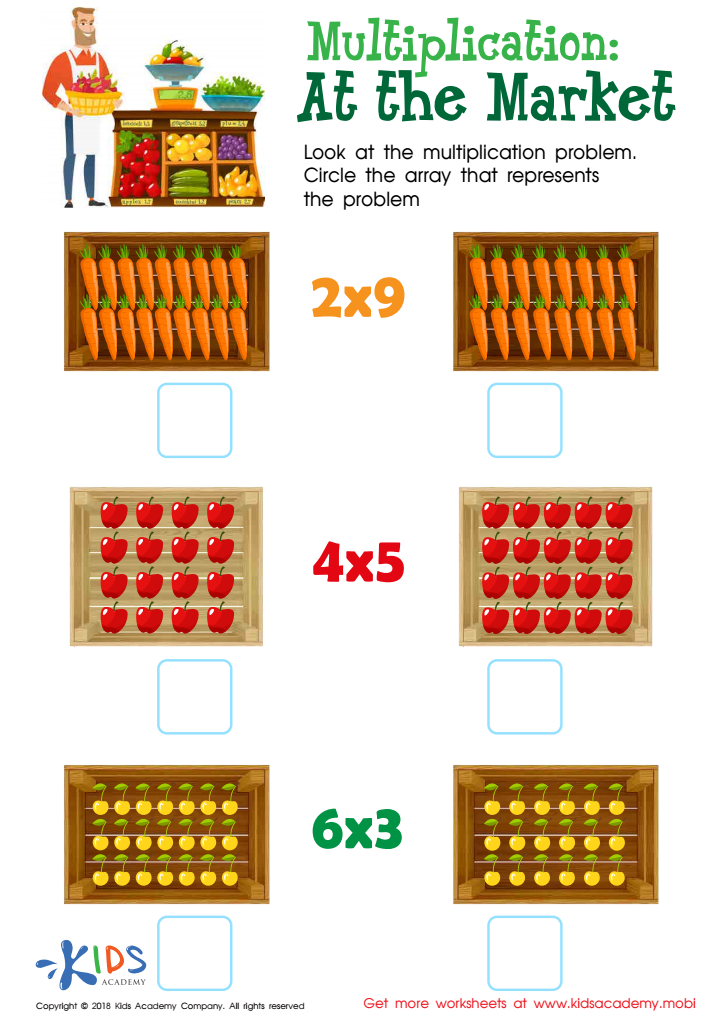
At the Market Worksheet
Head to At the Market! This attractive worksheet features arrays of delicious fruits and veggies that'll have 3rd graders working on their multiplication. Solve the problems, choose the correct answer, and learn while having fun!
At the Market Worksheet
Worksheet
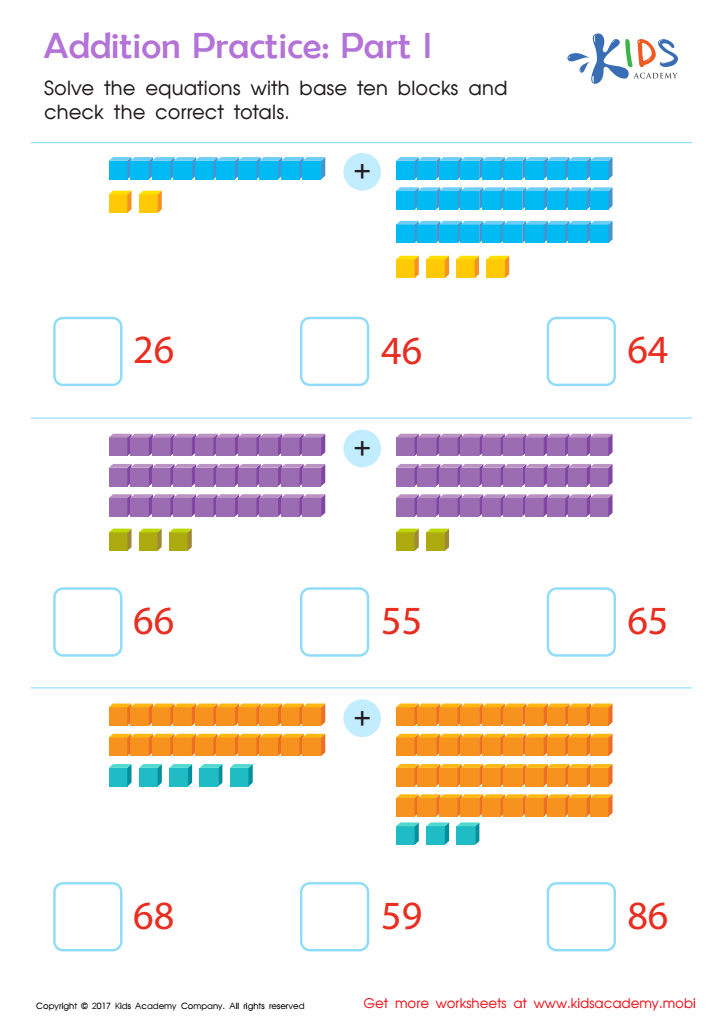
Addition Practice Sheet: Part 1
Kids Academy offers a free worksheet to help kids learn addition with base ten blocks, with or without actual manipulatives. Help your Kindergarten or First Grader flex and increase their knowledge of place value and understand math more deeply. Download this useful page for images that will promote success.
Addition Practice Sheet: Part 1
Worksheet
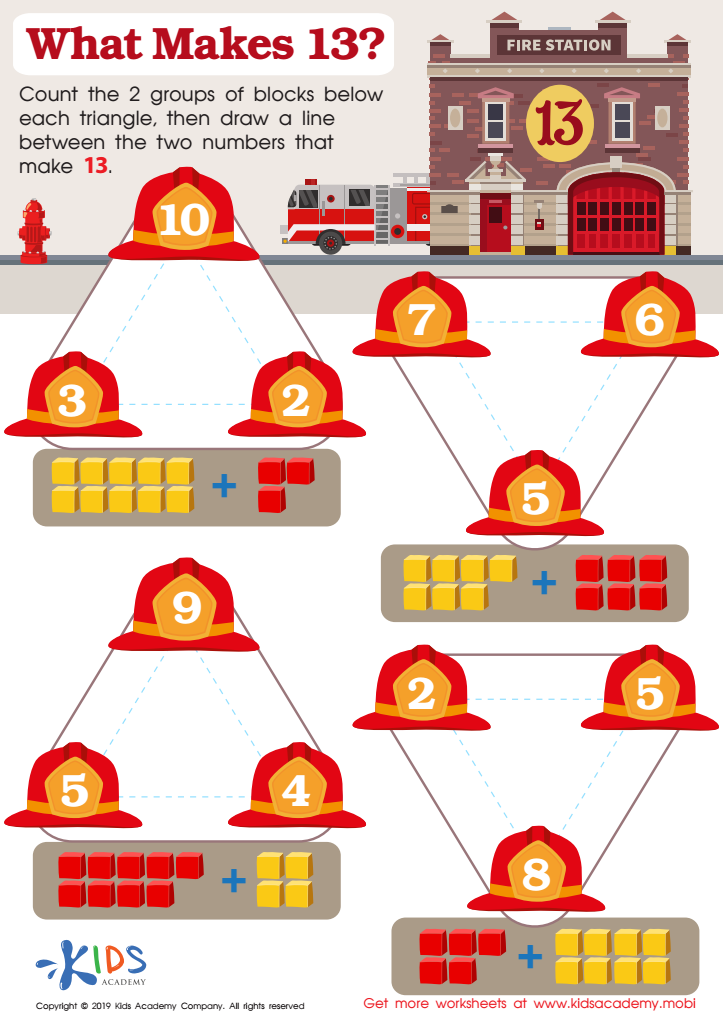
What Makes 13 Worksheet
Help your kids practice maths with this worksheet! With colourful images and simple equations, your kids will be more engaged in learning. Go through the four equations and help them add up the numbers. Then, draw a line between the numbers that make 13. Doing this will aid their learning and understanding.
What Makes 13 Worksheet
Worksheet
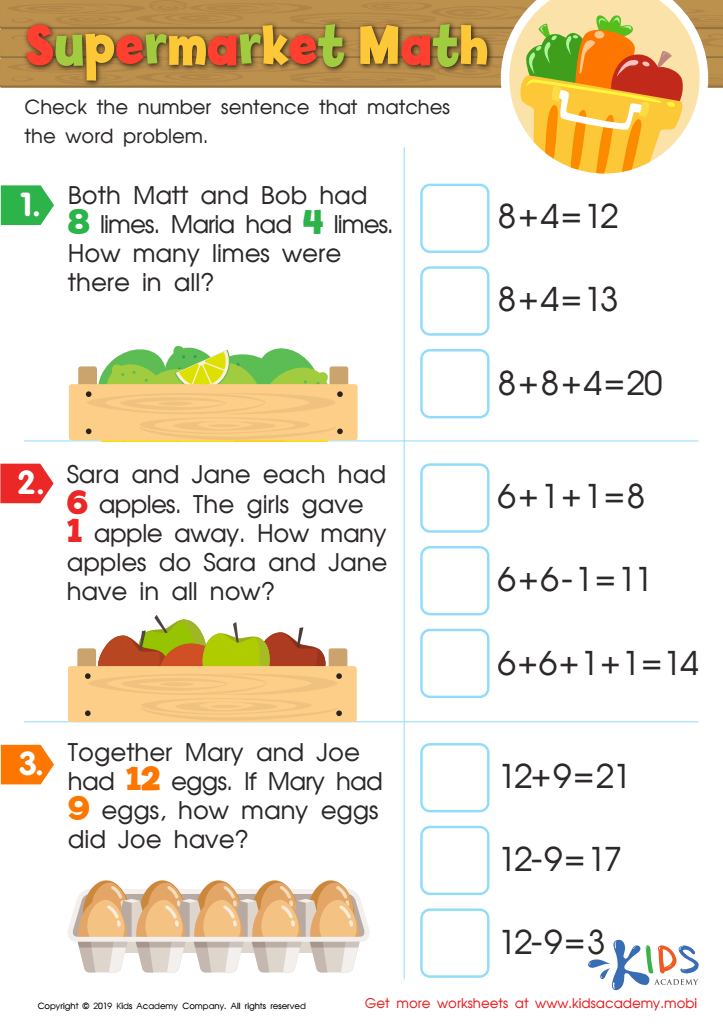
Supermarket Math Worksheet
Take your kids to the supermarket and ask what they're looking forward to buying. Help them solve the three questions in the worksheet by interpreting each one into an equation, then choose the right answer.
Supermarket Math Worksheet
Worksheet
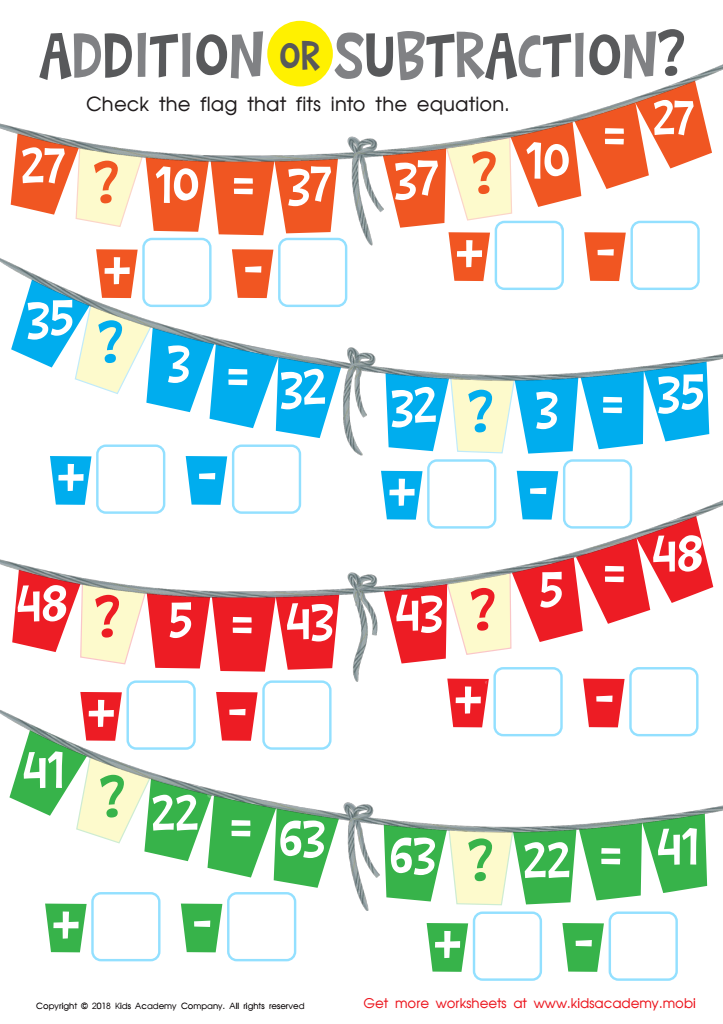
Addition or Subtraction? Worksheet
Help your math whiz's number skills advance with these colorful flag equations! With the free PDF, they'll learn to solve addition and subtraction facts by following the correct orders of operation. And the best part? They'll develop a deeper understanding of how the different operations work together within equations. Give it a try and watch their skills soar!
Addition or Subtraction? Worksheet
Worksheet
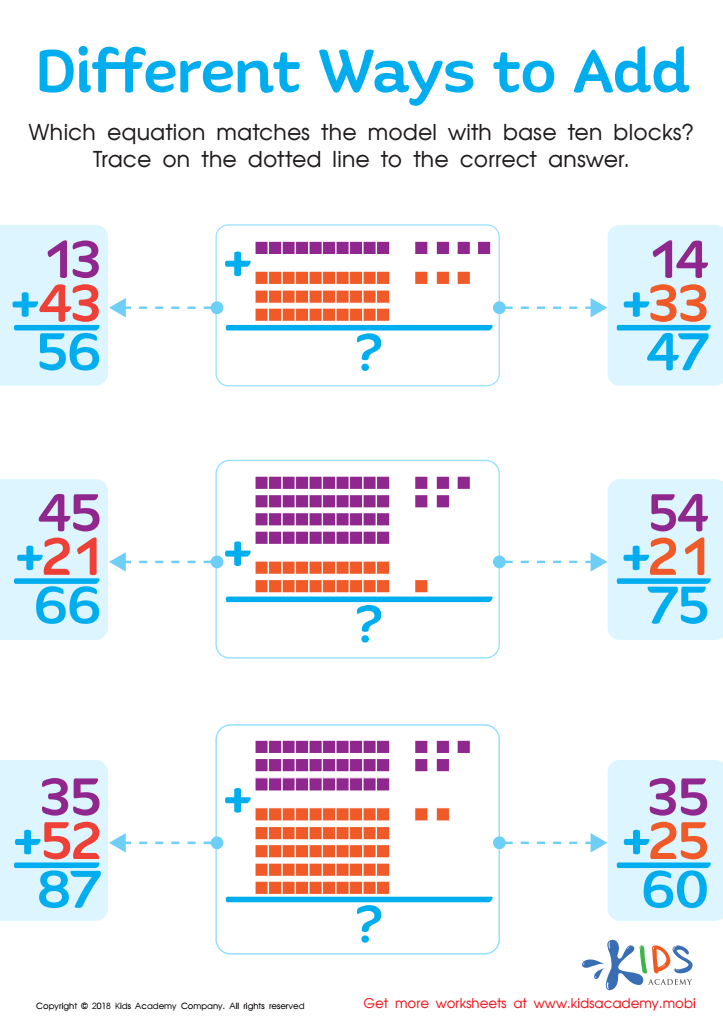
Different Ways to Add Worksheet
This worksheet enhances math skills by having students match equations to base ten pictures and tracing lines. It not only helps with fine motor skills, but also encourages number sense, with various ways to add and build upon existing math knowledge.
Different Ways to Add Worksheet
Worksheet
Join Kids Academy for Free
Who is primarily going to use this learning content?






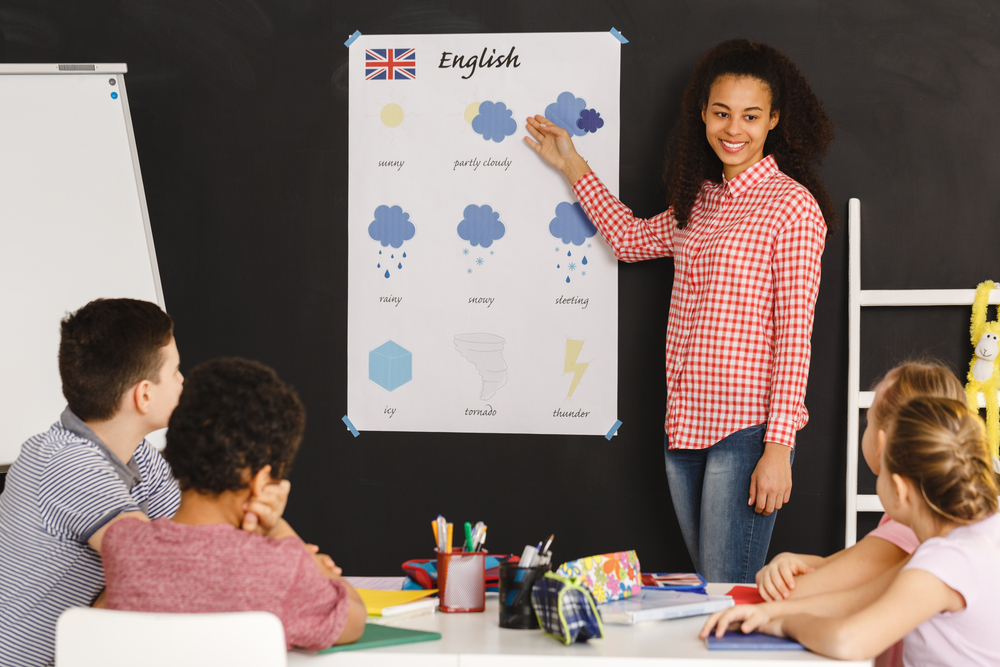

Addition skills are foundational in early mathematics and vital for children's cognitive development. For parents and teachers of children ages 3-9, fostering these skills is crucial as it helps them make sense of everyday situations, laying the groundwork for critical thinking and problem-solving. Mastery of addition encourages children to explore numbers and improves their understanding of quantity and value.
At this developmental stage, children are naturally curious and eager to learn. Engaging them in addition through playful activities and interactive games enhances their enthusiasm for math, making the learning process enjoyable and effective. Strong addition skills build confidence, helping them tackle more complex math concepts as they grow.
Moreover, these skills promote logical reasoning and perseverance. Parents and teachers play a key role in this by creating supportive environments where mistakes are viewed as opportunities for growth. Implementing addition in daily activities, such as counting objects during play or sharing snacks, allows children to see the relevance of math in their lives and strengthens their ability to apply what they learn.
In a world that increasingly relies on quantitative skills, developing strong addition skills can set a positive trajectory for children's academic success and lifelong learning.








