
Data interpretation Normal Math Worksheets for Ages 3-9
3 filtered results
Difficulty Level
Grade
Age
-
From - To
Subject
Activity
Standards
Discover our engaging Data Interpretation Normal Math Worksheets, designed specifically for children aged 3 to 9! These worksheets are perfect for developing crucial math skills through fun and interactive exercises. Kids will learn to interpret charts, graphs, and data sets, building their ability to analyze and make sense of information. With colorful visuals and age-appropriate challenges, these worksheets encourage critical thinking and enhance numeracy skills. Perfect for home or classroom use, our worksheets support early learners in mastering data interpretation concepts while making math enjoyable. Start your child’s journey to becoming a confident math thinker today!
Favorites
With answer key
Interactive
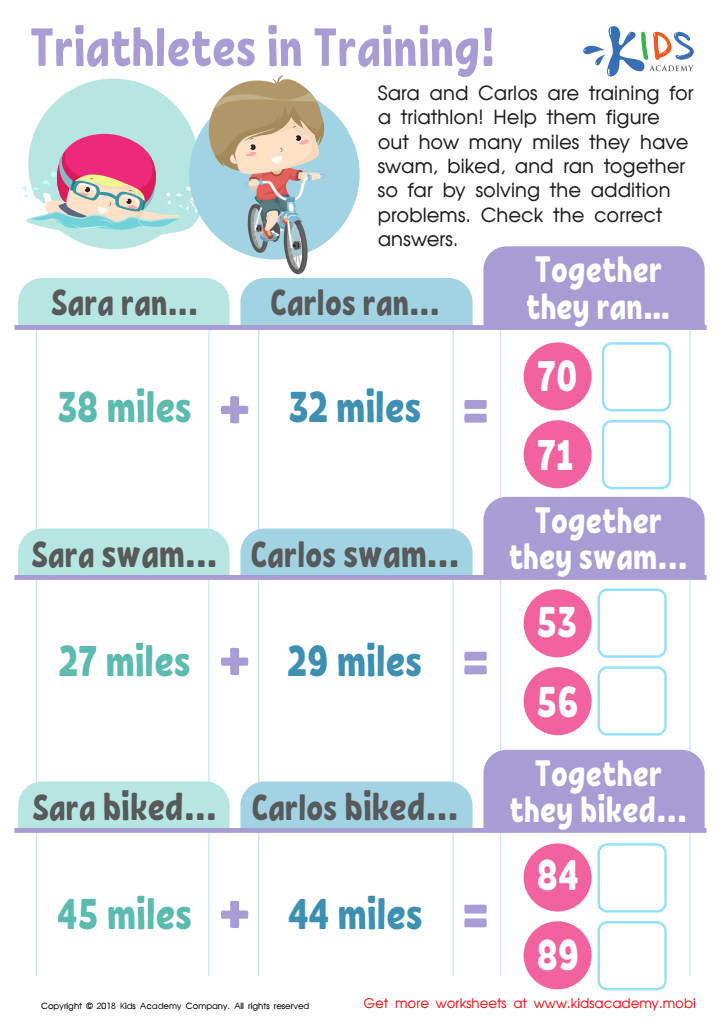
Triathletes in Training Worksheet
Sara and Carlos are training for a triathlon and need your child's help! They must solve the addition problems to figure out how many miles they've swam, ran, and biked. Help your kid check the answers and get them ready for the triathlon!
 Assign to My Students
Triathletes in Training Worksheet
Worksheet
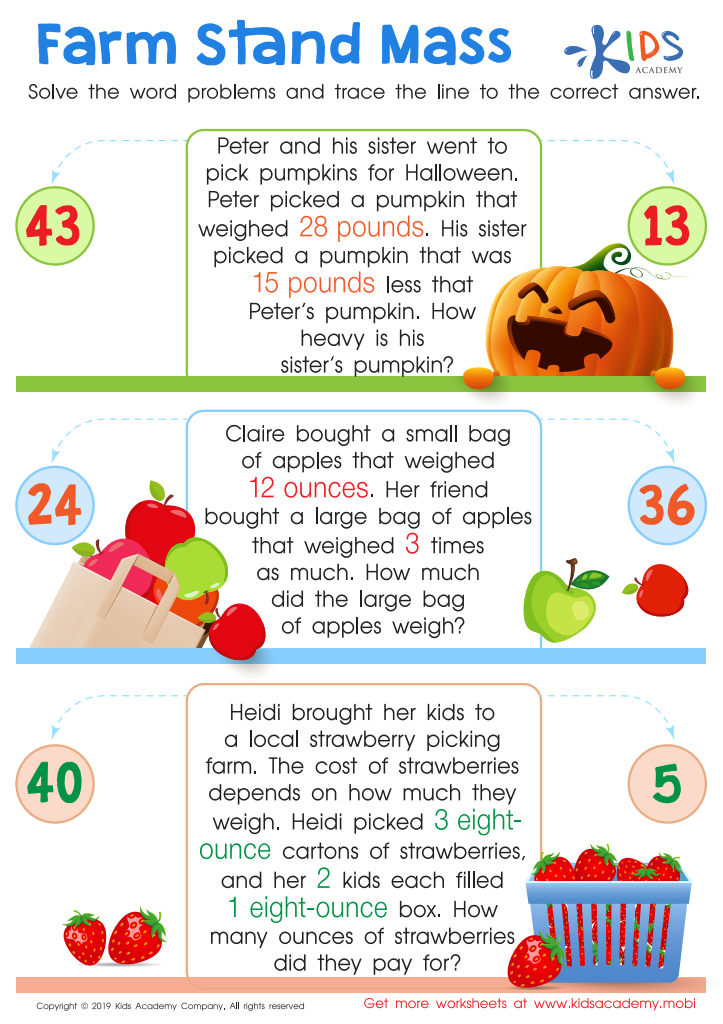
Farm Stand Mass Worksheet
Engage your kids in a fun learning adventure! Encourage them to practice what they learn in school using this worksheet. Look at the picture and read the problem together. Help them solve it and trace the line to the answer. Make learning enjoyable and your kids will be more motivated!
Farm Stand Mass Worksheet
Worksheet
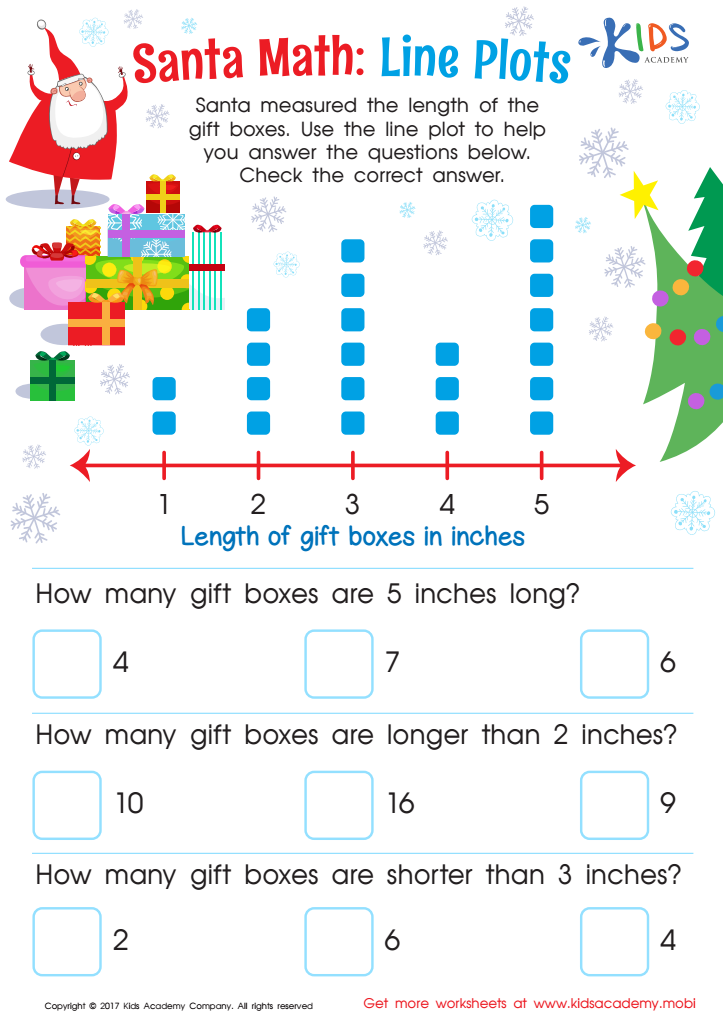
Line Plot Worksheet
Help your child measure presents with Santa using this 2nd grade line plot worksheet! It's a fun way to boost math skills and analyze data. Plus, it's sure to delight your child!
Line Plot Worksheet
Worksheet
Join Kids Academy for Free
Who is primarily going to use this learning content?








Data interpretation skills are essential for children aged 3-9, as they form the foundation for critical thinking and problem-solving abilities. Parents and teachers should prioritize normal math, particularly data interpretation, because it enhances children's analytical skills and fosters a deeper understanding of the world around them.
At an early age, children encounter basic forms of data through daily experiences, such as counting toys or comparing heights. Teaching them to organize, visualize, and interpret data cultivates their ability to make informed decisions. For example, when children learn to create simple bar graphs from their favorite fruits, they engage in hands-on exploration that helps reinforce mathematical concepts and enhances their reasoning skills.
Moreover, data interpretation promotes communication skills. Children learn to articulate their thoughts, defend their conclusions, and engage in discussions about their findings. This foundational knowledge not only supports future academic success in subjects like math and science but also equips children with life skills necessary for navigating everyday situations.
Lastly, fostering data interpretation skills aligns with many early childhood educational standards, making it an essential focus for parents and educators committed to holistic child development. By embracing these skills, adults can inspire a sense of curiosity and passion for learning in young children.








