Understanding base ten Normal Math Worksheets for Ages 3-9
3 filtered results
-
From - To
Discover our comprehensive "Understanding Base Ten Normal Math Worksheets" designed for children aged 3 to 9. These engaging printables aim to build a strong mathematical foundation by introducing the base ten concept through fun and interactive activities. Tailored to support young learners, our worksheets promote number recognition, counting skills, and an understanding of place value using colorful visuals and relatable themes. Ideal for both classroom settings and at-home learning, these exercises encourage critical thinking and mathematical reasoning while keeping children entertained. Explore creative and educational resources that nurture a love for math and pave the way for future success in mathematics!
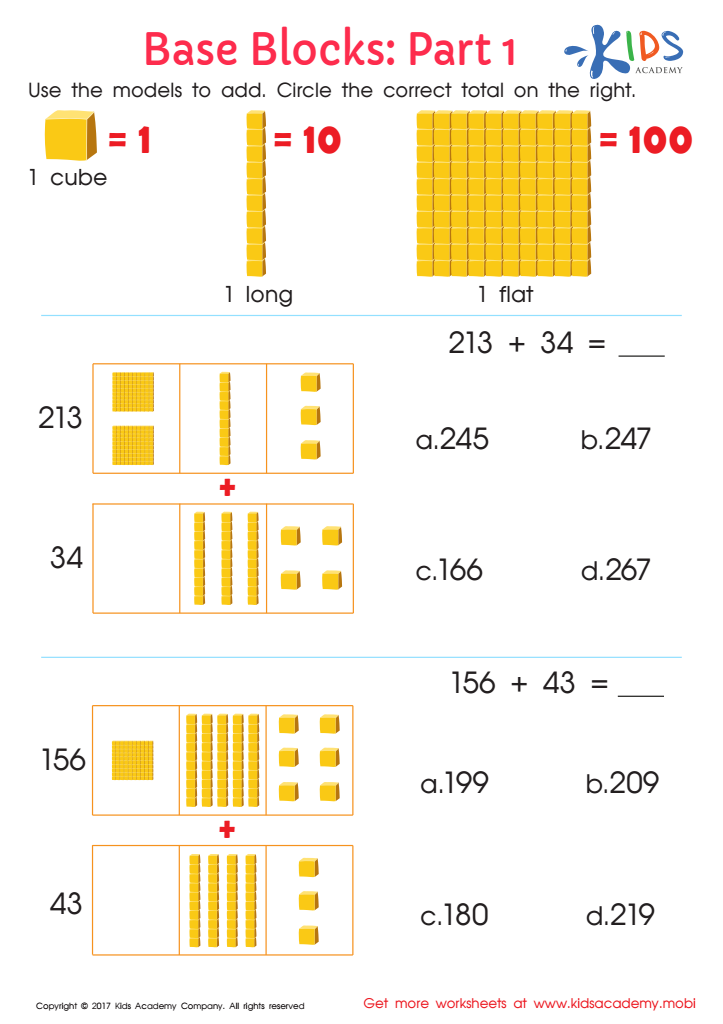
Base Ten Blocks Worksheet: Part 1
 Assign to My Students
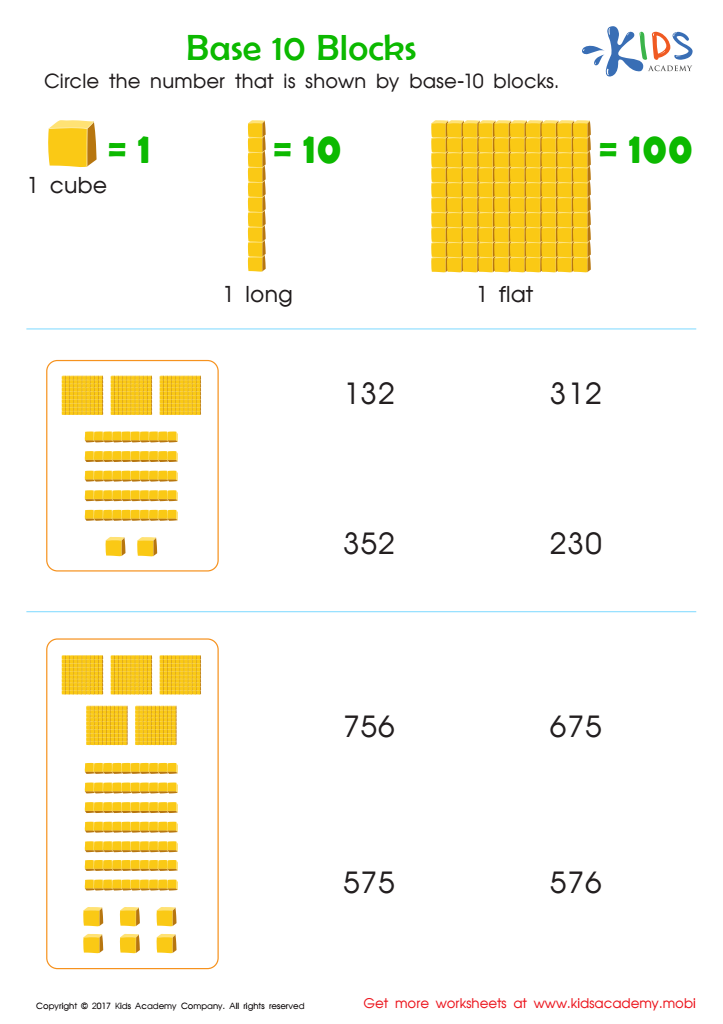
Base Ten Blocks Worksheet
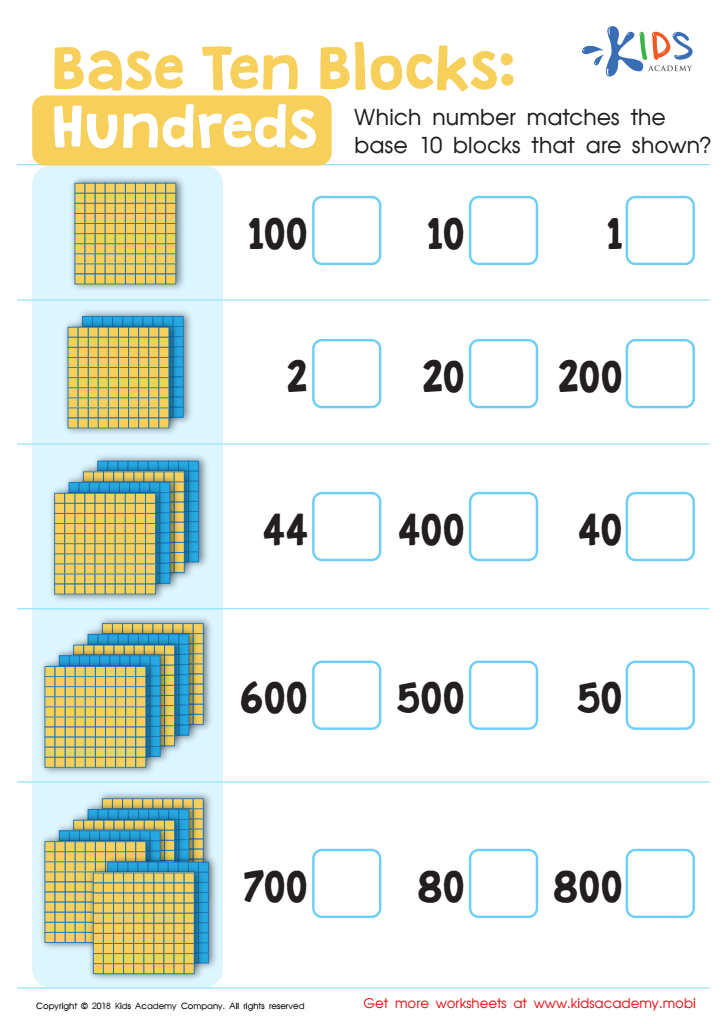
Base Ten Blocks: Hundreds Worksheet



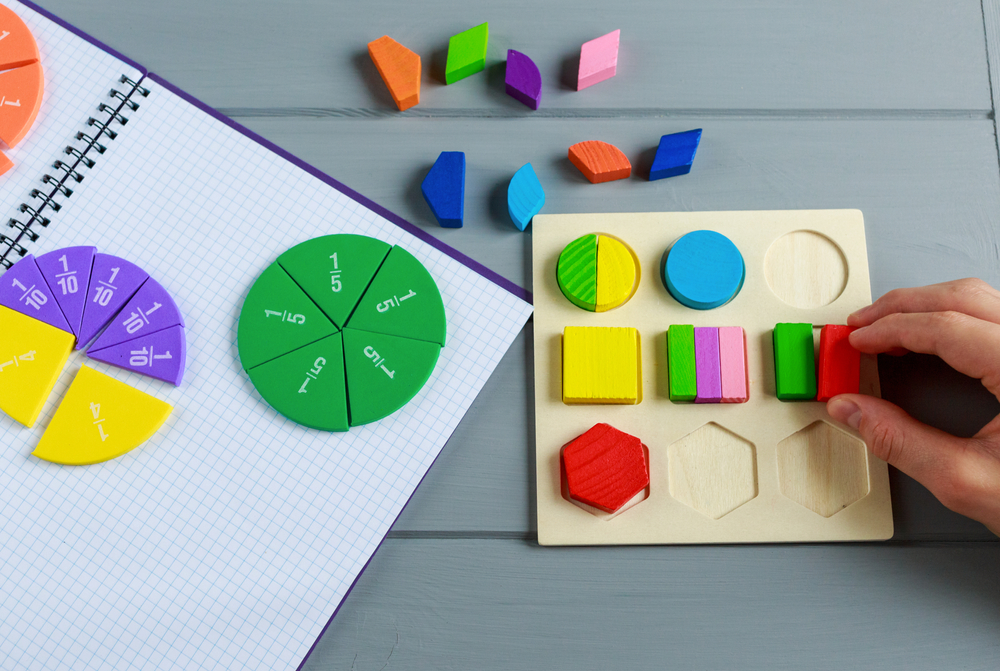


Understanding base ten is fundamental for young learners, particularly for children aged 3-9, as it forms the foundation of number comprehension and mathematical operations. Base ten concepts help children grasp how our numeral system operates, as it’s built on the idea that each place in a number represents a power of ten. When children understand this, they can efficiently perform addition, subtraction, and ultimately more complex operations like multiplication and division.
Teaching base ten encourages critical thinking and problem-solving skills. By manipulating blocks, counters, or drawings, children learn how to represent numbers and understand their values, fostering a deeper connection with mathematics. This foundational knowledge helps children visualize math, making it less intimidating and more engaging.
Furthermore, early math skills are crucial for academic success and correlate with later achievement in STEM (science, technology, engineering, and mathematics) fields. Parents and teachers play a pivotal role in nurturing this understanding through supportive practices and enriched learning environments. By emphasizing base ten, we prepare kids not just for immediate math skills, but also train them to approach larger concepts with confidence and competence, enhancing their overall cognitive development and preventing math anxiety in the future.








