Understanding fact families Normal Math Worksheets for Ages 3-9
5 filtered results
-
From - To
Discover “Understanding Fact Families Normal Math Worksheets” designed for children aged 3-9! These engaging worksheets help young learners grasp the concept of fact families—essential for building strong math skills. By exploring addition and subtraction relationships, children develop a foundational understanding of numbers and enhance problem-solving abilities. Our thoughtfully crafted activities encourage critical thinking and provide ample practice opportunities. With a variety of fun exercises, kids can work at their own pace while enjoying interactive learning. Perfect for classrooms or home education, these worksheets make math enjoyable and effective. Equip your child with essential math skills early on—start today!
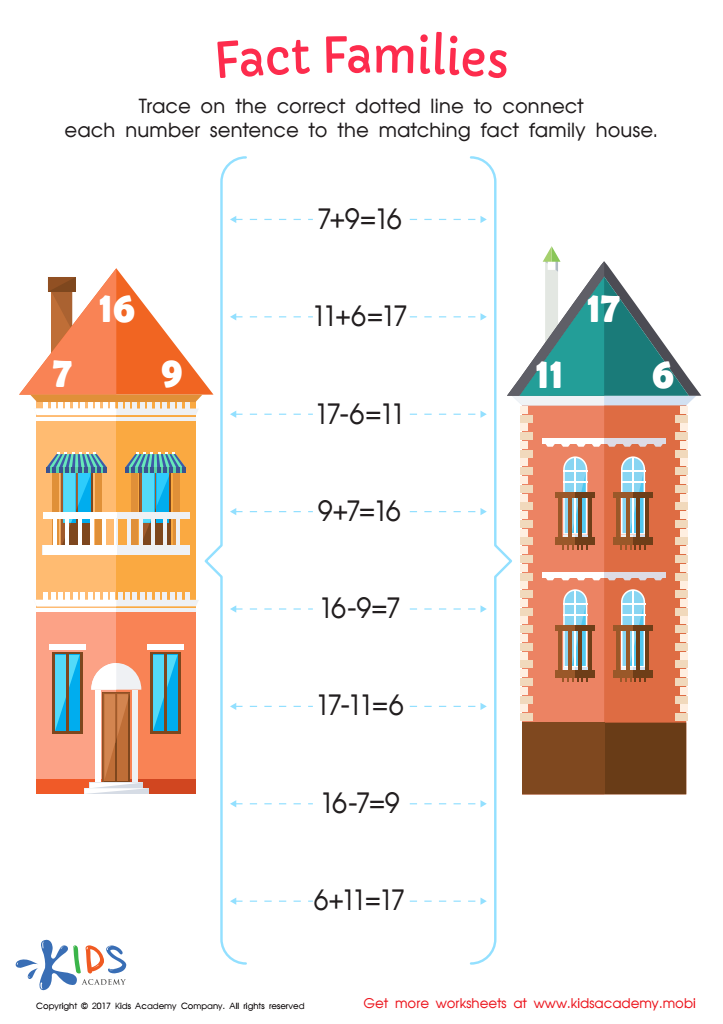
Fact Families — Add and Subtract Worksheet
 Assign to My Students
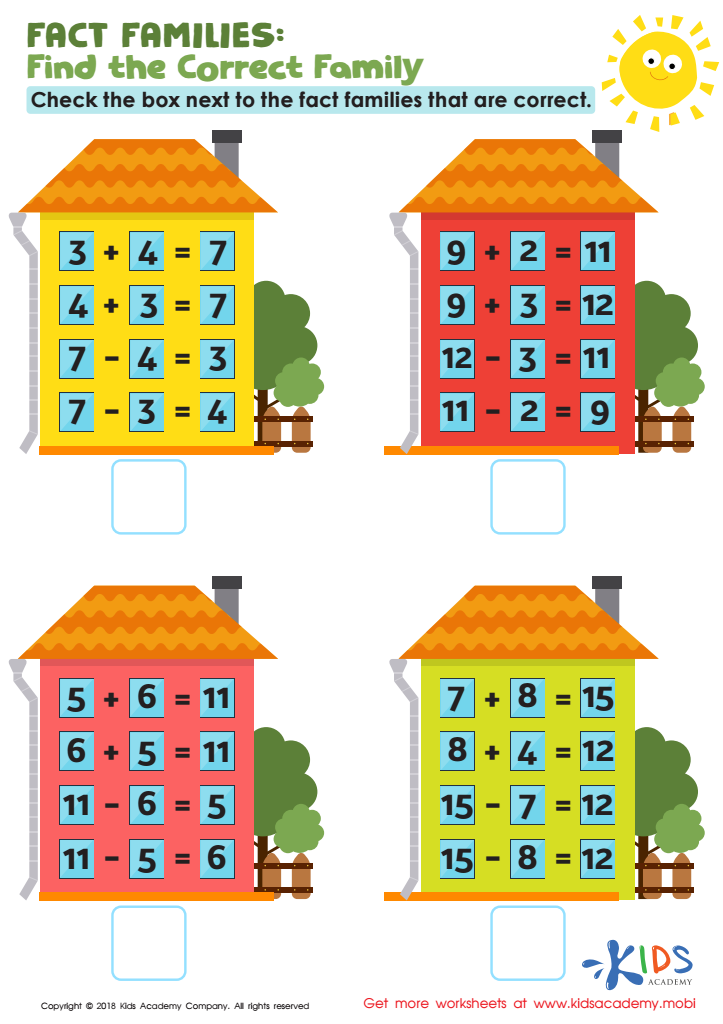
Fact Families: Find Correct Family Worksheet
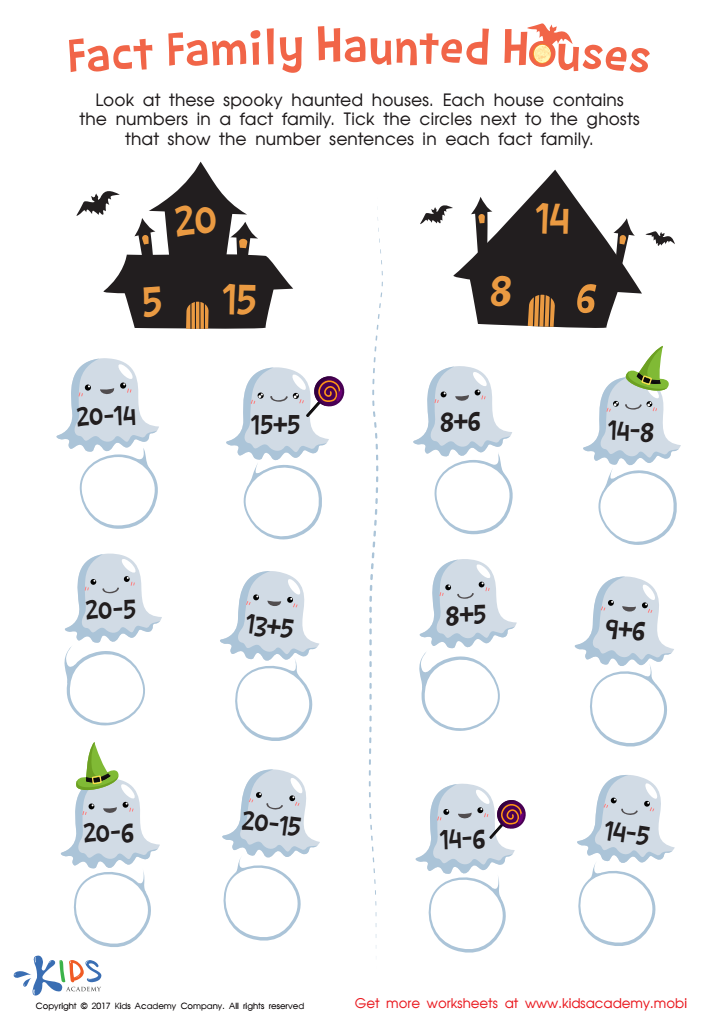
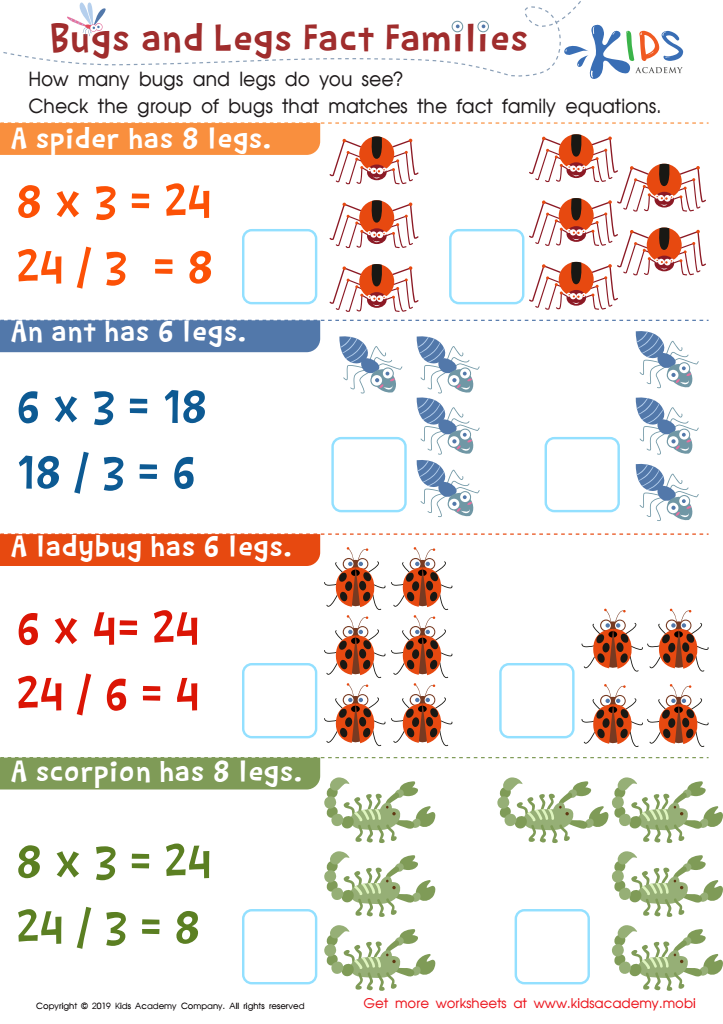
Bugs and Legs Fact Families Worksheet
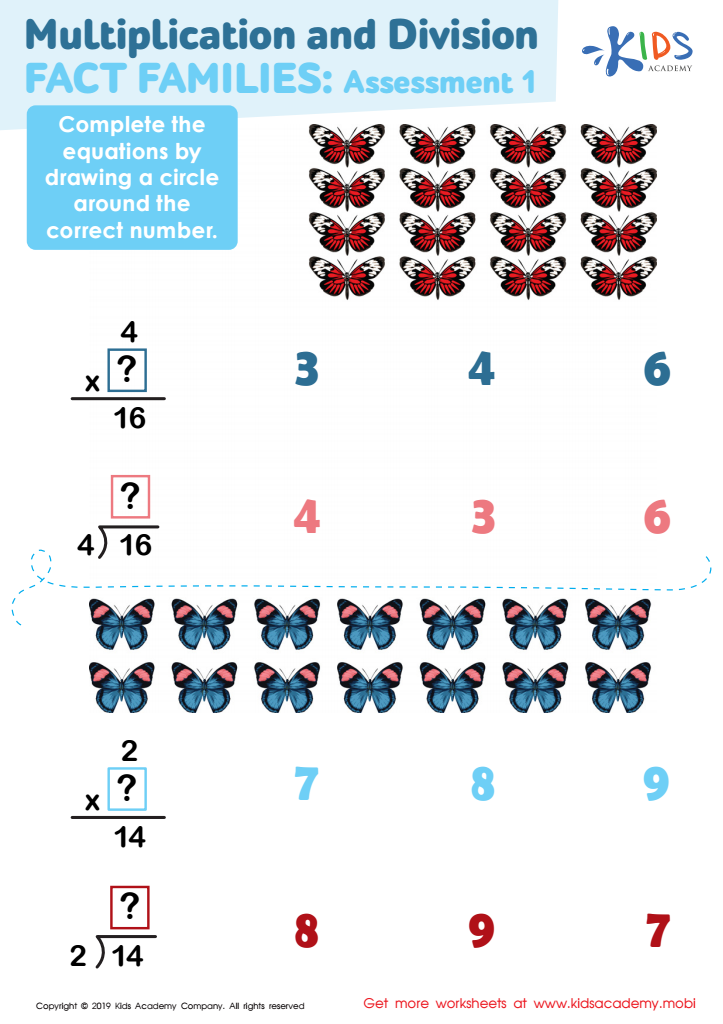
Multiplication and Division Fact Families Assessment 1 Worksheet








Understanding fact families is essential in early math education for children aged 3-9. Fact families are sets of related addition and subtraction (or multiplication and division) facts that demonstrate the relationship between numbers. For example, with the numbers 2, 3, and 5, the facts are 2 + 3 = 5, 3 + 2 = 5, 5 - 2 = 3, and 5 - 3 = 2. Recognizing these relationships helps students grasp the foundational concepts of arithmetic, fostering problem-solving and critical-thinking skills.
Parents and teachers should care about fact families because they promote mathematical fluency and deepen students' understanding of numbers. Mastering fact families enhances children's ability to see patterns in math, making it easier to tackle more complex problems in the future. This foundational knowledge builds confidence, which is crucial in lifelong learning.
Moreover, early exposure to fact families encourages students to discuss math vocabulary and relationships verbally. This practice aids in language development alongside math skills. By integrating fact families into learning, adults can help children develop a strong numerical sense, setting the stage for success in higher-level mathematics and enabling them to approach challenges with greater confidence. Overall, recognizing the significance of fact families is vital for developing mathematically proficient young learners.








