
Historical Knowledge Normal Multiplication Worksheets for Ages 3-9
4 filtered results
Difficulty Level
Grade
Age
-
From - To
Subject
Activity
Standards
Discover our engaging Historical Knowledge Normal Multiplication Worksheets specifically designed for children aged 3-9. These interactive materials combine fundamental multiplication skills with fascinating historical facts, making learning both fun and educational. As kids explore multiplication concepts, they also gain insights into various historical events and figures, enriching their general knowledge. Our worksheets cater to different learning levels, ensuring a tailored educational experience. With colorful visuals and age-appropriate content, students will enjoy mastering multiplication while deepening their understanding of history. Ideal for classroom settings or at-home practice, these worksheets promote critical thinking and a love for learning in young minds. Explore history through math today!
Favorites
With answer key
Interactive
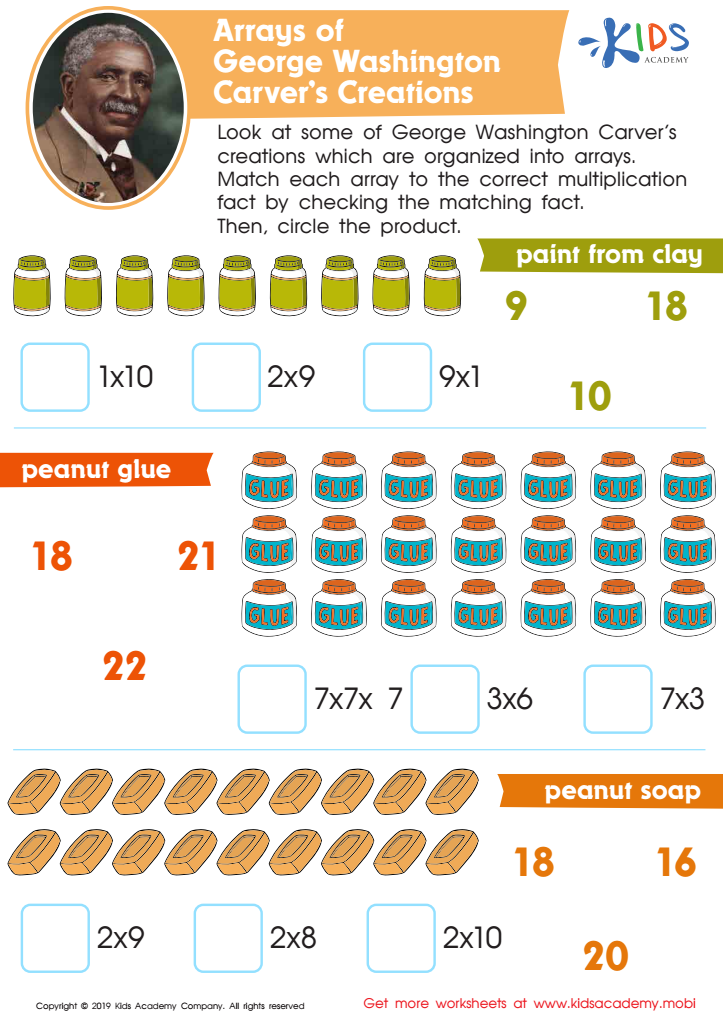
Arrays of George Washington Carver’s Creations Worksheet
Remind your child of what George Washington Carver created. Can they tell you? This worksheet has arrays with his creations. Match the array to the multiplication fact and help your child to circle the product.
 Assign to My Students
Arrays of George Washington Carver’s Creations Worksheet
Worksheet
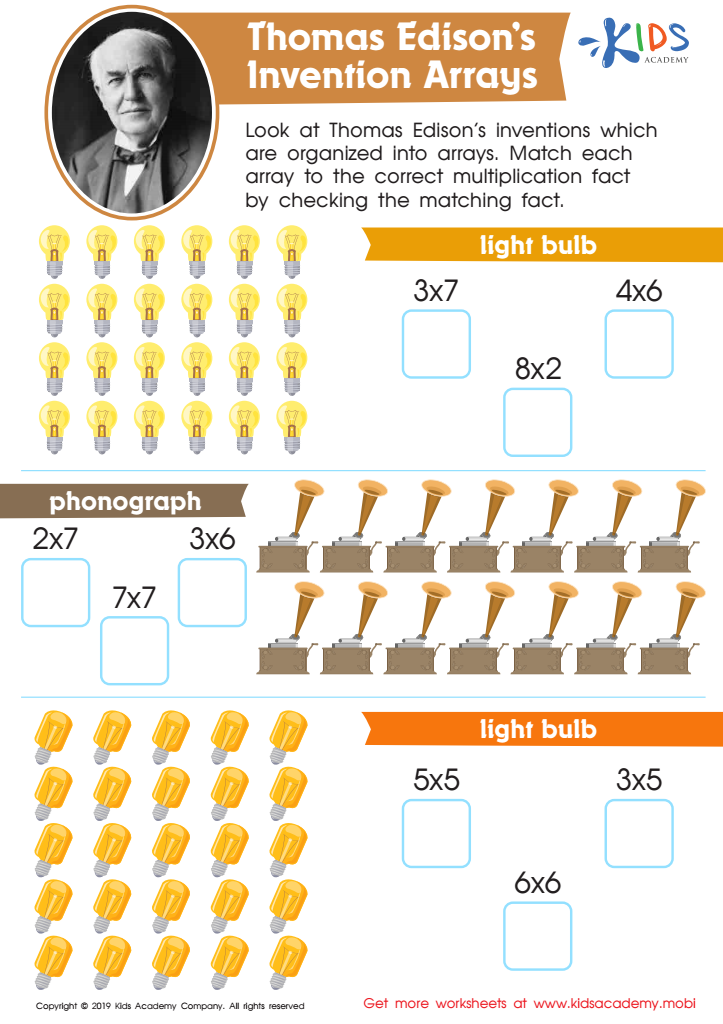
Thomas Edison’s Invention Arrays Worksheet
Test your students' knowledge on history by asking them what Thomas Edison invented. If they get the right answer, provide more information on other inventors. Check out this printout of Edison's light bulb inventions laid out in arrays. Get them to match each array to the correct multiplication fact.
Thomas Edison’s Invention Arrays Worksheet
Worksheet
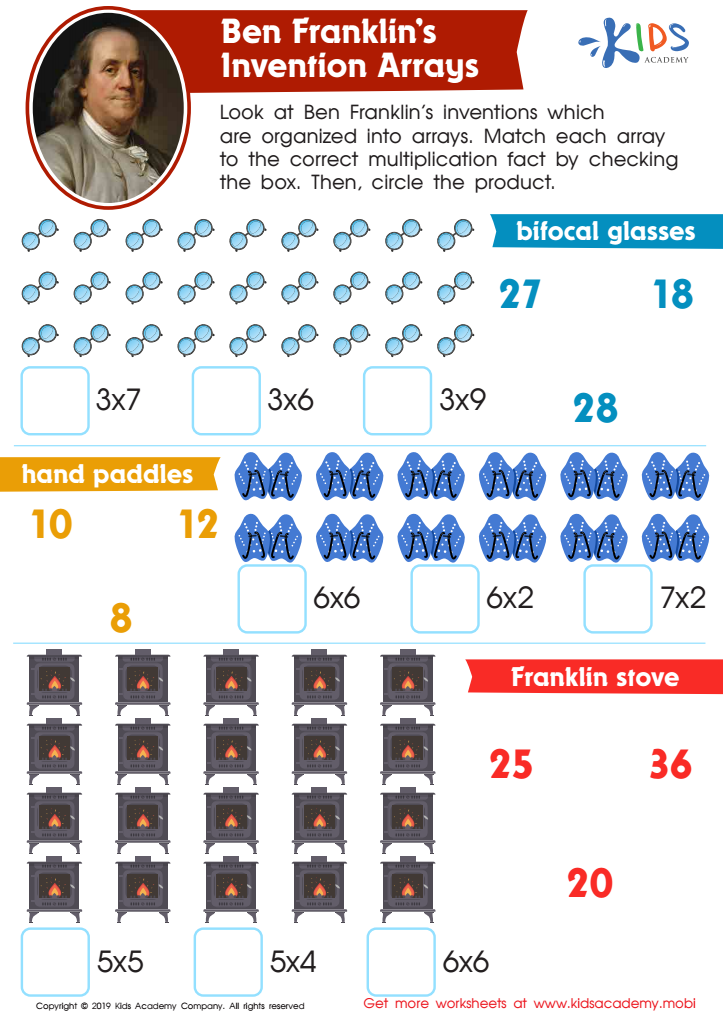
Ben Franklin’s Invention Arrays Worksheet
Have your child guess some of the inventors of the popular items we use today. For instance, the light bulb was invented by Thomas Edison. Look at Ben Franklin's inventions and help your kids match the arrays to the correct multiplication fact. Check the box and circle the product.
Ben Franklin’s Invention Arrays Worksheet
Worksheet
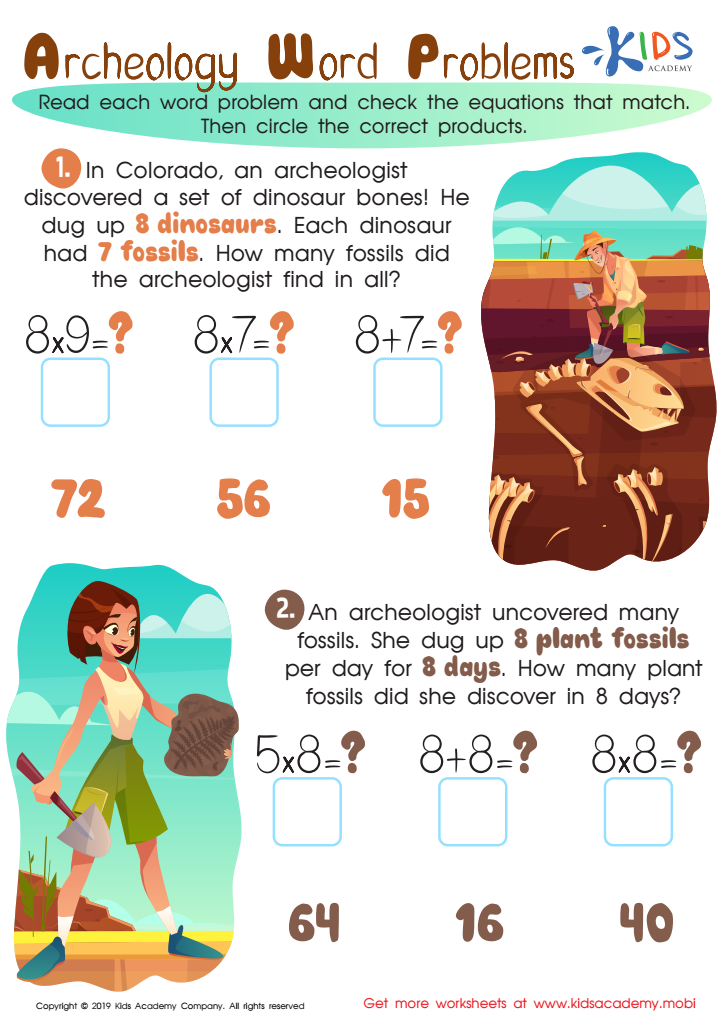
Archeology Word Problems Worksheet
Encourage your child to explore their career options! Show them an archeologist's job with this worksheet - featuring a picture of a dinosaur bone discovery. Read the accompanying text, then solve the word problems. Help your kids circle the correct answers to better understand this profession.
Archeology Word Problems Worksheet
Worksheet
Join Kids Academy for Free
Who is primarily going to use this learning content?




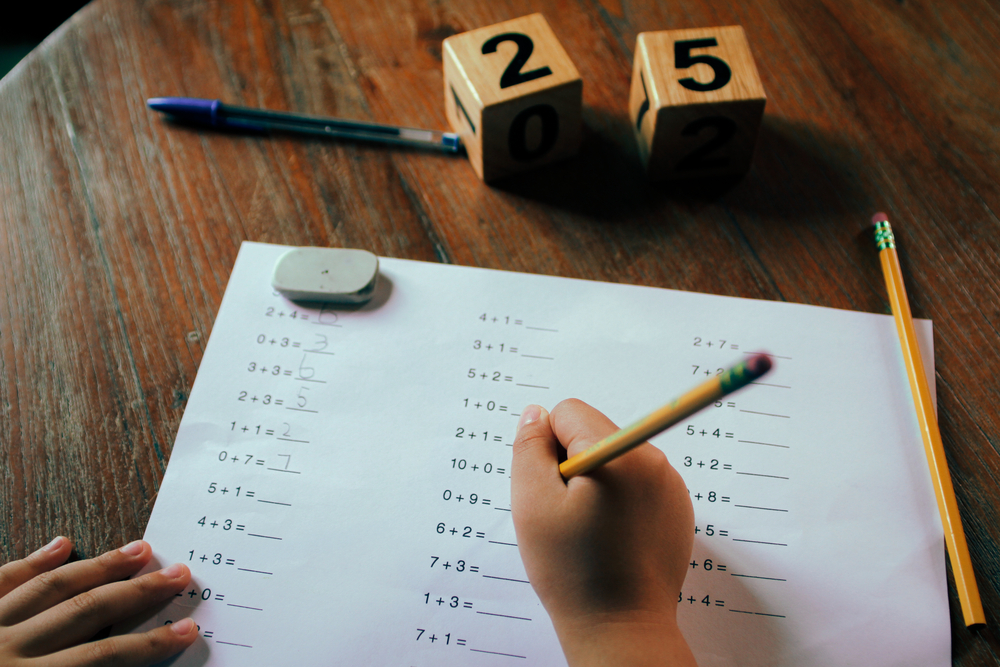



Understanding historical knowledge and normal multiplication is vital for children aged 3-9, as it lays the foundation for their future mathematical and critical thinking skills. Parents and teachers should care about this aspect of education for several reasons.
Firstly, early exposure to multiplication concepts encourages numerical fluency, fostering confidence and a positive attitude towards math. Multiplication is a core arithmetic operation, and grasping it early helps children tackle more complex math concepts later on.
Additionally, incorporating historical knowledge into multiplication teaches kids about the significance of numbers and their real-world applications. For instance, exploring how multiplication was utilized in trade or ancient civilizations can help spark young learners’ curiosity and help them grasp the context and importance of math in everyday life.
Moreover, discussions around the historical evolution of mathematical ideas can cultivate critical thinking and problem-solving skills, allowing children to view mathematics as a dynamic field rather than static facts.
In essence, focusing on historical knowledge and normal multiplication offers a holistic approach to math education, promoting not just technical skills but also fostering creativity, context, and a lifelong interest in learning—a foundation that will benefit children throughout their academic journey and beyond.








