Understanding times tables Normal Multiplication Worksheets for Ages 3-9
3 filtered results
-
From - To
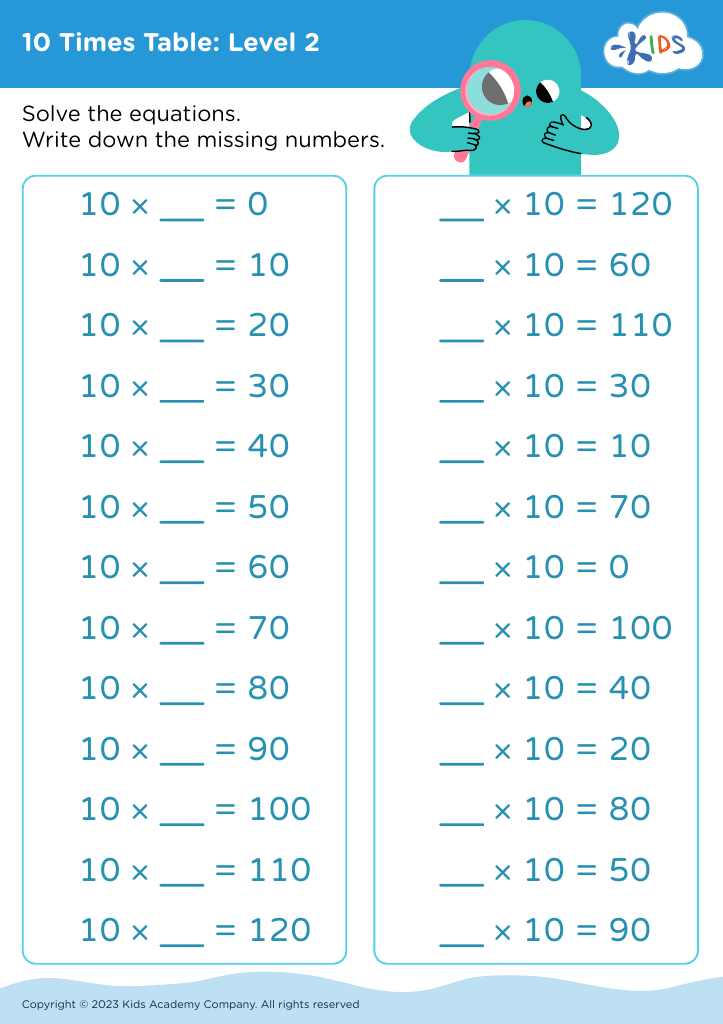
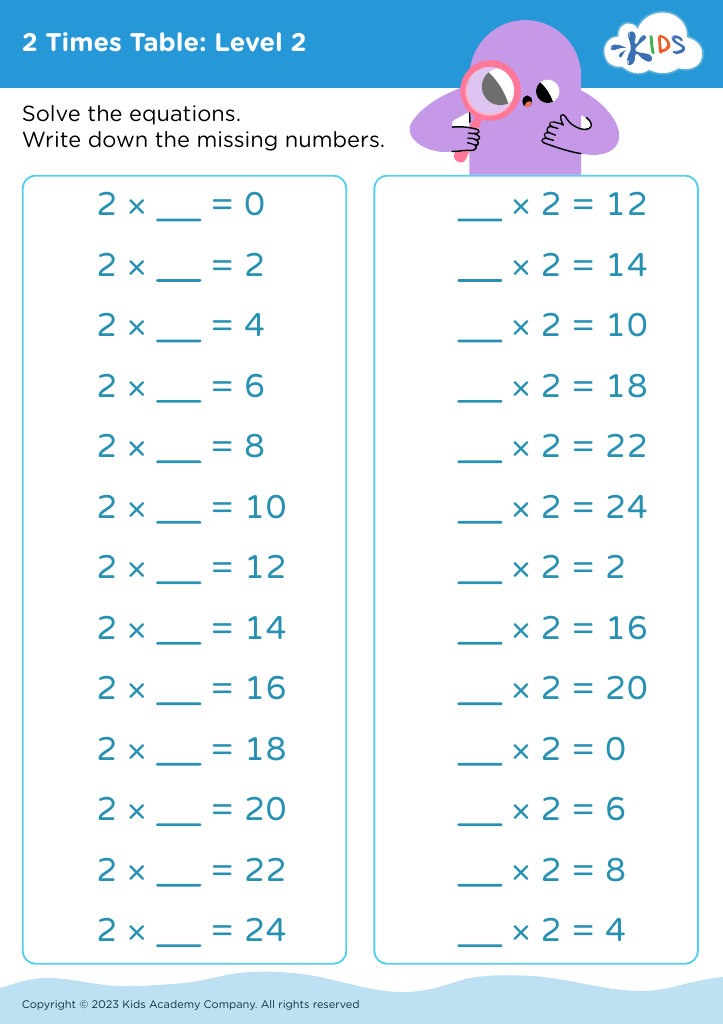
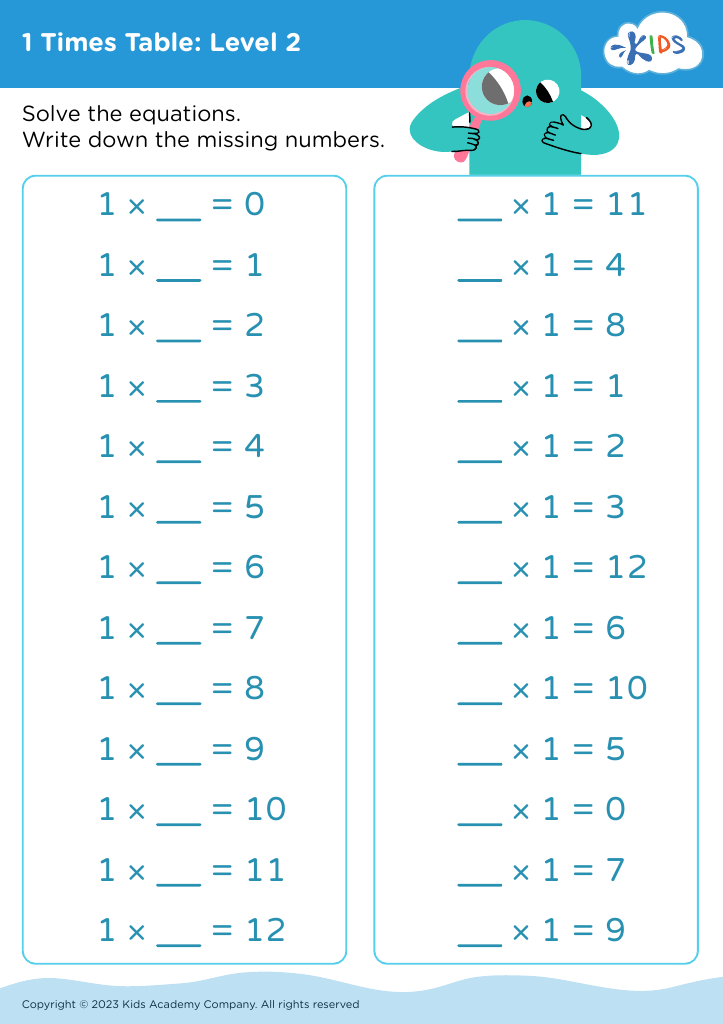
Explore our "Understanding Times Tables Normal Multiplication Worksheets" designed specifically for children ages 3-9. These engaging worksheets help young learners grasp the fundamentals of multiplication through intuitive, age-appropriate exercises. By introducing times tables in a fun and interactive way, we aim to build confidence and strengthen math skills early on. Each worksheet focuses on visual learning strategies, making complex concepts easier to understand. Ideal for classroom use or at-home practice, our resources encourage children to practice regularly while enjoying their learning journey. Turn multiplication into an adventure with our carefully crafted materials, setting the foundation for future math success!







Understanding times tables and normal multiplication is crucial for children aged 3-9 as it lays the foundation for their mathematical development. Early grasp of these concepts aids in building numerical fluency, which is essential for later, more complex math skills. By learning times tables, children develop a fundamental understanding of multiplication, leading to quicker problem-solving and improved confidence in handling numbers.
Parents and teachers should prioritize these skills because they promote logical thinking and pattern recognition. Children who master multiplication at an early age often excel in other areas of math, setting them up for success in higher learning environments. Furthermore, this understanding is not isolated; it enhances skills in areas such as division, fractions, and even advanced topics in secondary education.
Practicing times tables also supports cognitive development, encouraging children to memorize and recall information, which is beneficial across numerous subjects, including literacy and science. Engaging children in fun, interactive ways to learn multiplication can also strengthen parent-child or teacher-student relationships, making learning a shared, enjoyable experience. Ultimately, a firm foundation in multiplication empowers children with essential skills for their future educational journeys and everyday life.








