
Fine Motor Skills Normal Sorting Worksheets for Ages 3-9
3 filtered results
Difficulty Level
Grade
Age
-
From - To
Subject
Activity
Standards
Discover our Fine Motor Skills Normal Sorting Worksheets for Ages 3-9, designed to develop essential skills in young learners. These engaging and educational worksheets challenge children to classify and sort objects by shape, color, size, and more, enhancing their fine motor abilities and cognitive development. Perfect for home or classroom use, each activity helps to build hand-eye coordination, dexterity, and problem-solving skills. Ideal for parents and educators aiming to provide a fun, hands-on learning experience. Download now and foster growth in a critical developmental stage with our expertly crafted resources.
Favorites
With answer key
Interactive
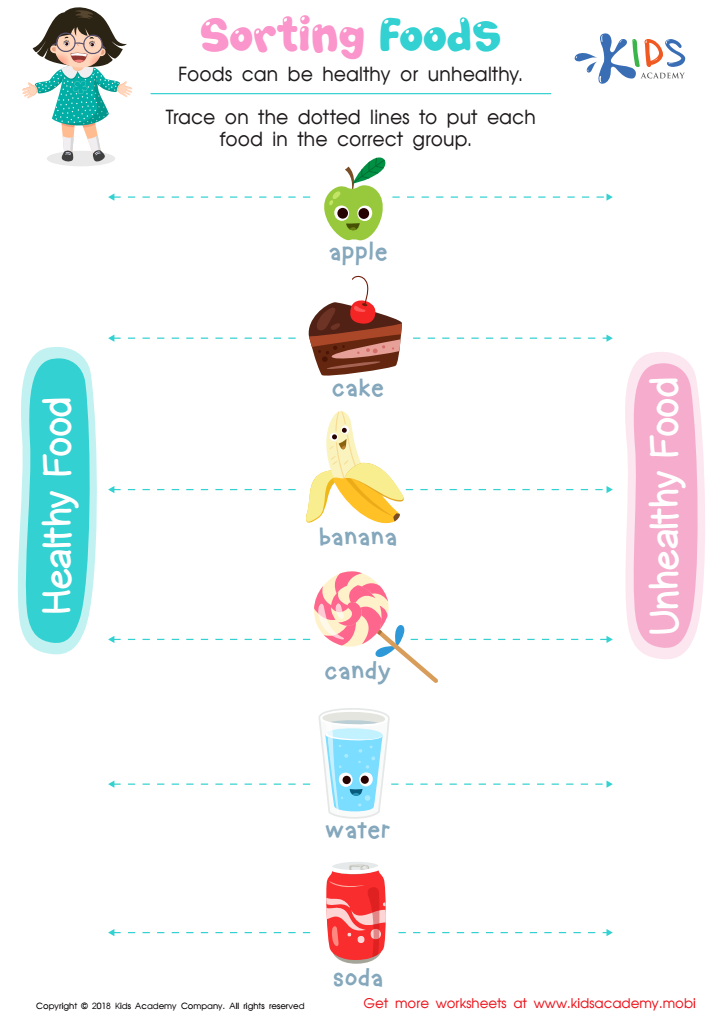
Sorting Food Worksheet
This delightful worksheet boosts critical thinking and fine motor skills. Kids use prior knowledge and pictures to sort foods into healthy and unhealthy groups. Tracing lines support accurate sorting and matching. Enjoy fun and free learning!
 Assign to My Students
Sorting Food Worksheet
Worksheet
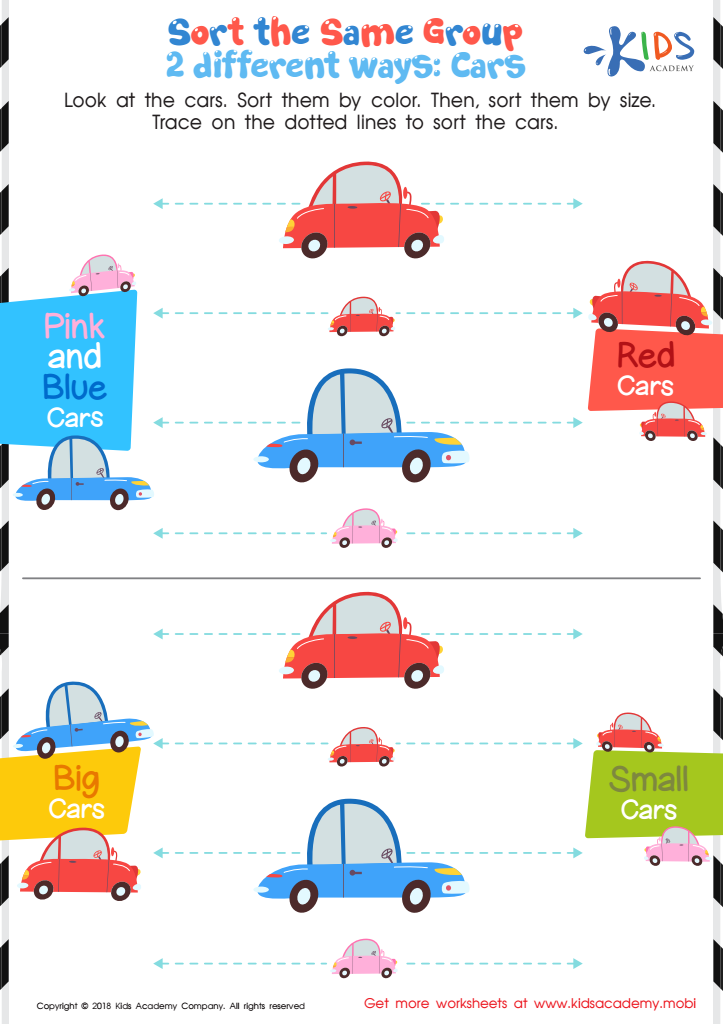
Sort the Same Group 2 Different Ways: Cars Worksheet
Look at the pictures with your child. Can they identify the objects? Ask them to sort the cars first by color and then size. Assist them to trace the dotted lines to sort the cars by color and size. This worksheet lets you easily assess your child's color and size organization skills.
Sort the Same Group 2 Different Ways: Cars Worksheet
Worksheet

Join Kids Academy for Free
Who is primarily going to use this learning content?








Fine motor skills are crucial for the overall development of children, aged 3-9. These skills involve the small muscles in the hands and fingers, enabling a variety of functions such as writing, buttoning clothes, or using utensils. Normal sorting activities help enhance these fine motor skills significantly. For parents and teachers, focusing on these skills means ensuring a child's ability to perform essential daily tasks with ease.
Firstly, fine motor skill proficiency has a direct impact on academic success. Children who develop these skills early on can efficiently handle pencils, scissors, and other classroom tools, resulting in better performance in tasks like writing and cutting. Underdevelopment can lead to frustration and negatively affect a child’s learning experience and self-esteem.
Secondly, effective sorting activities do more than just boost motor skills; they also enhance hand-eye coordination, cognitive abilities, and organizational skills. Sorting objects by color, size, or shape requires children to make decisions, categorize, and recognize patterns, which are foundational cognitive skills.
Finally, developing fine motor skills early paves the way for greater independence as children grow. By mastering these skills at a young age, children are more prepared to handle everyday tasks, building confidence and fostering self-reliance. Therefore, prioritizing fine motor skill development is indispensable for a well-rounded growth trajectory during these formative years.








