Phonics recognition Normal Reading Worksheets for Ages 3-9
4 filtered results
-
From - To
Welcome to our Phonics Recognition Worksheets designed for children aged 3-9! These engaging and interactive exercises help young learners develop essential reading skills through phonics recognition. Perfect for early readers, our worksheets include colorful illustrations and fun activities that capture children’s attention while reinforcing their understanding of letter sounds and word formation. By practicing with these worksheets, kids will build phonemic awareness, enhance vocabulary, and boost their confidence in reading. Ideal for home or classroom use, our phonics recognition resources make learning to read an enjoyable and effective adventure. Start your child's reading journey today with our fantastic worksheets!
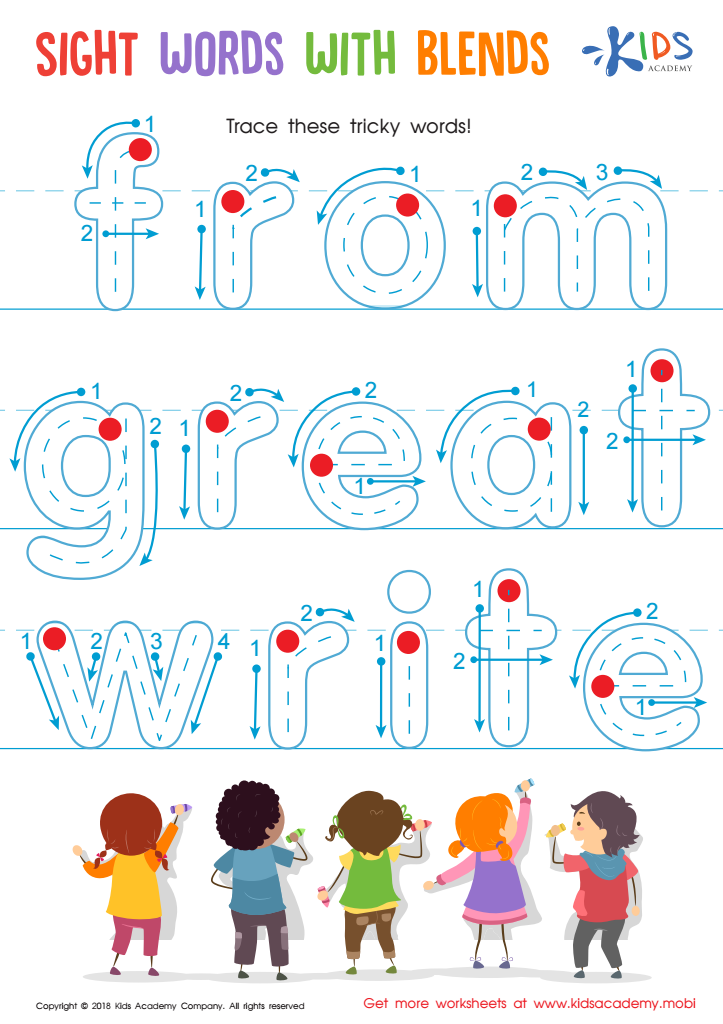
Sight Words with Blends Worksheet
 Assign to My Students
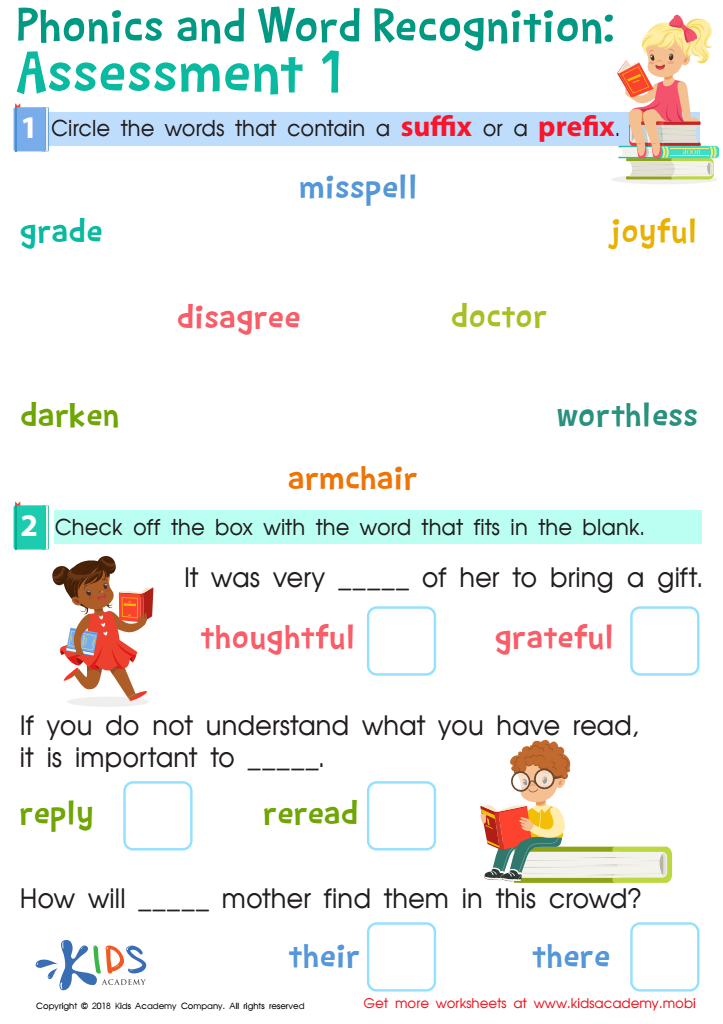
Phonics and Word Recognition: Assessment 1 Worksheet
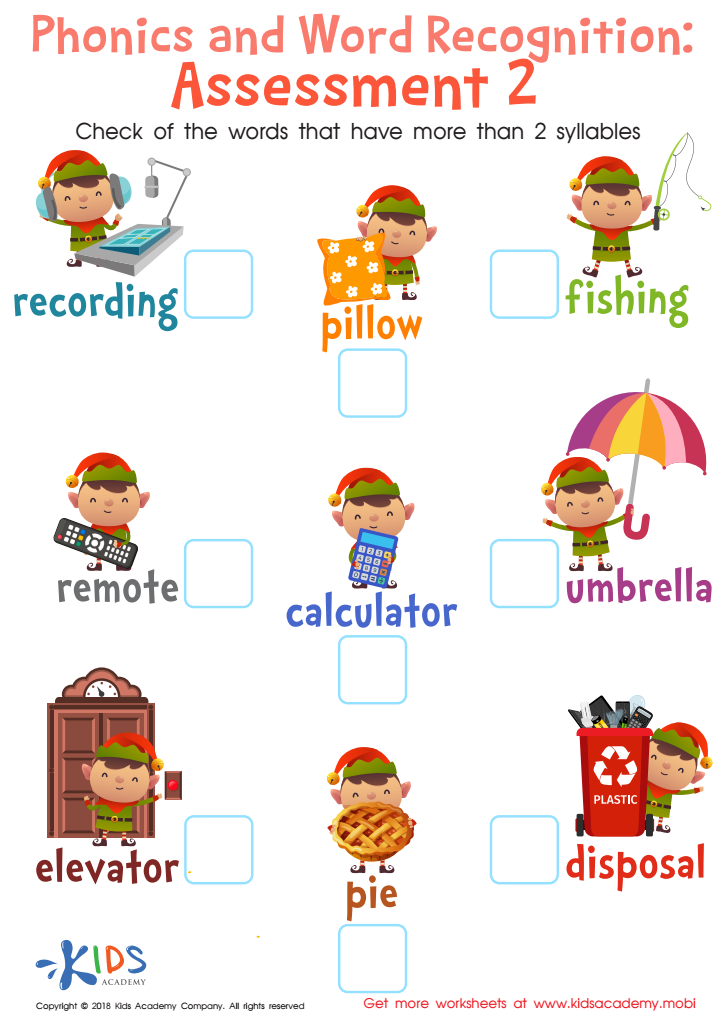
Phonics and Word Recognition: Assessment 2 Worksheet
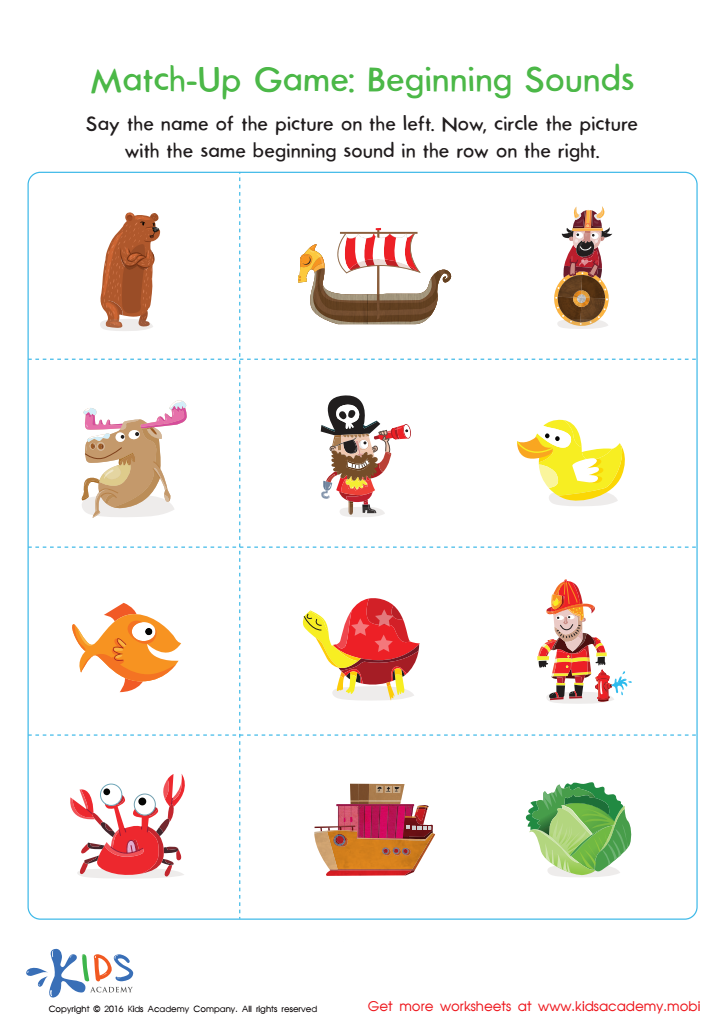
Match–Up Game: Beginning Sounds Worksheet







Phonics recognition is essential for children aged 3-9, laying the groundwork for successful reading and literacy skills. Understanding phonics—how letters correspond to sounds—enables young learners to decode words, which boosts their reading fluency and comprehension. For parents and teachers, recognizing the importance of phonics is crucial for several reasons.
Firstly, phonics fosters early literacy skills. As children learn to sound out words, they begin to develop a sense of independence and confidence in reading. This autonomy encourages a love for reading, as children can engage with books independently.
Secondly, phonics recognition can significantly impact a child’s overall academic performance. Strong readers often excel in other subjects, as reading is foundational to learning across the curriculum.
Additionally, children who struggle with phonics may face ongoing difficulties with literacy, leading to frustration and disengagement. By prioritizing phonics education, adults can create tailored learning strategies that cater to individual needs, ensuring all children have the tools necessary for literacy success.
In conclusion, prioritizing phonics recognition contributes to children’s cognitive development and prepares them for future academic challenges, ultimately nurturing lifelong learners and fostering a love for reading.








