
Rhyming skills Normal Reading Worksheets for Ages 3-9
3 filtered results
Difficulty Level
Grade
Age
-
From - To
Subject
Activity
Standards
Explore our engaging Rhyming Skills Normal Reading Worksheets designed for children aged 3-9. These interactive worksheets help young learners develop essential phonemic awareness by focusing on rhymes, supporting early reading development. With a variety of fun-filled activities, kids can practice identifying and creating rhymes, enhancing their vocabulary and comprehension skills. Ideal for classroom use or at-home learning, our worksheets cater to different learning styles and are perfect for reinforcing literacy fundamentals. Watch your child’s confidence soar as they explore the joyful world of rhymes! Download our printable worksheets today and foster a love for reading in your child.
Favorites
With answer key
Interactive
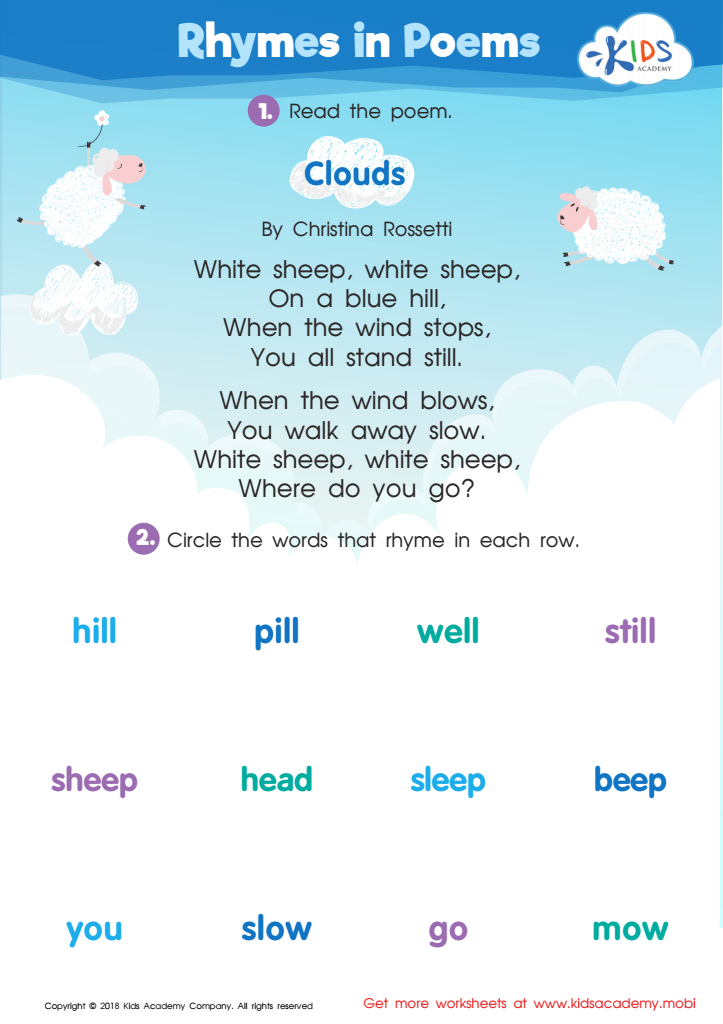
Rhymes in Poems Worksheet
Poems are lovely works of literature; some with rhymes, and some without. This poem for kids is full of rhymes and tells the tale of a sheep. Read it aloud to your kids, then help them circle the rhyming words.
 Assign to My Students
Rhymes in Poems Worksheet
Worksheet
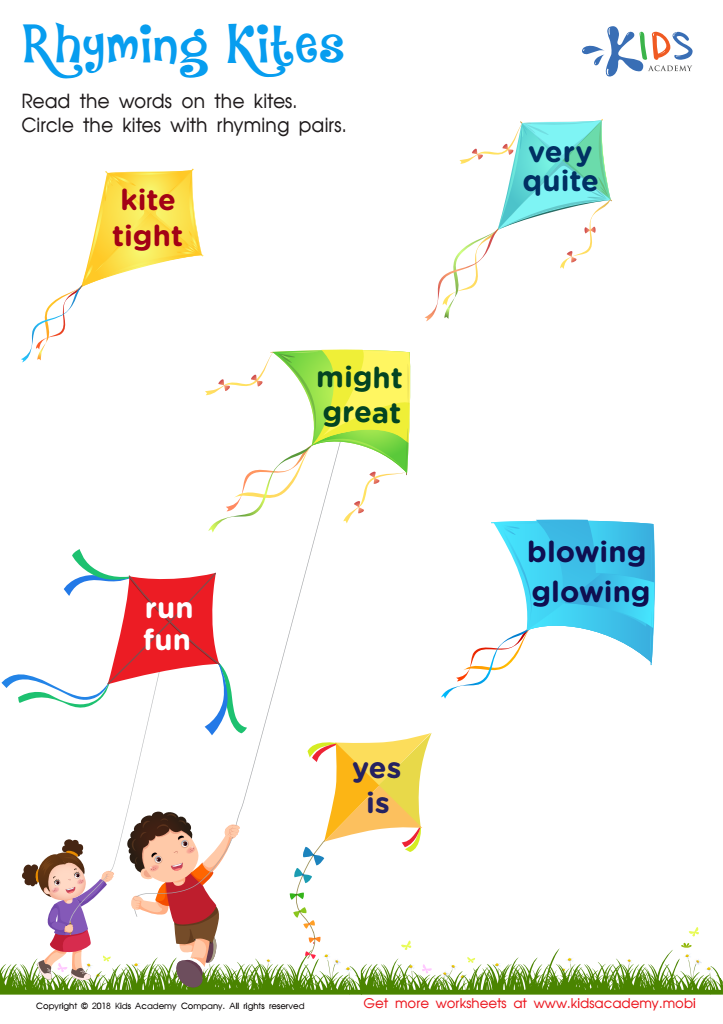
Rhyming Kites Worksheet
On a spring day, fly a kite! Kids Academy has a rhyming worksheet to boost your child's skills. Read the pairs of words aloud. Circle the kites if they rhyme, leave them blank if they don't. Listen carefully and find all the rhyming word pairs to complete this sheet!
Rhyming Kites Worksheet
Worksheet
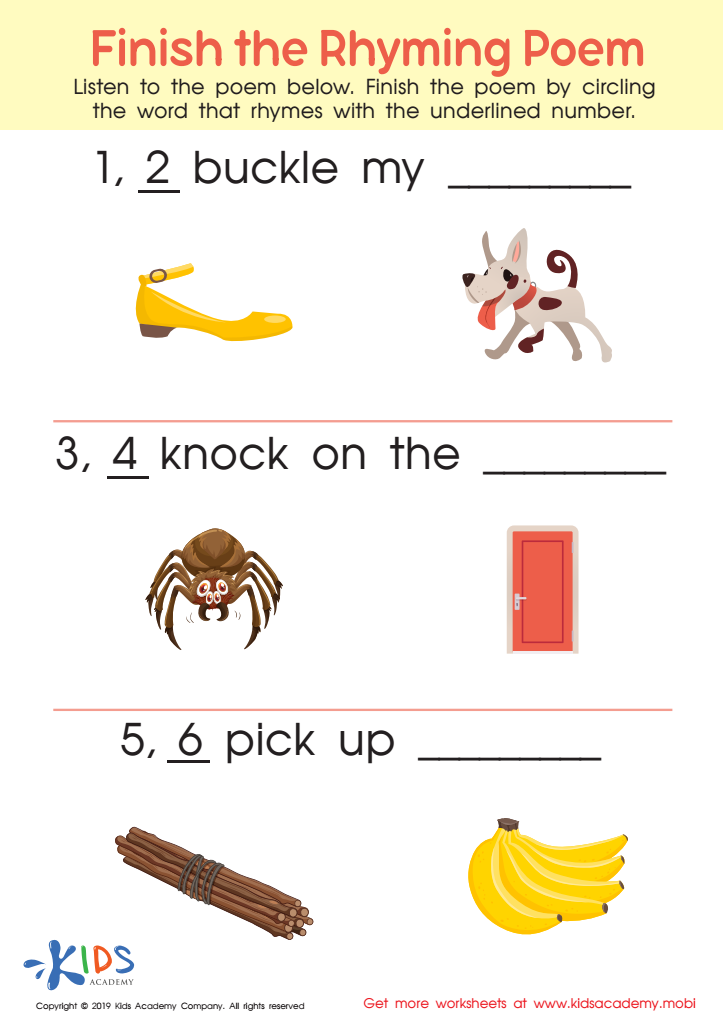
Finish Rhyming Poem Worksheet
Poems are a great way to express emotions and spark imagination. Does your child enjoy poetry and even have their own creations? If so, they'll love this worksheet. It's a great way to develop their rhyming skills. Challenge them to find and circle the words that rhyme with the ones underlined.
Finish Rhyming Poem Worksheet
Worksheet
Join Kids Academy for Free
Who is primarily going to use this learning content?







Rhyming skills are vital for early literacy development in children aged 3-9. They play a crucial role in enhancing language acquisition and phonemic awareness, foundational elements for successful reading. When children engage with rhymes, they become more attuned to the sounds of language, which helps them identify and manipulate phonemes—the smallest units of sound in words.
Understanding and producing rhymes fosters vocabulary expansion and improves auditory discrimination, allowing children to differentiate between similar sounds. This skill positively impacts their writing and spelling as well, making it easier for them to decode and comprehend words when they begin reading independently.
In addition to improving literacy, rhyming activities build cognitive skills by promoting memory and pattern recognition. They encourage children to think creatively and develop an appreciation for language through songs and playful storytelling, making learning enjoyable.
Moreover, rhyming games help strengthen relationships between parents, teachers, and children, providing opportunities for bonding and interaction. Overall, prioritizing rhyming skills not only supports reading readiness but also nurtures critical thinking, emotional well-being, and a lifelong love for literature, which is essential for a successful educational journey.








