Verb identification Normal Reading Worksheets for Ages 3-9
3 filtered results
-
From - To
Introducing our engaging Verb Identification Normal Reading Worksheets, specially designed for children aged 3-9. These interactive worksheets make learning fun by helping young learners recognize and understand verbs in context. Each worksheet features vibrant illustrations and simple sentences to enhance reading skills while focusing on action words. Tailored for various skill levels, these resources promote critical thinking and boost vocabulary retention. Ideal for both classroom teachers and parents, our worksheets foster an enjoyable learning experience, encouraging kids to identify verbs as they explore the exciting world of reading. Download and inspire a love of language with our verb identification resources today!
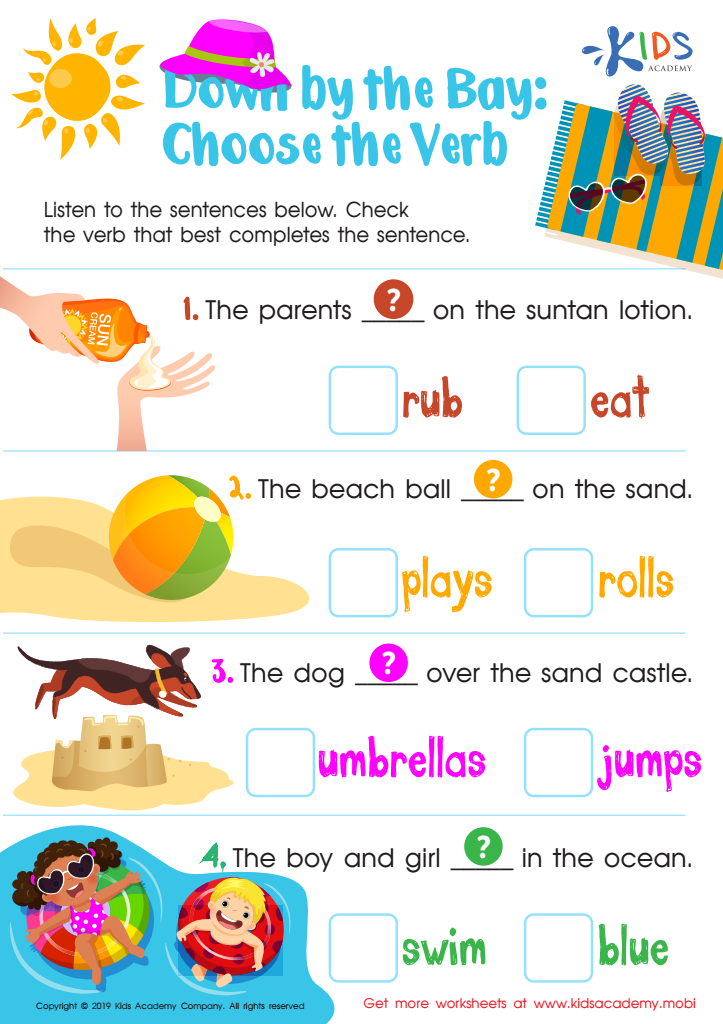
Down by the Bay: Choose the Verb Worksheet
 Assign to My Students
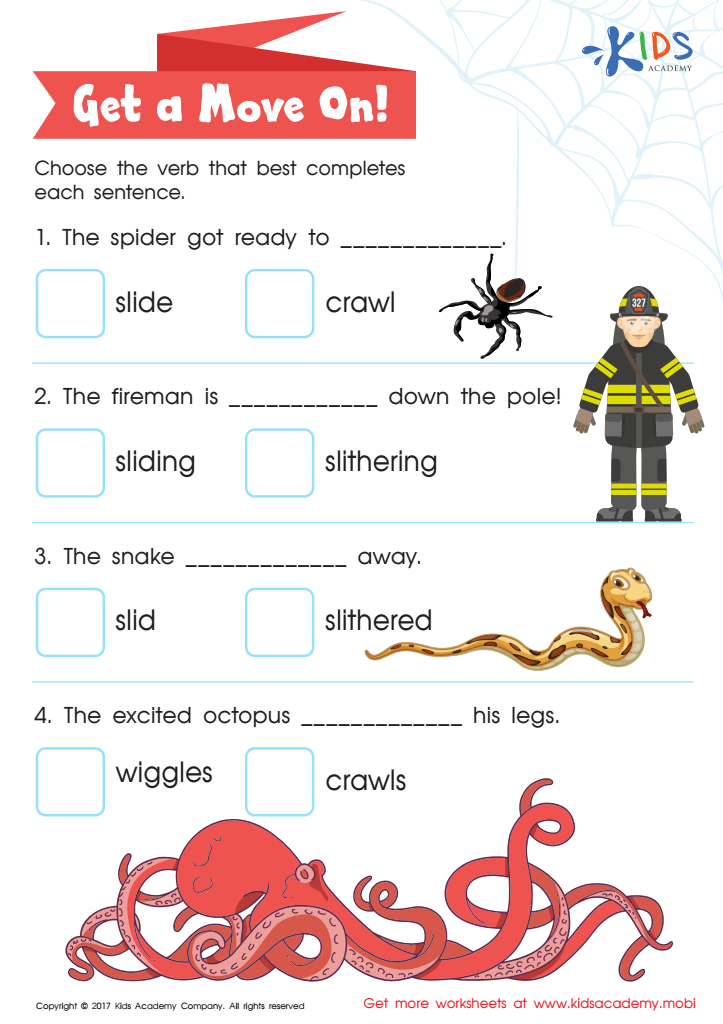
Verb Worksheet
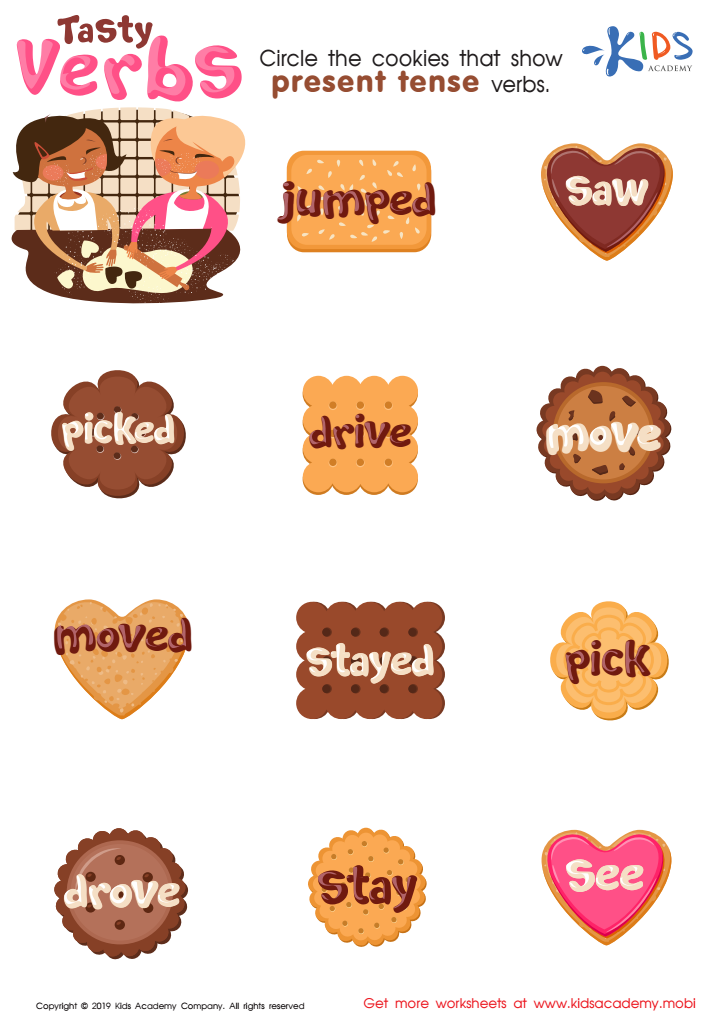
Tasty Verbs Worksheet


.jpg)





Verb identification is crucial for children aged 3-9 as it lays the foundation for effective communication and comprehension skills. Early literacy experiences significantly impact a child's language development, and verbs play a key role in sentence structure, meaning, and fluency. When parents and teachers prioritize this aspect of learning, they help children recognize action words, which empower them to express thoughts and feelings with clarity.
Understanding verbs enhances a child's reading ability. Vocabulary richness, which includes recognizing verbs, allows children to make connections between words and their meanings, facilitating better understanding of texts. Moreover, verb identification contributes to writing skills; as children learn to use different verbs correctly, they become more proficient storytellers, enabling them to construct more engaging narratives.
Beyond academia, verb identification fosters critical thinking skills. Recognizing verbs teaches children to analyze actions and sequences, helping them understand cause and effect in real-world contexts. By engaging with verbs, children also gain confidence in their verbal communication, making conversations more dynamic and expressive. Thus, supporting verb identification is essential for nurturing well-rounded, literate individuals capable of successful interactions in both academic and social environments.








