Vocabulary improvement Normal Reading Worksheets for Ages 3-9
3 filtered results
-
From - To
Enhance your child’s vocabulary with our engaging Normal Reading Worksheets designed for ages 3-9! Our thoughtfully crafted worksheets offer a fun and interactive approach to learning new words, improving comprehension, and building language skills. Each worksheet targets age-appropriate vocabulary through colorful visuals and entertaining activities, making learning enjoyable. Perfect for teachers and parents alike, these printable resources support early literacy development while fostering a love for reading. Take an innovative step in vocabulary improvement with our collection of worksheets that inspire curiosity and promote critical thinking, ensuring your child will grow confident in their language abilities. Start exploring today!
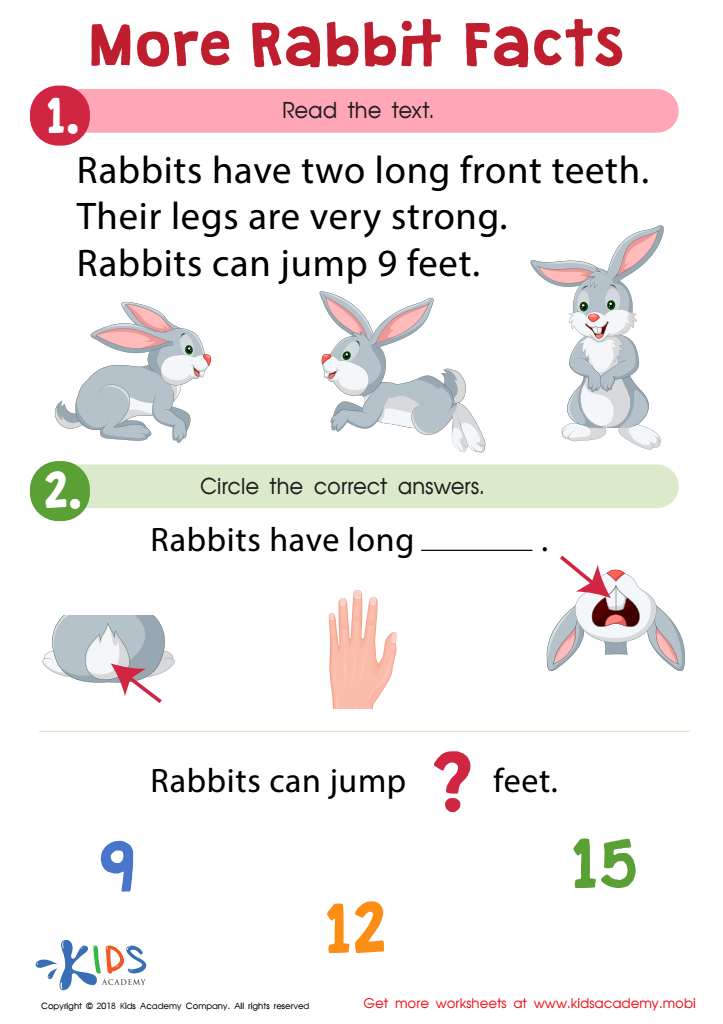
More Rabbit Facts Worksheet
 Assign to My Students
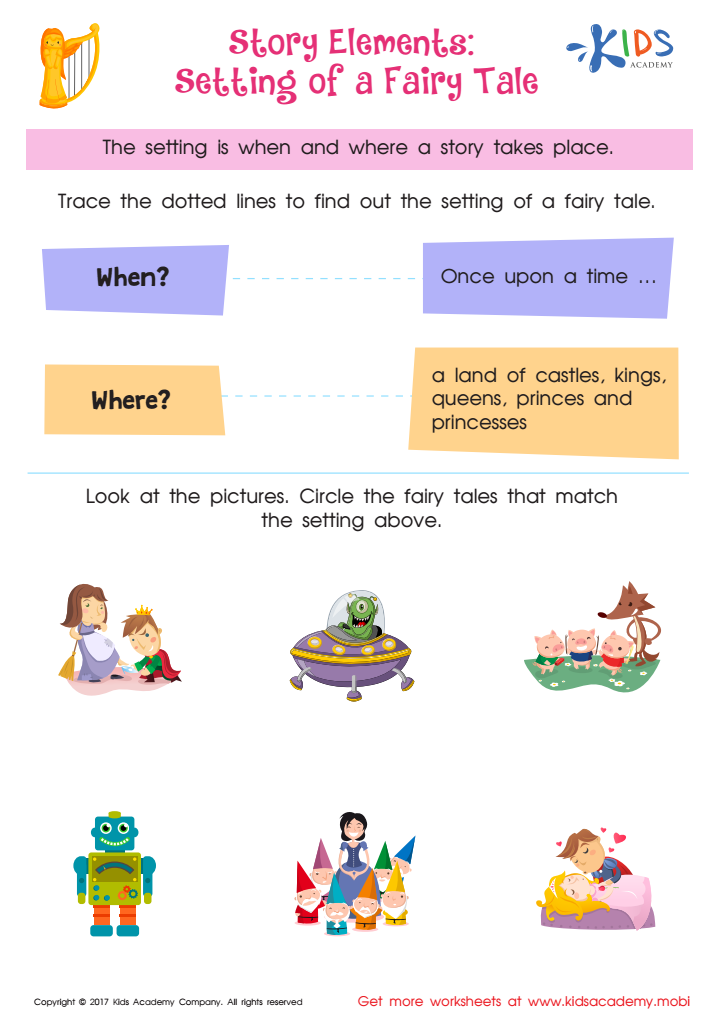
Story Elements: Setting of a Fairy Tale Printable
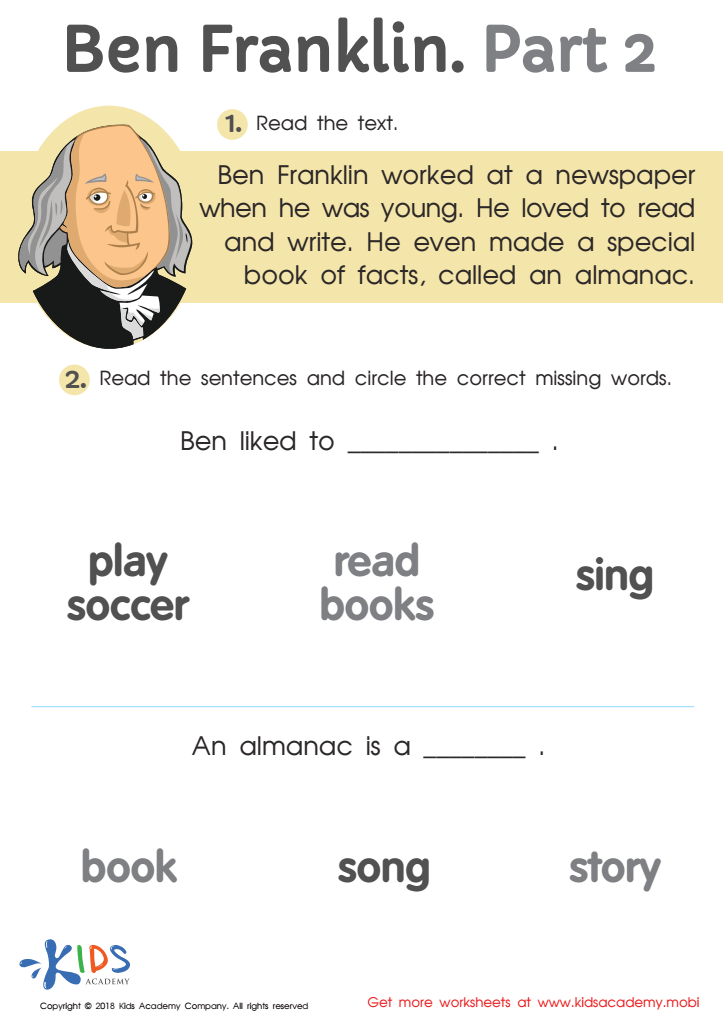
Ben Franklin Part 2 Worksheet








Vocabulary improvement is crucial for children aged 3-9, as it forms the foundation for effective communication and learning. At this stage of development, children are exploring language and building essential literacy skills. A strong vocabulary not only enhances their ability to express thoughts and feelings but also boosts comprehension when they read or listen. This age is a critical period for language acquisition; therefore, investing time in vocabulary development pays off in the long run.
Parents and teachers play a significant role in fostering vocabulary growth. Engaging in rich conversations, reading diverse books, and introducing new words in context helps broaden a child's lexical base. Improved vocabulary contributes to better academic performance, higher self-esteem, and increased motivation to learn. Furthermore, children with a robust vocabulary are better equipped to understand concepts, making it easier for them to excel in subjects such as math and science.
Ultimately, a focus on vocabulary improvement lays the groundwork for lifelong learning and effective communication skills. It empowers children to express themselves, engage with their peers, and understand the world around them, making it imperative for adults to prioritize this aspect of their development.








