Moral understanding Normal Reading Comprehension Worksheets for Ages 3-9
5 filtered results
-
From - To
Discover our engaging Moral Understanding Normal Reading Comprehension Worksheets, specially designed for children ages 3-9. These worksheets aim to enhance young learners' literacy skills while introducing important moral lessons. Each activity encourages critical thinking and promotes discussions around values such as empathy, kindness, and responsibility. Perfect for home or classroom use, our worksheets feature age-appropriate stories that stimulate curiosity and comprehension. Foster your child's ability to identify moral messages and draw meaningful connections to their own lives. Empower the next generation with the essential skills they need to navigate social interactions and understand the significance of moral principles through captivating reading experiences.
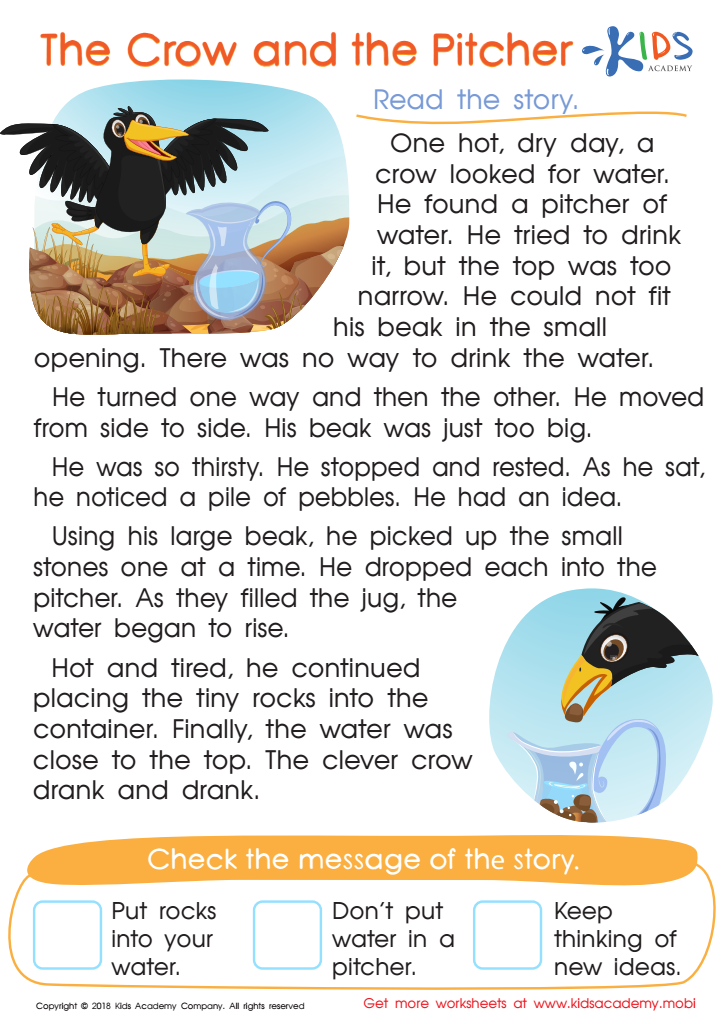
The Crow and the Pitcher Worksheet
 Assign to My Students
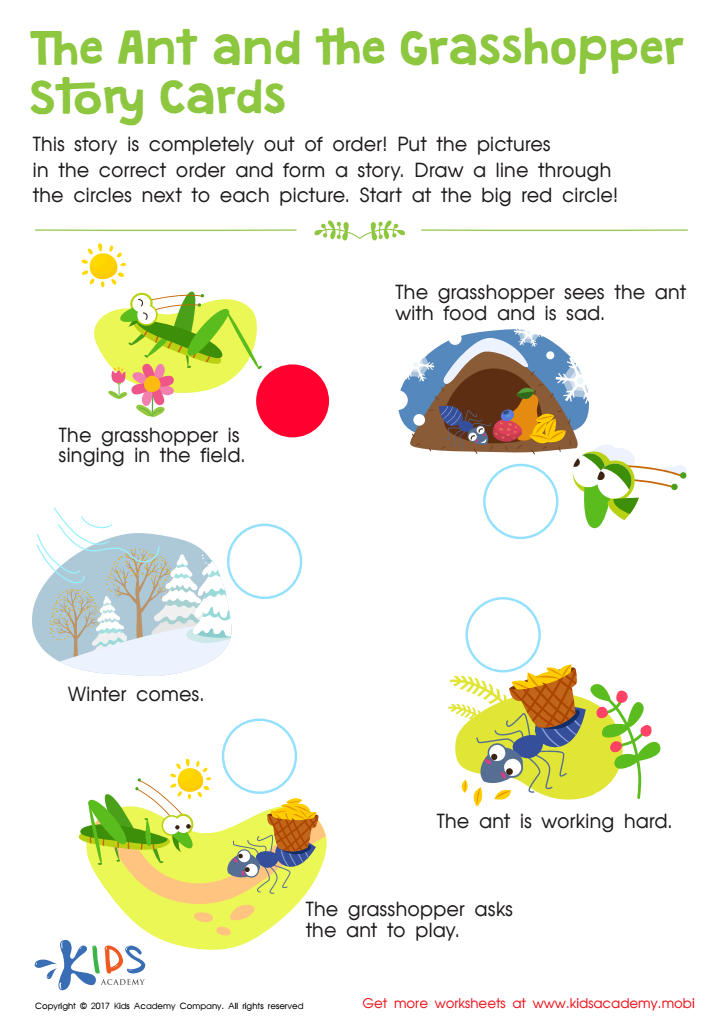
The Ant and The Grasshopper Worksheet
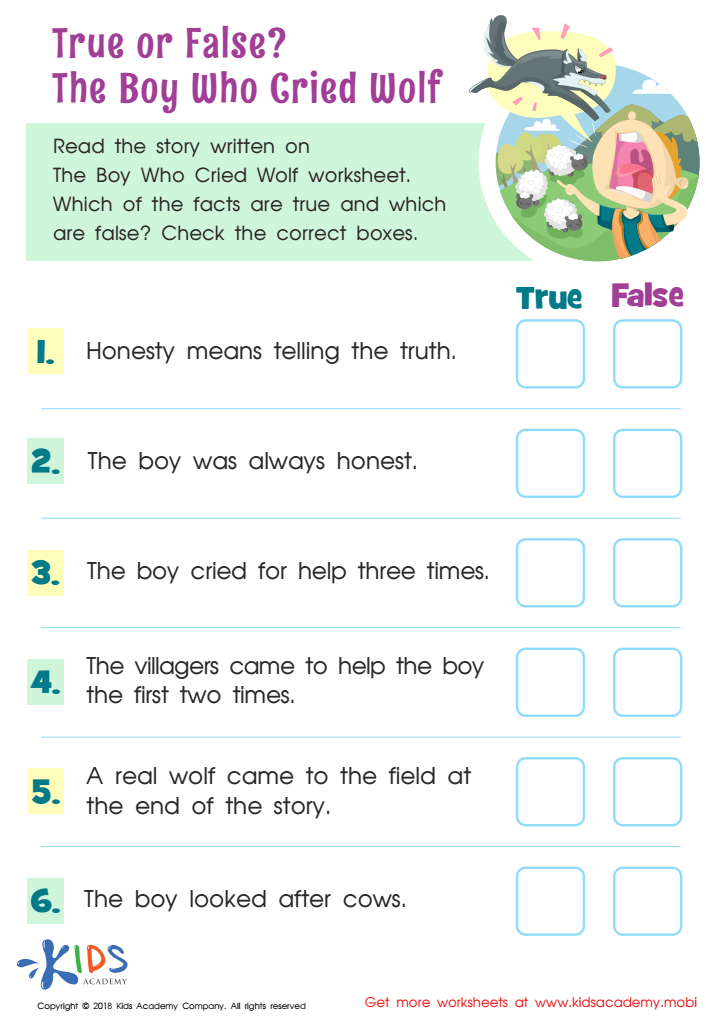
True or False? The Boy Who Cried Wolf Worksheet
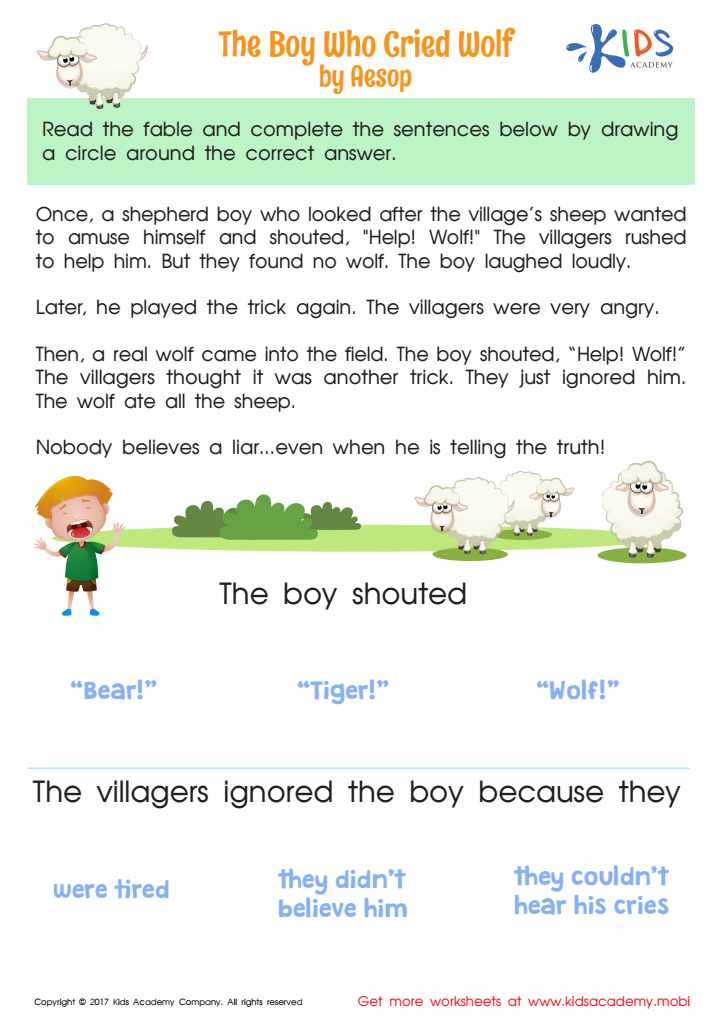
The Boy Who Cried Wolf Worksheet
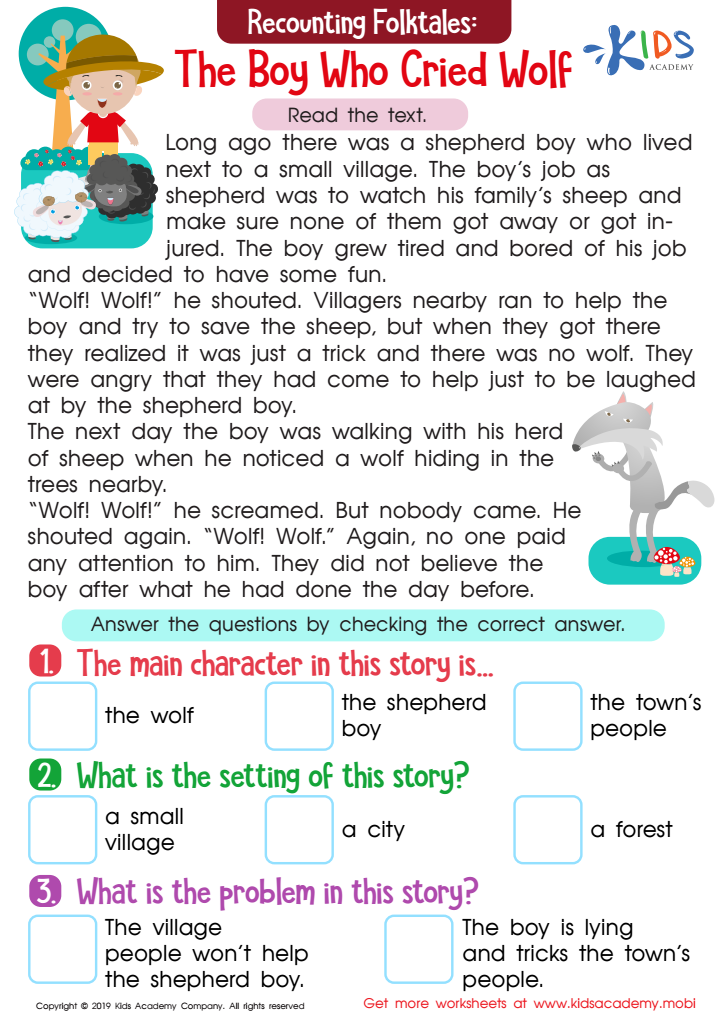
The Boy Who Cried Wolf Part 1 Worksheet






Moral understanding and reading comprehension are crucial for children aged 3-9, as they contribute to their overall development. When parents and teachers emphasize moral understanding, they help children learn how to differentiate between right and wrong, cultivate empathy, and recognize the consequences of their actions. These skills are foundational for positive social interactions and ethical decision-making in their future lives.
Reading comprehension, on the other hand, fosters literacy skills that are essential for academic success. At this age, children begin to understand narratives, character motivations, and moral lessons embedded in stories. Good reading comprehension not only enhances vocabulary but also provides a means for children to explore complex social situations and gain insights into diverse perspectives.
In combination, moral understanding and reading comprehension help children navigate their world more effectively. They enable youngsters to grasp the emotions and intentions of characters in books, nurturing their ability to engage with different viewpoints empathetically. Thus, when parents and teachers prioritize these areas, they equip children with the tools to become thoughtful readers and compassionate individuals, laying the groundwork for a more empathetic society. Supporting this dual development is vital for both personal growth and community well-being.








