Moral understanding Normal Reading Fiction Worksheets for Ages 3-9
5 filtered results
-
From - To
Enhance your child's reading experience with our "Moral Understanding Normal Reading Fiction Worksheets," designed specifically for ages 3-9. These engaging worksheets encourage young readers to explore essential moral lessons found within age-appropriate fictional stories. Aligned with educational standards, our resources promote critical thinking and comprehension by prompting discussions about values such as kindness, honesty, and empathy. Ideal for both classroom use and at-home learning, these worksheets support early literacy skills while fostering a deeper understanding of ethics through captivating narratives. Download these worksheets today to inspire a love of reading while instilling core moral values in your little ones!
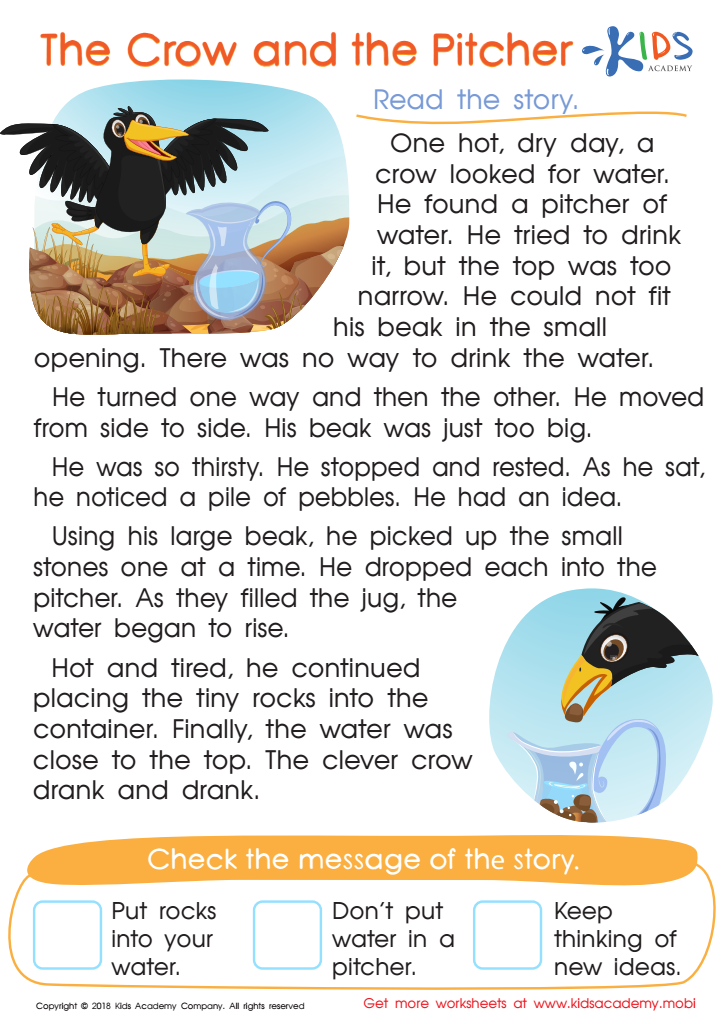
The Crow and the Pitcher Worksheet
 Assign to My Students
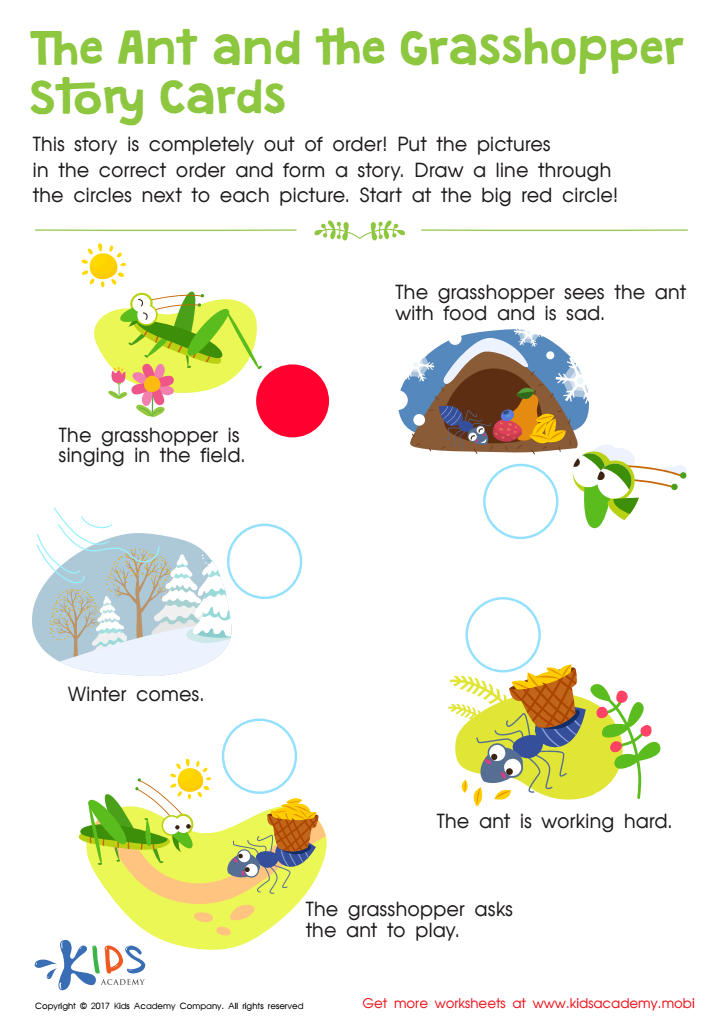
The Ant and The Grasshopper Worksheet
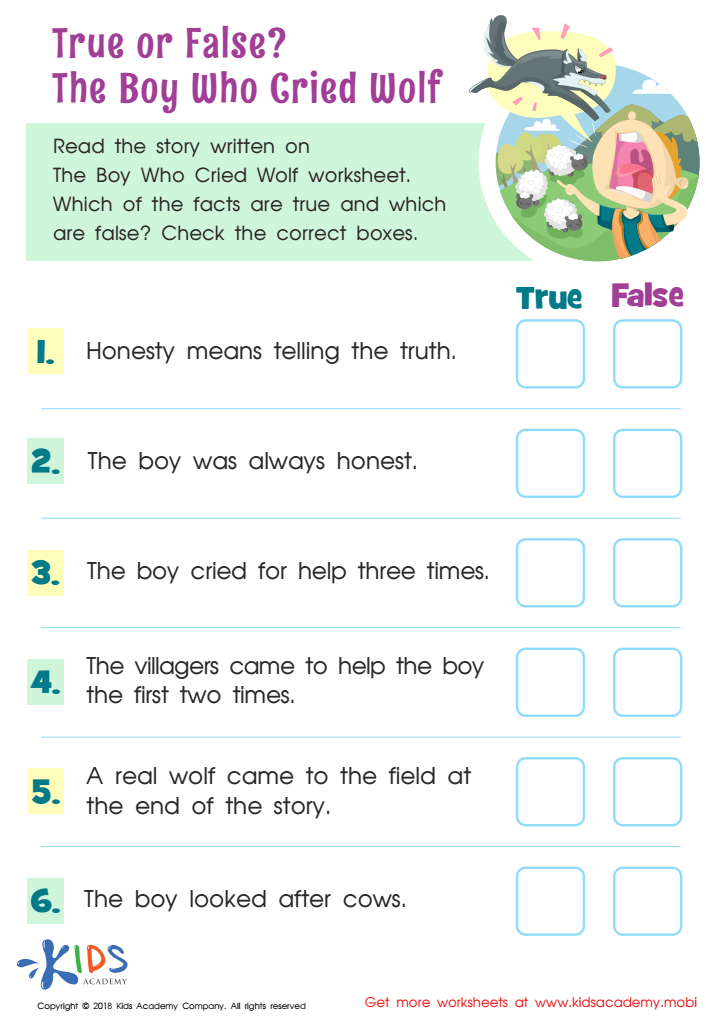
True or False? The Boy Who Cried Wolf Worksheet
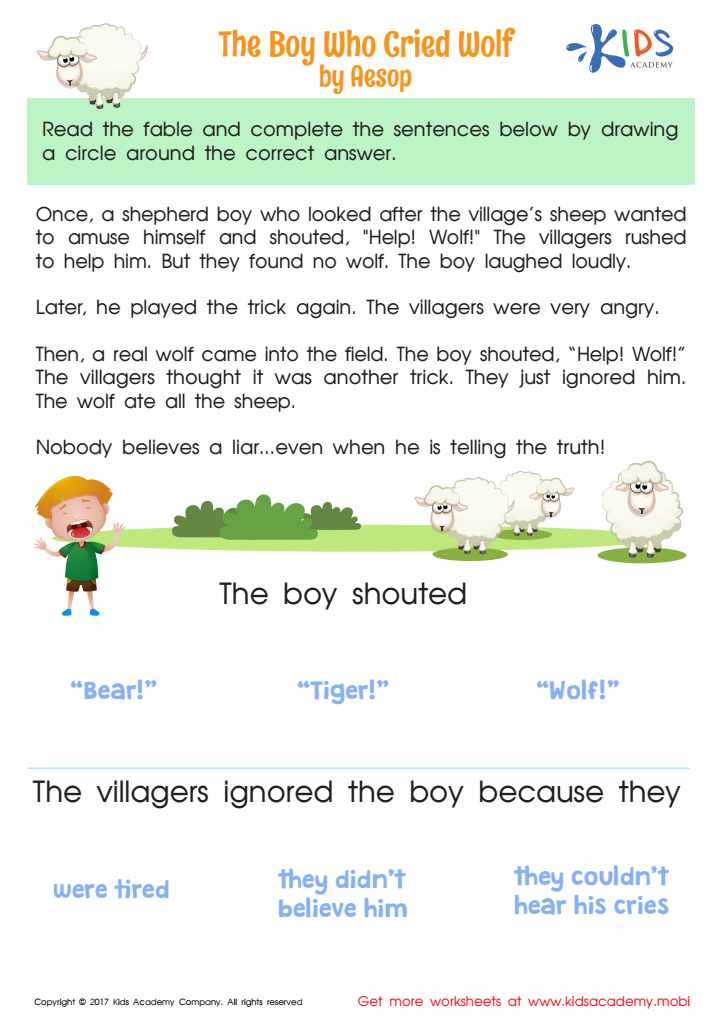
The Boy Who Cried Wolf Worksheet
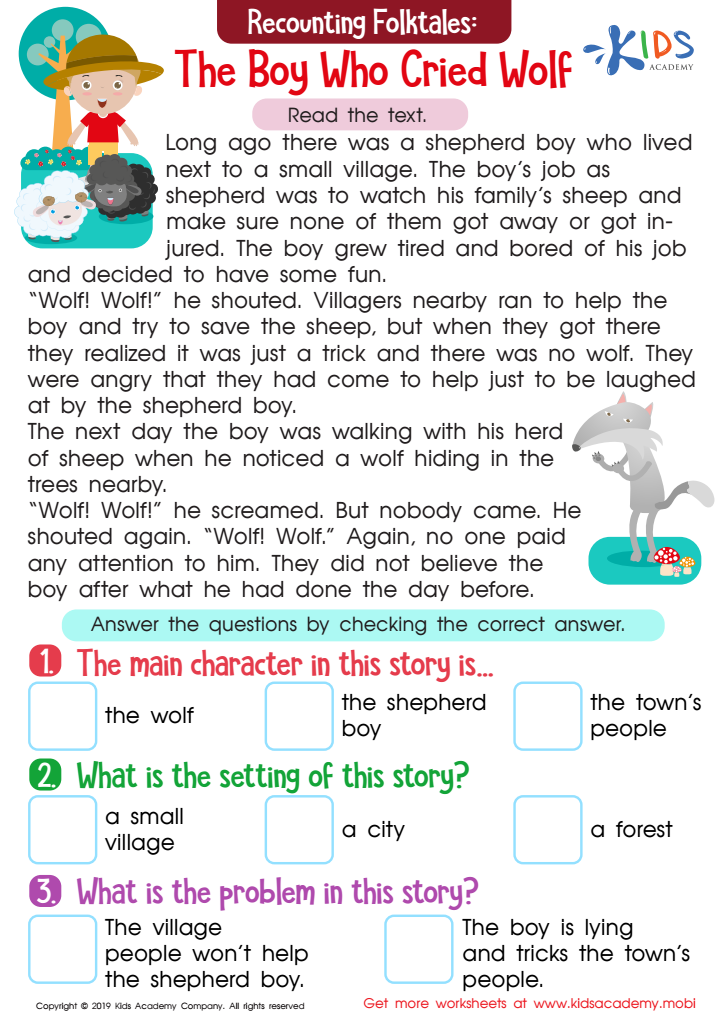
The Boy Who Cried Wolf Part 1 Worksheet








Moral understanding is vital for children aged 3-9, influencing their emotional and social development. Engaging with moral narratives in age-appropriate fiction provides young readers with insights into empathy, kindness, honesty, and responsibility. These stories spark discussions that help children recognize and reflect on ethical dilemmas, enabling them to develop their decision-making skills and understand varying perspectives.
For parents and teachers, fostering moral understanding through literature cultivates a supportive environment where children learn the importance of values and community. Reading moral fiction promotes critical thinking, allowing children to explore the consequences of actions within safe settings. These narratives often present relatable characters and scenarios, helping children identify and express their own feelings while building connections with others.
Additionally, moral reading lays the groundwork for lifelong values and an understanding of social norms. In an increasingly complex world, equipping children with moral literacy is crucial. It aids in developing compassionate individuals who can navigate diverse situations and treat others with respect. Hence, parents and teachers play a pivotal role in selecting and discussing moral fiction, ensuring that young readers become not just competent learners, but also emotionally intelligent and ethically grounded individuals.







