Rhyming skills development Normal Rhyming Words Worksheets for Ages 3-9
3 filtered results
-
From - To
Enhance your child's reading abilities with our "Rhyming Skills Development" worksheets, specially designed for ages 3-9. These engaging and educational worksheets focus on normal rhyming words, aiming to foster phonemic awareness and language skills. Through playful activities and fun exercises, children will learn to recognize and match rhyming words, an important precursor to reading fluency. Tailored to different age groups, each worksheet is a perfect blend of challenge and enjoyment, encouraging early literacy development. Let your child embark on a fun learning journey with our expertly crafted rhyming worksheets.
Let me know if you need any change.
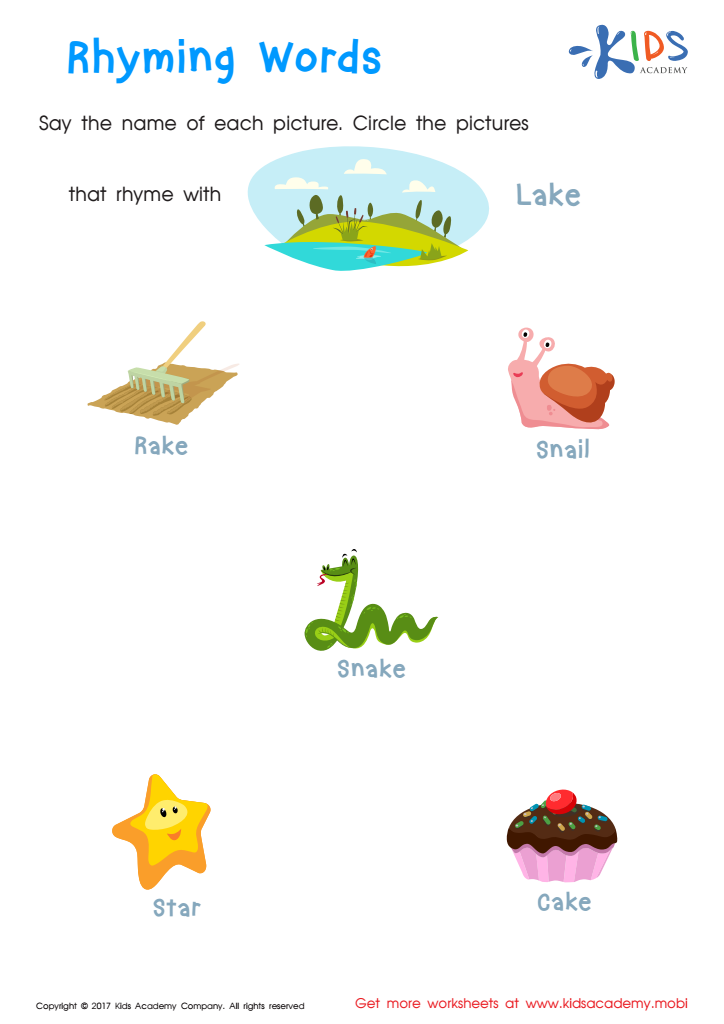
Rhyming Words Rhyming Worksheet
 Assign to My Students
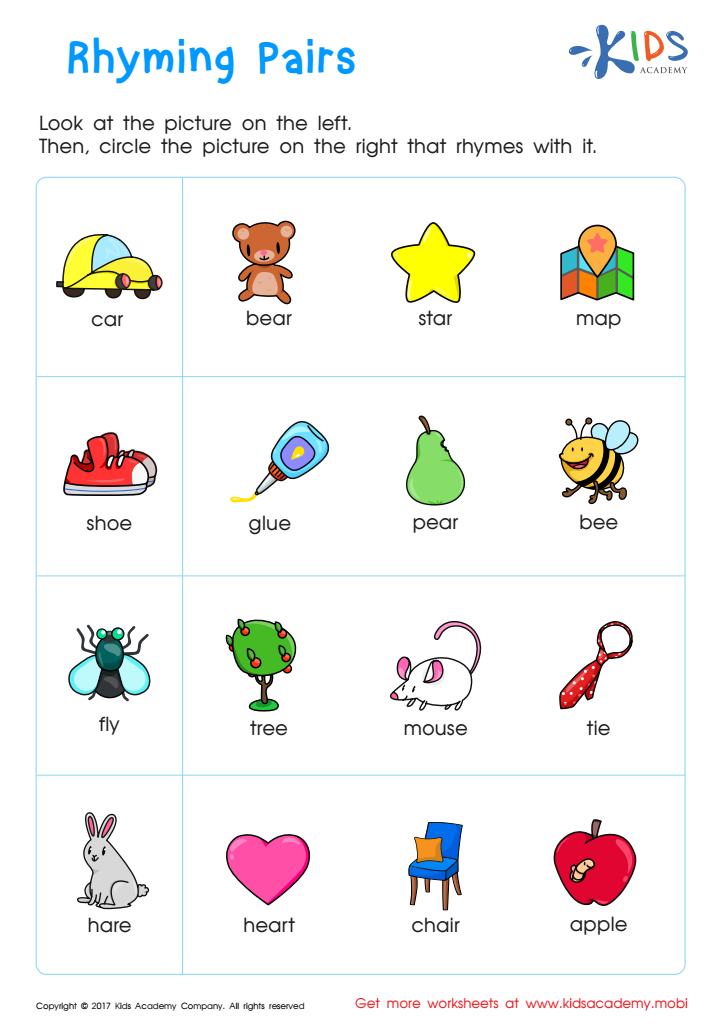
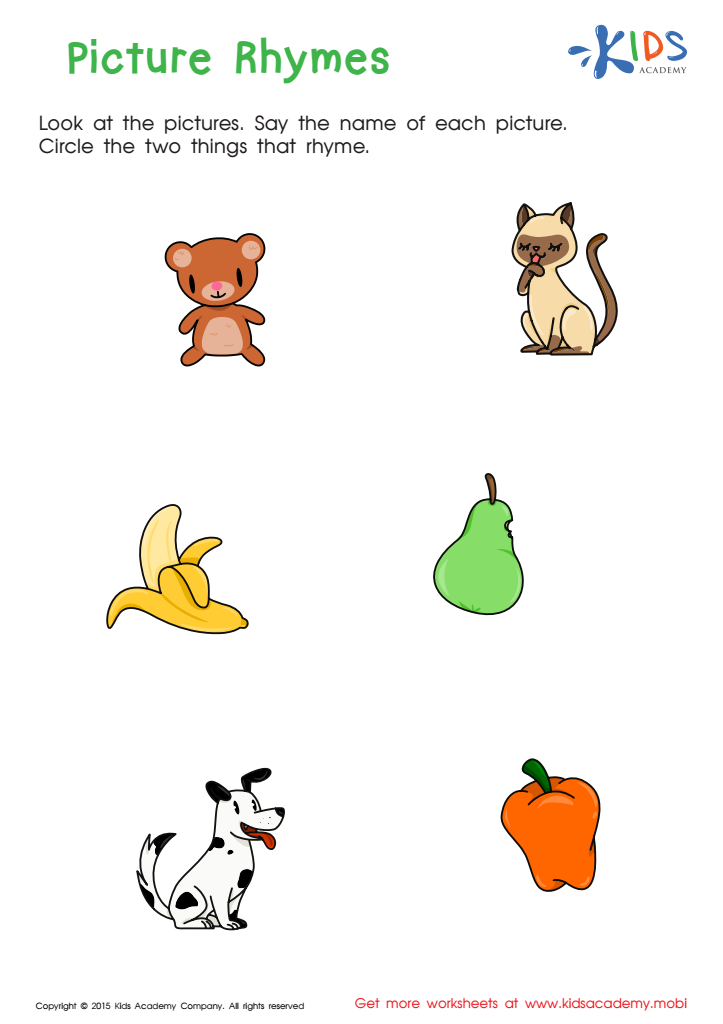
First Words: Picture Rhymes Worksheet



.jpg)




Rhyming skills are crucial for young children, particularly between the ages of 3-9, as they play a foundational role in language and literacy development. Rhyming aids in phonemic awareness—the ability to hear, identify, and manipulate individual sounds in spoken words. This awareness is a key precursor to reading, as it helps children recognize sound patterns within words, facilitating word recognition and decoding skills.
When children engage with rhymes, they enhance their auditory discrimination, learning to differentiate and match sounds, which is essential for spelling and reading fluency. Rhyming also enriches a child's vocabulary by exposing them to a variety of word patterns and structures in a fun, memorable way. Children who regularly practice rhyming develop better listening skills and improved memory, since rhymes often make use of repetition and patterning.
Moreover, rhyming exercises promote creativity and imagination as children experiment with sounds and language. These activities can be enjoyable and interactive, fostering a love for reading and literature from an early age. Both parents and teachers should thus prioritize rhyming activities, incorporating nursery rhymes, poems, rhyming games, and songs into daily routines. By doing so, they lay a sturdy groundwork for future academic success and a lifelong love for learning.








