Vocabulary Building Normal Animals Worksheets for Ages 3-9
4 filtered results
-
From - To
Enhance your child's language skills with our Vocabulary Building Normal Animals Worksheets, designed for ages 3-9! These engaging worksheets introduce young learners to a variety of common animals while expanding their vocabulary in a fun, interactive way. Each activity focuses on identifying, describing, and categorizing animals, making learning playful and effective. Perfect for preschool and early elementary students, these resources encourage curiosity about the animal kingdom while building essential language skills. Whether at home or in the classroom, our worksheets support a love for learning through vibrant illustrations and easy-to-follow instructions. Foster your child’s vocabulary development today!
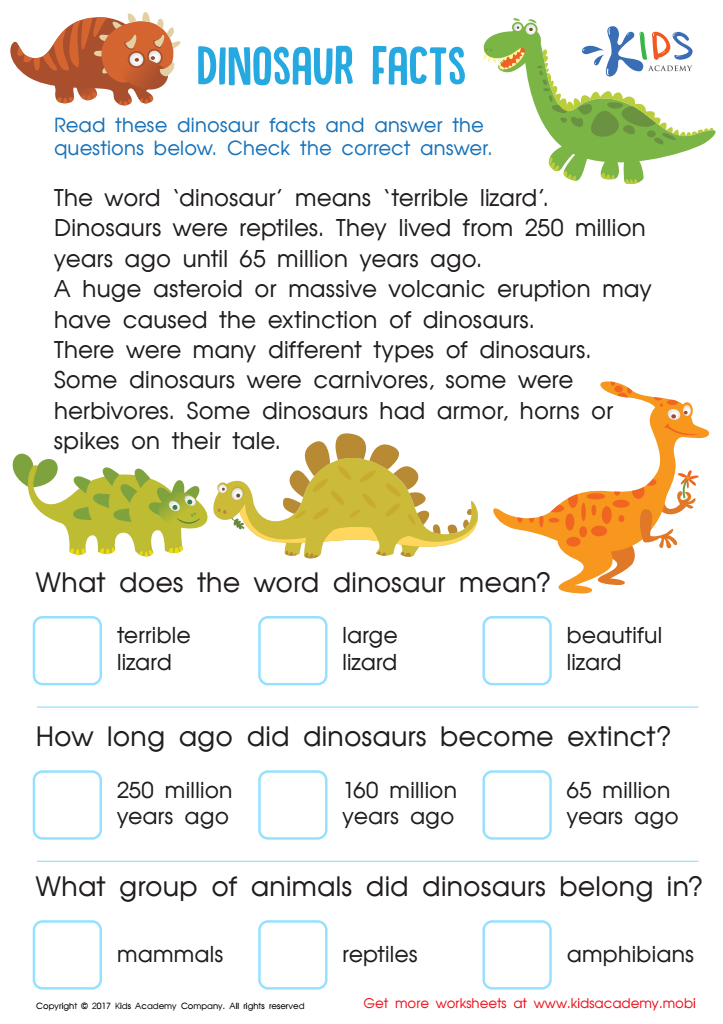
Dinosaur Facts Worksheet
 Assign to My Students
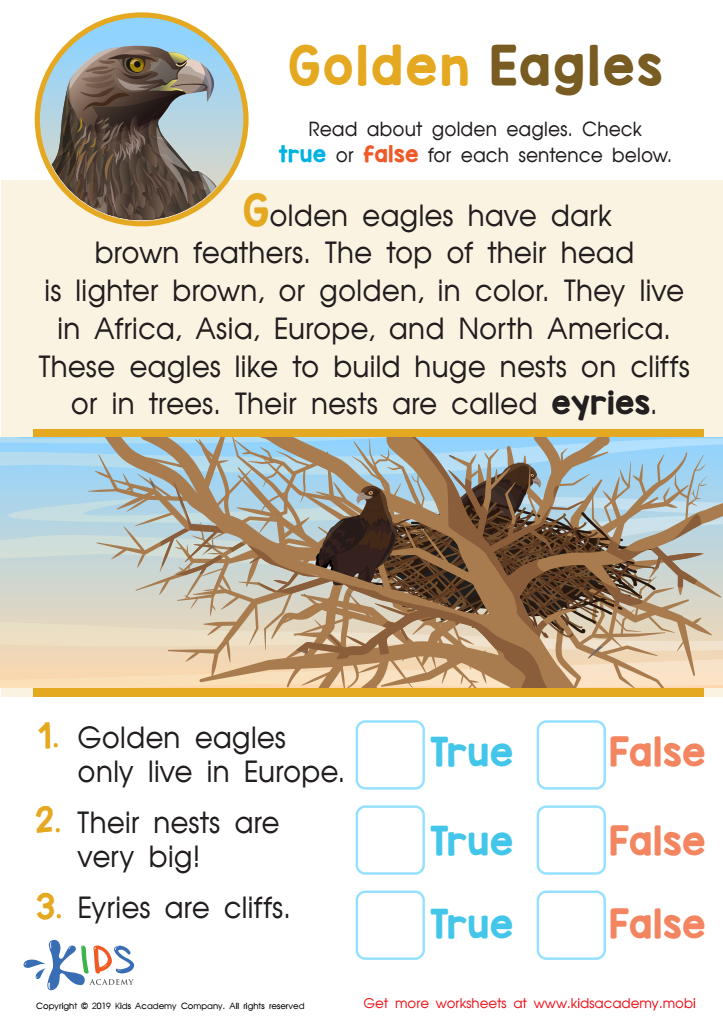
Golden Eagles Worksheet
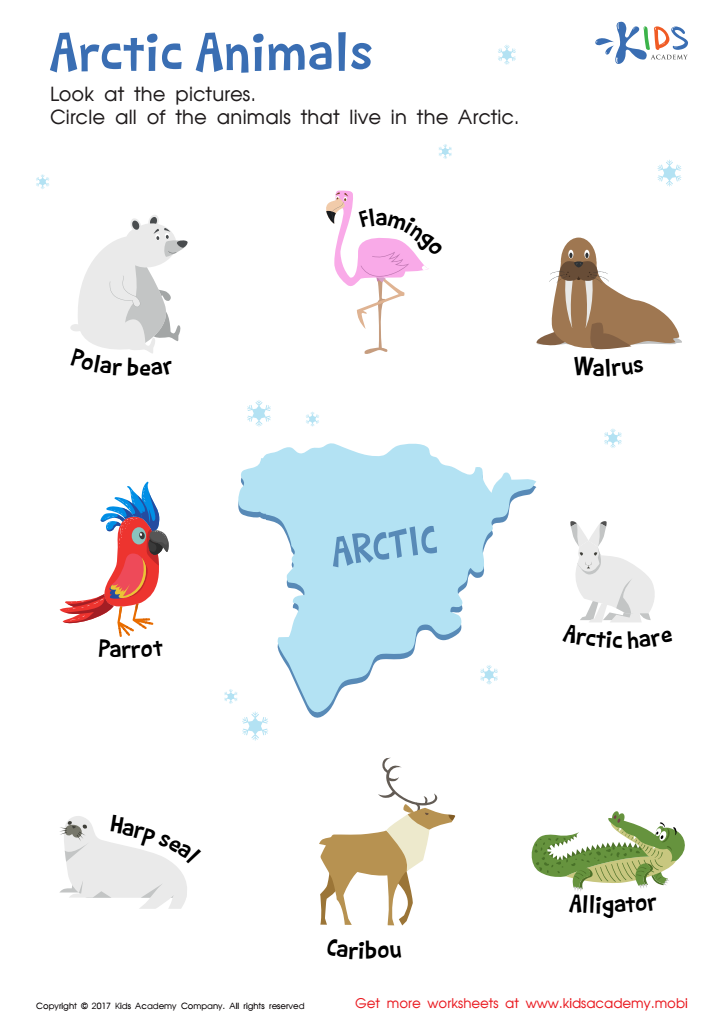
Arctic Animals Worksheet
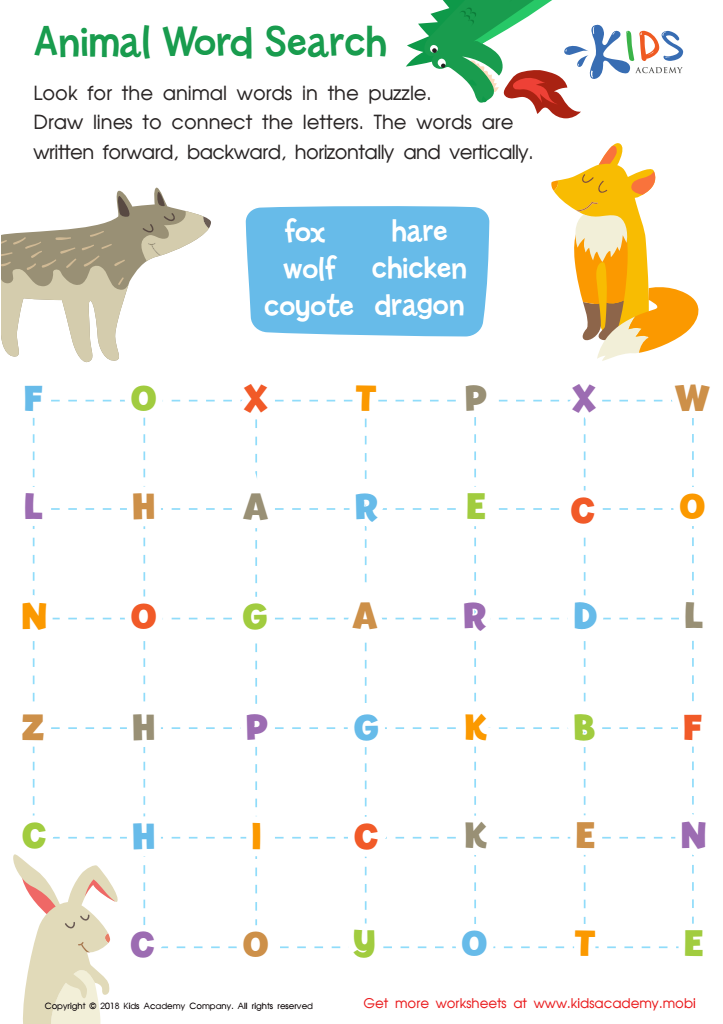
Animal Word Search Worksheet








Vocabulary building is crucial for children aged 3-9, particularly through engaging themes like normal animals. During these pivotal developmental years, children are expanding their language skills rapidly, which significantly impacts their reading abilities, communication skills, and overall cognitive development. Introducing vocabulary centered around everyday animals allows parents and teachers to connect language learning with familiar and relatable contexts.
Engagement with animal vocabulary can spark curiosity and enthusiasm in young learners. By using animals children observe in their surroundings—like dogs, cats, birds, and farm animals—the learning process becomes relatable and fun. Parents and teachers can incorporate stories, songs, and hands-on activities that revolve around these animals, enhancing retention of new words and concepts.
Moreover, a robust vocabulary is linked to academic success. Children with a rich vocabulary can express themselves more clearly, understand instructions better, and engage more effectively with peers. This laid foundation in language not only promotes early literacy but also emotional and social development. Therefore, fostering vocabulary related to normal animals not only enriches young children’s language skills but also cultivates a love for learning, setting the stage for future academic achievements and effective interpersonal communication.








