
Critical Thinking Normal Life Science Worksheets for Ages 3-9
4 filtered results
Difficulty Level
Grade
Age
-
From - To
Subject
Activity
Standards
Explore our engaging "Critical Thinking Normal Life Science Worksheets" designed for children ages 3-9! These worksheets foster curiosity and analytical skills through stimulating activities centered around life science topics. Young learners will investigate concepts such as plants, animals, and ecosystems while enhancing their critical thinking abilities through fun puzzles, sorting tasks, and hands-on experiments. Each worksheet encourages creativity and promotes problem-solving skills essential for cognitive development. Ideal for at-home learning or classroom use, our resources provide an exciting way for kids to discover the wonders of life science while developing essential analytical skills. Start your educational journey today!
Favorites
With answer key
Interactive
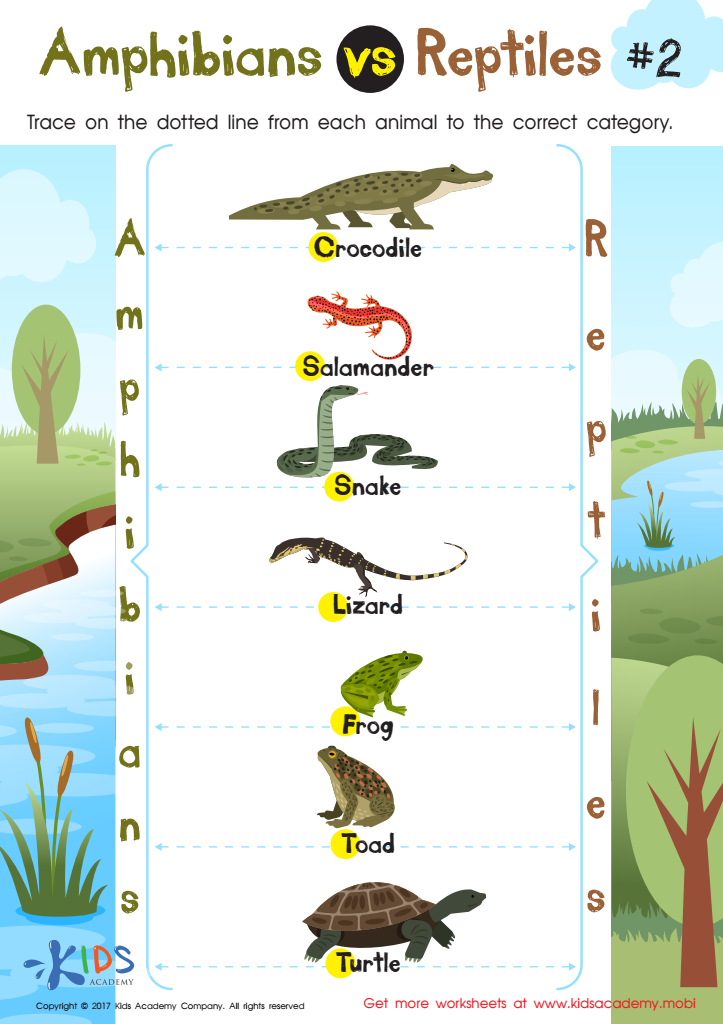
Amphibians vs Reptiles Worksheet for 3rd Grade
Let your 3rd grader challenge themselves and have fun by distinguishing between reptiles and amphibians. With this cool worksheet, they'll explore vivid pictures and learn about these fascinating creatures!
 Assign to My Students
Amphibians vs Reptiles Worksheet for 3rd Grade
Worksheet
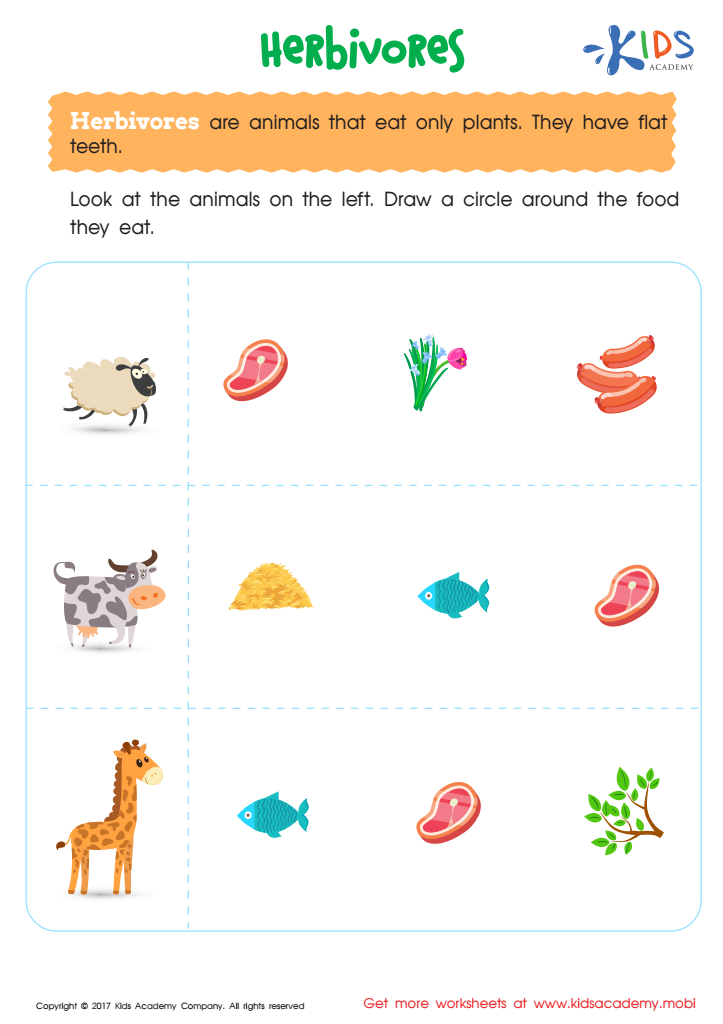
Herbivores Printable
Strengthen their vocab with these fascinating creatures, as they explore an intriguing aspect of beloved animals.
Herbivores Printable
Worksheet
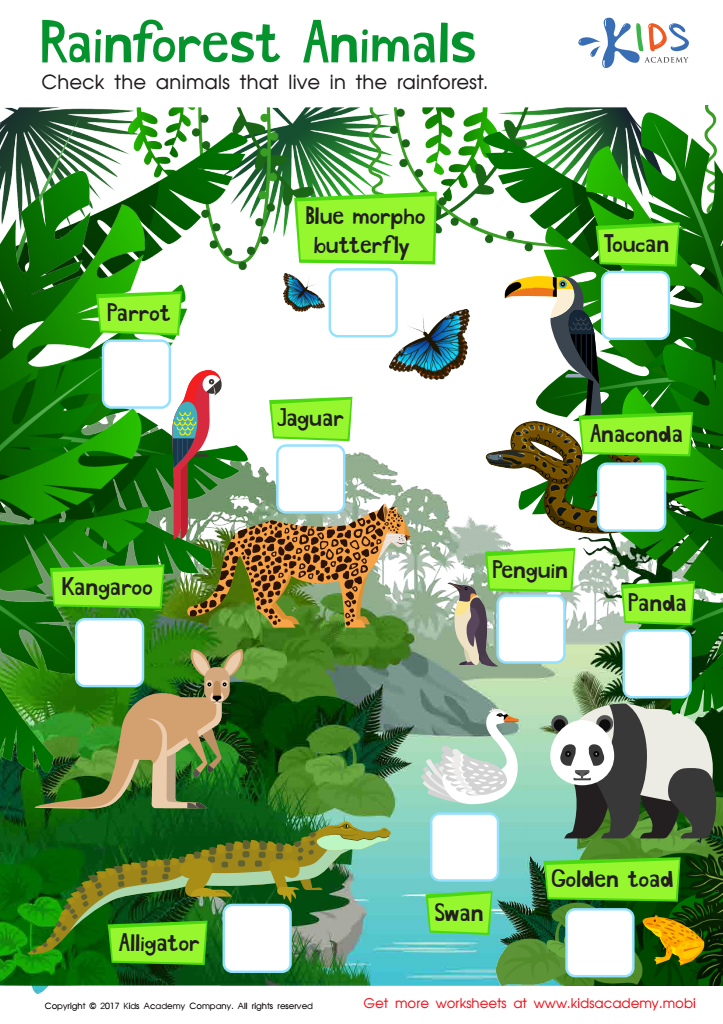
Rainforest Animals Worksheet
Kids love the bright, vivid pics of rainforest animals in this worksheet. It fuels their interest in life science and brings joy to their learning. It encourages them to study these animals in detail.
Rainforest Animals Worksheet
Worksheet
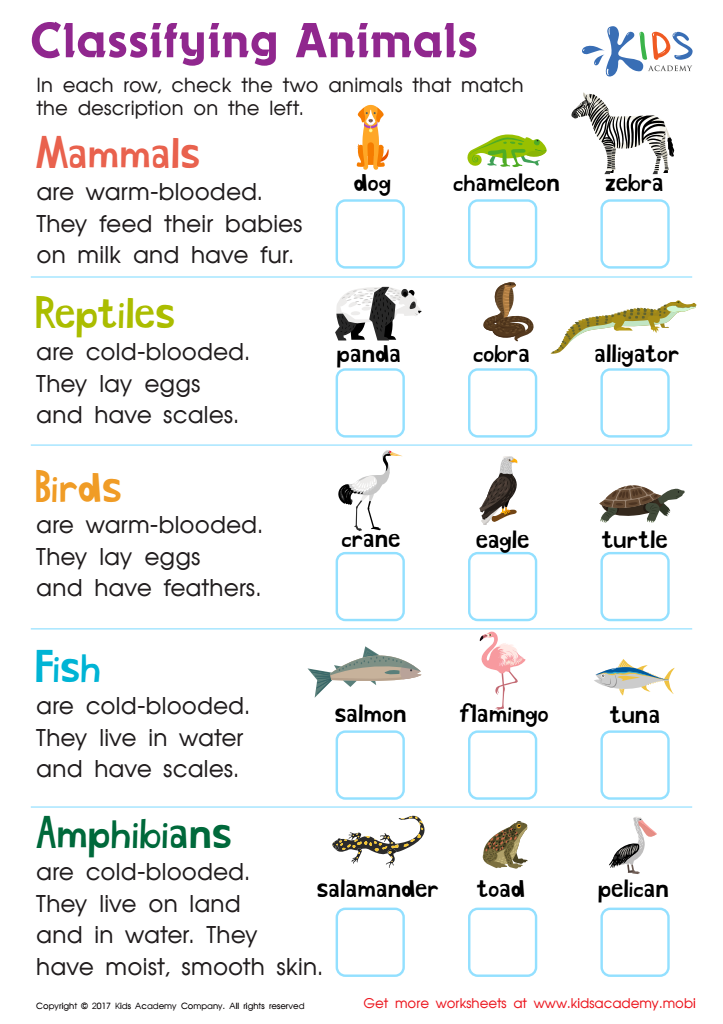
Classifying Animals Worksheet
Print the 2nd grade animal classification worksheet and help kids study the differences between mammals, reptiles, birds, fish and amphibians. Let them pick two examples from the options given.
Classifying Animals Worksheet
Worksheet
Join Kids Academy for Free
Who is primarily going to use this learning content?








Parents and teachers should prioritize Critical Thinking in Normal Life Science for children aged 3-9 because this foundational skill sets the stage for lifelong learning and cognitive development. At this age, children are naturally curious, and fostering their ability to think critically enhances their inquiry skills, allowing them to ask questions, make observations, and articulate their understanding of the world around them. Engaging in life sciences encourages exploration of fundamental concepts such as living things, ecosystems, and health, helping children make connections between their immediate environment and broader scientific principles.
Promoting critical thinking in life sciences also teaches children how to approach problems logically, evaluate evidence, and consider multiple perspectives. These skills empower them to become independent learners who can navigate complex information as they progress through their education. Moreover, integrating critical thinking with life science education cultivates a sense of responsibility toward the environment and health, encouraging future generations to make informed decisions and advocate for sustainability.
Overall, investing in critical thinking through Normal Life Science provides children with tools to think analytically, solve problems, and engage thoughtfully with the world, forming a well-rounded basis for academic success and responsible citizenship.








