Division practice Normal Plants and Animals Worksheets for Ages 3-9
4 filtered results
-
From - To
Our "Division Practice Normal Plants and Animals Worksheets" are perfect for children ages 3-9. These fun and educational worksheets help young learners understand basic division while exploring the fascinating world of plants and animals. Through engaging exercises, kids can build essential math skills, boost their problem-solving abilities, and foster a love for science. Each worksheet features colorful illustrations and kid-friendly activities designed to make learning enjoyable and effective. Ideal for both classroom and at-home practice, these worksheets provide a comprehensive and interactive approach to mastering division concepts while discovering nature.
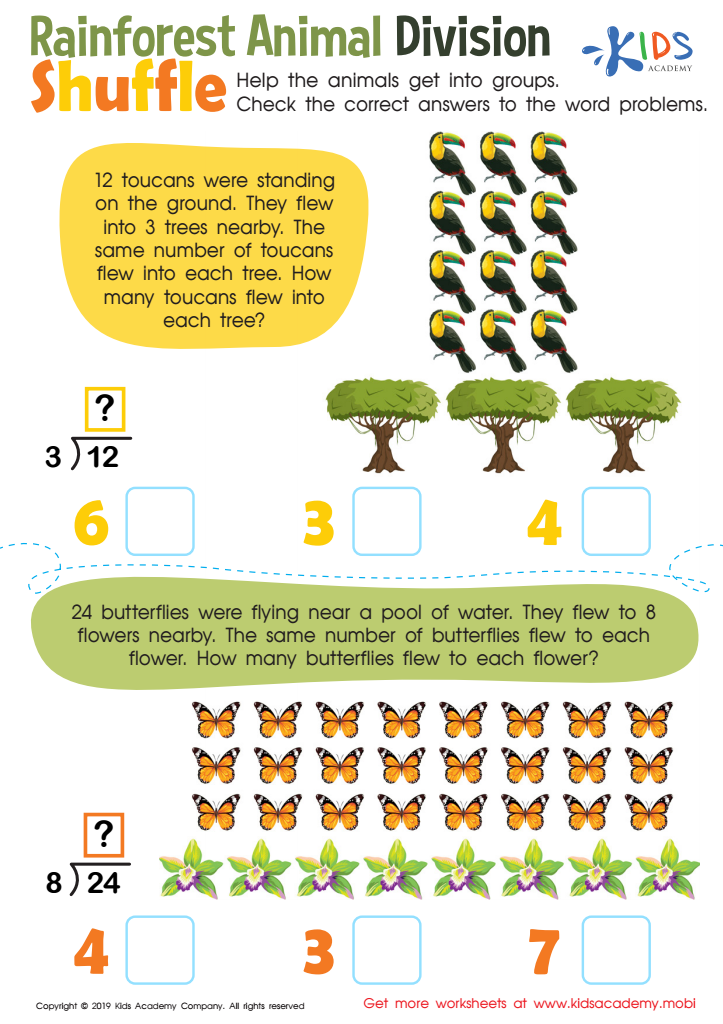
Rainforest Animal Division Worksheet
 Assign to My Students











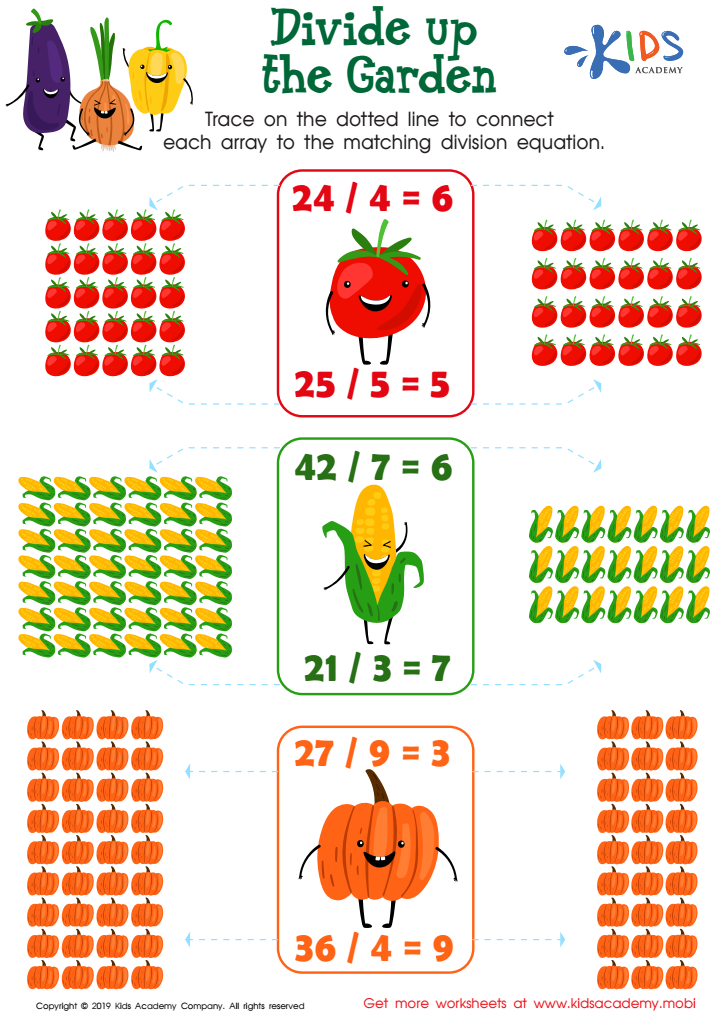
Divide up the Garden Worksheet
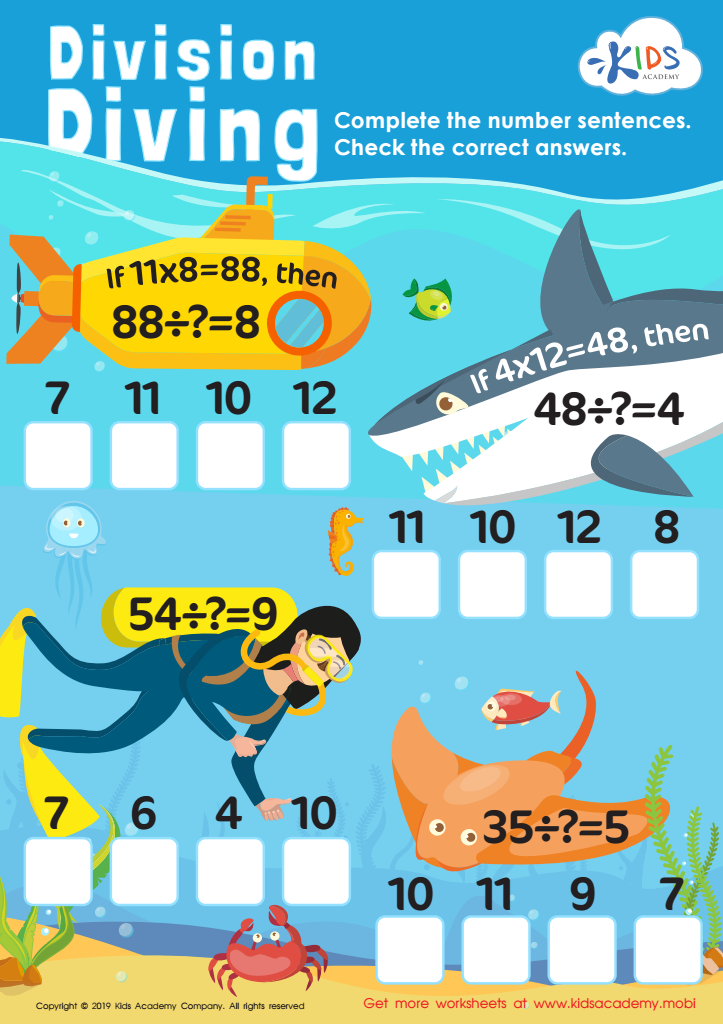
Division Diving Worksheet
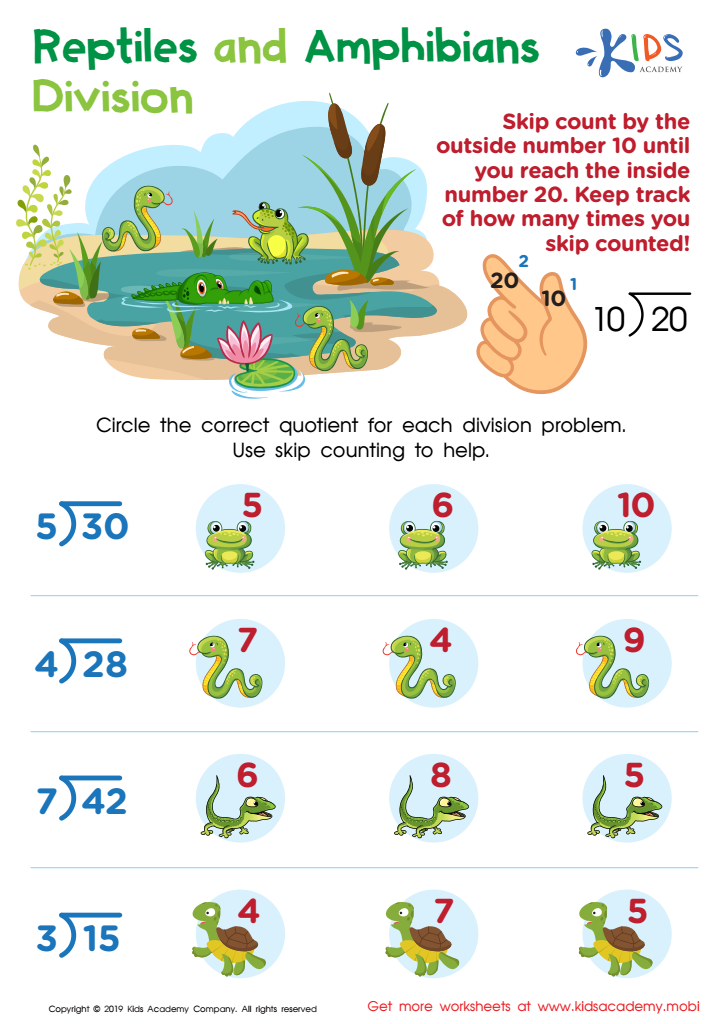
Reptile and Amphibians Division Worksheet








Focusing on division practice and the subject of normal plants and animals for children ages 3-9 is crucial for multiple developmental reasons. Early exposure to division aids in cognitive development by enhancing problem-solving skills, logical reasoning, and mathematical thinking. Mastery of division lays the groundwork for advanced mathematical concepts that students will encounter later. It's not just about arithmetic; it's about teaching young minds how to break down problems into manageable parts—an essential life skill.
Simultaneously, learning about normal plants and animals fosters curiosity and respect for the natural world. This exposure helps children develop critical observational skills and encourages them to ask questions. Understanding the basics of biology at a young age can spark a lifelong interest in science, paving the way for future learning.
Integrating these subjects contributes to a well-rounded education. For instance, discussing how animals live in groups (such as packs or herds) can serve as an analogy for division and grouping in mathematics. Furthermore, environmental awareness and sustainability concepts can naturally tie into social studies and community lessons.
Ultimately, caring about these foundational subjects equips young learners with a solid knowledge base and versatile thinking skills, setting the stage for academic and personal growth. Parents and teachers should therefore nurture both areas to cultivate intellectually curious and environmentally responsible individuals.







