Understanding pollination Normal Plants and Animals Worksheets for Ages 3-9
3 filtered results
-
From - To
Explore the fascinating world of pollination with our "Understanding Pollination: Normal Plants and Animals Worksheets" designed specifically for children aged 3-9. These engaging worksheets introduce young learners to the essential process of pollination, showcasing how plants rely on animals and other natural elements to thrive. Featuring colorful illustrations and easy-to-follow activities, children will learn about various pollinators, the anatomy of flowers, and the importance of this natural process in the ecosystem. Perfect for home or classroom use, these interactive resources foster curiosity and a love for nature while developing essential science skills. Unlock your child’s potential today!
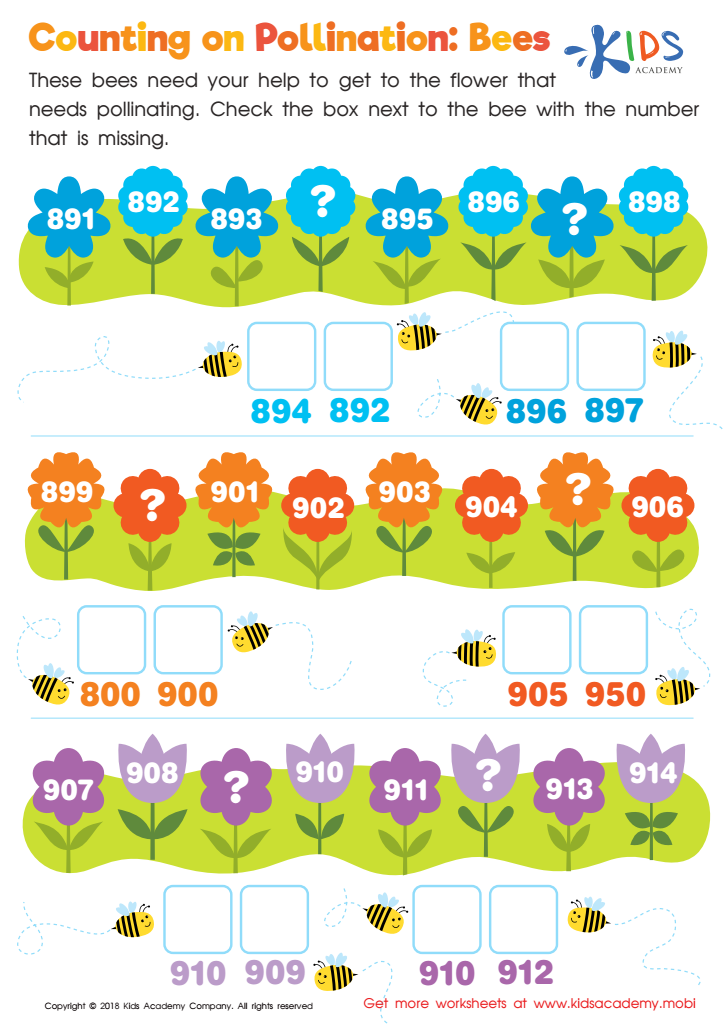
Counting on Pollination: Bees Worksheet
 Assign to My Students











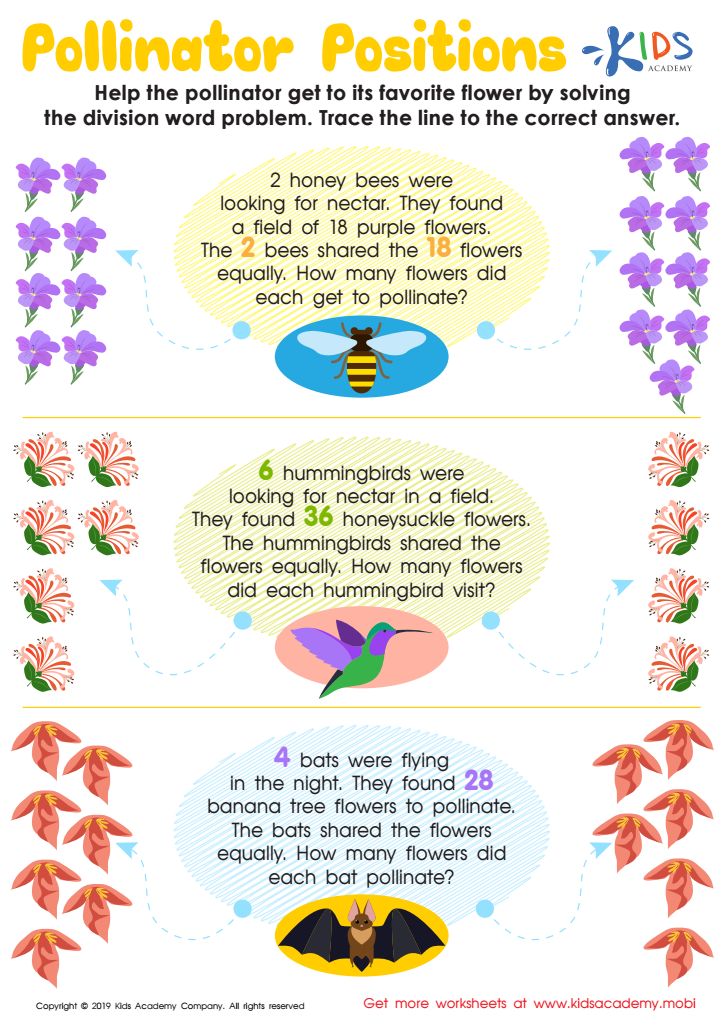
Pollinator Positions Worksheet
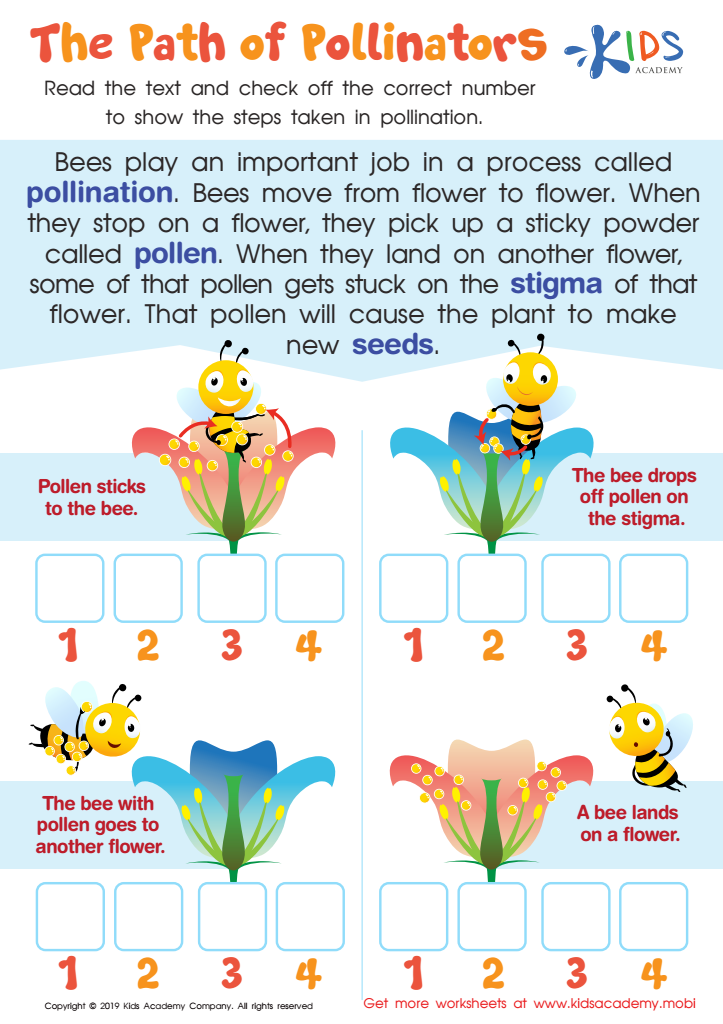
The Path of Pollinators Worksheet






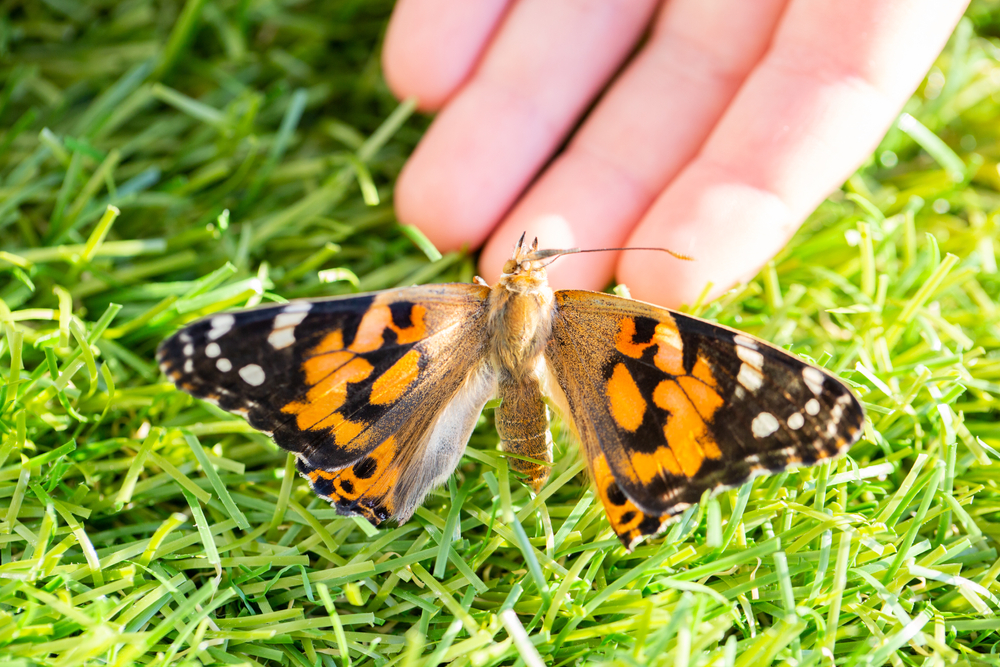

Understanding pollination is crucial for young learners aged 3-9 as it lays the foundation for their comprehension of ecosystems and the importance of biodiversity. Pollination is a central process that supports food production and the survival of plant species, making it vital for our environment and daily life.
For parents and teachers, engaging children in learning about pollination can spark curiosity and foster a love for nature. It introduces concepts of interdependence in ecosystems, where plants, animals (like bees and butterflies), and human activities are interconnected. Children who grasp these ideas early on develop a sense of responsibility toward the environment and sustainable practices.
Furthermore, lessons on pollination naturally lend themselves to hands-on activities, such as planting flowers and observing various pollinators, promoting active learning and fine motor skills. These experiences can enhance children's observational skills and scientific thinking.
By understanding pollination, children can better appreciate the importance of plants in their environment, encouraging them to care for their surroundings. Ultimately, fostering an early interest in botany and ecology not only enriches children's knowledge but also cultivates environmentally conscious individuals for the future.







