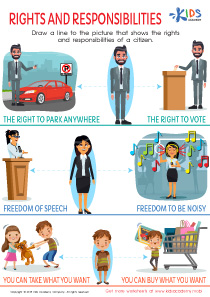
Map reading Normal Social Studies Worksheets for Ages 3-9
3 filtered results
Difficulty Level
Grade
Age
-
From - To
Subject
Activity
Standards
Unlock the adventure of map reading with our engaging Normal Social Studies Worksheets designed for children aged 3-9! These interactive and age-appropriate resources encourage young learners to explore essential map skills, such as identifying symbols, understanding directions, and interpreting simple maps. Our worksheets incorporate fun illustrations and relatable scenarios, making the learning experience enjoyable and effective. As children develop spatial awareness and navigational skills, they'll gain confidence in understanding their surroundings. Whether at home or in the classroom, these worksheets provide a valuable foundation in social studies, laying the groundwork for future exploration and curiosity about the world around them!
Favorites
With answer key
Interactive
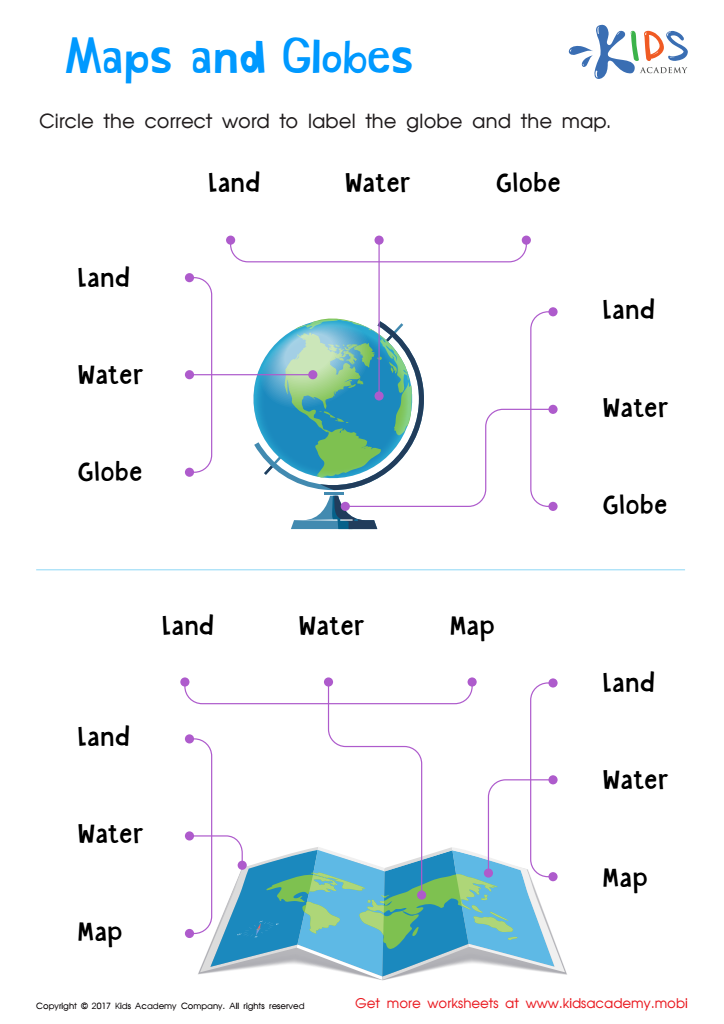
 Assign to My Students
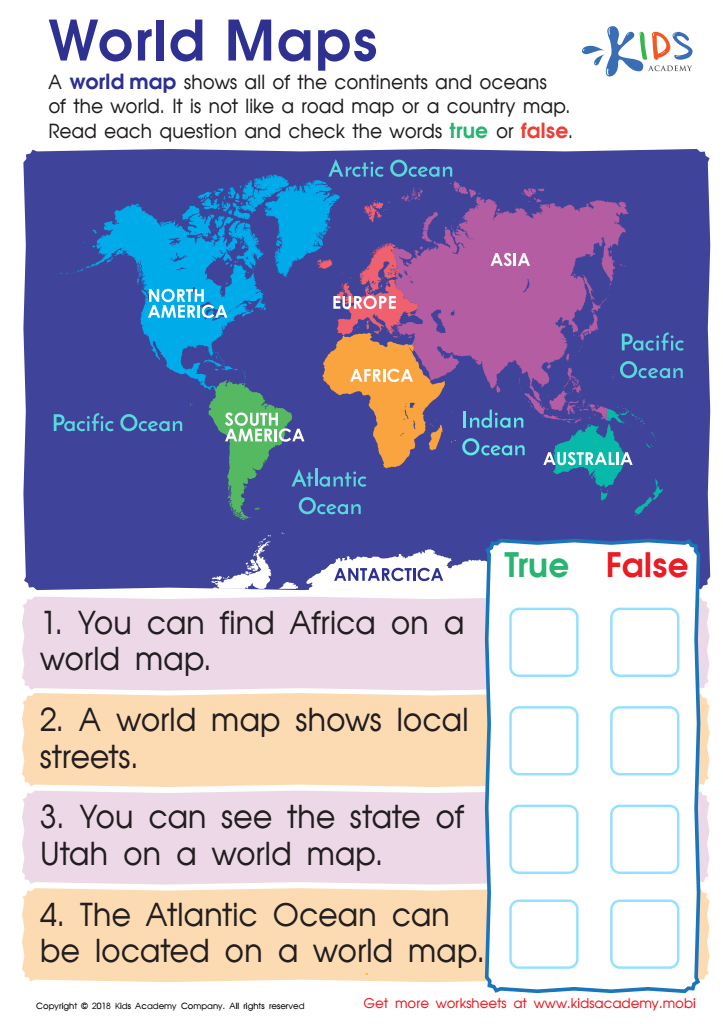
World Maps Worksheet
Help your young geographer learn about world maps. Show them that it displays all the oceans, continents and is distinct from other maps. Challenge them to answer the true/false questions on this free worksheet, and help them become a global citizen who understands the purpose of world maps.
World Maps Worksheet
Worksheet
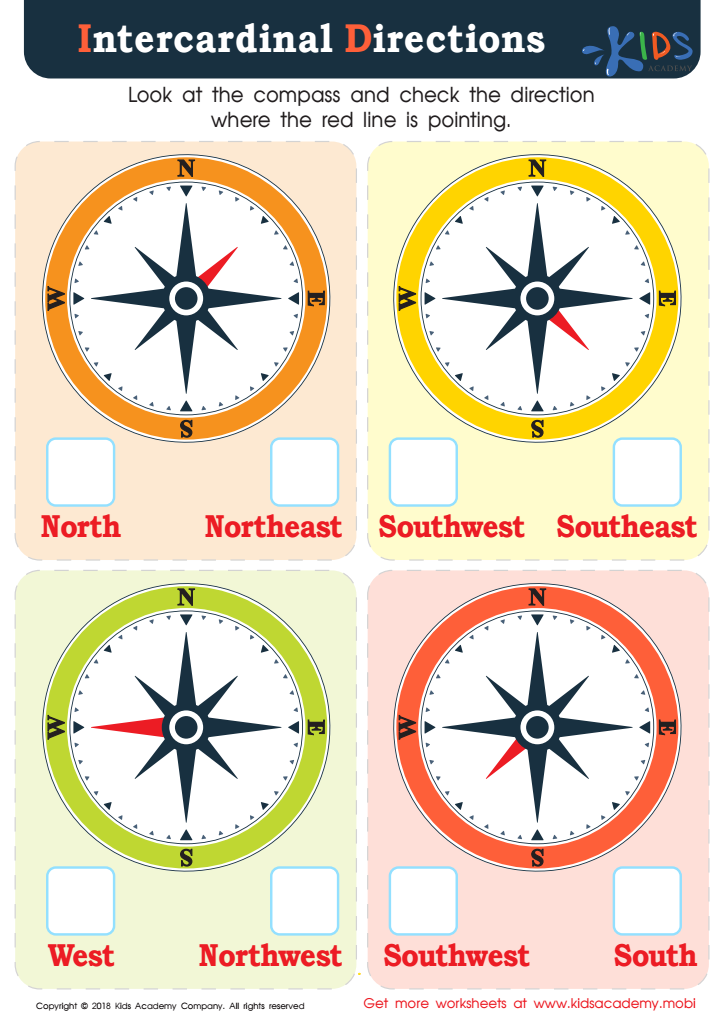
Intercardinal Directions Worksheet
Young students often don't get to practice cardinal and intercardinal directions in the digital age, but it's an important social studies and geography concept to learn. This PDF provides colorful compasses for them to practice with, giving them a real-world skill for common curriculum and independent living.
Intercardinal Directions Worksheet
Worksheet
Join Kids Academy for Free
Who is primarily going to use this learning content?








Map reading skills are essential for children aged 3-9, as they lay the foundation for understanding geography, developing spatial awareness, and fostering critical thinking skills. By introducing young learners to map reading, parents and teachers can support cognitive development and build essential life skills that extend beyond the classroom.
Understanding maps teaches children how to interpret symbols, scales, and directions, which enhances their ability to navigate both physical and cultural landscapes. This knowledge promotes curiosity about the world around them, encouraging exploration and fostering a sense of place and identity.
Moreover, map reading integrates elements of social studies, helping students learn about communities, habitats, and global connections. Engaging in map activities nurtures teamwork and communication as children discuss routes, share ideas, and solve problems together.
Furthermore, developing these skills at an early age empowers children to become informed citizens. As they grow, a solid foundation in mapping allows them to comprehend more complex geographical concepts. Ultimately, making map reading a priority in social studies cultivates lifelong learners who possess critical geographical literacy, enhancing their ability to engage with societal issues and contributing to their overall education.