Understanding timelines Normal Social Studies Worksheets for Ages 3-9
3 filtered results
-
From - To
Explore our "Understanding Timelines" social studies worksheets, designed specifically for children aged 3-9. These engaging resources help young learners grasp the concept of timelines through fun and interactive activities. With bright illustrations and age-appropriate exercises, kids will develop essential skills in sequencing events and recognizing historical progression. Our worksheets promote critical thinking and comprehension, aiding children in connecting past, present, and future. Perfect for classroom use or at-home learning, these timelines activities foster curiosity for history while enhancing cognitive abilities. Dive into exciting lessons that nurture young minds and equip them with a foundational understanding of time and history!
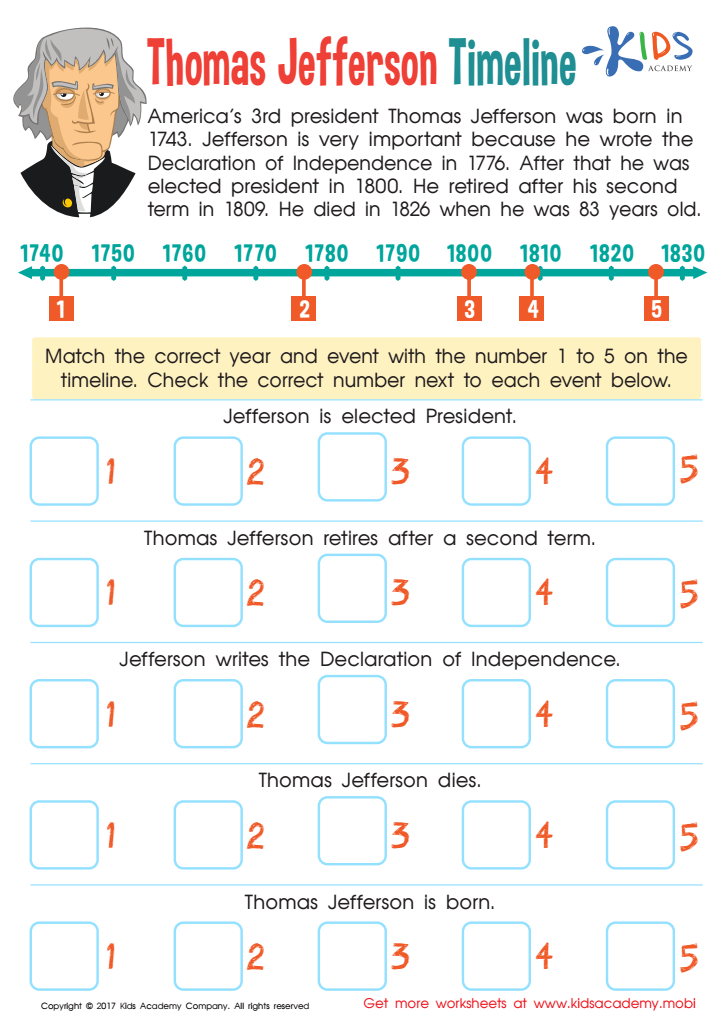
Thomas Jefferson Timeline Worksheet
 Assign to My Students
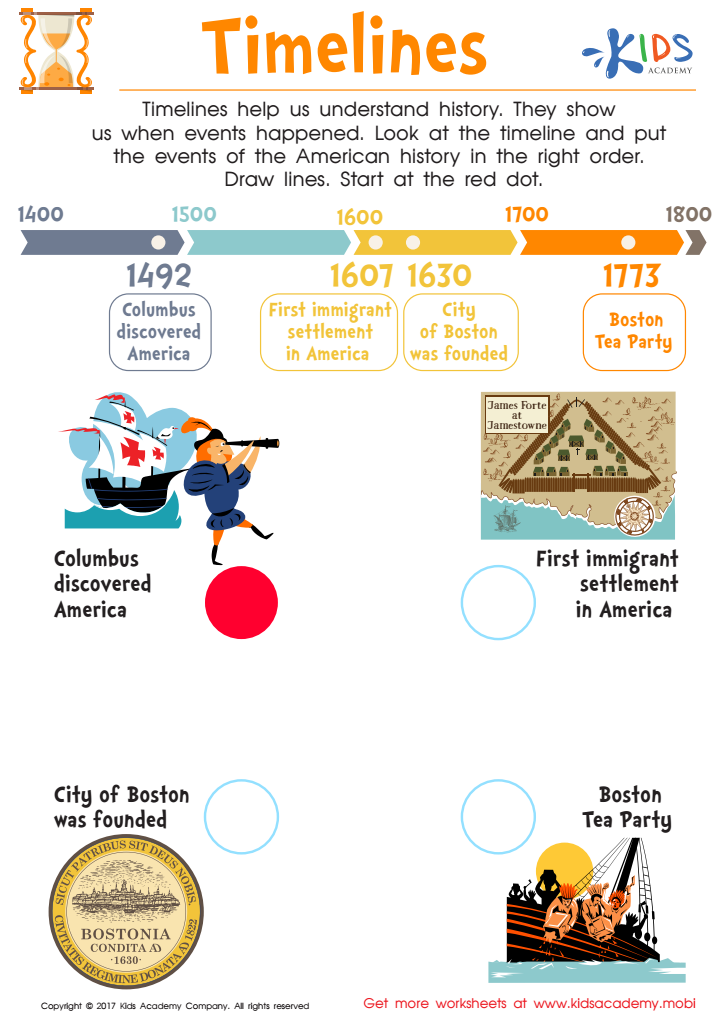
American History Timeline Worksheet
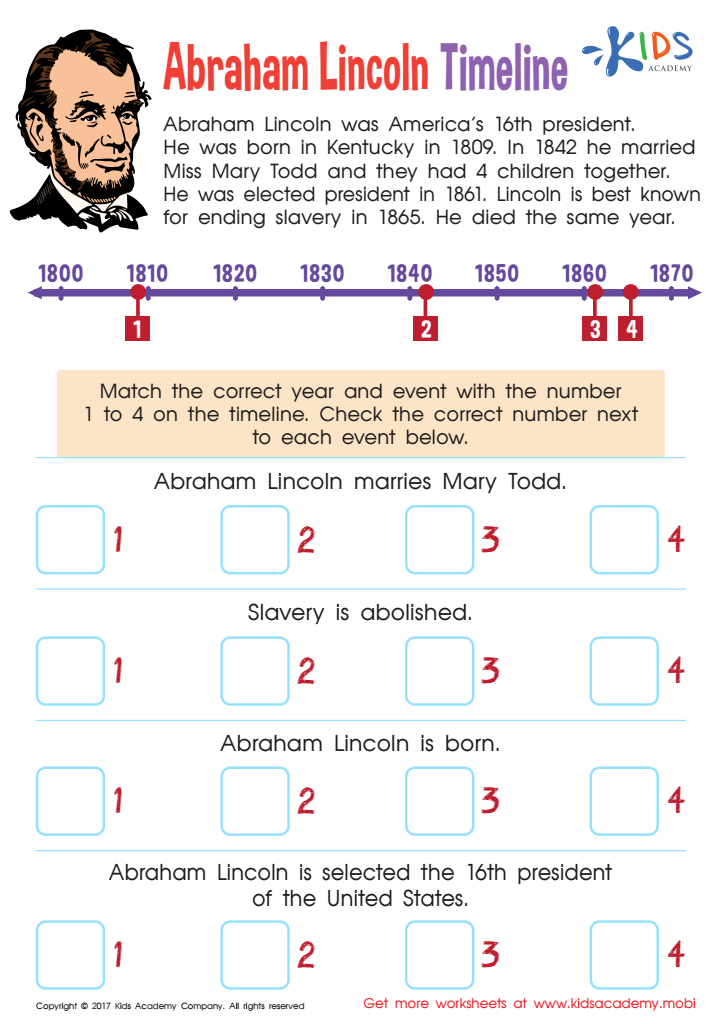
Abraham Lincoln Timeline Worksheet






Understanding timelines is crucial for young learners aged 3-9, as it lays the foundation for developing essential historical and social skills. Children begin to grasp the concept of time and sequence, which enhances their cognitive abilities and critical thinking. By learning to place events in chronological order, kids can better understand cause and effect relationships, making sense of how one event influences another.
For parents and teachers, investing time in teaching timelines helps nurture curiosity about the world. It encourages children to explore their own history—such as family traditions—and significant events in society. This drives engagement and fosters a lifelong love for learning.
Additionally, time management skills begin to form at this age. When kids learn to visualize what happened before or after certain events, they become better equipped to plan their daily activities and responsibilities.
Moreover, understanding timelines promotes discussions about diversity and cultures, as children can place different historical events or societal changes within a broader context. This understanding can lead to greater respect and empathy for others' experiences.
Ultimately, grasping timelines not only aids in academic success but also helps children view themselves as part of a larger narrative, enriching their social awareness and interpersonal skills.