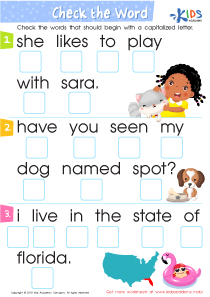
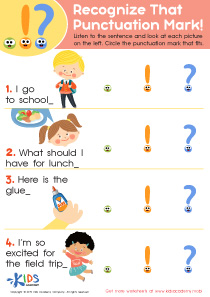
Critical Thinking Normal Grammar Worksheets for Ages 3-9
3 filtered results
-
From - To
Enhance your child’s language skills with our Critical Thinking Normal Grammar Worksheets, designed for ages 3-9. These engaging worksheets encourage young learners to think critically while mastering essential grammar concepts. Each activity promotes problem-solving and helps children develop their writing abilities in a fun, interactive way. From identifying parts of speech to organizing sentences, your child will build confidence in their grammar usage while enhancing cognitive skills. Perfect for classroom or home use, our worksheets are easy to print and offer a variety of challenges tailored to different age levels. Stimulate creativity and critical thinking—empower your child's learning journey today!
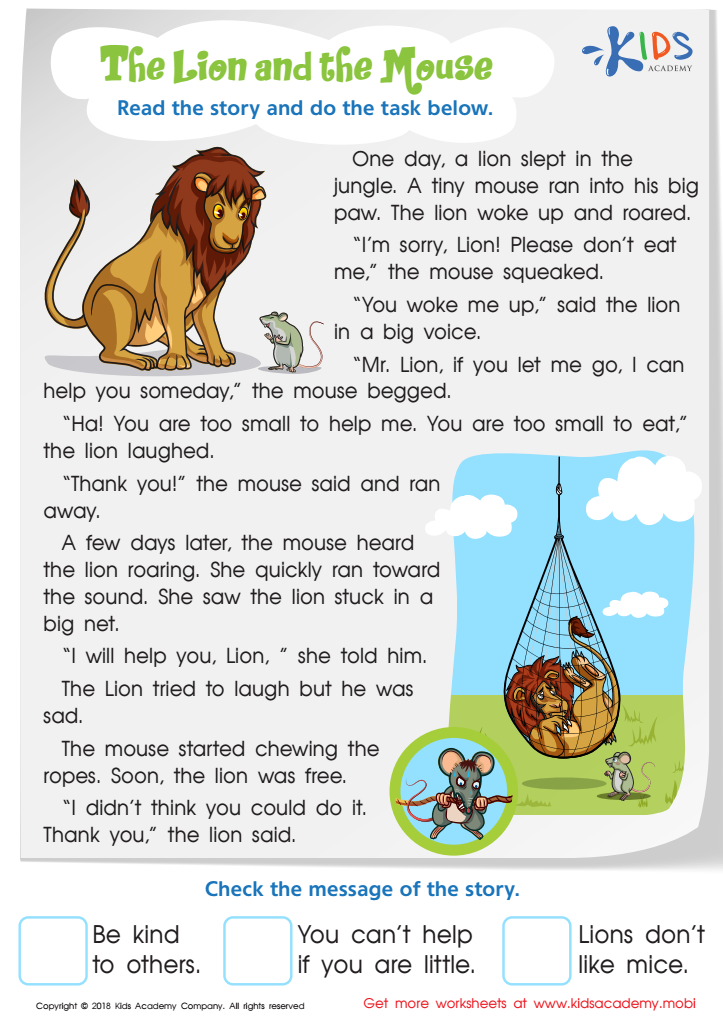
The Lion and the Mouse Worksheet
 Assign to My Students
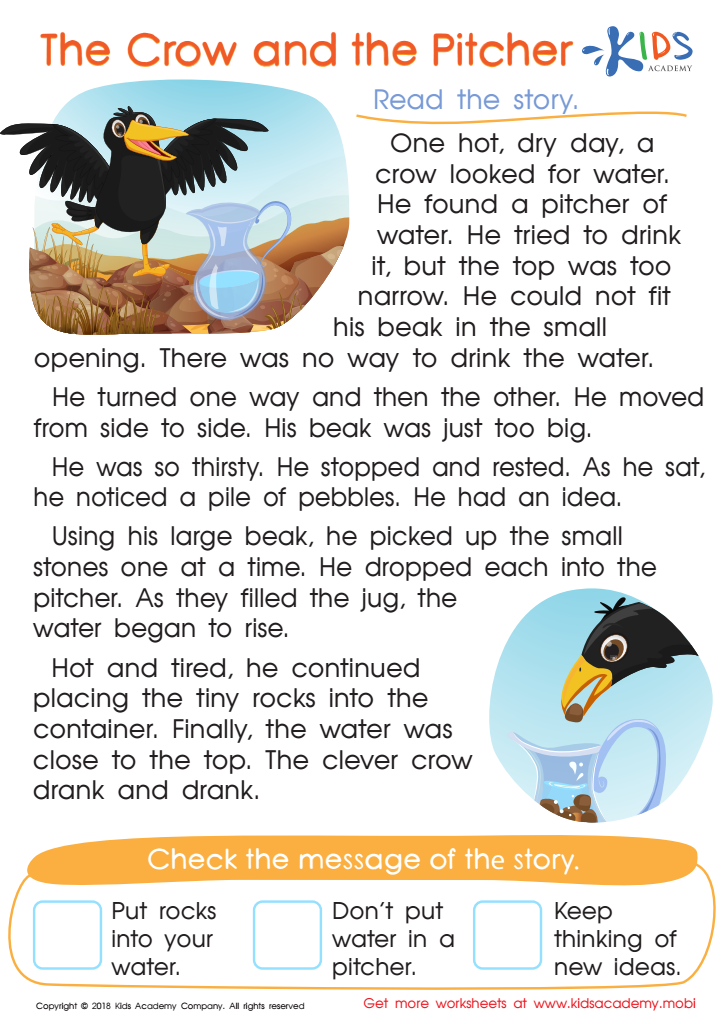
The Crow and the Pitcher Worksheet
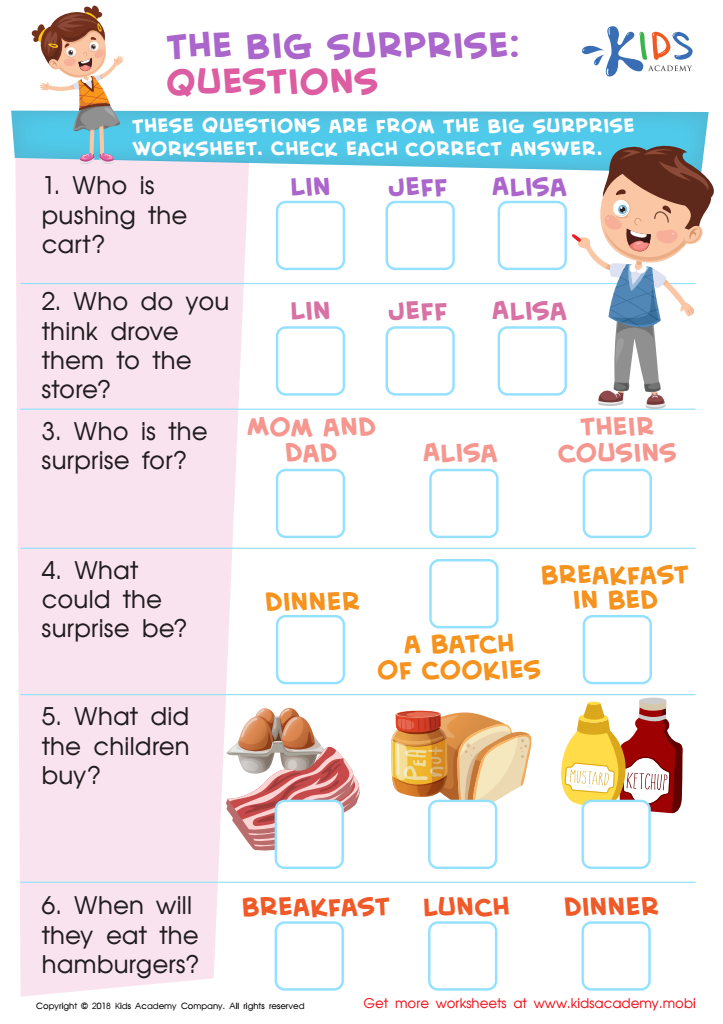
The Big Surprise: Questions Worksheet








Parents and teachers should prioritize critical thinking skills for children aged 3-9 because these foundational years are crucial for cognitive development. At this age, children are naturally curious and eager to explore their environment. Encouraging critical thinking helps them make sense of the world around them, fostering skills such as problem-solving, creativity, and effective reasoning.
Moreover, critical thinking enhances language development. As children engage in discussions and inquiry, they learn to articulate their thoughts clearly and logically. This not only improves their communication skills but also boosts their confidence in expressing themselves.
Instilling critical thinking skills early prepares children for future academic challenges. By learning to analyze information, evaluate situations, and make informed decisions now, they are better equipped to tackle complex tasks later on. This adaptive mindset can lead to higher academic performance and lifelong learning.
Lastly, teaching critical thinking promotes emotional intelligence. Children learn to consider different perspectives, empathetically respond to others, and approach conflicts thoughtfully. By nurturing these skills, parents and teachers empower children to become informed, responsible citizens who can contribute positively to society. Ultimately, investing in critical thinking paves the way for a brighter, more innovative future for our children.