Sentence construction Normal Grammar Worksheets for Ages 3-9
13 filtered results
-
From - To
Discover our engaging Sentence Construction Normal Grammar Worksheets, specially designed for kids ages 3-9. These fun-filled worksheets help young learners build a strong foundation in grammar by focusing on sentence creation. Children will develop critical writing skills as they practice forming sentences using correct structure and appropriate punctuation. Ideal for classroom and home use, these printables enhance vocabulary and understanding of language norms. Bright, engaging designs ensure that learning remains enjoyable. Empower your child’s writing journey with Kids Academy's expertly crafted resources that foster confidence and proficiency in grammar effortlessly. Start building better sentences today!
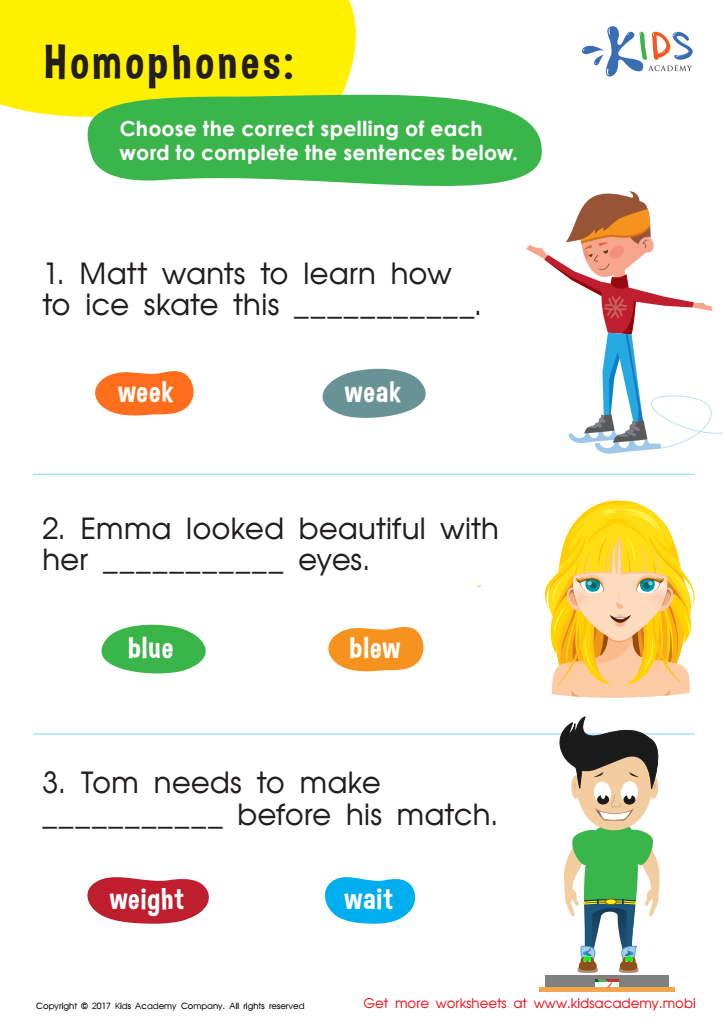
Homophones Ate/Eight Spelling Worksheet
 Assign to My Students
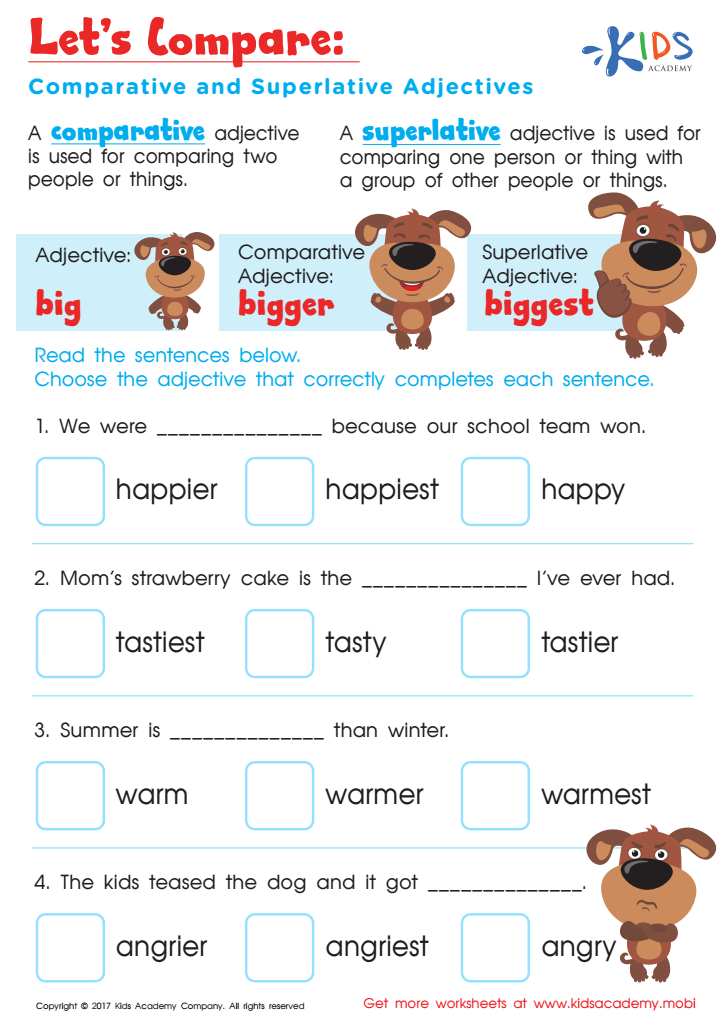
Comparative and Superlative Worksheet
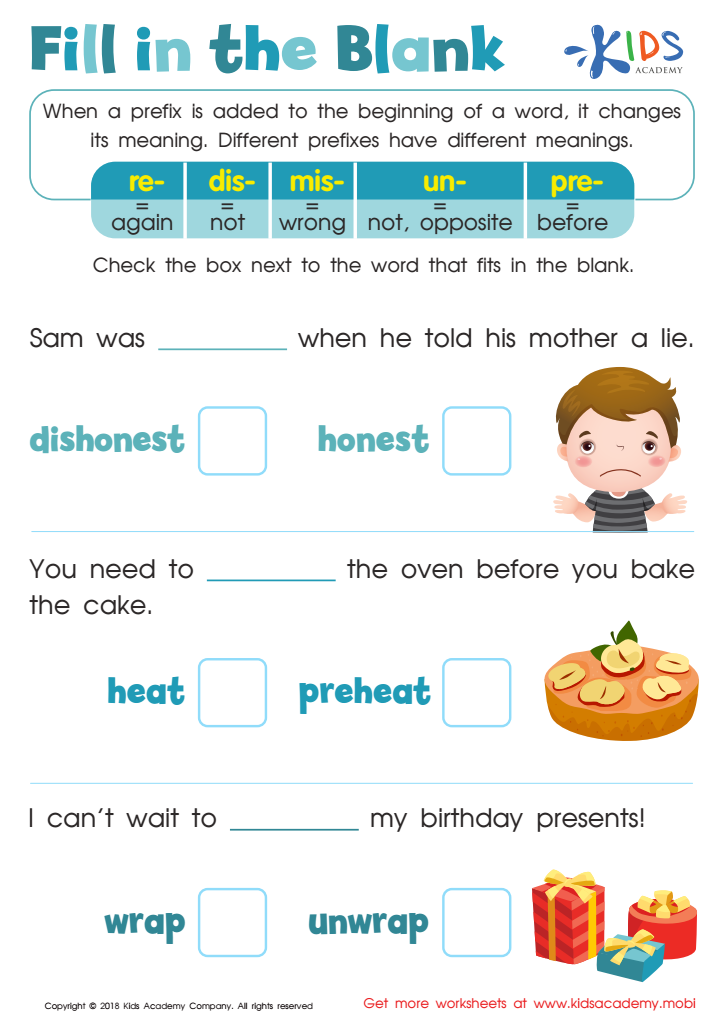
Reading: Fill in the Blank Worksheet
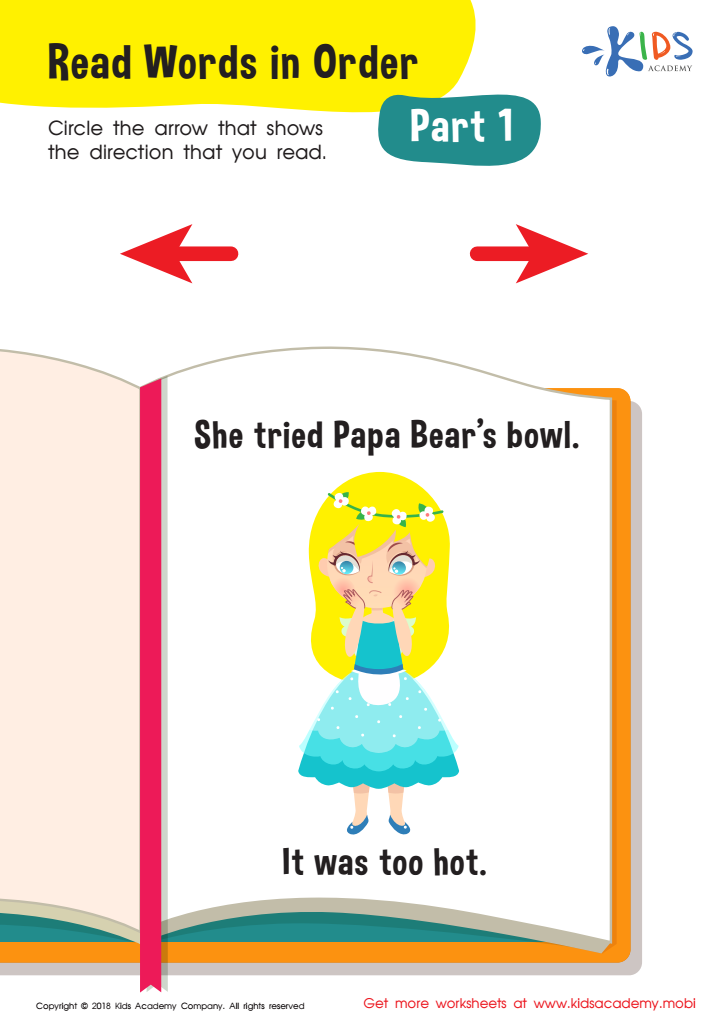
Read Words Order Part 1 Worksheet
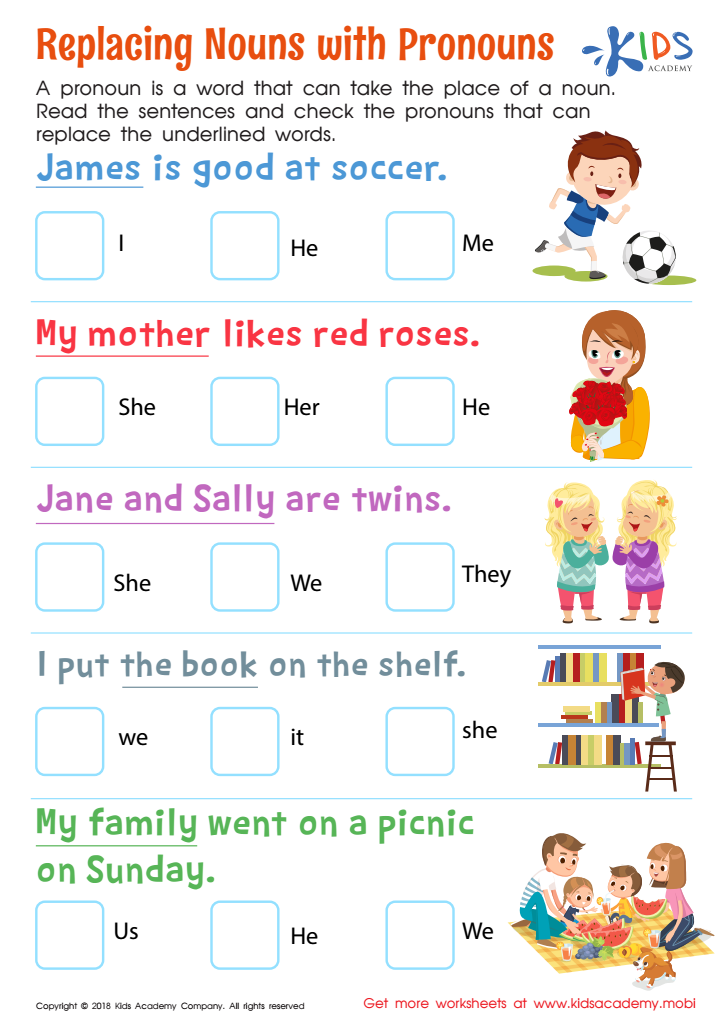
Replacing Nouns with Pronouns Worksheet
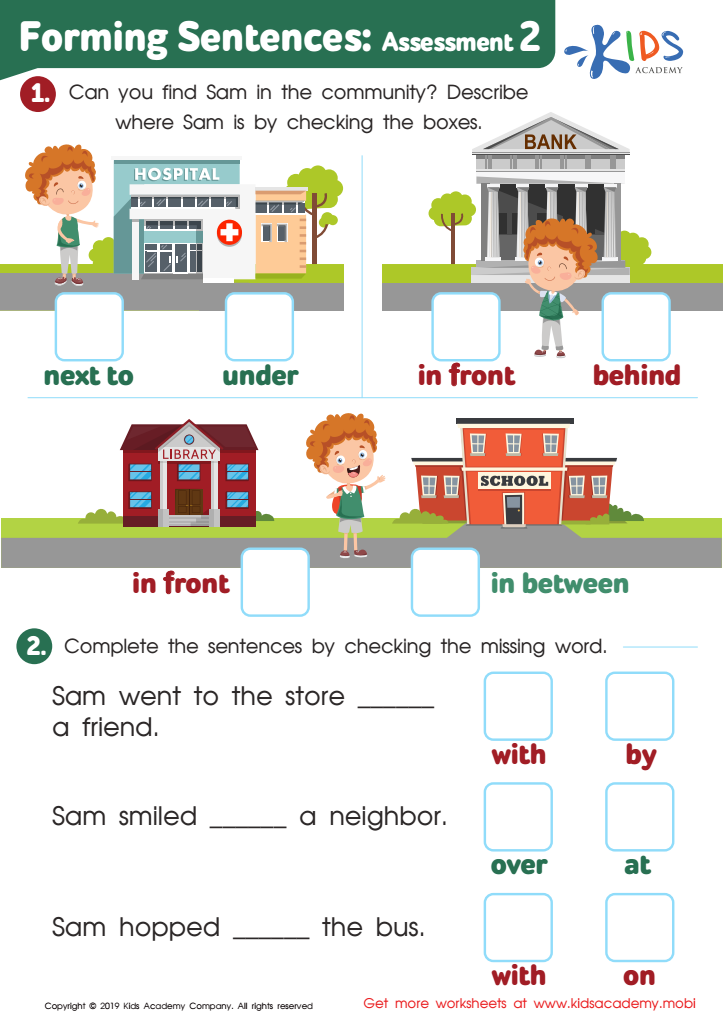
Forming Sentences: Assessment 2 Worksheet
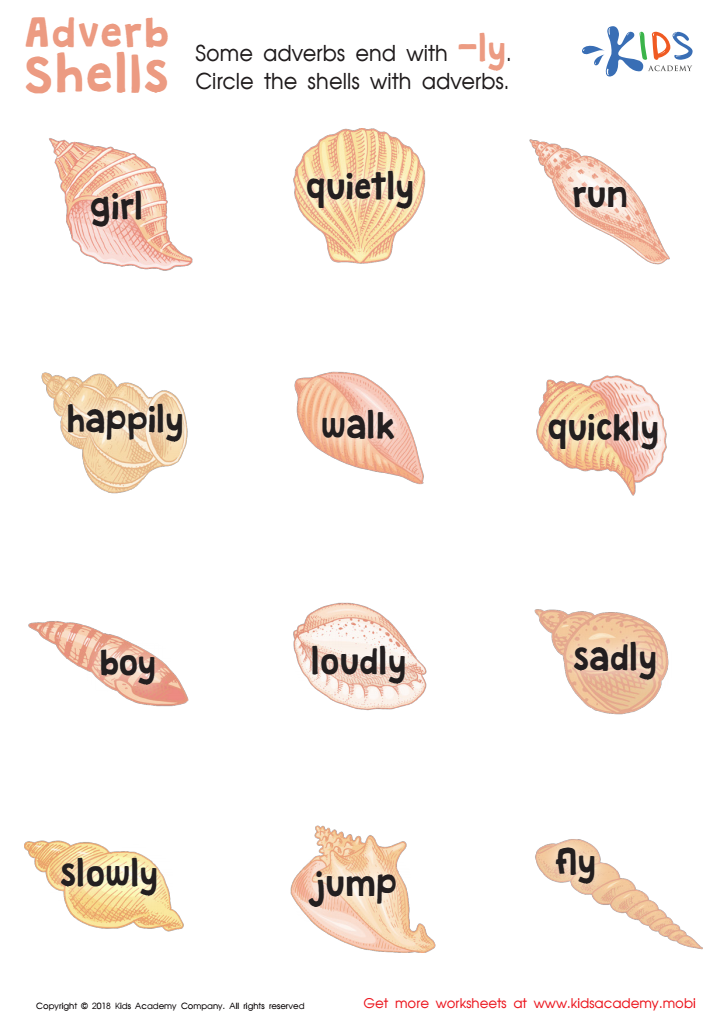
Adverb Shells Worksheet
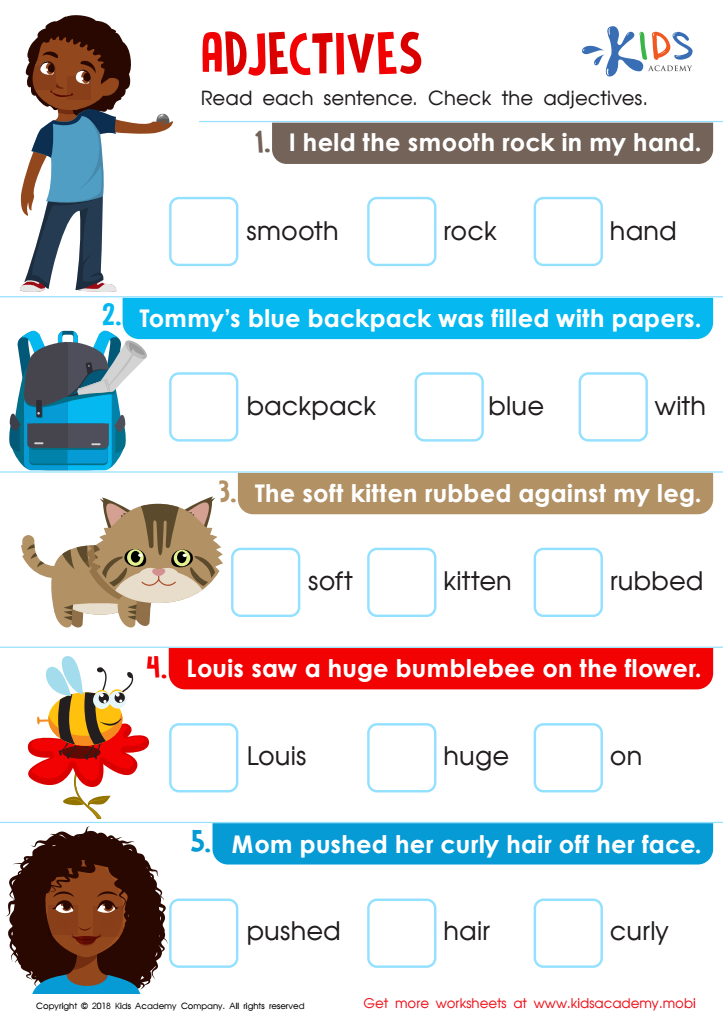
Adjectives Worksheet
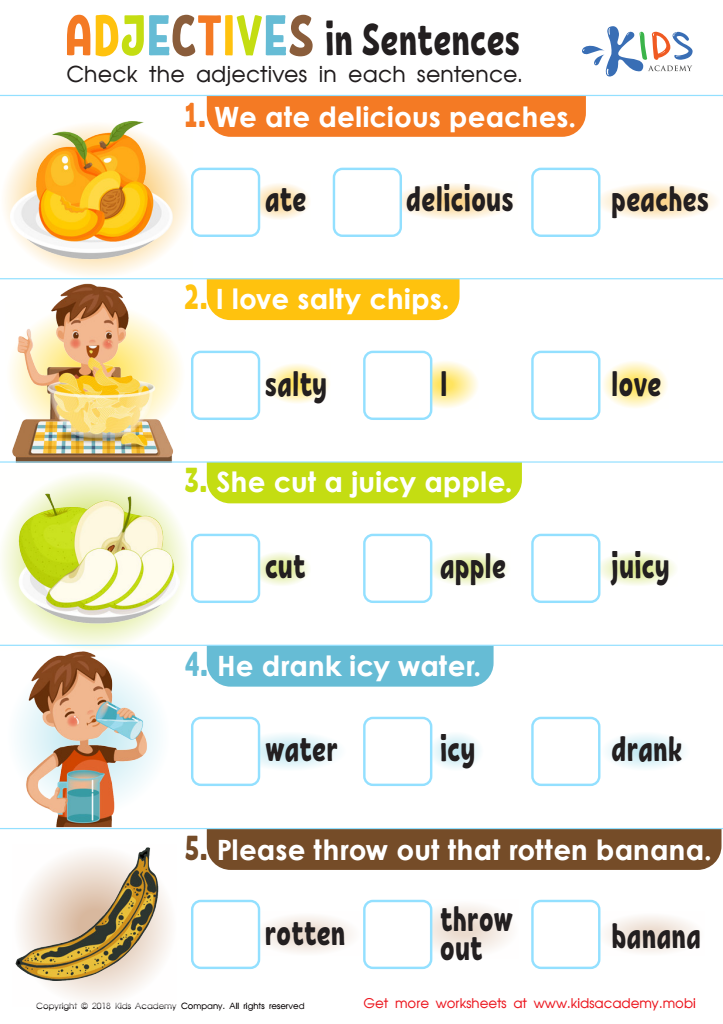
Adjectives in Sentences Worksheet
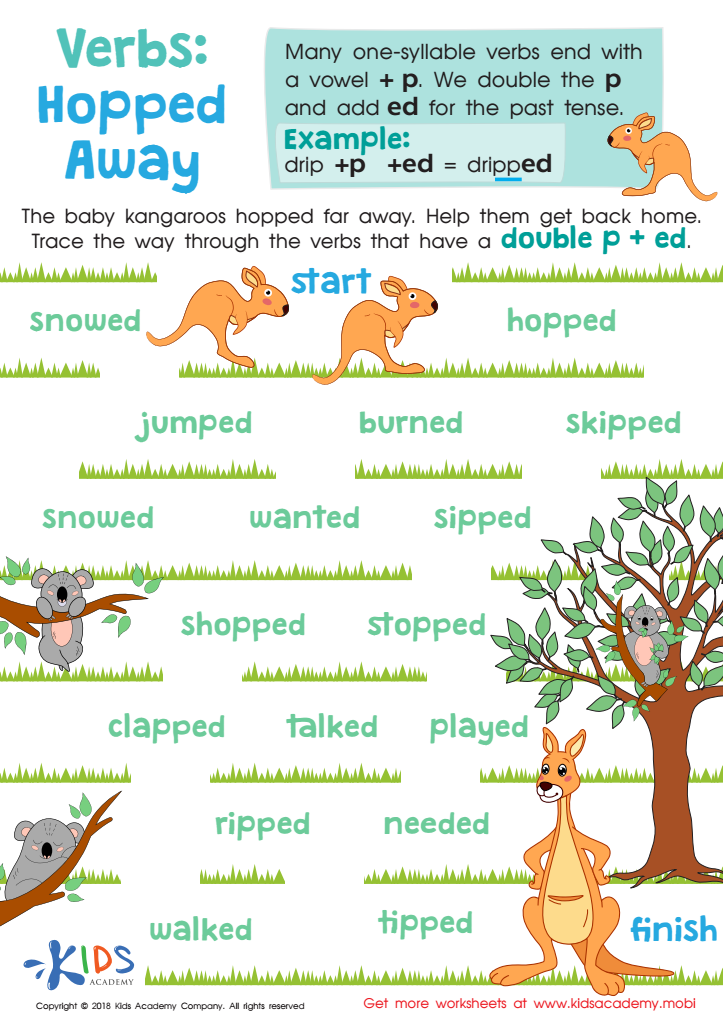
Verbs: Hopped Away Worksheet
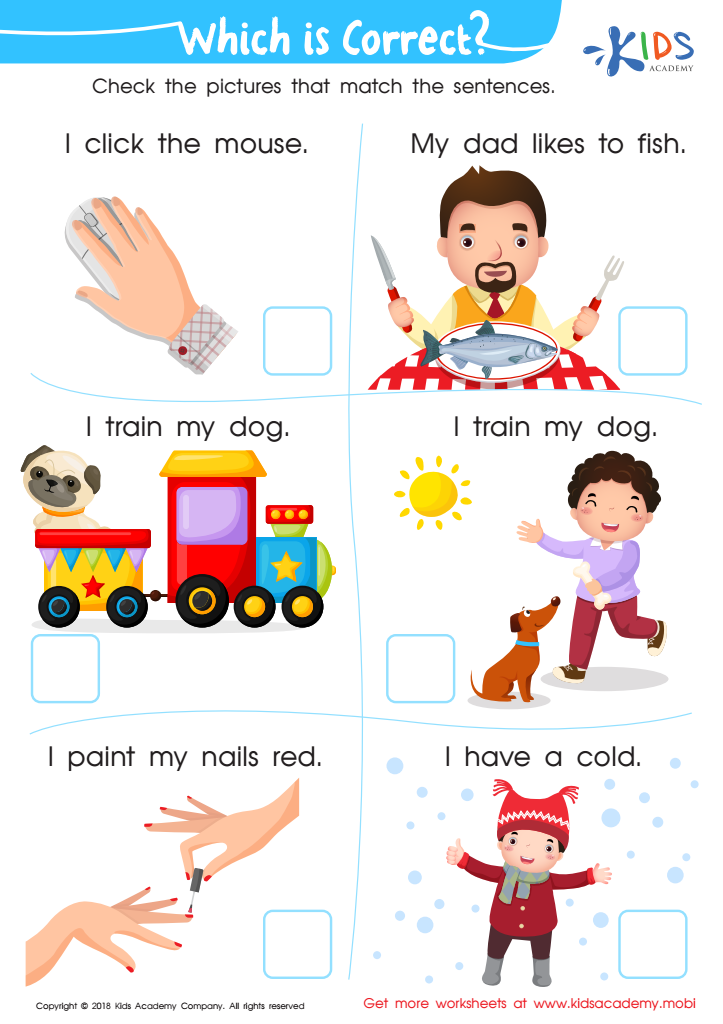
Which Is Correct? Worksheet
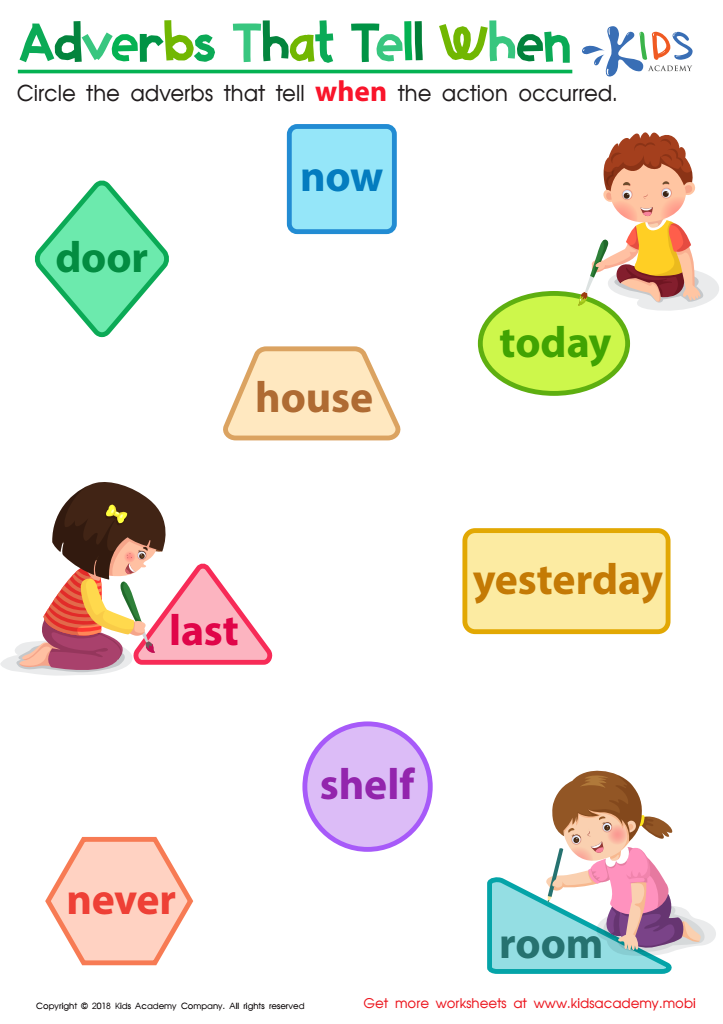
Adverbs That Tell us When Worksheet
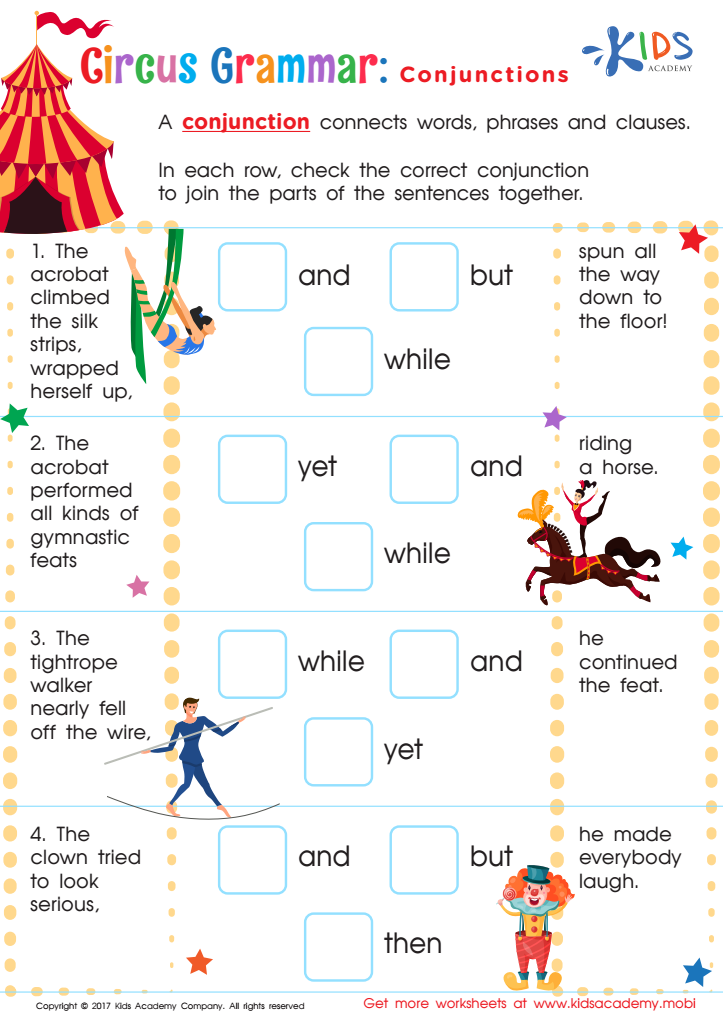
Conjunctions Worksheet








Ensuring that children aged 3-9 develop proper sentence construction and grammar skills is vital for several fundamental reasons. Firstly, these years are formative in language development, where children's brains are exceptionally receptive to learning new languages and rules. Proper sentence construction helps them communicate effectively, express their thoughts clearly, and be understood by others. This not only impacts their day-to-day interactions but also forms the basis for advanced literacy skills needed for reading comprehension and writing as they progress through school.
Additionally, understanding grammar rules fosters cognitive development by enhancing logical thinking and problem-solving skills. The structured nature of grammar helps children develop patterns of thinking that are key in other areas of learning, like math and science. For instance, recognizing subject-verb agreement requires attention to detail and analytical skills that are applicable in broader academic contexts.
Moreover, early proficiency in normal grammar sets a strong foundation for future academic achievement. Research shows that early reading and writing skills are strongly correlated with later success in school. By mastering basic grammar and sentence construction early on, children are better prepared to engage with more complex texts and compose well-structured written work, which are crucial skills throughout their education and beyond.
Thus, parents and teachers should prioritize these aspects of language learning to support the overall intellectual and social-emotional development of children.