Understanding suffixes Normal Grammar Worksheets for Ages 3-9
6 filtered results
-
From - To
Unlock the magic of language for young learners with our "Understanding Suffixes: Normal Grammar Worksheets for Ages 3-9." Specifically designed to spark curiosity and build foundational skills, these engaging worksheets simplify the concept of suffixes. From beginners to advancing kids, each activity encourages understanding and usage of common suffixes to form new words. With vibrant visuals and age-appropriate exercises, children achieve mastery in grammar through play and practice. Ideal for educators and parents alike, these worksheets offer a dynamic learning experience that makes grammar fun and accessible for children aged 3 to 9. Download today and watch their language skills thrive!
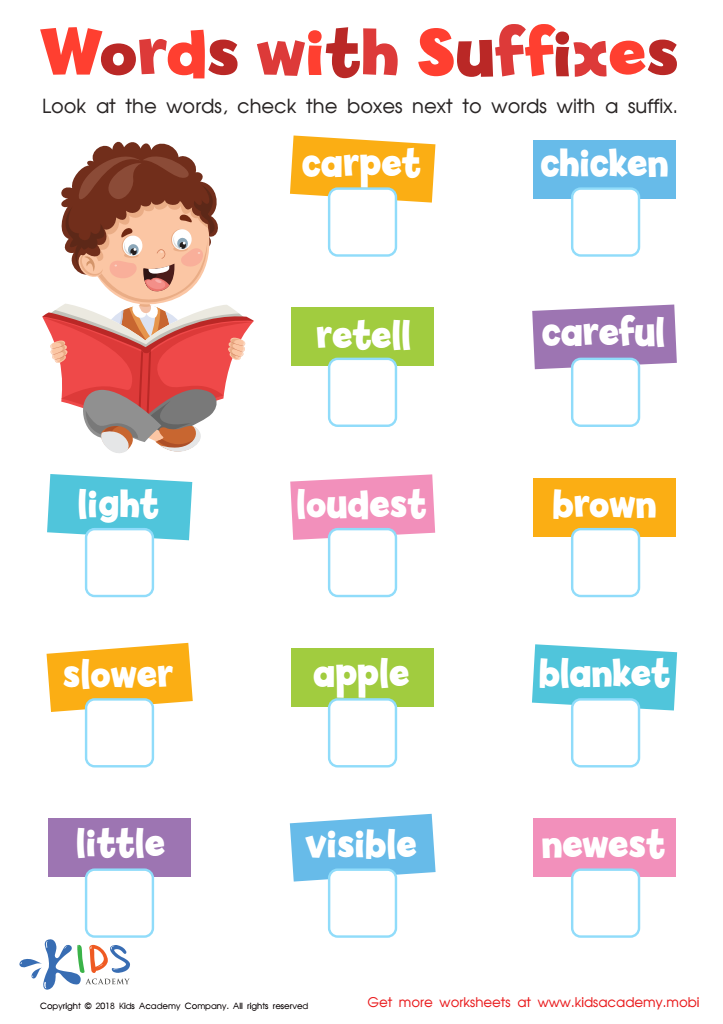
Reading: Words With Suffixes Worksheet
 Assign to My Students
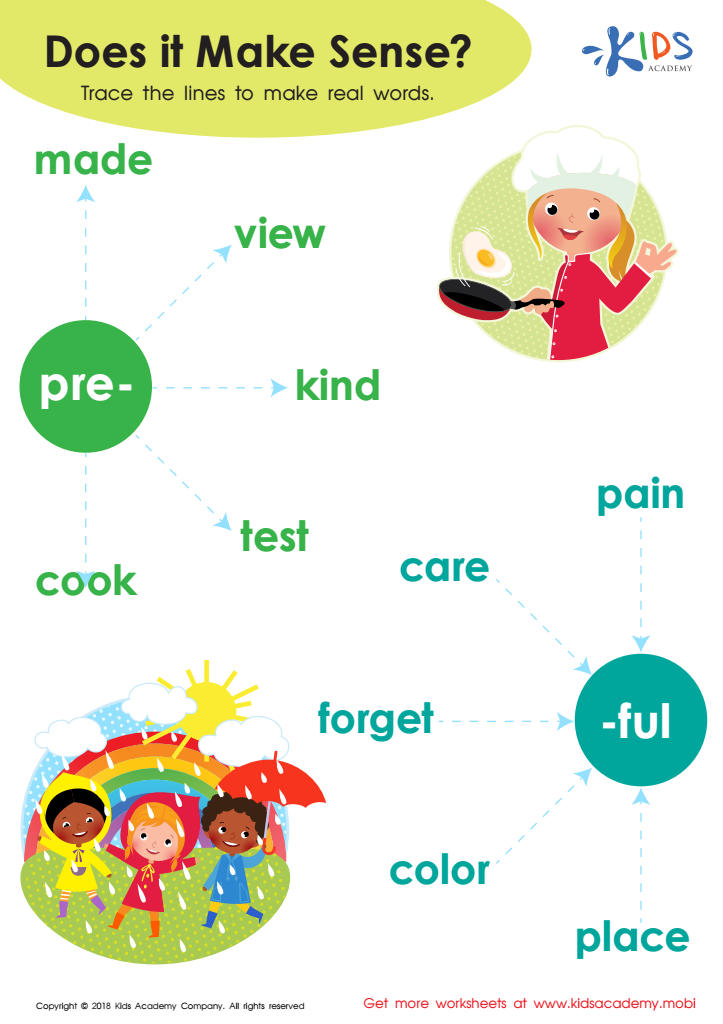
Prefix pre– and Suffix ful– Worksheet
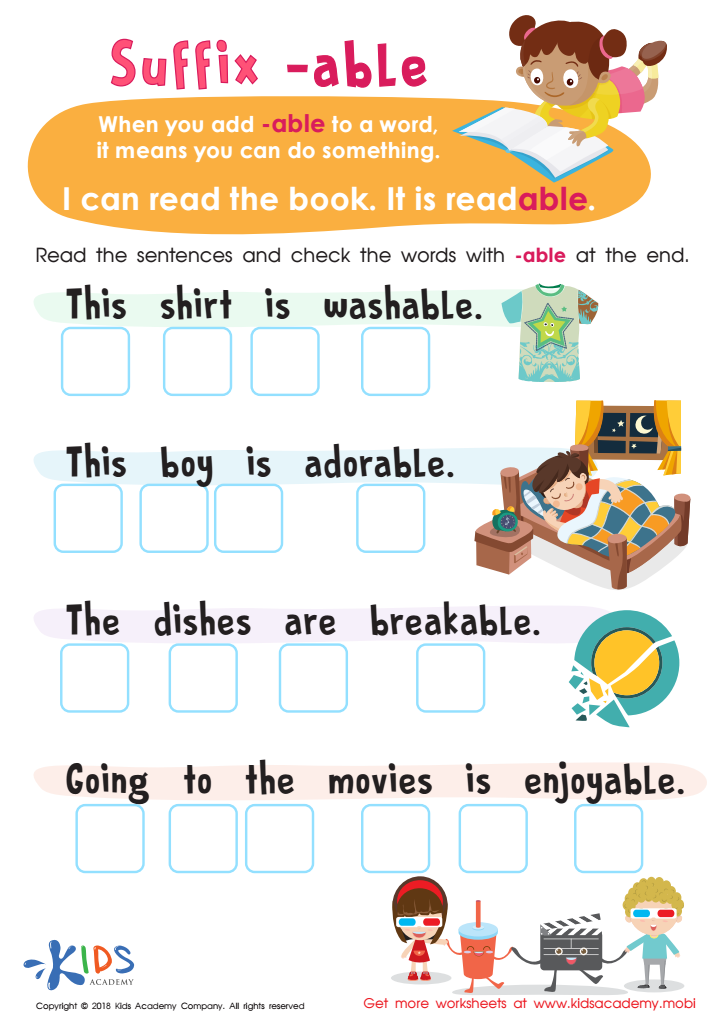
Suffix -Able Worksheet
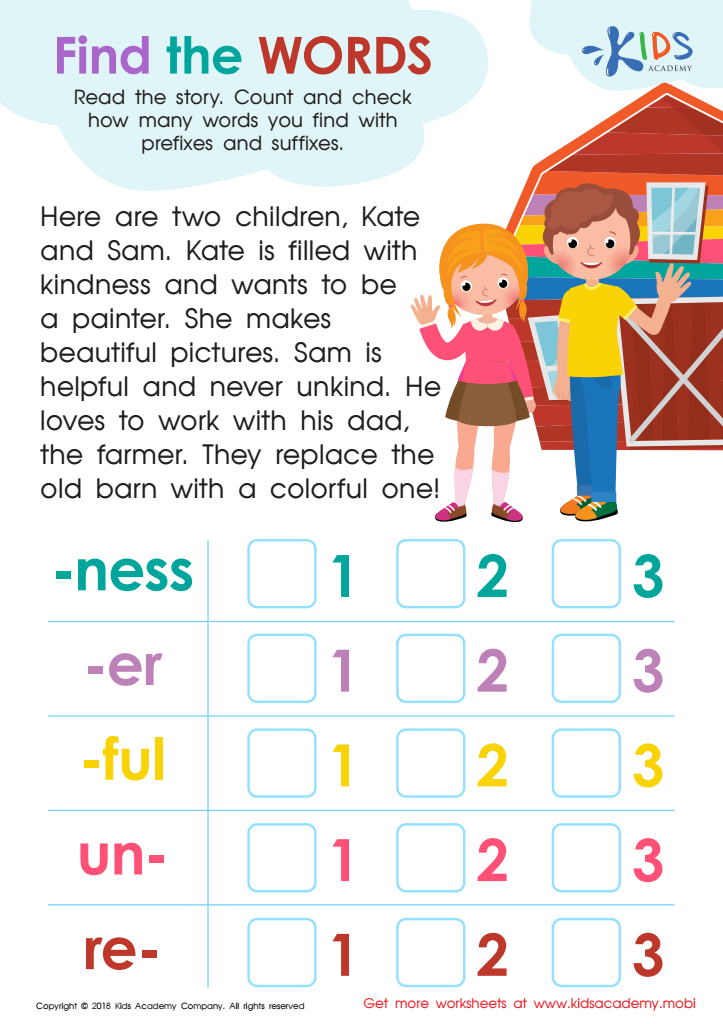
Prefix and Suffix Worksheet For Grade 3
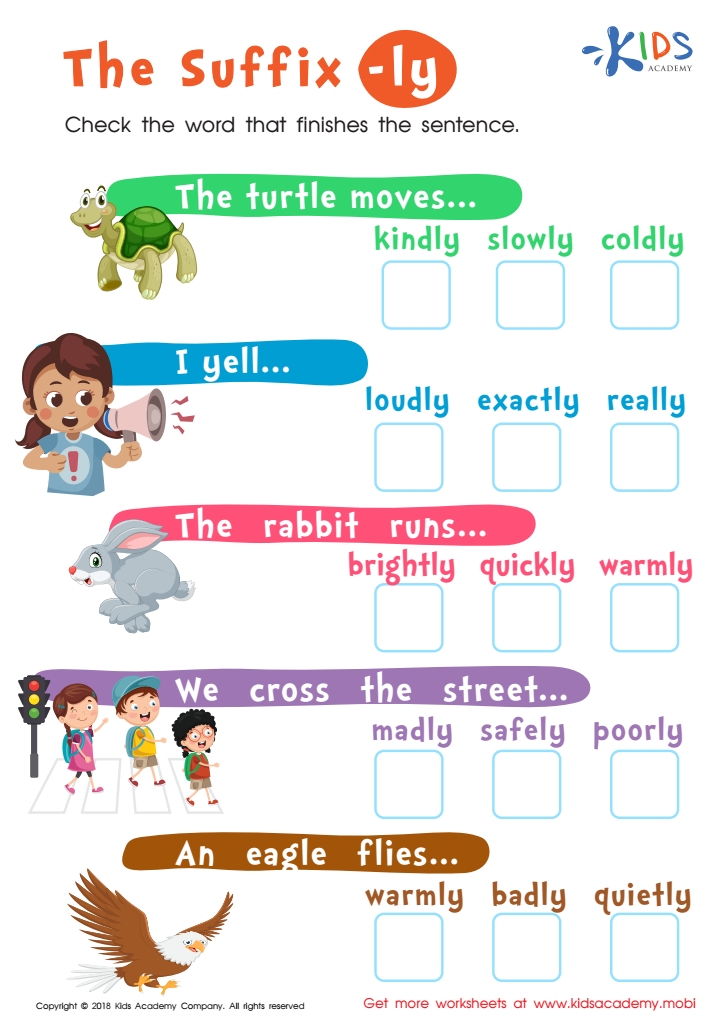
The Suffix -Ly Worksheet
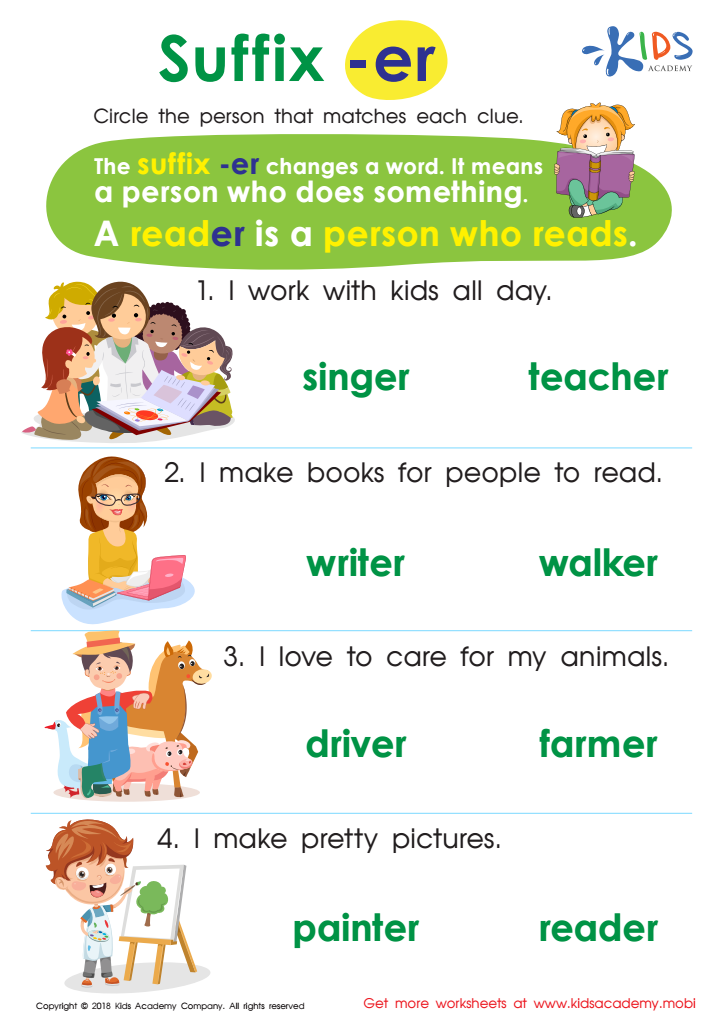
Suffix –er Printable Worksheet


.jpg)



Understanding suffixes is fundamental for young children's language development, and it's essential for parents and teachers to prioritize this knowledge. Suffixes, the endings added to root words, help children expand their vocabulary and comprehend more complex words by grasping their meanings and grammatical roles. For example, when kids learn that adding "-s" to a noun like "cat" makes it plural ("cats"), or that adding "-ed" to a verb like "talk" forms the past tense ("talked"), they start to decode language rules naturally.
In addition, suffix knowledge supports reading development. When children recognize common suffixes, they can more easily decode unfamiliar words, enhancing their reading fluency and comprehension. This foundational skill, developed from ages 3 to 9, paves the way for more advanced literacy skills in later years, giving them a strong start in their educational journeys.
Moreover, understanding suffixes boosts children's writing abilities. They begin to apply these suffixes in their own writing, making their sentences more grammatically accurate and expressive. By understanding and using suffixes correctly, children communicate more effectively, both in spoken and written forms.
Overall, grasping suffixes enriches vocabulary, reading, and writing skills, setting young learners up for academic success and effective communication, making it a critical element of early education.