Critical Thinking Normal Writing Worksheets for Ages 3-9
3 filtered results
-
From - To
Enhance your child's cognitive skills with our "Critical Thinking Normal Writing Worksheets for Ages 3-9." Designed to challenge young minds, these printable worksheets promote logical reasoning, problem-solving, and analytical skills through engaging writing activities. From identifying patterns to creative storytelling, each worksheet fosters a love for learning while reinforcing essential critical thinking concepts. Perfect for homeschooling or supplemental practice, these worksheets adapt to various learning styles, ensuring all children can reach their full potential. With bright illustrations and age-appropriate content, make critical thinking an exciting part of your child's educational journey today!
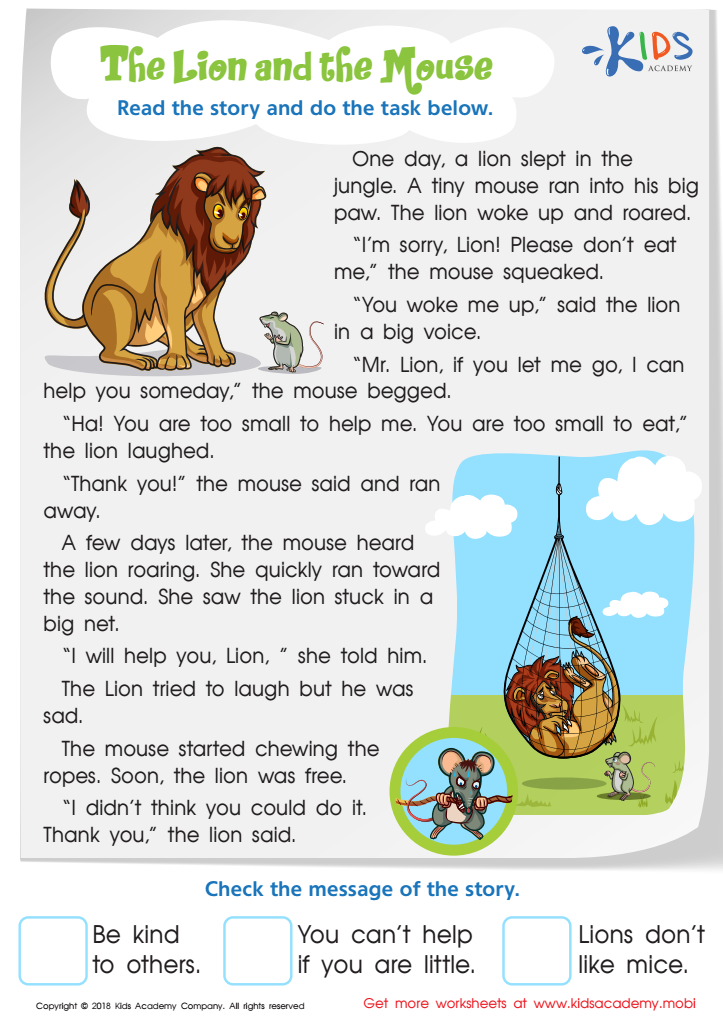
The Lion and the Mouse Worksheet
 Assign to My Students
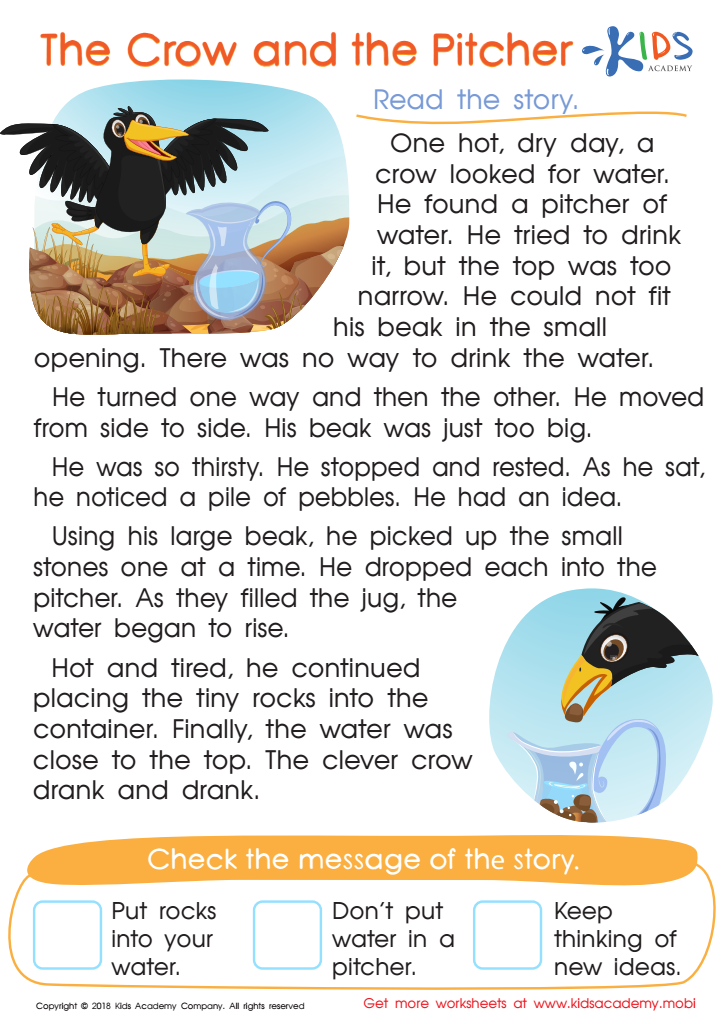
The Crow and the Pitcher Worksheet
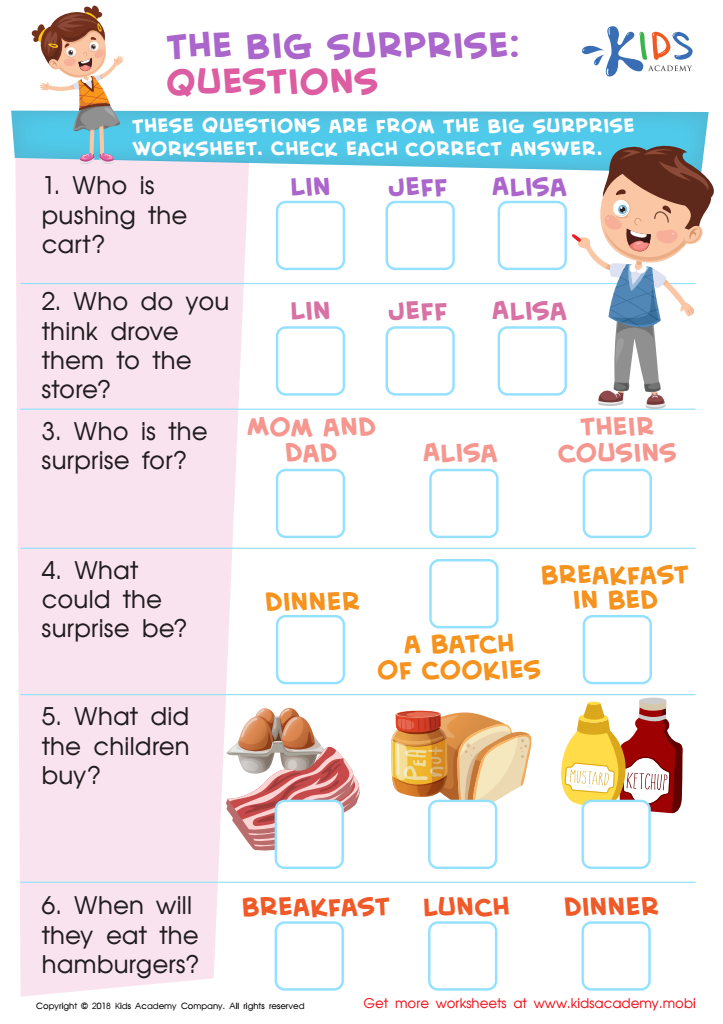
The Big Surprise: Questions Worksheet








Encouraging critical thinking in children ages 3 to 9 is fundamental to their overall development. At these formative ages, their brains are extraordinarily receptive to new information and ways of understanding the world around them. By introducing critical thinking, parents and teachers help children develop strong problem-solving skills and the ability to make informed decisions. This foundation not only supports academic success but also prepares children for real-life challenges.
Critical thinking enables kids to ask questions, explore new ideas, and understand various perspectives. It fuels creativity and sparks a love for lifelong learning. For example, when children are faced with a puzzle or a complex question, they learn to break down the problem, consider different solutions, and reflect on the consequences of each. This process nurtures their analytical abilities and helps them become independent thinkers.
Moreover, fostering these skills early on can boost a child's self-confidence. When children feel capable of evaluating situations and making decisions, they are more likely to tackle new challenges head-on. This builds resilience and a growth mindset. In an ever-evolving world, having the capacity to think critically is indispensable. By prioritizing critical thinking, parents, and teachers equip children with essential tools for navigating the complexities of life.