Grammar skills improvement Normal Writing Worksheets for Ages 3-9
5 filtered results
Difficulty Level
Grade
Age
-
From - To
Subject
Activity
Standards
Boost your child's grammar skills with our engaging Normal Writing Worksheets designed specifically for ages 3-9. These worksheets provide a fun and interactive approach to improving grammar fundamentals, helping young learners build a strong foundation for effective communication. Covering essential topics such as sentence structure, punctuation, and parts of speech, each worksheet is carefully crafted to nurture your child's writing abilities. Ideal for both classroom use and at-home practice, our resources encourage creativity and critical thinking. Empower your child with the confidence to express themselves clearly as they dive into the world of grammar through our vibrant and user-friendly worksheets!
Favorites
With answer key
Interactive
Reflexive Pronouns Worksheet
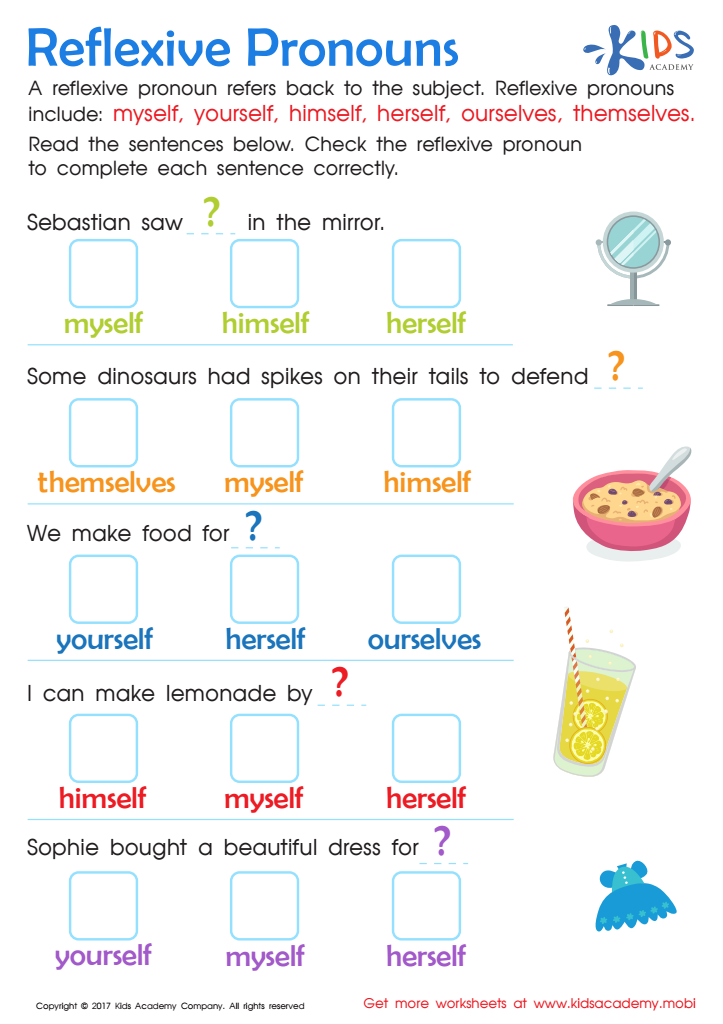
The 2nd grade reflexive pronouns worksheet by Kids Academy offers clear explanations and fun activities to help master reflexive pronouns.
Kids Academy's 2nd grade reflexive pronouns worksheet has everything you need to brush up on reflexive pronouns. It includes a brief explanation and fun activities with sentences and pictures to check your understanding. Master reflexive pronoun usage in no time!
 Assign to My Students
Reflexive Pronouns Worksheet
Worksheet
Practice Capitalization Printable
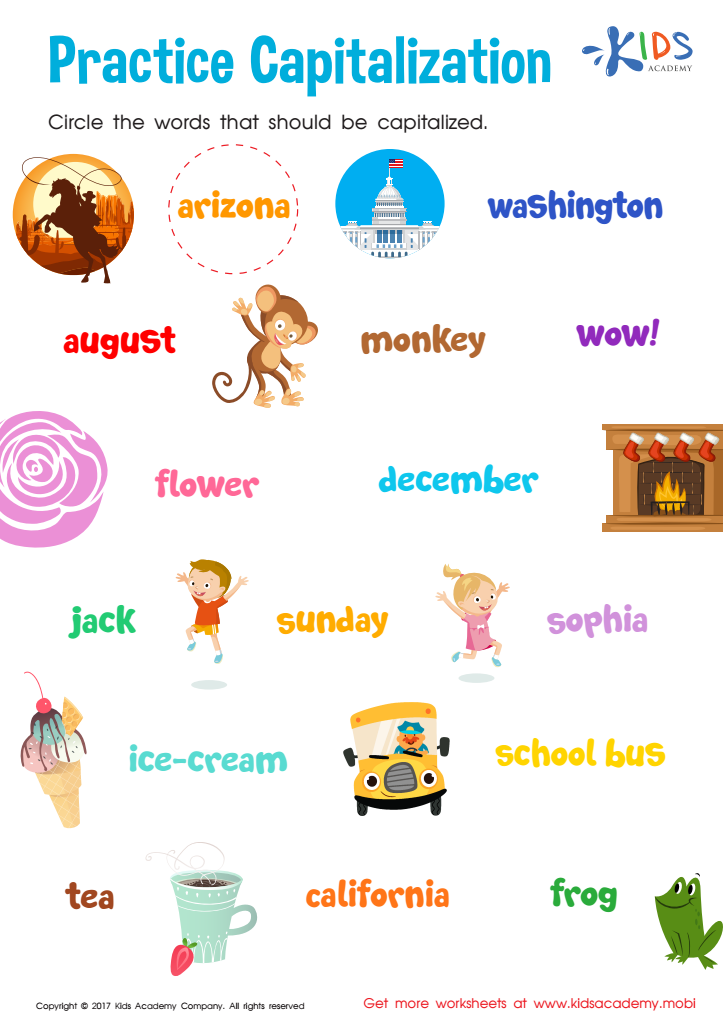
Test your child's knowledge of capitalization with this fun worksheet! It's up to them to choose which words need to be capitalized and which don't. Get your printable Practice Capitalization worksheet today! (80 words)
Practice Capitalization Printable
Worksheet
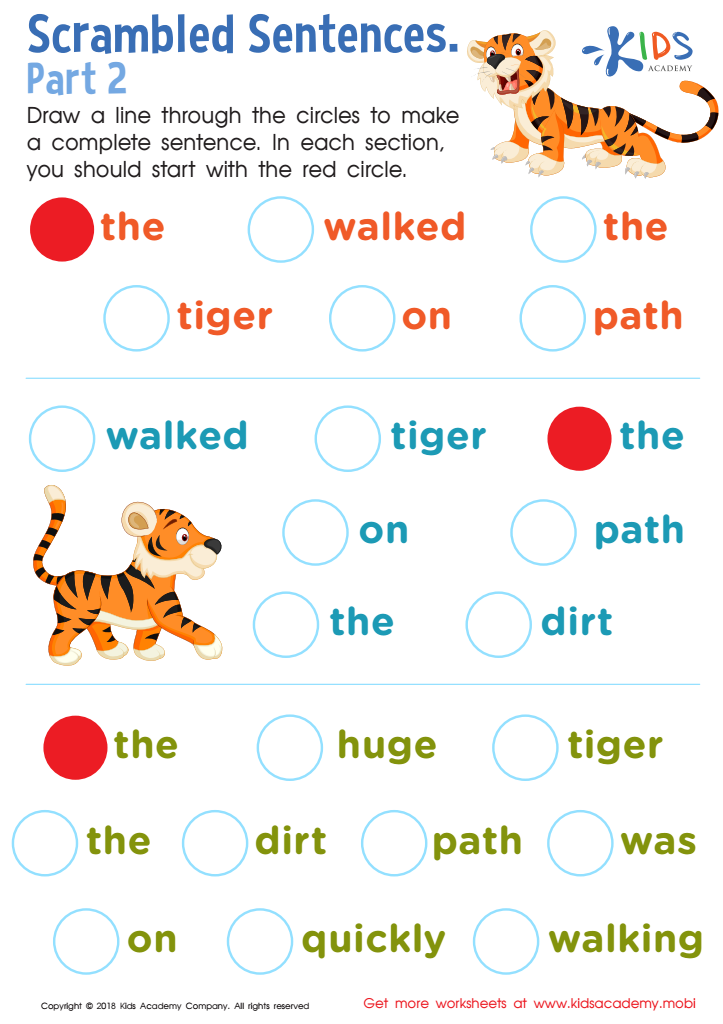
Scrambled Sentences Part 2 Worksheet
This printable worksheet helps kids construct simple, correct sentences. Introduce them to making sentences if they're new to it. Have them draw a line through the circles to form a sentence, starting with the red circle. After completing this exercise, they'll be able to craft short sentences with confidence.
Scrambled Sentences Part 2 Worksheet
Worksheet
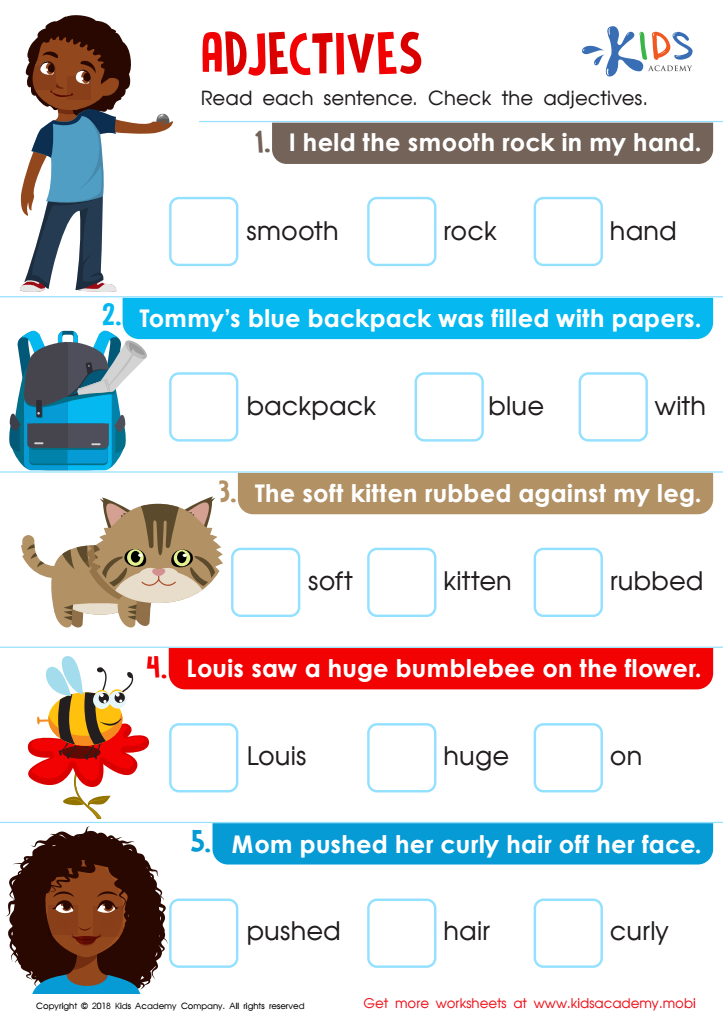
Adjectives Worksheet
Adjectives are words that describe a noun. Examples include "beautiful" and "good". Ask your students to use these adjectives in a sentence and have them identify the adjectives in five sentences on a worksheet. Point out that adjectives are essential to understand, and have them check their answers.
Adjectives Worksheet
Worksheet
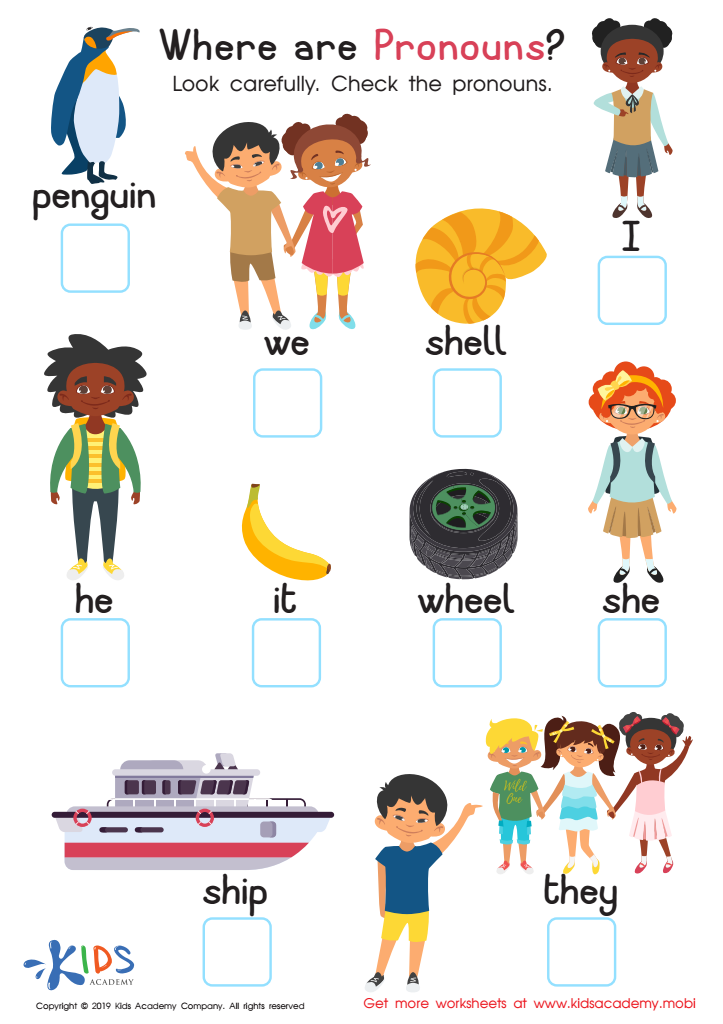
Where Are Pronouns? Worksheet
Pronouns make language flow, substituting "he" or "she" for names. Kids know and use them in their speech, but identifying pronouns in grammar helps build writing skills. This worksheet challenges kids to pick out pronouns from other nouns. Go through the worksheet, view the pictures and read the words. Ask kids to check boxes in front of pronouns to mark answers.
Where Are Pronouns? Worksheet
Worksheet
Join Kids Academy for Free
Who is primarily going to use this learning content?







Parents and teachers should prioritize grammar skills improvement for children ages 3-9 because these foundational skills are essential for effective communication. Mastery of grammar helps children express their thoughts clearly, allowing them to engage meaningfully with others. At a young age, children are naturally curious and keen to learn; strengthening their grammar knowledge supports their overall language development.
Improving grammar skills also enhances reading comprehension. When children understand the structure of sentences, they become better equipped to decipher meaning and story context. This knowledge primes them for academic success as they progress through school. Additionally, grammar proficiency contributes to writing clarity. As children develop their writing skills, they learn to organize ideas logically and express themselves with confidence.
Beyond academics, good grammar fosters positive social interactions. Clear communication is vital in friendships and collaborative environments. Moreover, strong grammar skills improve self-esteem, as children take pride in their ability to convey their thoughts without confusion or errors.
In summary, supporting kindergarten through early elementary-aged children with grammar skills not only sets the stage for successful literacy development but also enriches their social and emotional well-being. Parents and teachers play a crucial role in nurturing these skills at this critical stage of growth.