Pronoun identification Normal Writing Worksheets for Ages 3-9
3 filtered results
-
From - To
Our Pronoun Identification Normal Writing Worksheets for Ages 3-9 are designed to make language learning fun and effective. These engaging worksheets help young learners identify and correctly use pronouns in sentences. Through colorful exercises and playful activities, children practice distinguishing between subjects like "he," "she," "it," "they," and more. Ideal for home or classroom settings, our resources support developing essential writing skills as they progress through various levels. Build your child's confidence in grammar while enhancing their literacy at an early age with our expertly crafted pronoun worksheets. Explore more to inspire learning and growth.
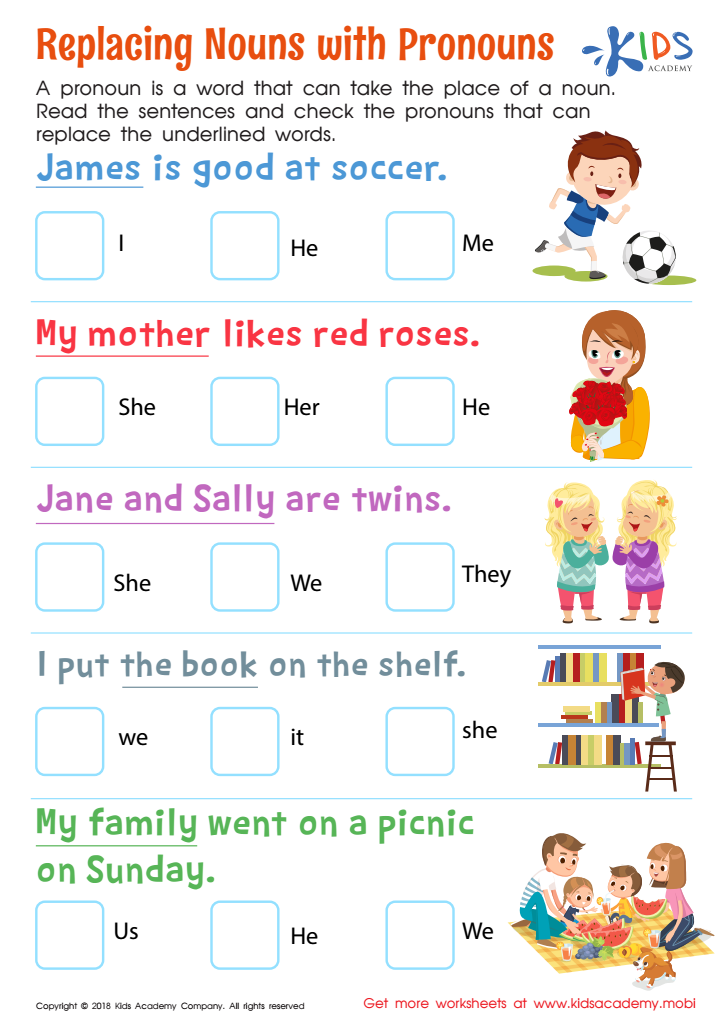
Replacing Nouns with Pronouns Worksheet
 Assign to My Students
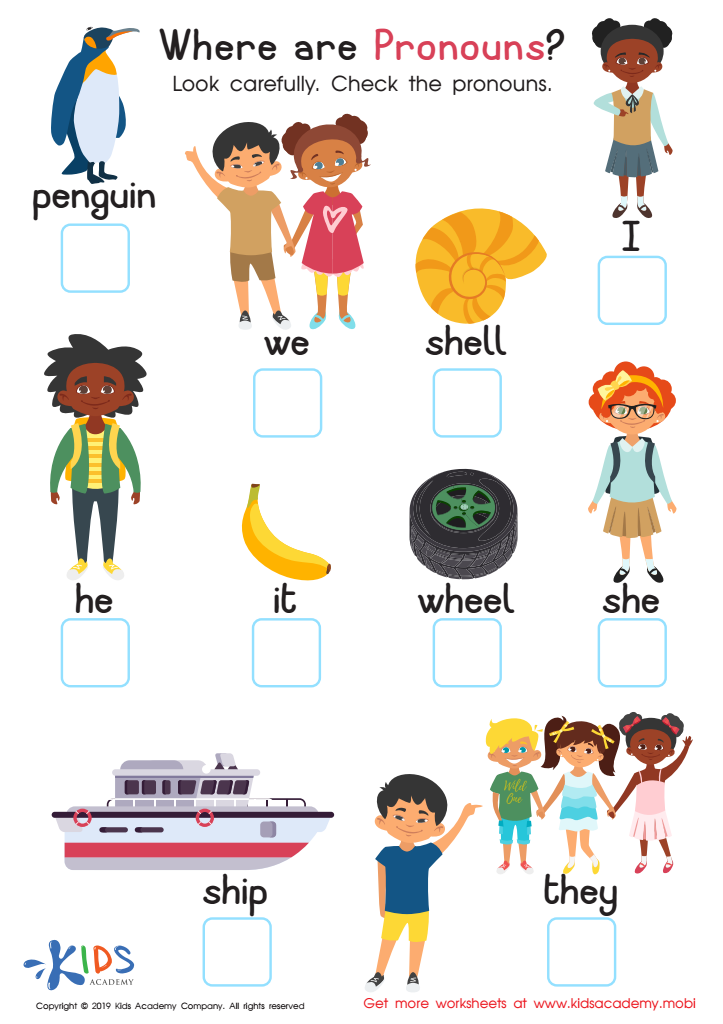
Where Are Pronouns? Worksheet
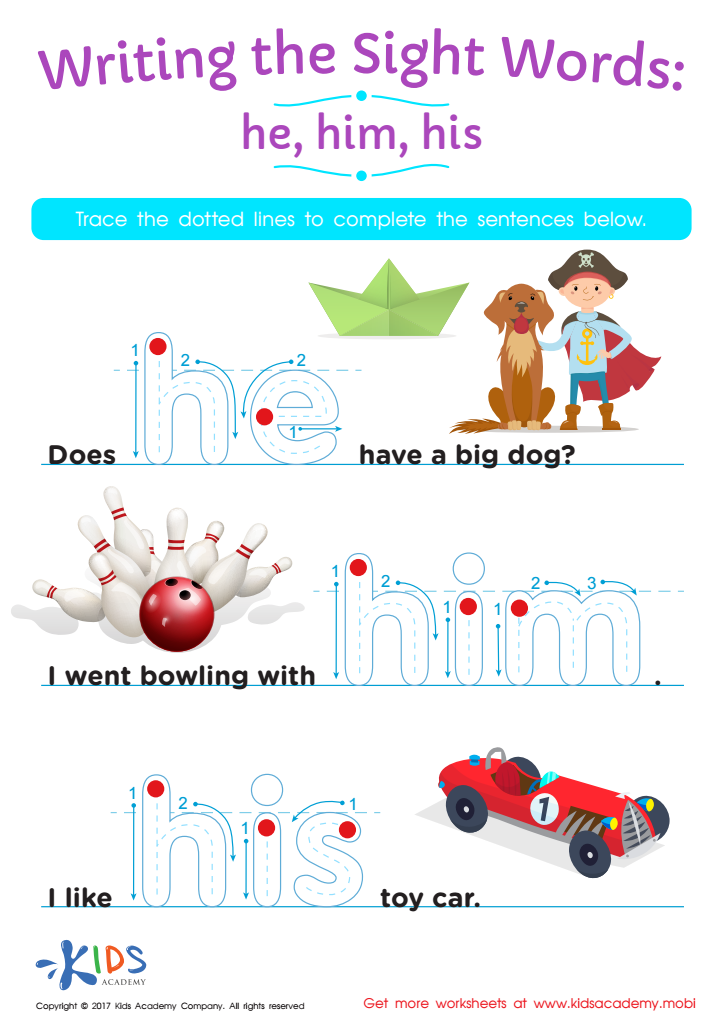
He, Him, His Printable Sight Words Worksheet








Parents and teachers should prioritize pronoun identification for children ages 3-9 because it lays a critical foundation for effective communication and linguistic development. At this age, children are rapidly honing their language skills, and mastering pronouns, such as he, she, they, and it, is essential for constructing clear and coherent sentences. Understanding and correctly using pronouns helps children express their thoughts accurately and reduces confusion in both spoken and written language.
Moreover, early proficiency in pronoun usage enhances reading comprehension and writing skills. When children read stories, correctly identifying the pronouns helps them better understand character actions and narrative flow, which in turn reinforces their understanding of the overall text. In writing, using pronouns appropriately makes their sentences simpler and more natural, fostering clarity.
Additionally, inclusive and accurate pronoun usage promotes social development. It fosters respect and sensitivity towards others' identities, which is crucial in today’s diverse society. Teaching children the wide range of pronouns and their proper usage can cultivate empathy and respect for individual differences from an early age.
Therefore, parents and teachers should focus on pronoun identification to ensure children develop strong language abilities, improve academic skills, and build a respectful and inclusive outlook towards others.