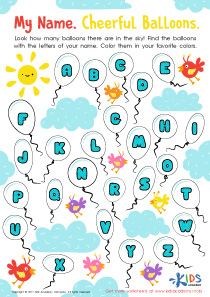
Handwriting Skills Normal ABC Order Worksheets for 3-Year-Olds
5 filtered results
Difficulty Level
Grade
Age
-
From - To
Subject
Activity
Standards
Introduce your little ones to the world of letters with our "Handwriting Skills Normal ABC Order Worksheets for 3-Year-Olds." These engaging printables are designed to help children practice writing their ABCs, improve fine motor skills, and foster a love for learning. Our age-appropriate exercises are tailored to make learning fun and interactive, with colorful illustrations and simple instructions that guide your child step-by-step. Perfect for educators and parents alike, these worksheets provide a solid foundation for early literacy and make mastering the alphabet a delightful experience for young learners. Let's start the writing adventure today!
Favorites
With answer key
Interactive
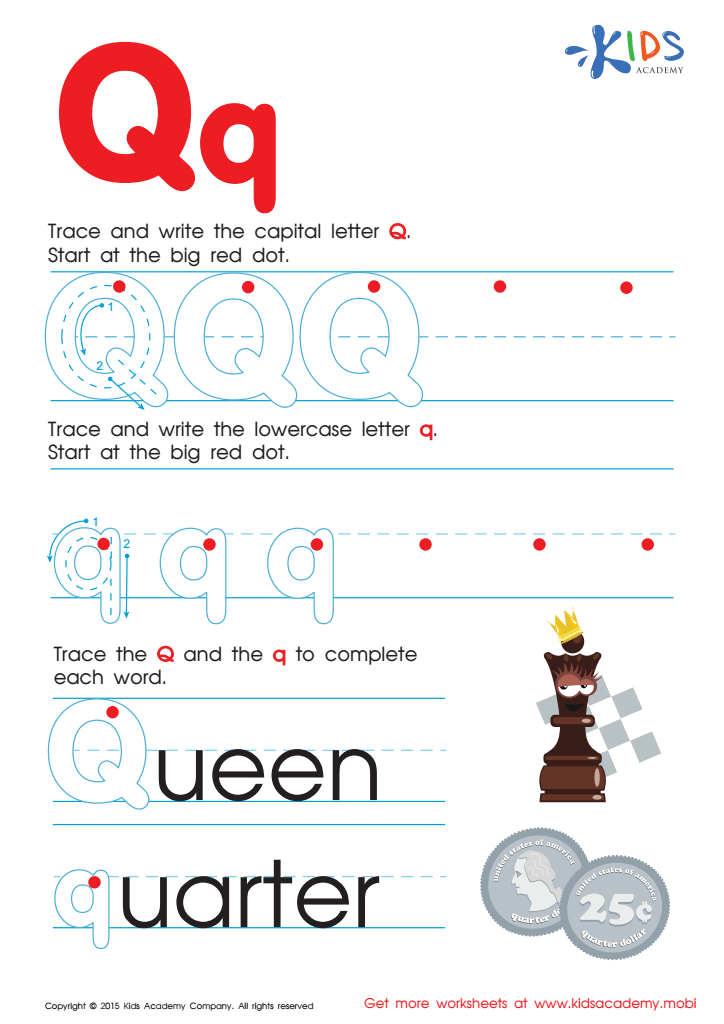
Letter Q Tracing Page
Learn the letter "Q"! Trace and write it a few times in upper and lowercase. Then help the Queen by writing her initial letter. Finally, write "quarters" and practice with more alphabet worksheets.
 Assign to My Students
Letter Q Tracing Page
Worksheet

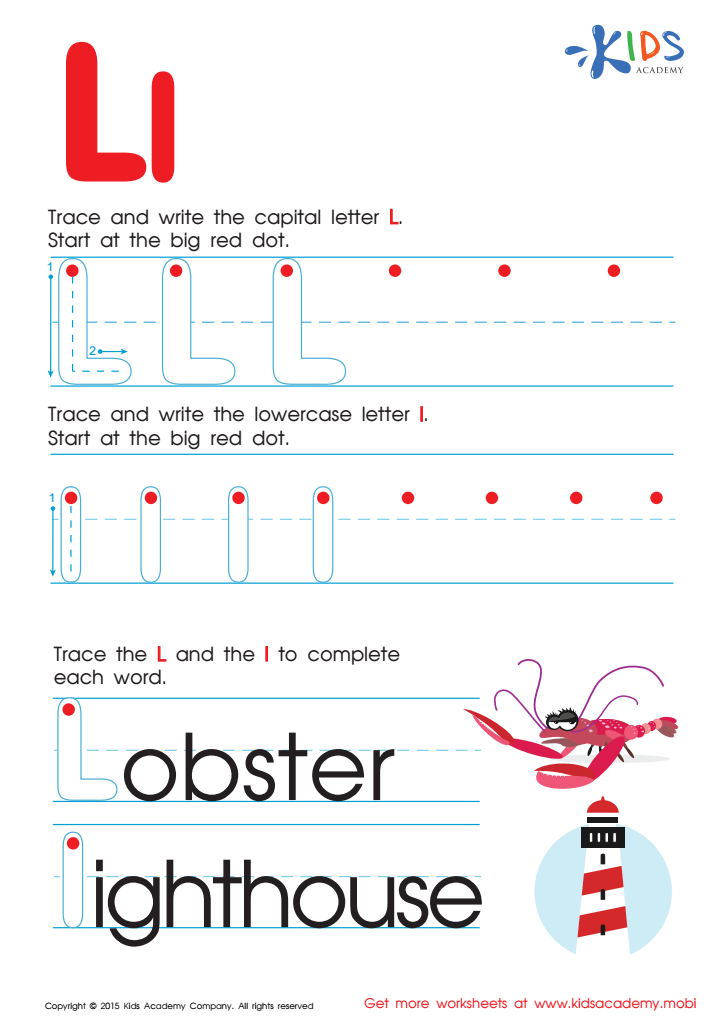
Letter L Tracing Page
Trace uppercase and lowercase letters to practice writing. Pay attention to the lowercase letters, like the "L", that are not as tall as an uppercase "I" or as short as a lowercase "i". Words like "lobster" and "lighthouse" are waiting to be completed. Enjoy!
Letter L Tracing Page
Worksheet
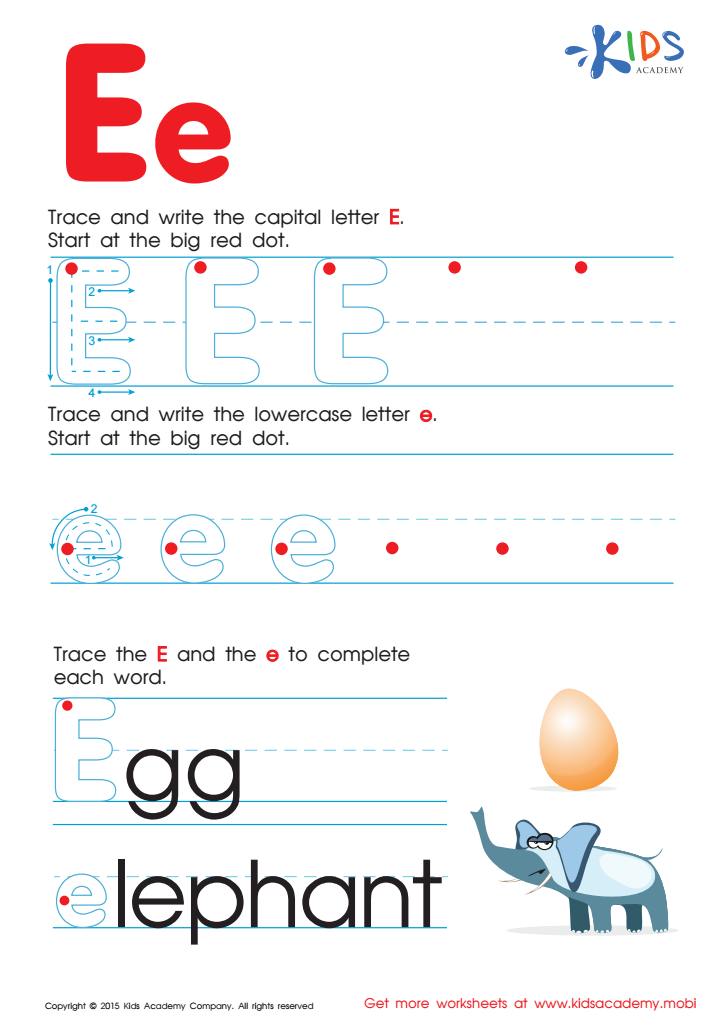
Letter E Tracing Page
Trace and write the uppercase and lowercase "E" starting at the big red dot. Complete words to perfect letter writing. Egg and Elephant must be written carefully. More alphabet worksheets for kindergarten are available for download to spend more time with your children learning.
Letter E Tracing Page
Worksheet
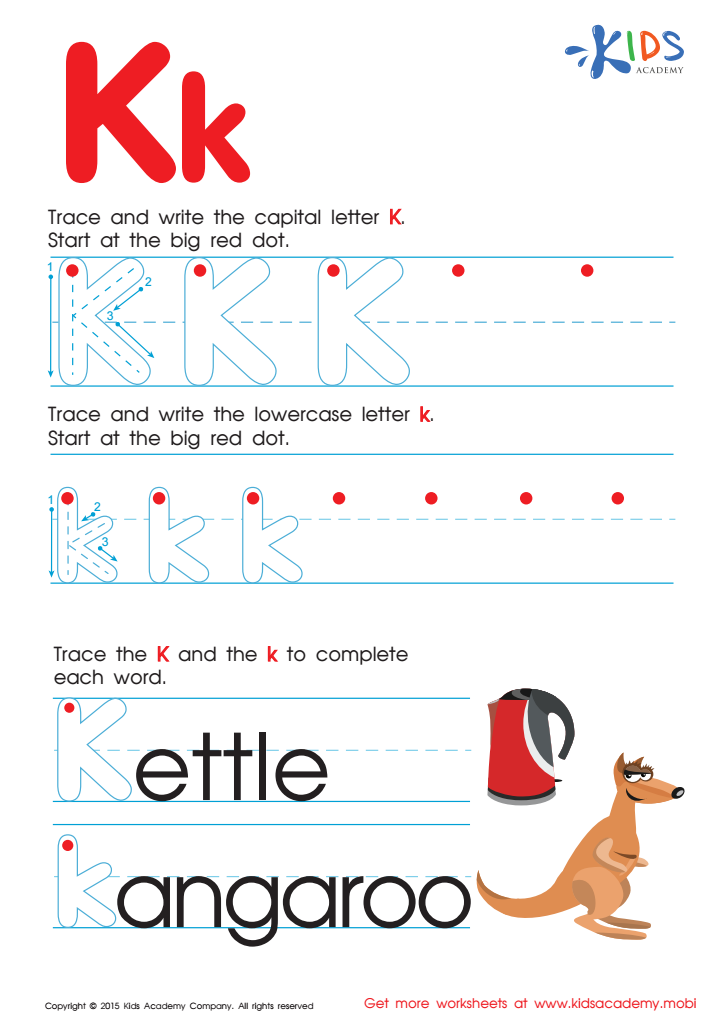
Letter K Tracing Page
Trace and write the letter K; start at the big red dot. Use it to complete words like "Kettle" and "Kangaroo". Visit Kids Academy for more free alphabet worksheets for kindergarten.
Letter K Tracing Page
Worksheet
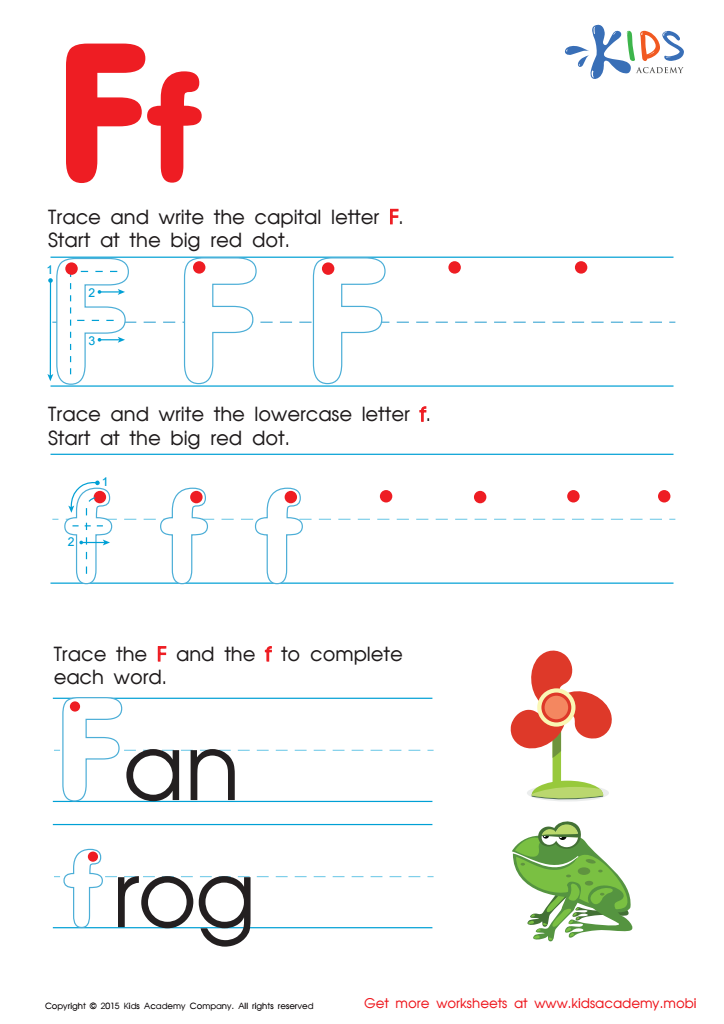
Letter F Tracing Page
Trace "F" with your pencil! Start at the red dot and draw lines — it's fun! Check it out — it looks great! Keep practicing to make it even better. Then, try completing words. Help out the broken fan and funny frog! Get free alphabet worksheets and activities for your kids. Come see our new tracing pages!
Letter F Tracing Page
Worksheet
Join Kids Academy for Free
Who is primarily going to use this learning content?







Handwriting skills and learning the ABC alphabet order are crucial developmental milestones for 3-year-olds. For parents and teachers, fostering these abilities at this early stage offers multiple benefits that impact a child's academic and cognitive development.
Firstly, handwriting practice enhances fine motor skills, strengthening the small muscles in the hands and fingers required for tasks such as buttoning clothes and using scissors. These skills lay the foundation for more complex hand-eye coordination activities that are essential as the child grows.
Learning the alphabet in its normal order also aids in cognitive organization and memory. Recognizing the sequence of letters lays the groundwork for reading and literacy. Understanding the ABC order helps children begin to see patterns, categorize information, and develop early phonological awareness, which are crucial pre-reading skills.
Furthermore, practicing handwriting fosters persistence and attention to detail. These activities help children build concentration, patience, and the ability to follow through with tasks—traits beneficial not only in academics but in various life aspects.
Importantly, early engagement in writing and letter recognition activities creates a positive association with learning, instilling confidence and a growth mindset. This early positive reinforcement can keep children curious and enthusiastic about their educational journey, making it easier for them to tackle more complex subjects in the future.