Boost your child's early literacy with our Phonics Skills Normal Alphabet Worksheets designed specifically for 3-year-olds! These engaging, colorful worksheets are perfect for introducing young learners to phonics concepts through simple and enjoyable activities. Each worksheet focuses on letter recognition, sounds, and essential phonetic skills, providing a strong foundation for reading and writing. Tailored to meet the developmental needs of toddlers, these resources promote interactive learning and creativity. Parents and educators can easily access and print these engaging materials for home or classroom use, making it fun for little ones to discover the exciting world of letters. Start your phonics adventure today!

Check out this FREE Trial Lesson on Alphabet for age 3!

Letter Sound Relationship X-Y-Z

Favorites
With answer key
Interactive
  • 3
  • Phonics Skills
  • Alphabet
  • Normal
Letter Q Sounds Worksheet

Letter Q Sounds Worksheet

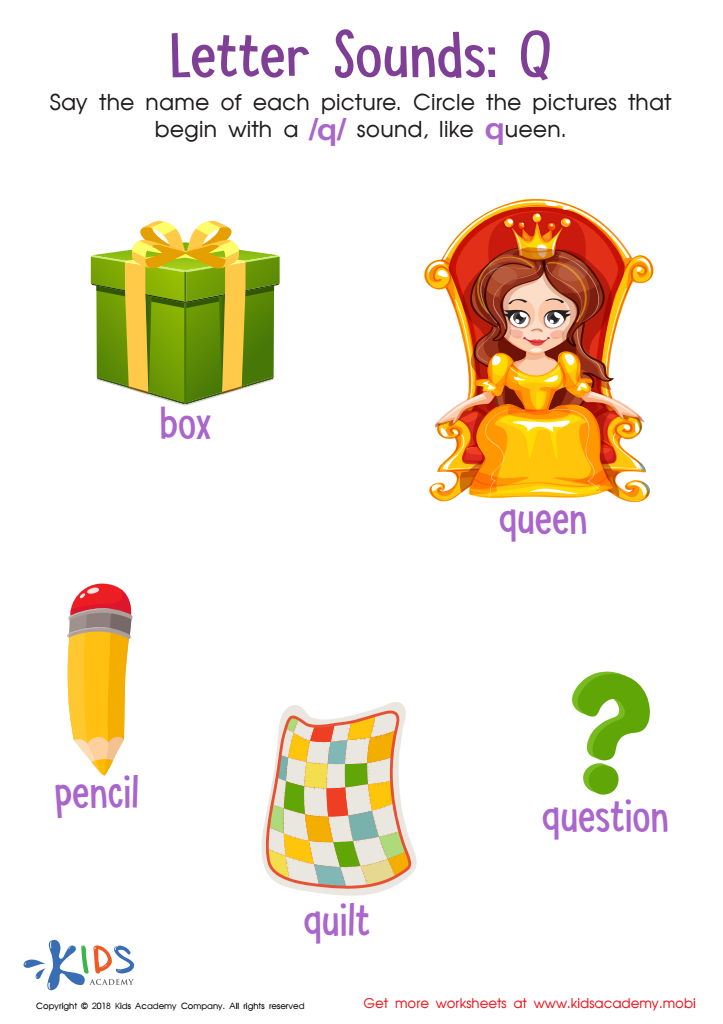
Kids can get confused between "K" and "Q" sounds. Help them learn with this phonics worksheet. They'll name each image and read the word underneath. Point out that words with "Q" also have a "U" which affects how it sounds. Have them circle the matching pictures and watch as they learn this unique letter sound.
Letter Q Sounds Worksheet
Worksheet
Letter B and C Sounds Worksheet

Letter B and C Sounds Worksheet

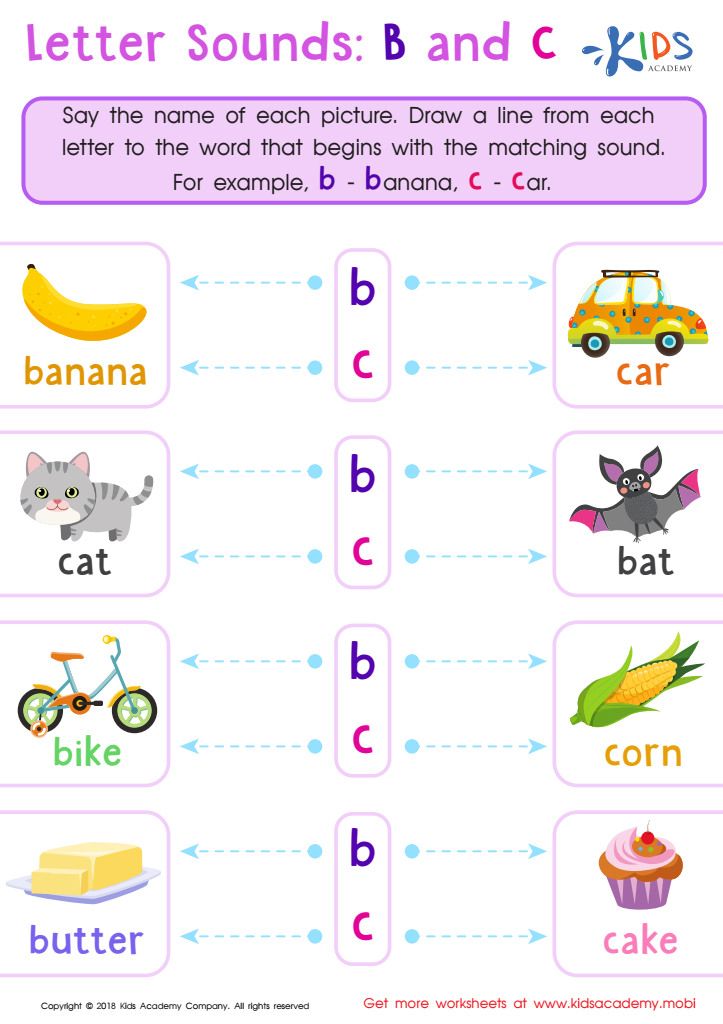
This fun worksheet offers bright, engaging pictures and helps kids learn to distinguish between the sounds of "B" and "C". With the use of pictures and familiar items, kids will trace lines to the correct initial consonant sound, while also developing fine-motor skills. It's a great way to build decoding ability!
Letter B and C Sounds Worksheet
Worksheet
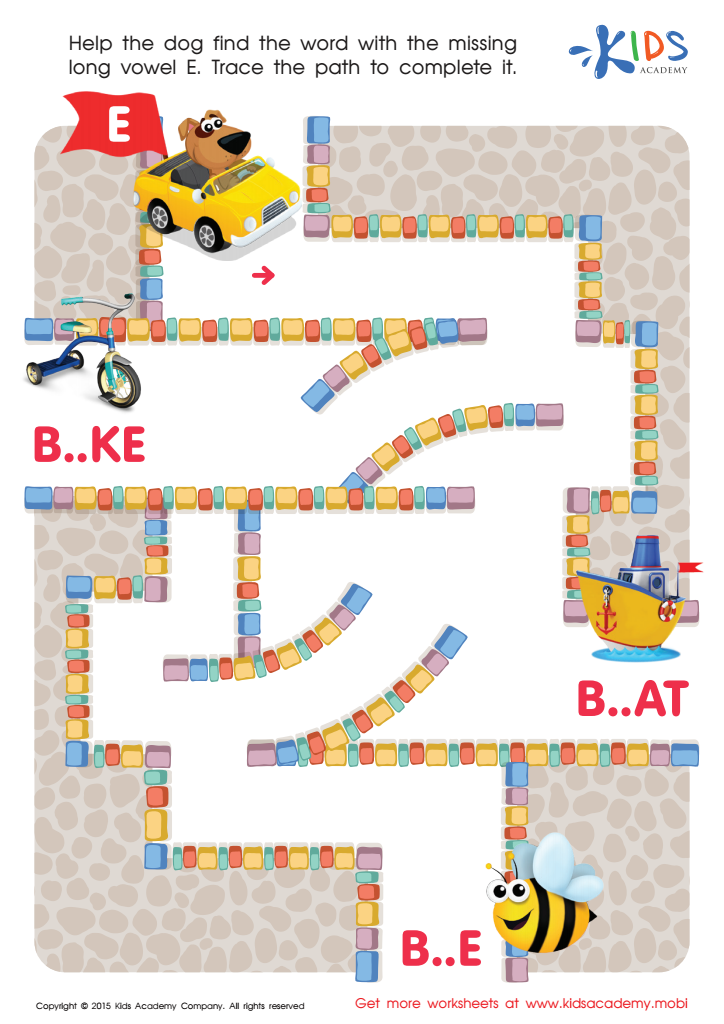
Phonics for Kids | Long Vowel Sound E | PDF Worksheet 1

Long Vowel Sound E Worksheet

Practice distinguishing long and short vowel sound E with this free printable! Kids must complete the word “bee” by tracing the maze and adding the missing letter E. Remind them to say the word aloud to help sharpen their phonics ear. Get more phonics fun with the vowel sound E here.
Long Vowel Sound E Worksheet
Worksheet
Letter X Sounds Worksheet

Letter X Sounds Worksheet

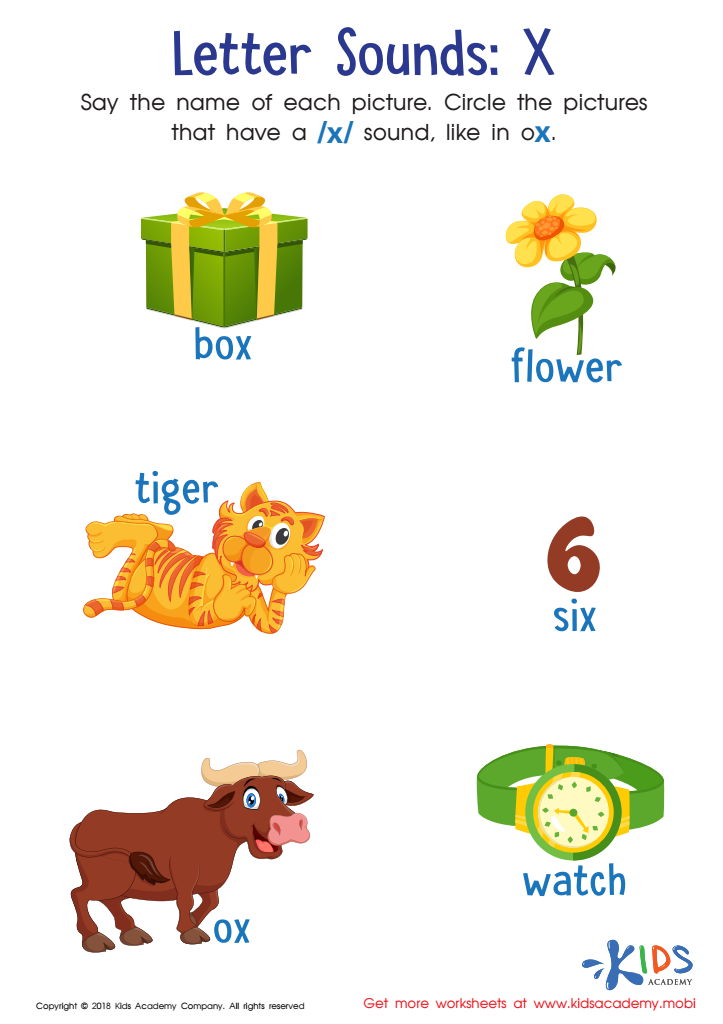
Help your early learner master the letter X sound with this fun, illustrated phonics worksheet. Have kids name the pictures, listening for the pronunciation of each. Have them circle only the pictures with the X sound, then double check by looking for the letter in the word below.
Letter X Sounds Worksheet
Worksheet
Letter l and M Sounds Worksheet


Letter l and M Sounds Worksheet

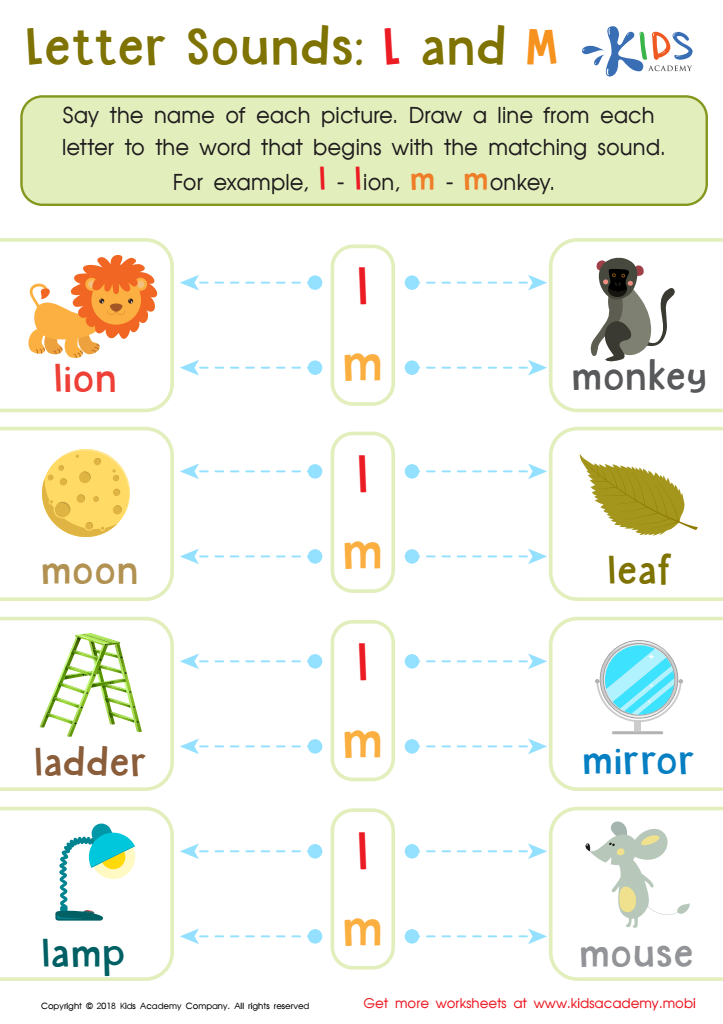
Our Kids Academy phonics practice pages give clear instructions and captivating pictures to pique children's interest. This fun worksheet helps kids identify a picture, then match its beginning sound. Listen and say each word - does it start with "L" or "M"? Trace the dotted line from the letter to the correct match and listen closely to the sound it makes.
Letter l and M Sounds Worksheet
Worksheet
Long and Short E Worksheet

Long and Short E Worksheet

This fun printout makes learning phonics enjoyable for Grade 3 students. Get them to read the words “tree” and “bed” to recognize the different sounds of the letter “E”. After hearing the words they can color the words and the pictures to understand differences between long and short vowels.
Download (PDF)
Assign to My Students
Long and Short E Worksheet
Worksheet


Parents and teachers should care about phonics skills, particularly the normal alphabet, for 3-year-olds because these foundational skills are crucial for early literacy development. At this age, children are rapidly acquiring language and understanding the world around them. Teaching phonics introduces them to the relationship between letters and sounds, an essential building block for reading and writing.

Early exposure to the alphabet and phonics helps children develop strong language skills, enhances vocabulary, and improves their ability to express themselves. Furthermore, recognizing letters and sounding them out builds confidence, fosters a positive attitude toward learning, and sets the stage for academic success.

Engaging young learners with phonics through playful activities, songs, and games makes the learning process both fun and effective. This playful approach not only nourishes a love for reading but also promotes critical thinking and problem-solving skills, as children learn to decode words and understand language structure.

Moreover, children who develop phonics skills early are better equipped to handle the demands of transition to formal schooling, minimizing potential reading difficulties later on. Thus, prioritizing phonics skills in early education can significantly impact a child's lifelong learning journey.