
Phonics Skills Normal Phonics Worksheets for 3-Year-Olds
6 filtered results
Difficulty Level
Grade
Age
-
From - To
Subject
Activity
Standards
Introduce your little learners to the foundational skills of reading with our Normal Phonics Worksheets designed specifically for 3-year-olds. These engaging worksheets focus on phonics skills, helping young children connect sounds to letters and develop pre-reading abilities in a fun and interactive way. With vibrant illustrations and simple activities, your child will love practicing letter recognition, sound identification, and early phonemic awareness. Our expertly crafted worksheets provide essential reinforcement for early literacy while keeping learning enjoyable. Equip your child with the tools for reading success and foster a love for learning with these essential phonics resources. Explore our collection today!
Favorites
With answer key
Interactive
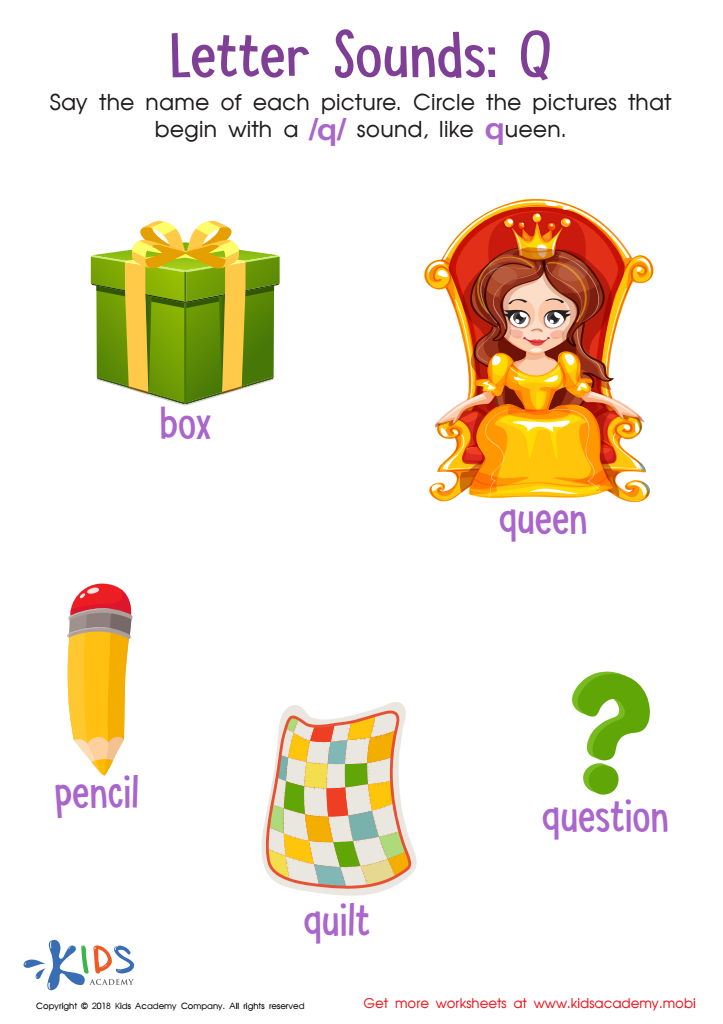
Letter Q Sounds Worksheet
Kids can get confused between "K" and "Q" sounds. Help them learn with this phonics worksheet. They'll name each image and read the word underneath. Point out that words with "Q" also have a "U" which affects how it sounds. Have them circle the matching pictures and watch as they learn this unique letter sound.
Letter Q Sounds Worksheet
Worksheet
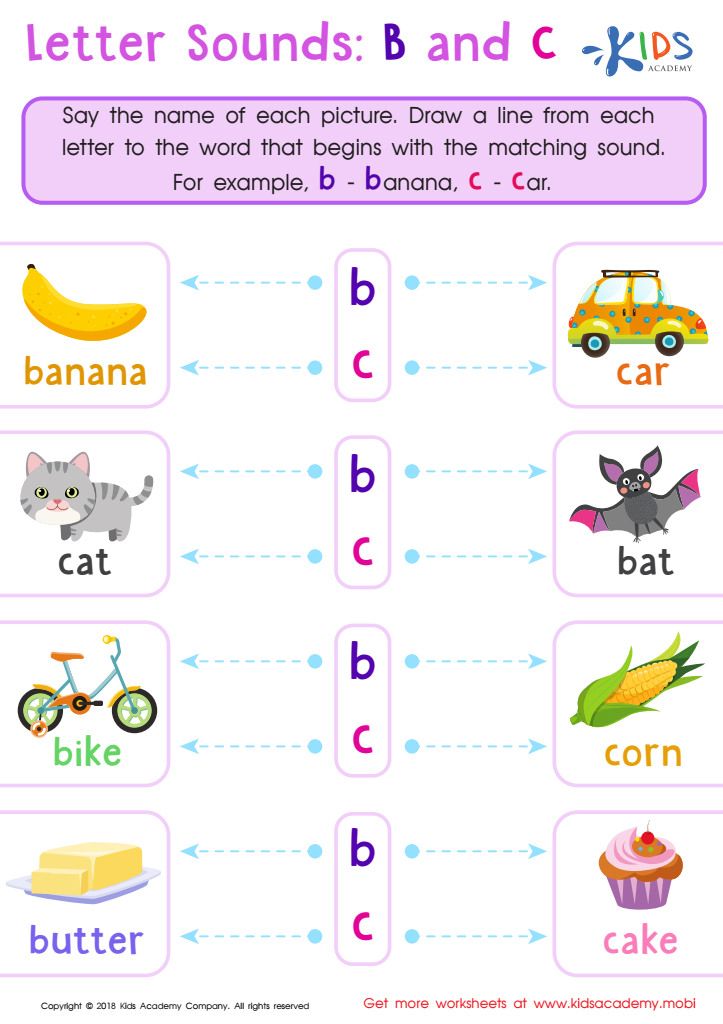
Letter B and C Sounds Worksheet
This fun worksheet offers bright, engaging pictures and helps kids learn to distinguish between the sounds of "B" and "C". With the use of pictures and familiar items, kids will trace lines to the correct initial consonant sound, while also developing fine-motor skills. It's a great way to build decoding ability!
Letter B and C Sounds Worksheet
Worksheet
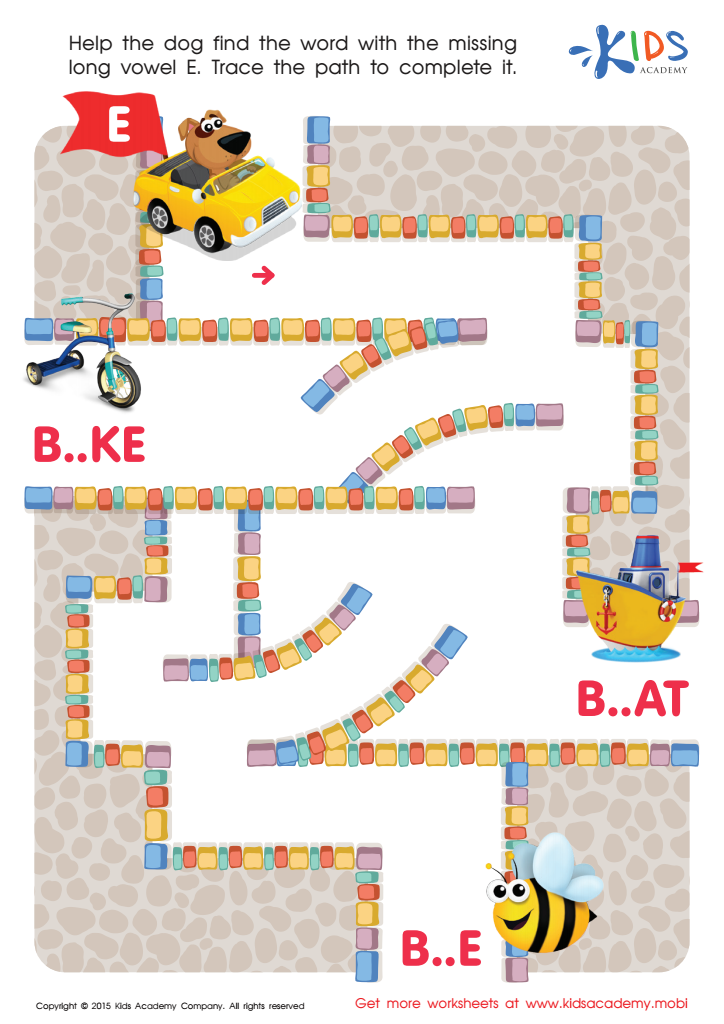
Long Vowel Sound E Worksheet
Practice distinguishing long and short vowel sound E with this free printable! Kids must complete the word “bee” by tracing the maze and adding the missing letter E. Remind them to say the word aloud to help sharpen their phonics ear. Get more phonics fun with the vowel sound E here.
Long Vowel Sound E Worksheet
Worksheet
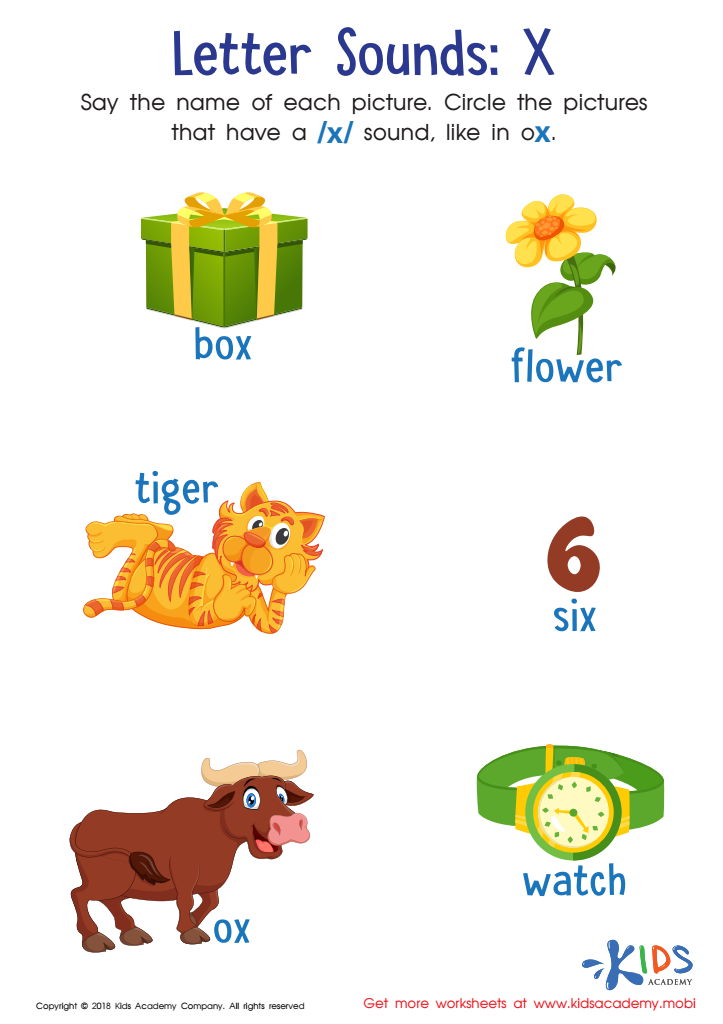
Letter X Sounds Worksheet
Help your early learner master the letter X sound with this fun, illustrated phonics worksheet. Have kids name the pictures, listening for the pronunciation of each. Have them circle only the pictures with the X sound, then double check by looking for the letter in the word below.
Letter X Sounds Worksheet
Worksheet
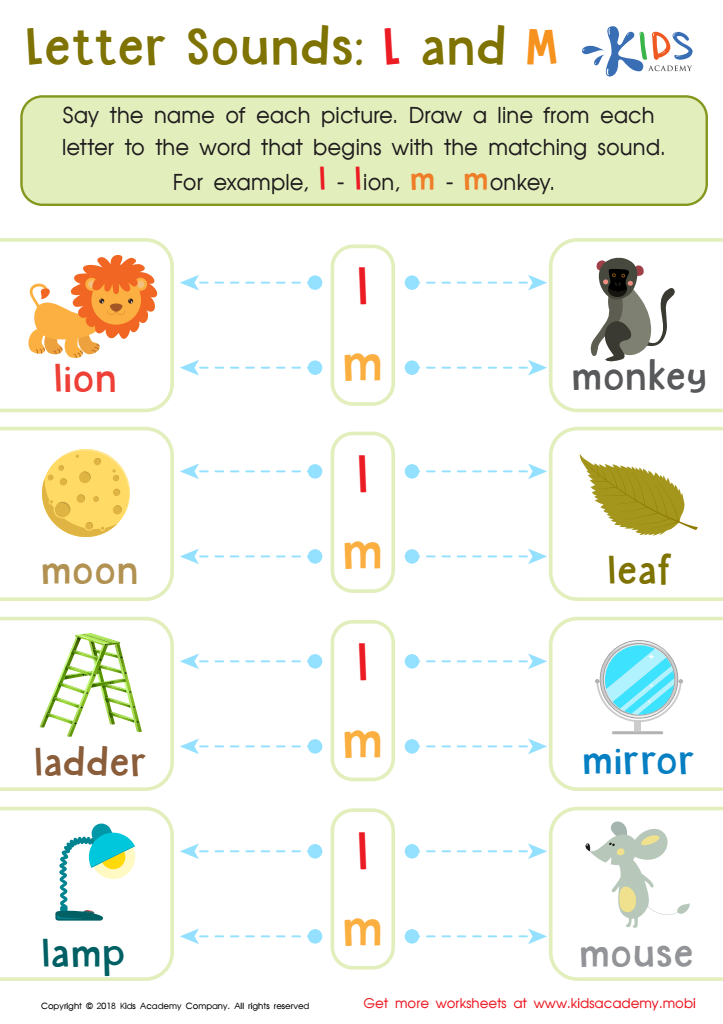
Letter l and M Sounds Worksheet
Our Kids Academy phonics practice pages give clear instructions and captivating pictures to pique children's interest. This fun worksheet helps kids identify a picture, then match its beginning sound. Listen and say each word - does it start with "L" or "M"? Trace the dotted line from the letter to the correct match and listen closely to the sound it makes.
Letter l and M Sounds Worksheet
Worksheet
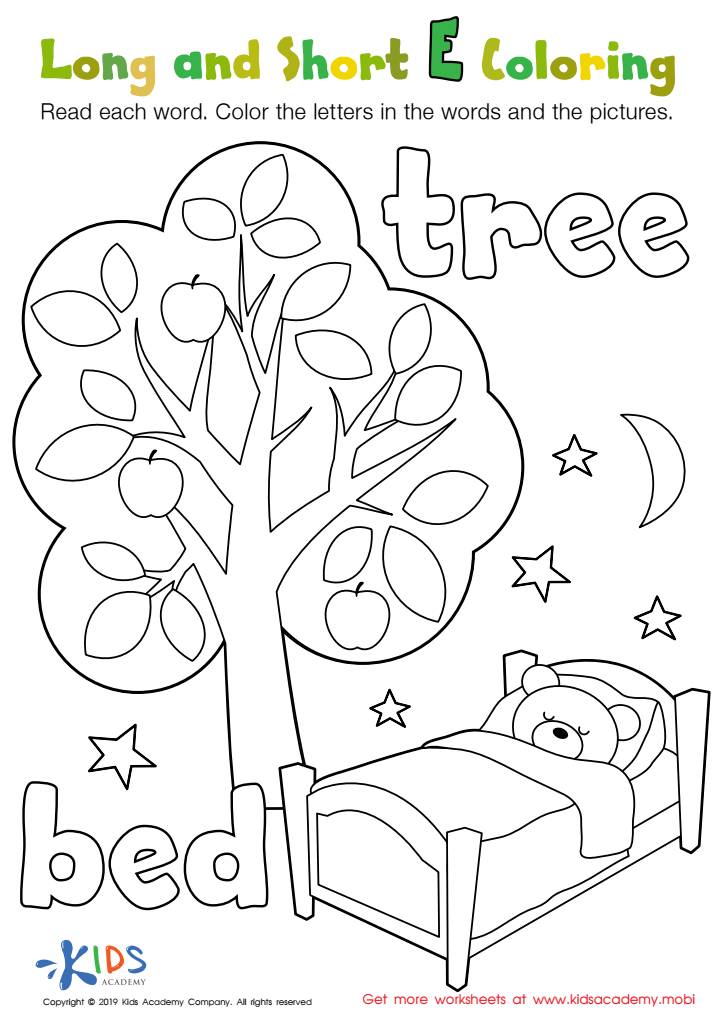
Long and Short E Worksheet
This fun printout makes learning phonics enjoyable for Grade 3 students. Get them to read the words “tree” and “bed” to recognize the different sounds of the letter “E”. After hearing the words they can color the words and the pictures to understand differences between long and short vowels.
Download (PDF)
 Assign to My Students
Assign to My Students
Long and Short E Worksheet
Worksheet
Join Kids Academy for Free
Who is primarily going to use this learning content?








Phonics skills are fundamental for early literacy development, making it essential for parents and teachers to prioritize their instruction for 3-year-olds. At this age, children are highly receptive to language learning, and introducing them to phonics lays the groundwork for reading and writing success. Normal phonics—where sounds are associated with letters—helps children decode words, enhances their vocabulary, and fosters a love for reading.
When children engage with phonics, they develop critical listening skills and phonemic awareness, enabling them to recognize and manipulate sounds. Early exposure to these skills makes future learning easier, as children progress to more complex reading tasks. Furthermore, strong phonics skills can boost a child's confidence in their reading abilities, which can translate to better academic performance down the line.
Parents and teachers play a vital role in nurturing a phonics-rich environment, using songs, rhymes, and playful activities to keep learning engaging. Collaborative efforts ensure that children are not only prepared for school but also motivated to continue exploring the world of letters and sounds. Together, they can create foundational literacy skills that support lifelong learning and a passion for books, empowering children academically and socially.







