Basic geometry understanding Normal Worksheets for 3-Year-Olds
3 filtered results
-
From - To
Introducing our engaging Basic Geometry Understanding Worksheets for 3-year-olds! Designed to spark curiosity, these worksheets help young learners explore fundamental shapes and their characteristics. Through fun and interactive activities, children will identify circles, squares, triangles, and more, enhancing their spatial awareness and problem-solving skills. Our colorful visuals and age-appropriate tasks promote early math competence in a playful manner. Perfect for home or classroom use, these worksheets support developmental milestones by encouraging cognitive development. Equip your little ones with essential geometry skills early on, ensuring a solid foundation for future learning! Download now and make geometry fun for your child!
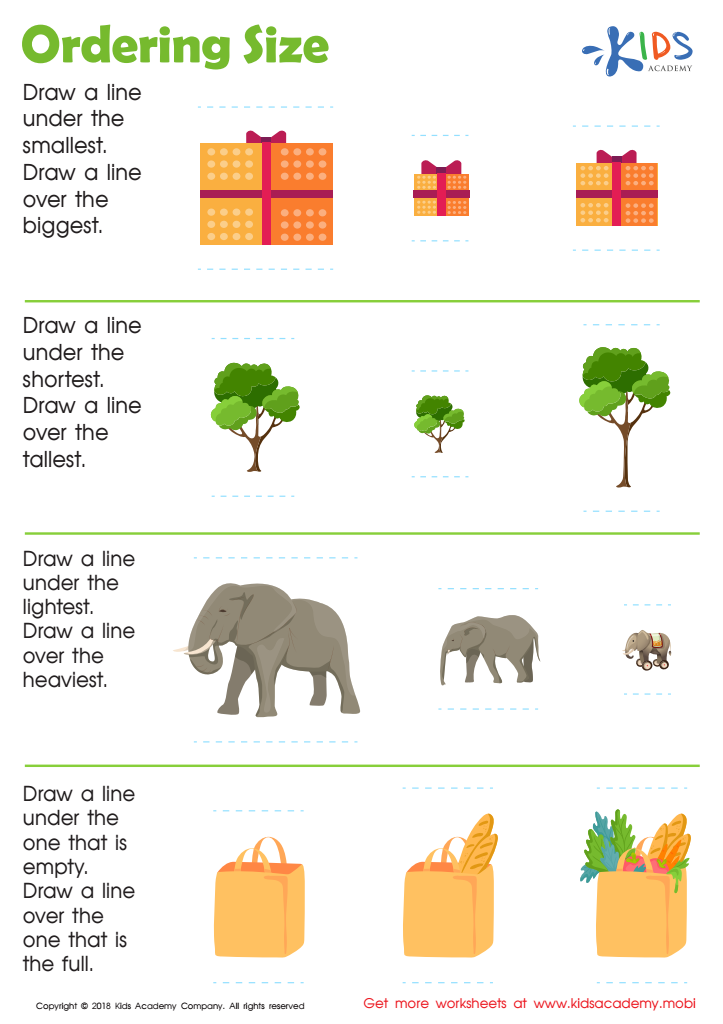
Ordering Size Worksheet
 Assign to My Students
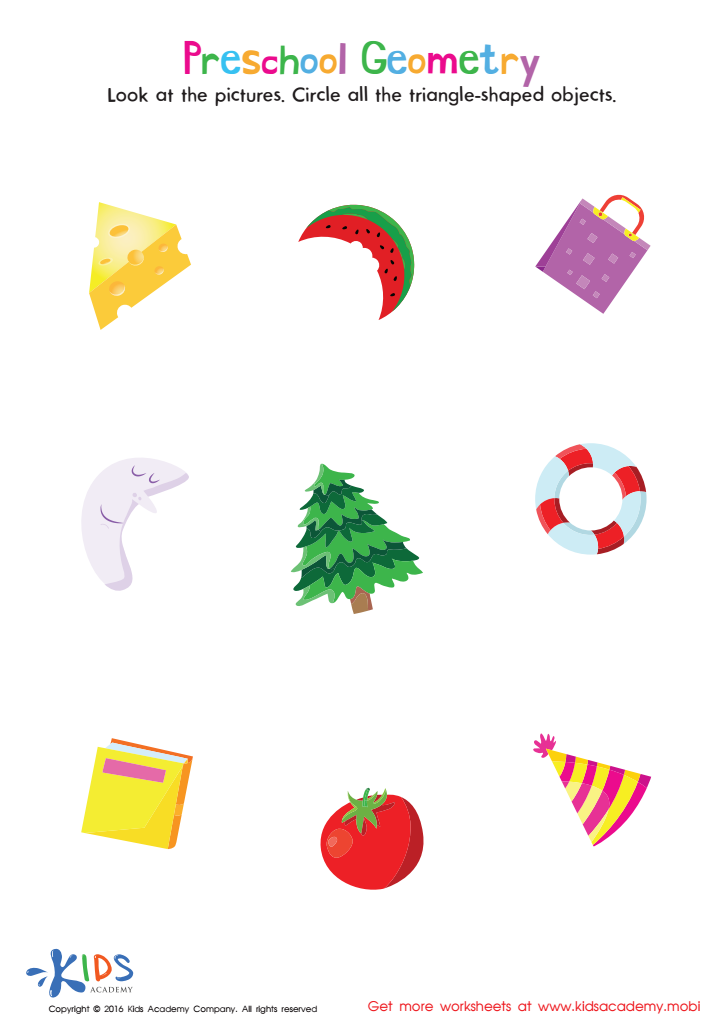
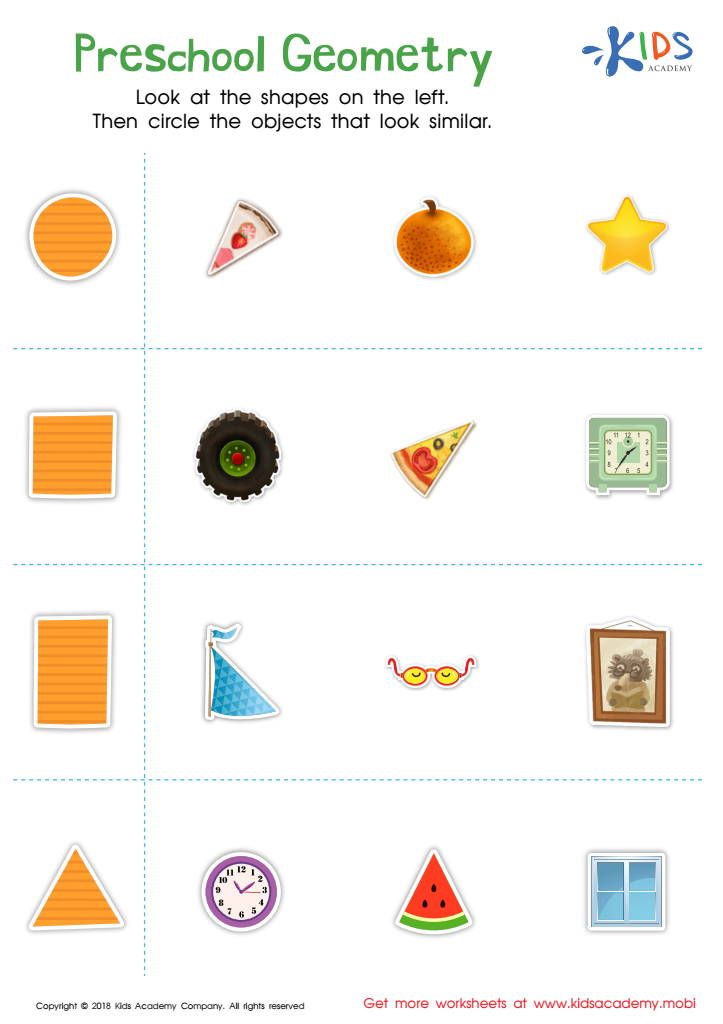
Preschool Geometry Worksheet



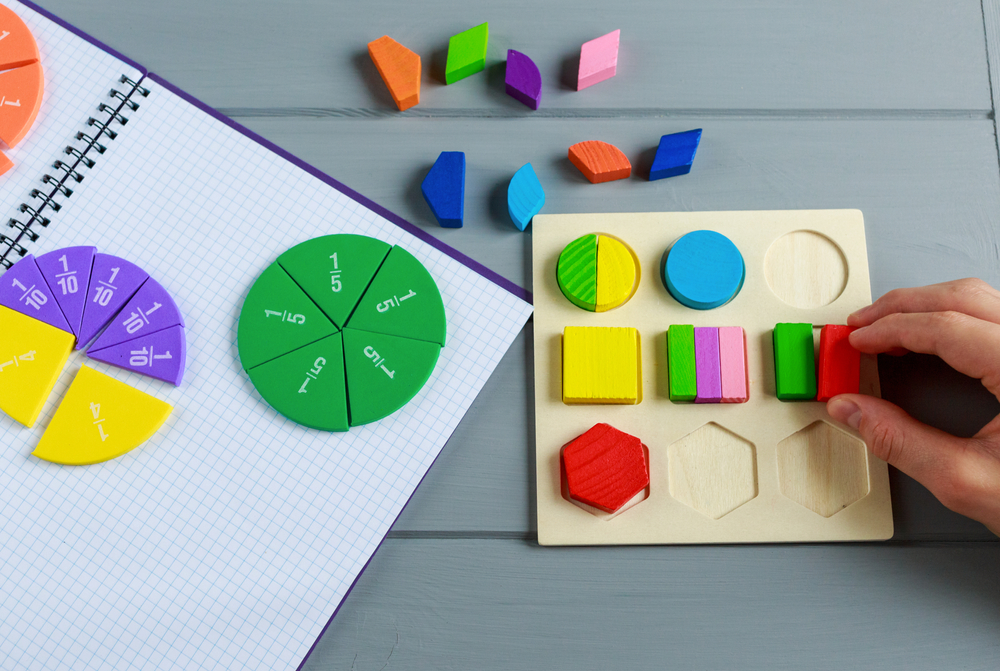

Understanding basic geometry principles is crucial for 3-year-olds as it lays a foundation for their cognitive development and future learning. Geometry isn’t just about shapes; it fosters critical thinking and spatial awareness. At this age, children are naturally curious explorers, and introducing them to shapes, sizes, and spatial relationships helps them make sense of their surroundings.
Learning basic geometry nurtures skills in problem-solving and critical thinking. Identifying shapes like circles, squares, and triangles enhances their visual discrimination, which is essential for reading and writing later in life. Activities that involve sorting objects by shape or size encourage observational skills and classification.
Moreover, early geometry skills are linked to math proficiency. When children understand concepts like similarity, difference, and symmetry, they are better prepared for addition and subtraction later on. Engaging in fun, geometry-related activities—like shape hunts or building with blocks—makes learning enjoyable and interactive.
Additionally, these activities promote fine motor skills and hand-eye coordination, essential for tasks like writing or cutting. By prioritizing early geometry understanding, parents and teachers can ignite a lifelong love for learning and equip children with essential skills that transcend the classroom, fostering confidence in their ability to think and explore the world around them.








