Division practice Normal Worksheets for 3-Year-Olds
4 filtered results
-
From - To
Welcome to our Division Practice Normal Worksheets designed specifically for 3-year-olds! Our engaging and age-appropriate worksheets introduce young learners to foundational division concepts in a fun and interactive way. With colorful illustrations and simple exercises, children can explore the idea of sharing and grouping, nurturing their early mathematical skills. Each worksheet is crafted to captivate young minds while promoting concentration and critical thinking. These resources not only support division learning but also enhance fine motor skills through writing and drawing. Start your child's journey into the world of numbers with our delightful division practice worksheets today!
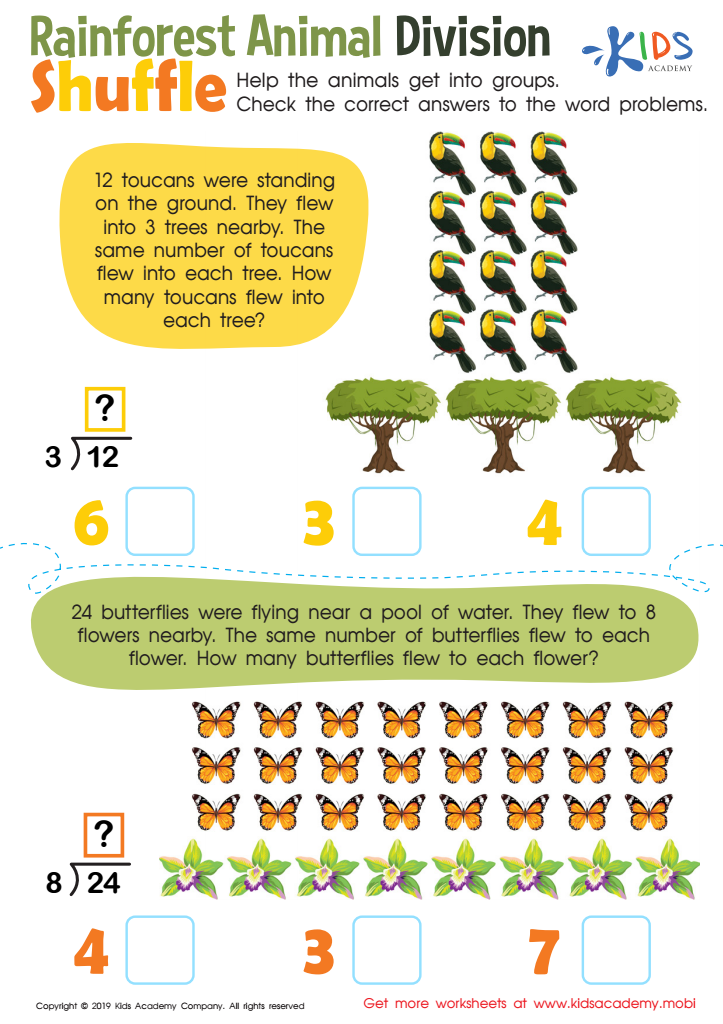
Rainforest Animal Division Worksheet
 Assign to My Students
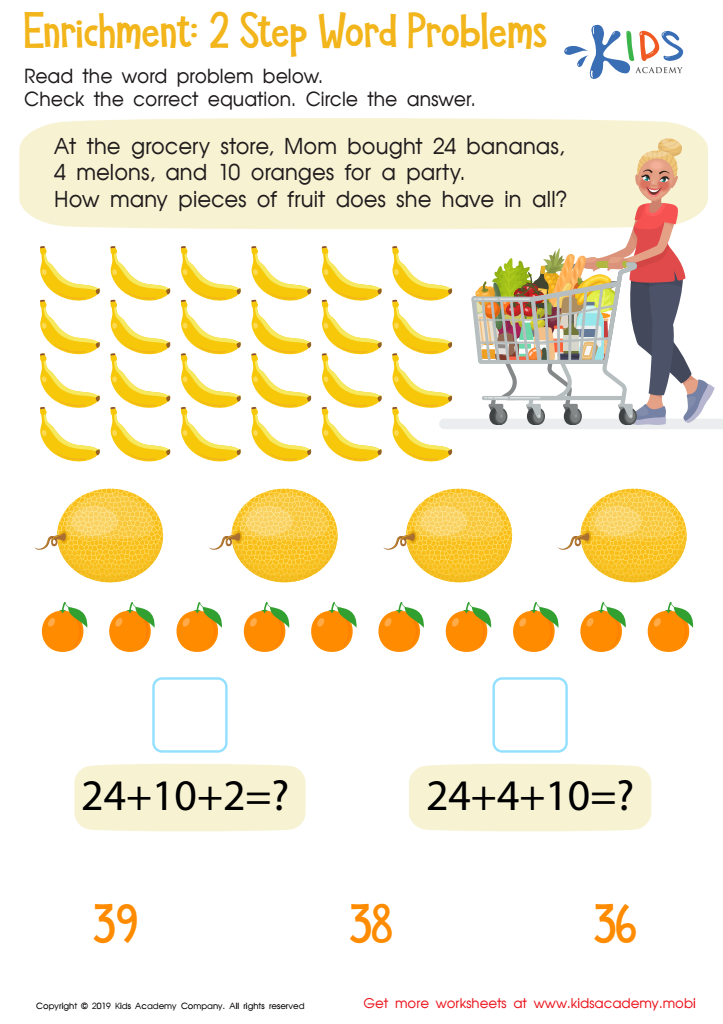
Enrichment -2 Step Word Problems Worksheet
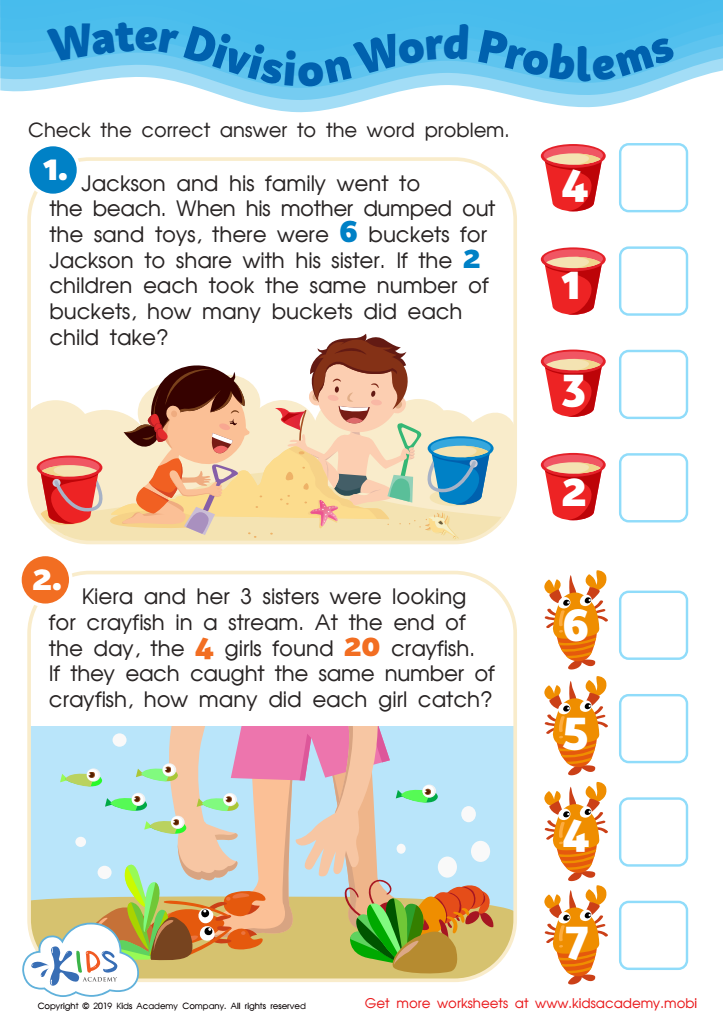
Water Division Word Problems Worksheet
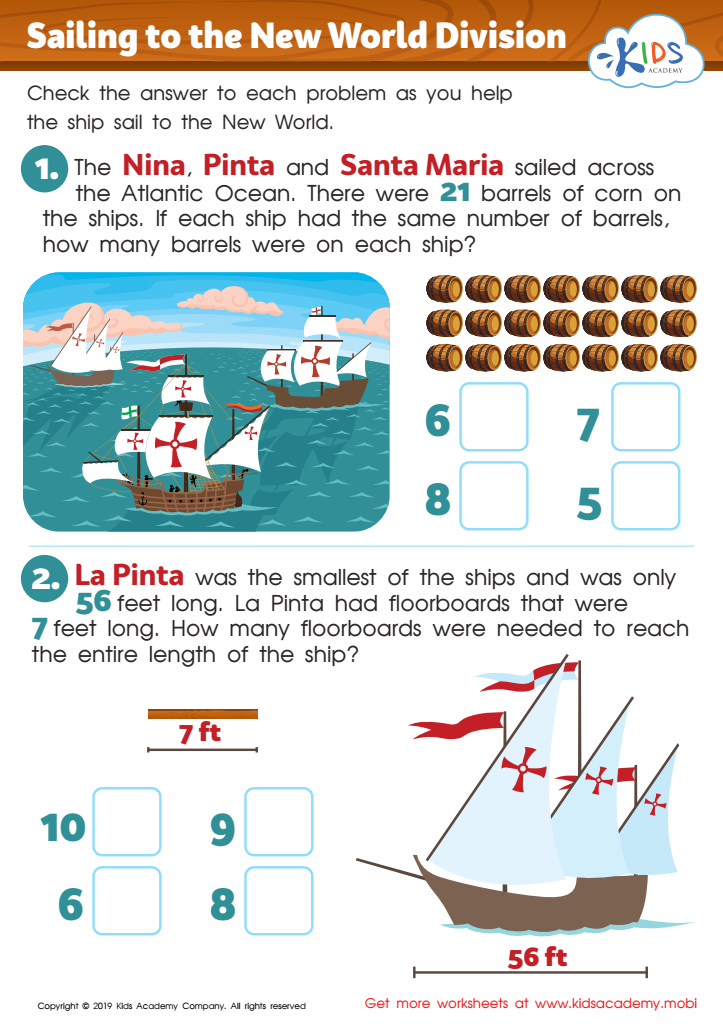
Sailing to the New World Division Worksheet






.jpg)

Division practice for 3-year-olds may seem premature, but it's vital to the foundational development of mathematical understanding. At this age, children are building the essential cognitive skills that will support their future learning. Introducing simple division concepts, such as sharing and grouping, cultivates early number sense and encourages critical thinking. Through playful activities like distributing snacks or sharing toys, children can intuitively grasp the idea of “fair shares,” which provides a practical context for division.
Engaging in these foundational concepts fosters curiosity and exploration. When parents or teachers incorporate division-like scenarios into daily routines, children make meaningful connections between math and real life. Moreover, this practice enhances problem-solving skills and promotes social interactions, as kids learn to negotiate and cooperate during sharing activities.
It’s essential to recognize that division at this stage is less about formal calculation and more about understanding relationships between quantities. A solid base in these early math skills predicts better mathematical fluency as children progress in school. By nurturing an environment that encourages sharing and group activities, adults can help ensure that children not only develop mathematical confidence but also posit a strong conceptual framework on which to build more complex arithmetic skills in the future.








