Check out this FREE "Letter recognition" Trial Lesson for age 3!

N

Favorites
With answer key
Interactive
  • 3
  • Letter recognition
  • Normal
Letter K Coloring Page

Letter K Coloring Sheet

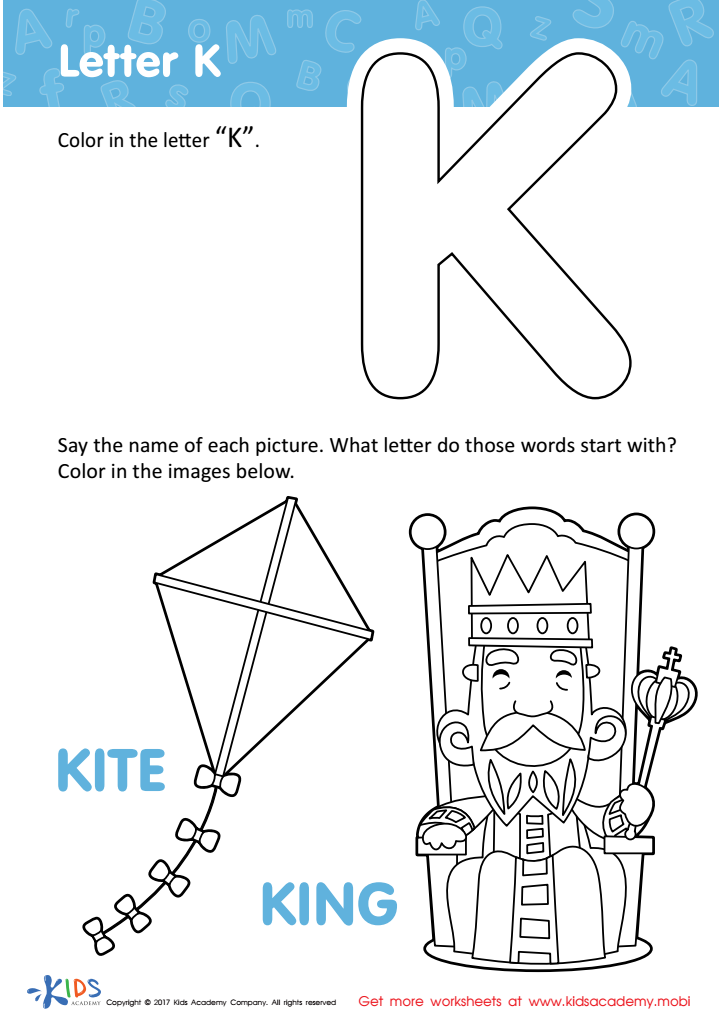
This letter K coloring page captivates your child's creativity while learning the letter! Showcasing a king and kite, common words for their age group, it's sure to spark their imagination.
Download (PDF)
Assign to My Students
Letter K Coloring Sheet
Worksheet
letter F worksheets
letter F worksheets

Letter F Tracing Page

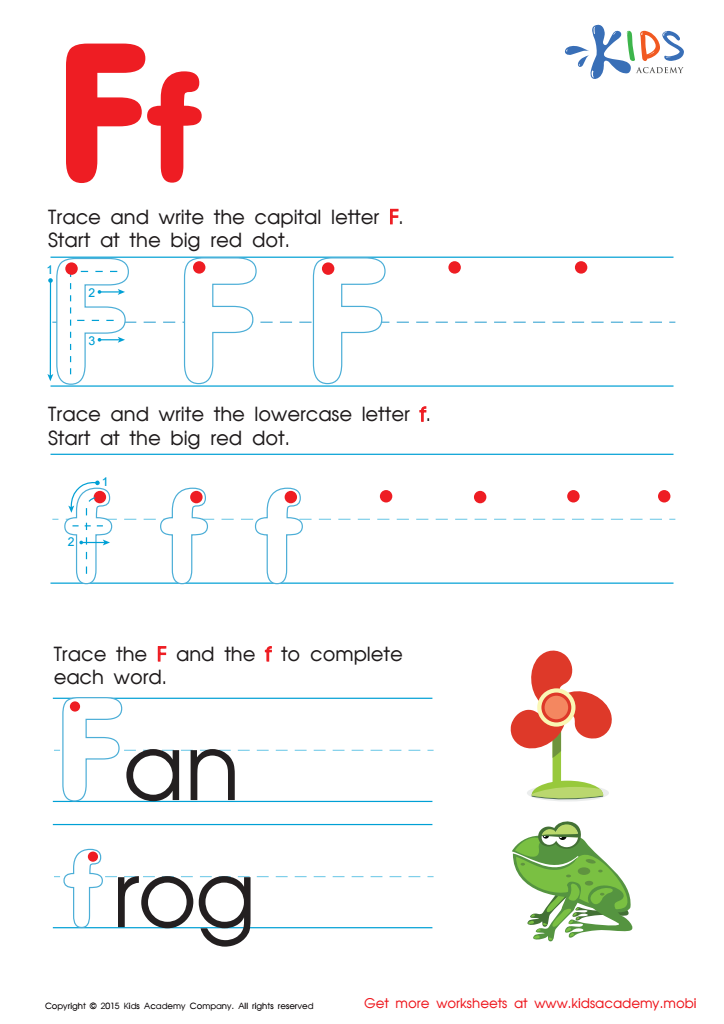
Trace "F" with your pencil! Start at the red dot and draw lines — it's fun! Check it out — it looks great! Keep practicing to make it even better. Then, try completing words. Help out the broken fan and funny frog! Get free alphabet worksheets and activities for your kids. Come see our new tracing pages!
Letter F Tracing Page
Worksheet
Long and Short E Worksheet

Long and Short E Worksheet

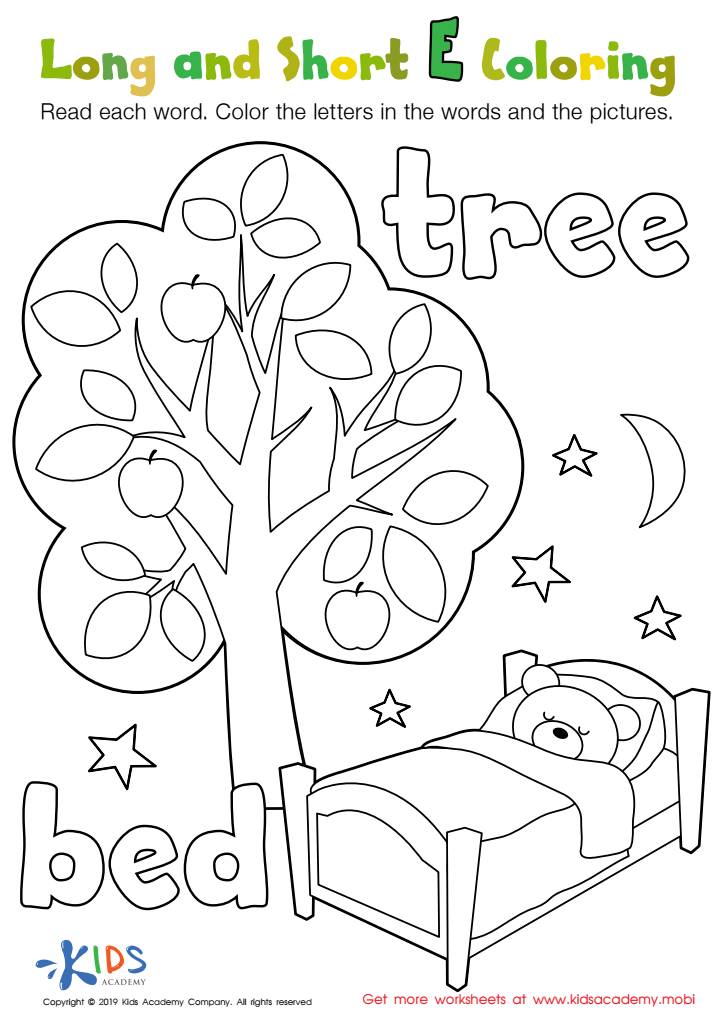
This fun printout makes learning phonics enjoyable for Grade 3 students. Get them to read the words “tree” and “bed” to recognize the different sounds of the letter “E”. After hearing the words they can color the words and the pictures to understand differences between long and short vowels.
Download (PDF)
Assign to My Students
Long and Short E Worksheet
Worksheet
Phonological Awareness: Assessment 1 Worksheet

Phonological Awareness: Assessment 1 Worksheet

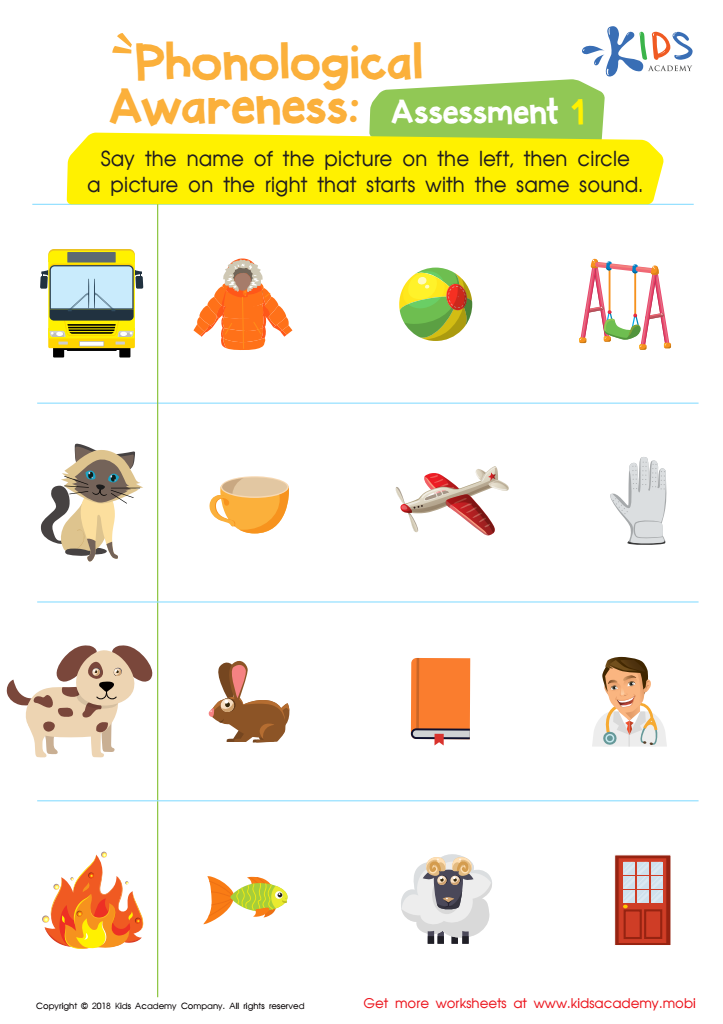
This worksheet helps kids build key phonics skills for pre-reading. They say each picture name aloud, focusing on the starting sound. Then, they match the sound with an image in the same row. Use as a checkpoint for kindergarten or grade 1 phonics readiness.
Phonological Awareness: Assessment 1 Worksheet
Worksheet
Letter N Coloring Page

Letter N Coloring Sheet

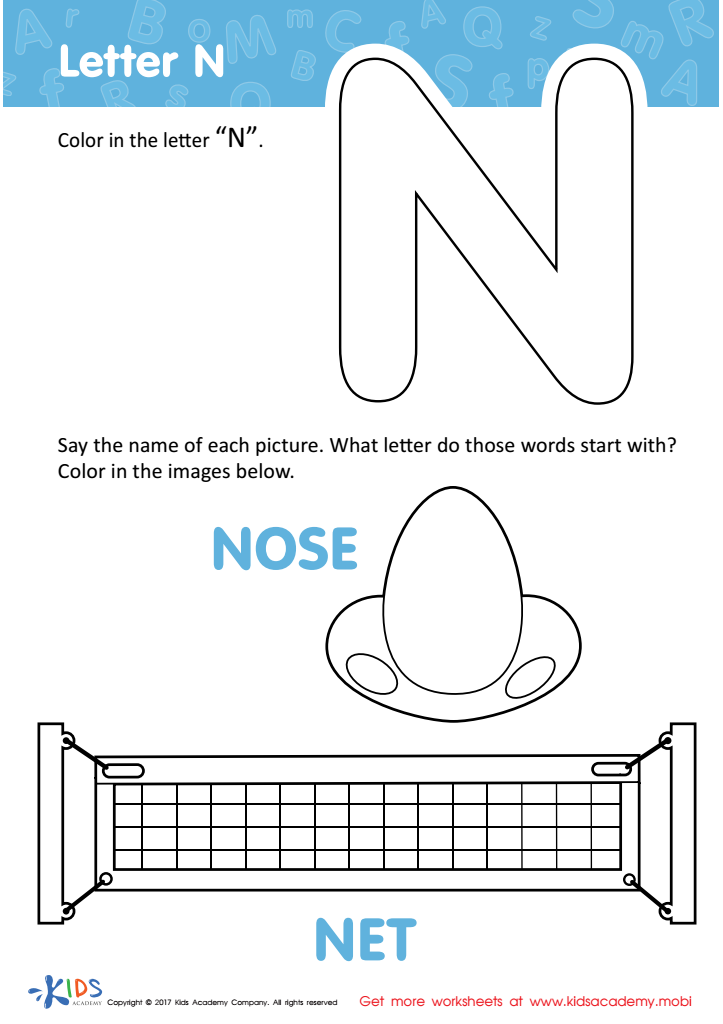
Let your child get creative and learn the alphabet with this letter "N" coloring page! It's a fun way to recognize the letter, featuring a body part all kids know. Coloring and reinforcing recognition of "N" will help your child have fun while learning!
Download (PDF)
Assign to My Students
Letter N Coloring Sheet
Worksheet
letter d worksheets
letter d worksheets

Letter D Tracing Page

Trace and write capital and lowercase letter "D" with our free printable alphabet worksheet! Be careful not to mix up "b" and "d" - just look at the ducks and write their first letter. The dolphin wants to join the fun too - do you like dolphins? Get more fun worksheets and activities at Kids Academy!
Letter D Tracing Page
Worksheet
Letter G Sounds Worksheet

Letter G Sounds Worksheet

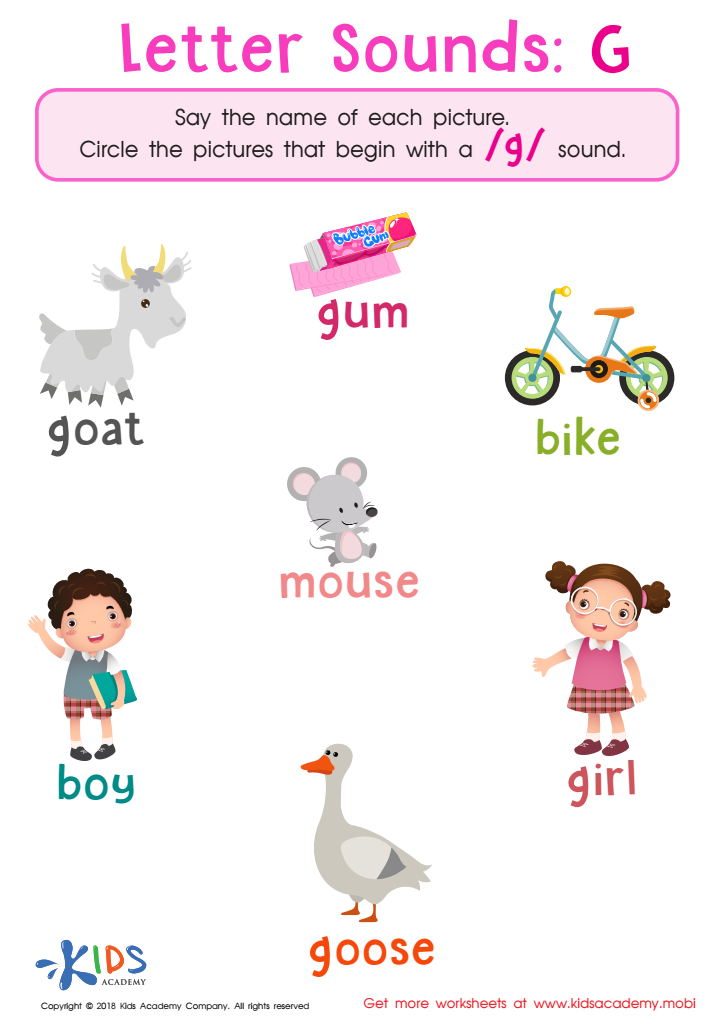
Help emerging readers build confidence by giving them practice identifying hard "G" with this free PDF worksheet. They'll use picture clues to name the words, and practice fine-motor skills tracing circles around the corresponding pics. It's a great way to introduce or reinforce hard "G" words.
Letter G Sounds Worksheet
Worksheet
My Name: Cheerful Balloons Worksheet

My Name: Cheerful Balloons Worksheet

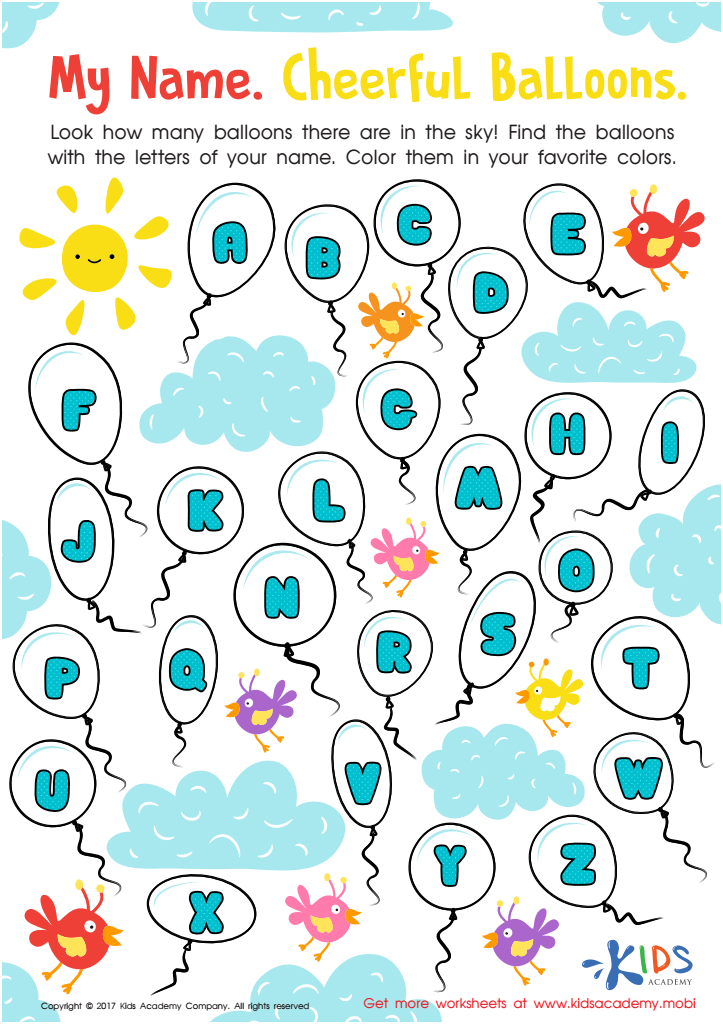
Encourage toddlers and preschoolers to soar with this fun worksheet! Find the letters in the balloons and help your child find the letters of their name. Then, fill in each balloon with their favorite colors and turn the paper over to write their name on the back. A great way to give imaginations wings!
Download (PDF)
Assign to My Students
My Name: Cheerful Balloons Worksheet
Worksheet
Letter D and E Sounds Worksheet


Letter D and E Sounds Worksheet

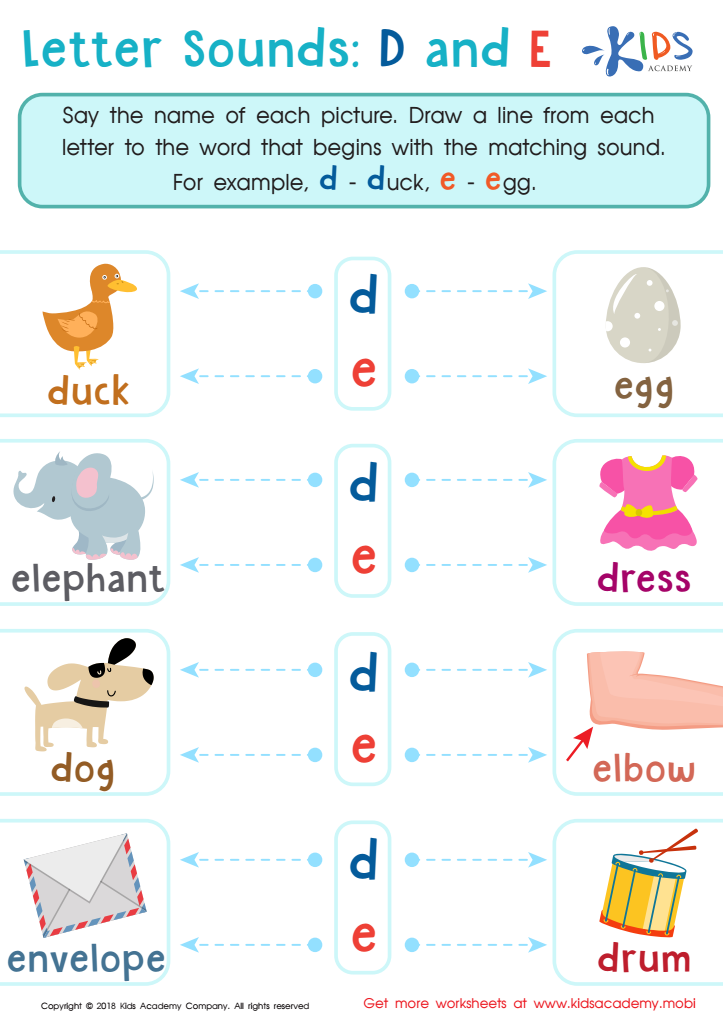
Kids can use picture clues and visual discrimination to name cheerful pics and isolate the beginning sound. This free PDF worksheet will help them develop phonological awareness, differentiate between "D" and "E", and hone fine-motor skills. It'll also boost their confidence as they become readers.
Letter D and E Sounds Worksheet
Worksheet


Letter recognition is a critical milestone for 3-year-olds, serving as a foundation for future literacy skills. Parents and teachers should care about this development because it directly influences a child's ability to read and write proficiently as they grow. During the early years, children's brains are particularly receptive to learning new concepts, and introducing letter recognition during this stage takes advantage of this natural inclination.

Firstly, recognizing letters helps children connect visual symbols with sounds, which is essential for phonics and, consequently, reading. By being familiar with letters, children are better prepared to understand that written text represents spoken language. This knowledge lays the groundwork for decoding words and comprehending text, crucial skills in all areas of learning.

Secondly, letter recognition supports vocabulary expansion. Once children can identify letters, they can begin to recognize words, ask questions about them, and incorporate them into their own speech. This enriches their language skills and communication abilities.

Moreover, mastering this skill builds confidence and encourages a love for learning. When children achieve success in identifying letters, they gain self-assurance and motivation to tackle more challenging tasks. Overall, focusing on letter recognition at a young age equips children with vital skills for academic success and fosters a positive attitude towards lifelong learning.