Rhyming skills development Normal Worksheets for 3-Year-Olds
3 filtered results
-
From - To
Enhance your child's language abilities with our Rhyming Skills Development Worksheets, specially designed for 3-year-olds. These fun and engaging worksheets encourage early literacy by helping little ones recognize and create rhymes through interactive activities. By participating in rhyming exercises, children will sharpen their phonemic awareness, expand their vocabulary, and develop a love for reading. Our thoughtfully crafted worksheets focus on cultivating essential skills in a playful way, making learning enjoyable and effective. Explore our collection today and support your child's cognitive growth as they discover the exciting world of rhymes! Perfect for home or classroom use.

Rhyming Words Rhyming Worksheet
 Assign to My Students
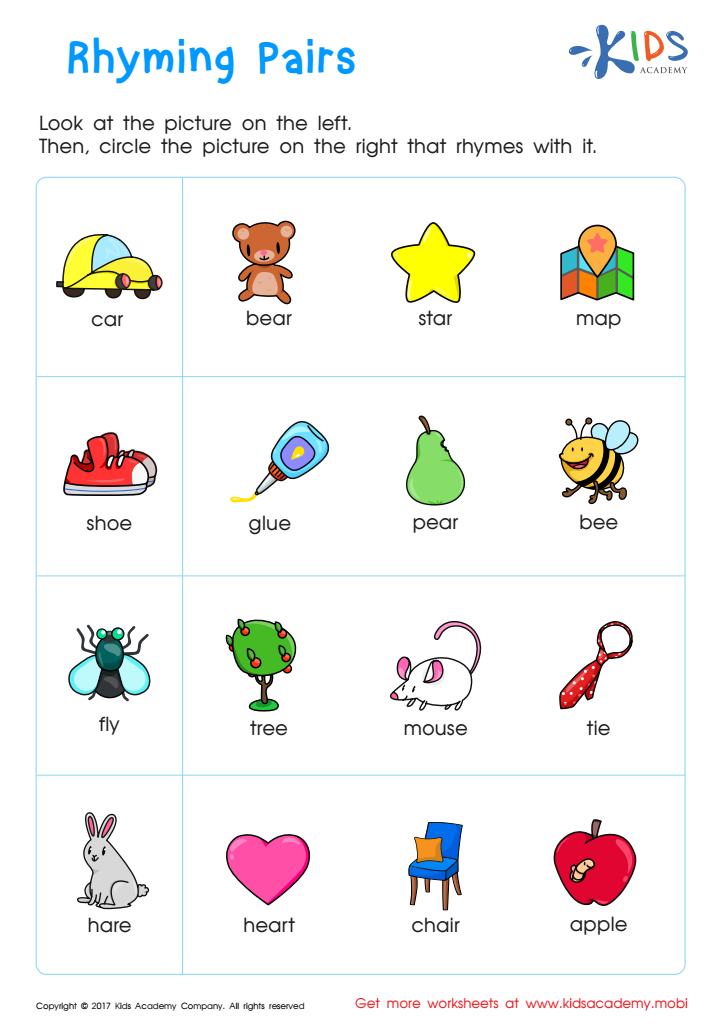

First Words: Picture Rhymes Worksheet







Rhyming skills development is crucial for 3-year-olds as it lays the foundation for essential literacy skills. When children engage in rhyming, they enhance their phonemic awareness, which is the ability to hear and manipulate the sounds in spoken words. This auditory skill is critical for learning to read later on, as it helps with recognizing patterns in language, distinguishing words, and understanding sounds.
Additionally, rhyming activities are inherently fun and engaging for young children. They encourage participation through games, songs, and stories, making learning enjoyable. This enjoyment fosters a positive attitude toward language and literacy, promoting a lifelong love for reading and learning.
Moreover, rhyming supports cognitive development. As children experiment with words and sounds, they enhance their vocabulary and comprehension skills. It also fosters social interactions among peers and adults, as they share in the joy of discovering rhymes together.
Parents and teachers play a vital role in cultivating these skills by incorporating rhymes into daily routines, stories, and playful activities. Ultimately, caring about rhyming skills not only equips children with vital tools for academic success but also enriches their early learning experiences, fostering curiosity and creativity.








