
Sorting skills Normal Worksheets for 3-Year-Olds
4 filtered results
Difficulty Level
Grade
Age
-
From - To
Subject
Activity
Standards
Enhance your child's sorting skills with our engaging and interactive worksheets designed specifically for 3-year-olds! Our "Sorting Skills Normal Worksheets" offer a variety of fun activities that help young learners categorize items based on color, size, and shape. These worksheets foster critical thinking and cognitive development while providing an enjoyable learning experience. With visually appealing illustrations and simple instructions, your child will develop essential categorization skills at their own pace. Perfect for preschool and home education settings, our worksheets are printable and easy to use, making learning a fun and accessible journey for your little one! Explore our resources today!
Favorites
With answer key
Interactive
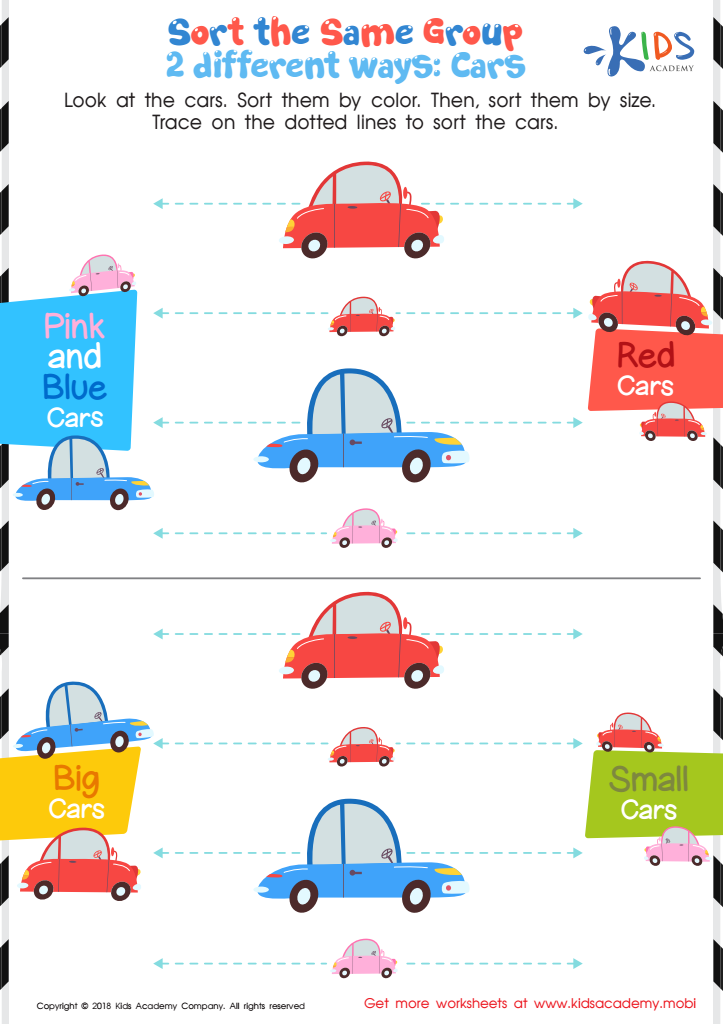
Sort the Same Group 2 Different Ways: Cars Worksheet
Look at the pictures with your child. Can they identify the objects? Ask them to sort the cars first by color and then size. Assist them to trace the dotted lines to sort the cars by color and size. This worksheet lets you easily assess your child's color and size organization skills.
 Assign to My Students
Sort the Same Group 2 Different Ways: Cars Worksheet
Worksheet
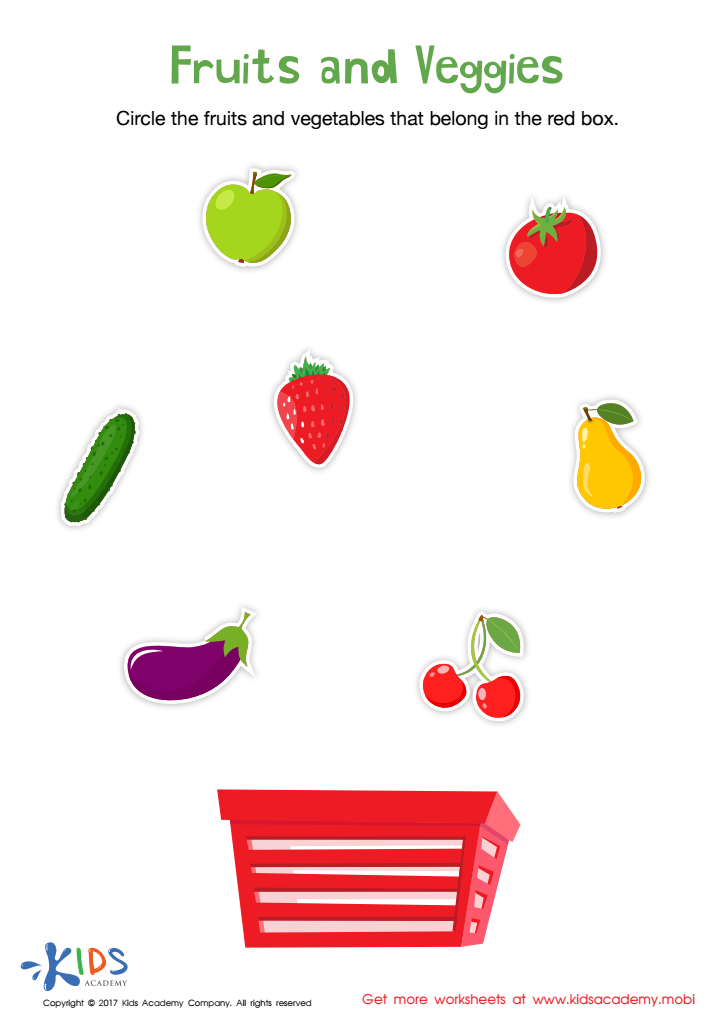
Classifying Fruits and Veggies by Color Sorting Worksheet
Worksheet
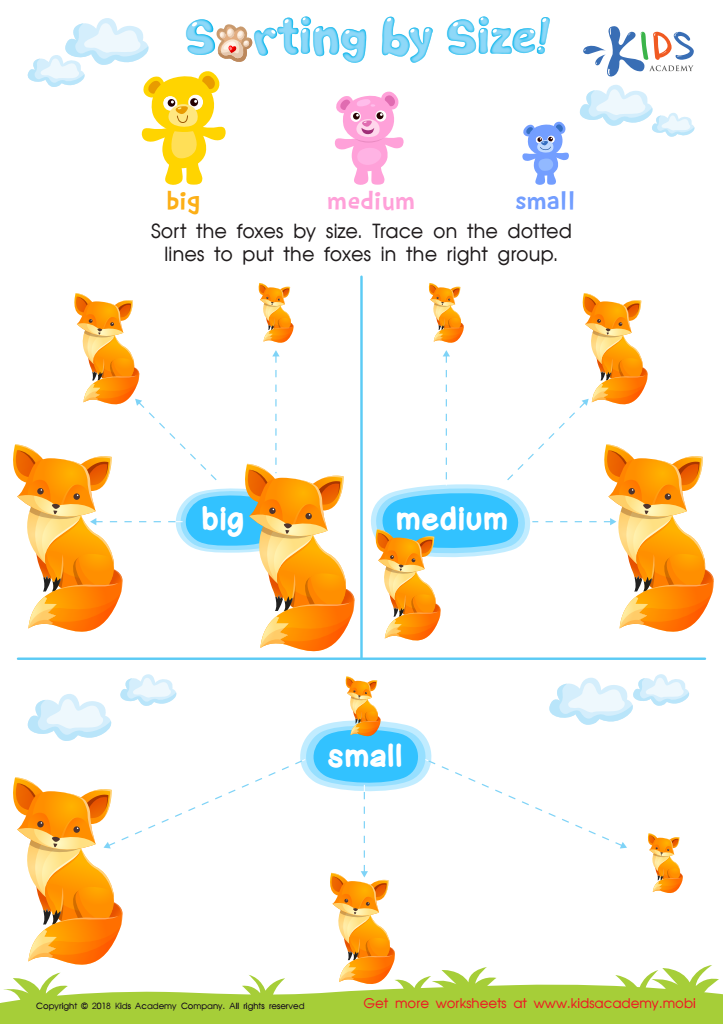
Sorting by Size Worksheet
This bright printout lets your students sort the foxes by size. Ask them to identify objects, then trace the dotted lines to put the foxes in the right group. Clear and easy instructions make this a fun and colorful exercise for your young ones.
Sorting by Size Worksheet
Worksheet
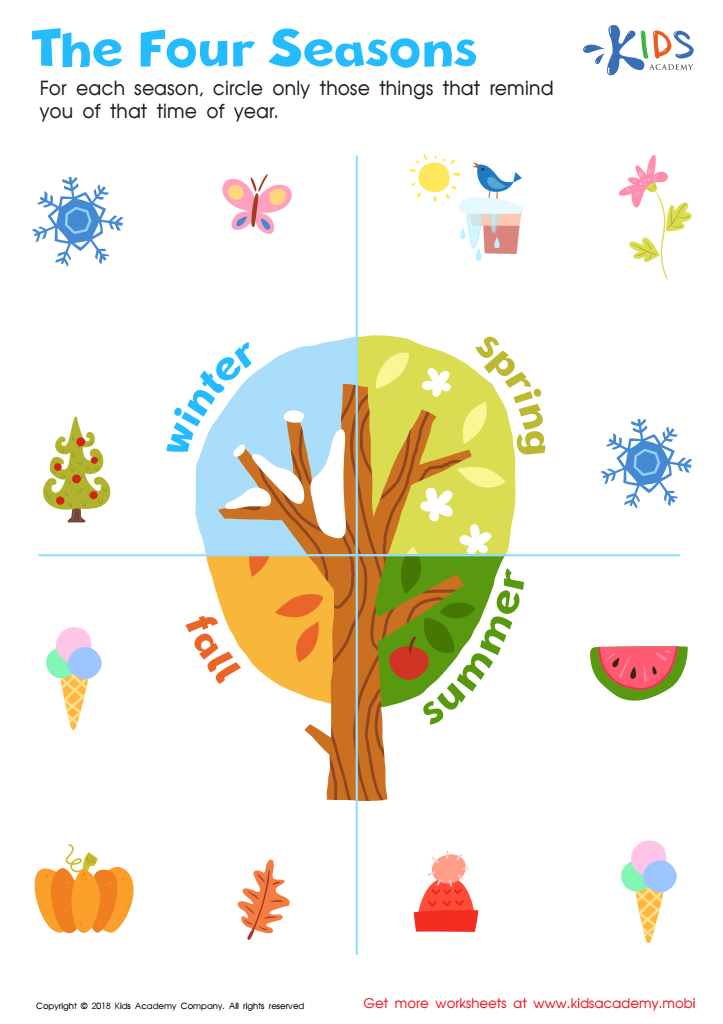
The Four Seasons Worksheet
Tell your child to circle things that remind them of each season. The tree has four squares, one for each season. Some things in each square match the season, others don't. Ask if any are out of place. Help them circle only items that remind them of that season.
The Four Seasons Worksheet
Worksheet
Join Kids Academy for Free
Who is primarily going to use this learning content?







Sorting skills in three-year-olds are foundational for several reasons, making it essential for parents and teachers to pay attention to their development. At this age, children are beginning to explore and understand their environment, and sorting activities help them categorize objects based on attributes such as size, shape, color, and function. This process fosters critical thinking and cognitive development, as children learn to recognize similarities and differences in various items.
Moreover, sorting skills promote organizational abilities that are vital for later academic learning. As children discern patterns, they become adept problem-solvers—skills that will aid in subjects like math and science. Through sorting, kids also enhance their fine motor skills through handling tiny objects or manipulatives, boosting their hand-eye coordination and dexterity.
Socially, when children participate in sorting games, they often engage collaboratively, learning to share ideas and tools while developing communication skills. Additionally, these activities open the door for emotional growth, as sorting can provide comfort and a sense of control—beneficial for emotional regulation.
In summary, helping three-year-olds develop sorting skills is crucial not just for academic readiness but also for holistic development, reinforcing the need for parents and teachers to be actively involved in nurturing these skills.








