Understanding prepositions Normal Worksheets for 3-Year-Olds
3 filtered results
-
From - To
Our "Understanding Prepositions Normal Worksheets for 3-Year-Olds" are designed to introduce young learners to essential spatial concepts using engaging activities. These worksheets utilize bright, cheerful illustrations to make learning fun and interactive for preschoolers. By practicing with these sheets, children will gradually grasp the meaning of fundamental prepositions such as “in,” “on,” “under,” and “between.” Each worksheet encourages kids to reinforce their understanding of prepositions through coloring, drawing lines, and identifying positions in familiar contexts. Perfect for both classroom and at-home learning, these easy-to-use worksheets support early literacy and cognitive development in a playful manner.
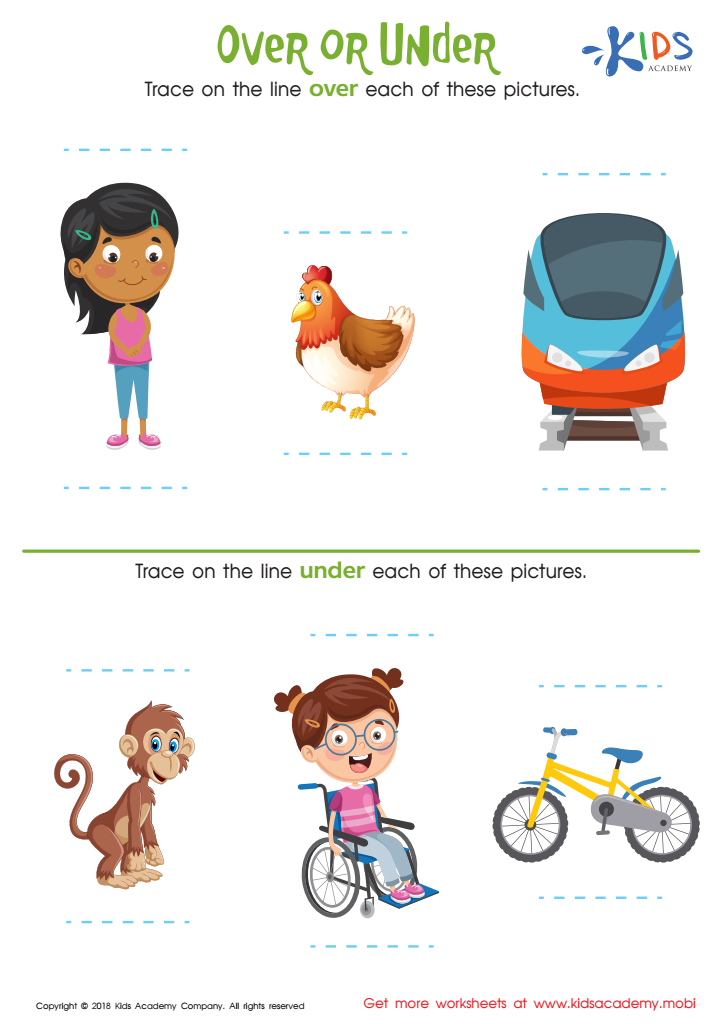
Over or Under Worksheet
 Assign to My Students
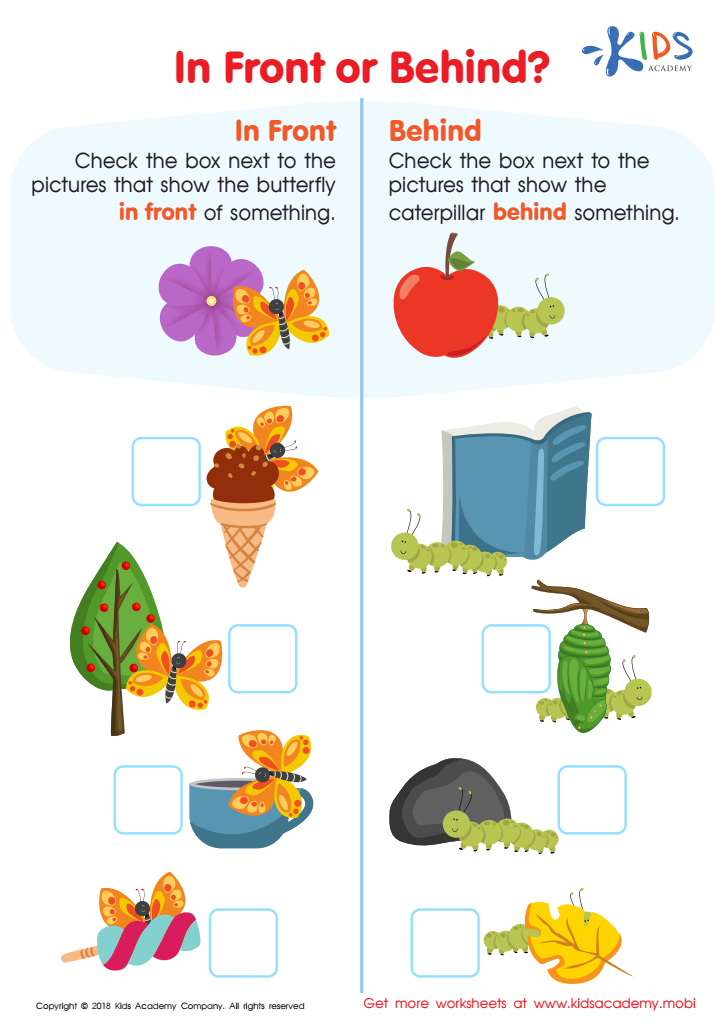
In Front or Behind Worksheet
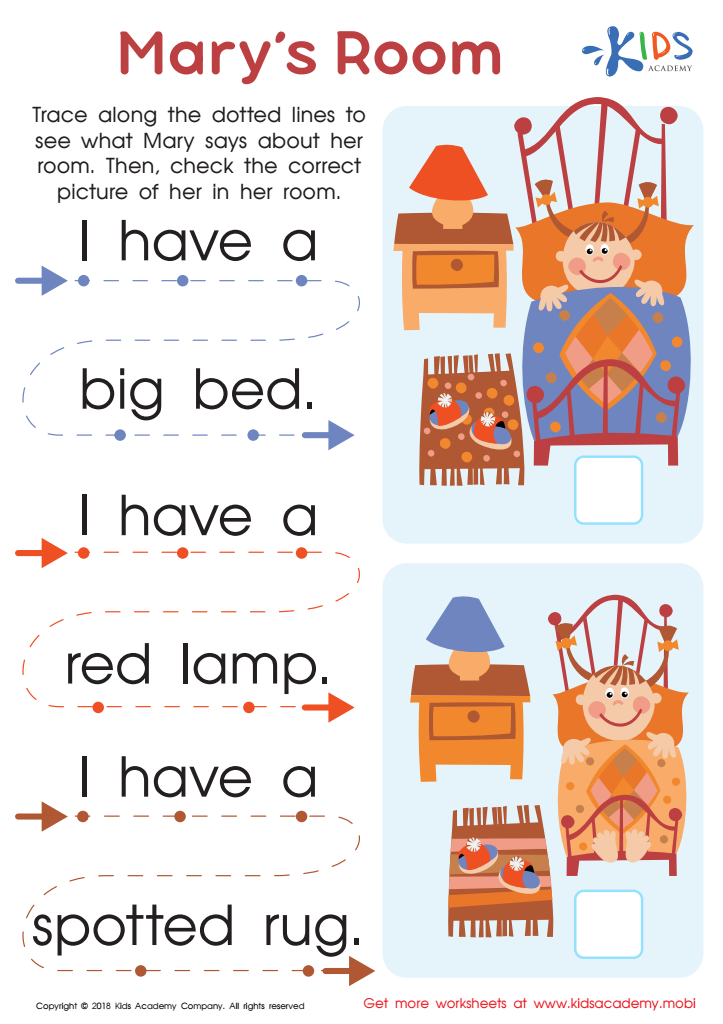
Mary's Room Worksheet


.jpg)
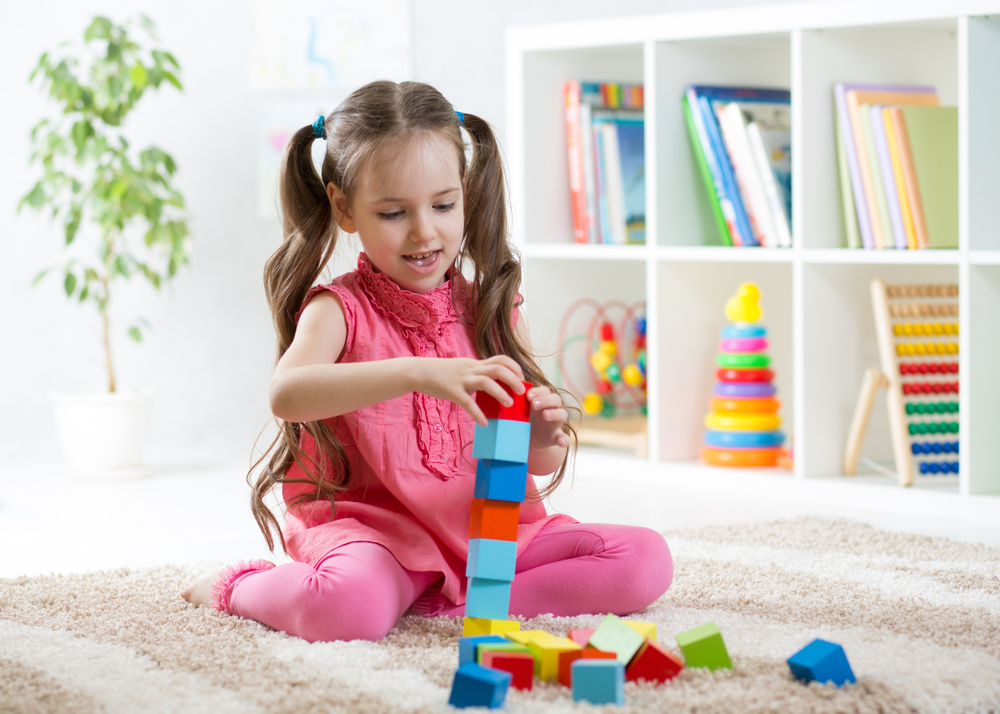


Understanding prepositions is crucial for 3-year-olds because it significantly enhances their language development and cognitive skills. Prepositions such as “in,” “on,” “under,” and “beside” help children make sense of and describe their environment more accurately. This foundational aspect of language allows them to better understand instructions, which is essential for following rules and engaging in activities at home or in the classroom. Moreover, it fosters their ability to communicate effectively with peers and adults, reducing frustration and misunderstandings.
Cognitively, grasping prepositions aids spatial awareness and problem-solving skills. Knowing where objects are in relation to each other is fundamental for engaging in play and daily routines, such as putting toys away or setting the table. This understanding lays the groundwork for future learning in subjects like math, science, and even reading comprehension, where spatial relationships and positioning vocabulary are frequently encountered.
Furthermore, early mastery of prepositions can boost a child's confidence and independence. When children can follow and give simple directions, they feel more in control and capable in their environment. Therefore, parents and teachers should prioritize teaching prepositions to help children thrive across various developmental domains, setting a strong foundation for more complex learning and social interactions in the future.








