
Subtraction practice Normal Addition & Subtraction Worksheets for 3-Year-Olds
5 filtered results
Difficulty Level
Grade
Age
-
From - To
Subject
Activity
Standards
Welcome to our engaging Subtraction Practice page, designed specifically for 3-year-olds! Here, young learners can explore the fundamentals of normal addition and subtraction through a variety of fun and interactive worksheets. Our carefully crafted activities encourage essential math skills while promoting confidence and creativity. Each worksheet fosters a child's understanding of subtraction in an enjoyable manner, featuring colorful visuals and relatable themes. Perfect for parents and educators, these resources can easily be incorporated into everyday learning. Start your child’s math journey today and watch them develop a solid foundation in subtraction with our delightful and educational worksheets!
Favorites
With answer key
Interactive
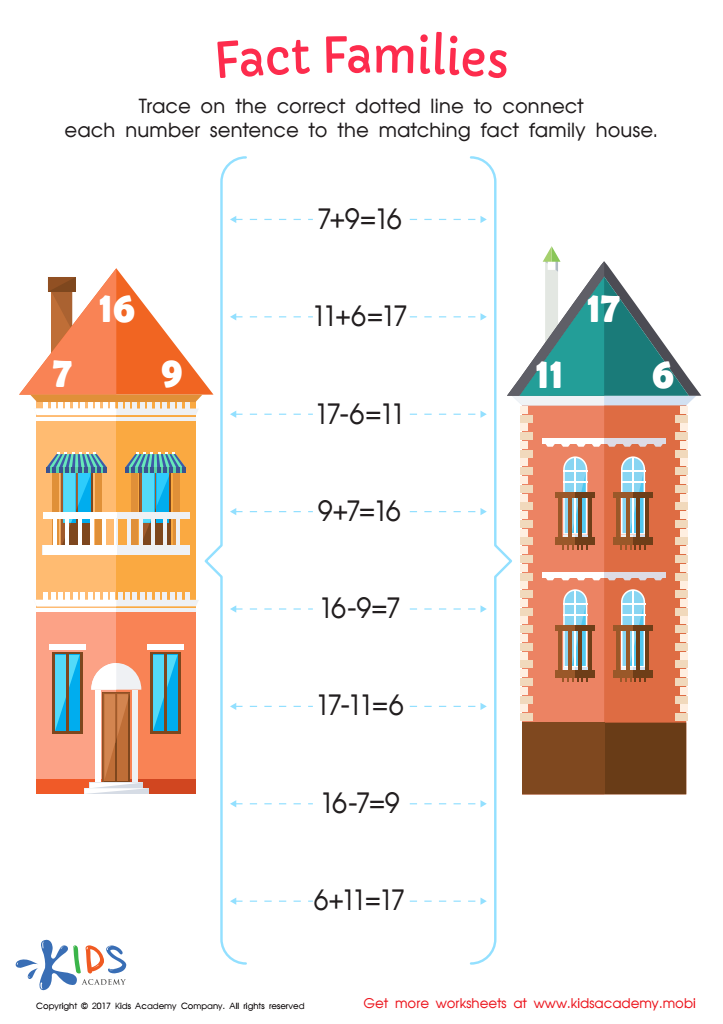
Fact Families — Add and Subtract Worksheet
Kids will love seeing how families of numbers "live" in their own houses!
 Assign to My Students
Fact Families — Add and Subtract Worksheet
Worksheet
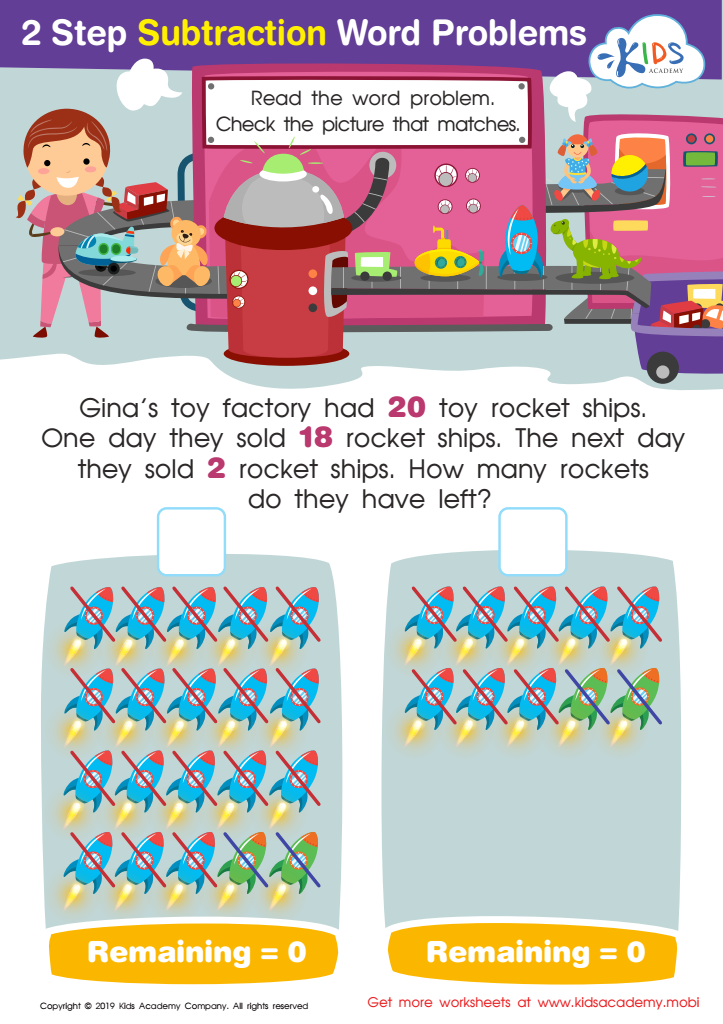
Step Subtraction Word Problems Worksheet
With this worksheet, kids can solve a multi-step subtraction problem with one-to-one number representation, helping Gina figure out her rocket count. Visualizing word problems is key, and this PDF will give your child a concrete image to work with. They'll be successful problem solvers in no time!
Step Subtraction Word Problems Worksheet
Worksheet
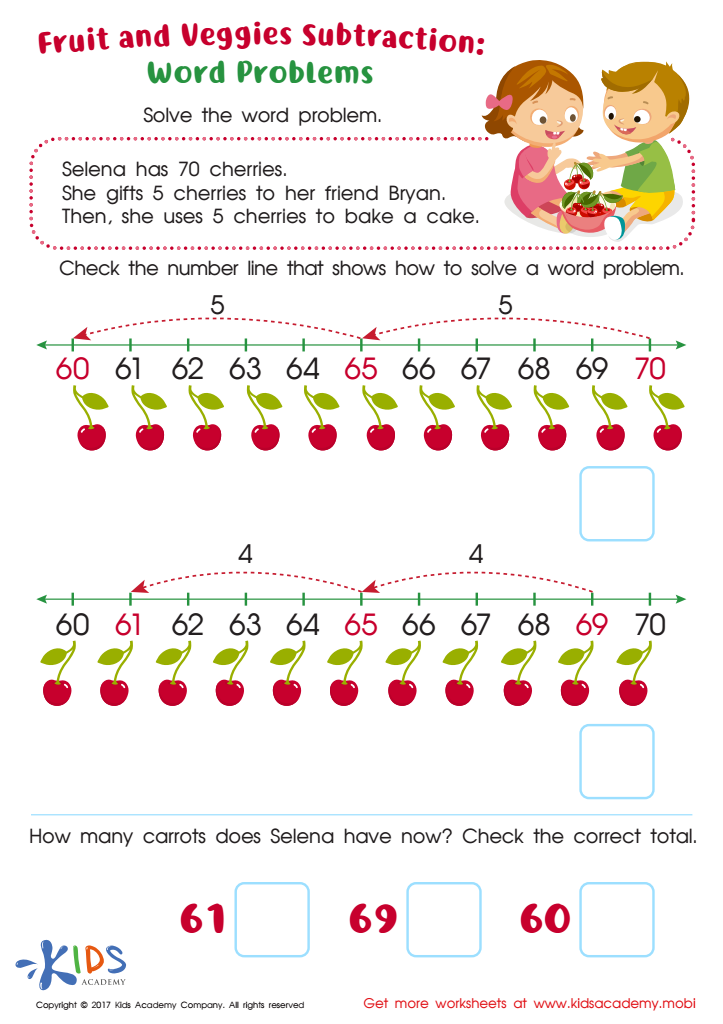
Subtraction Word Problems Free Printable
Try out this free printable subtraction worksheet! Your child can use number lines to solve challenging word problems – it's a great way to boost their problem-solving skills.
Subtraction Word Problems Free Printable
Worksheet
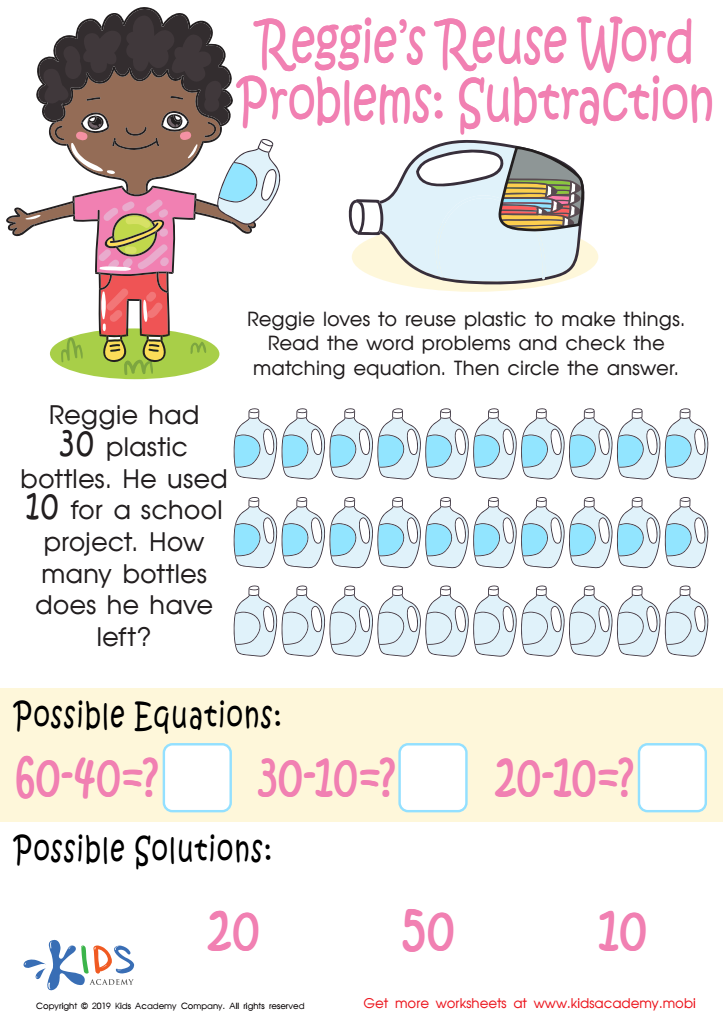
Reggie's Reuse Word Problems: Subtraction Worksheet
Kids can help pal Reggie become an eco-friendly friend! This PDF teaches kids subtraction and one-to-one number representation. They'll use pictures to solve word problems and find out how many plastic bottles Reggie can reuse. They'll also match number equations and solutions to get the right answer.
Reggie's Reuse Word Problems: Subtraction Worksheet
Worksheet
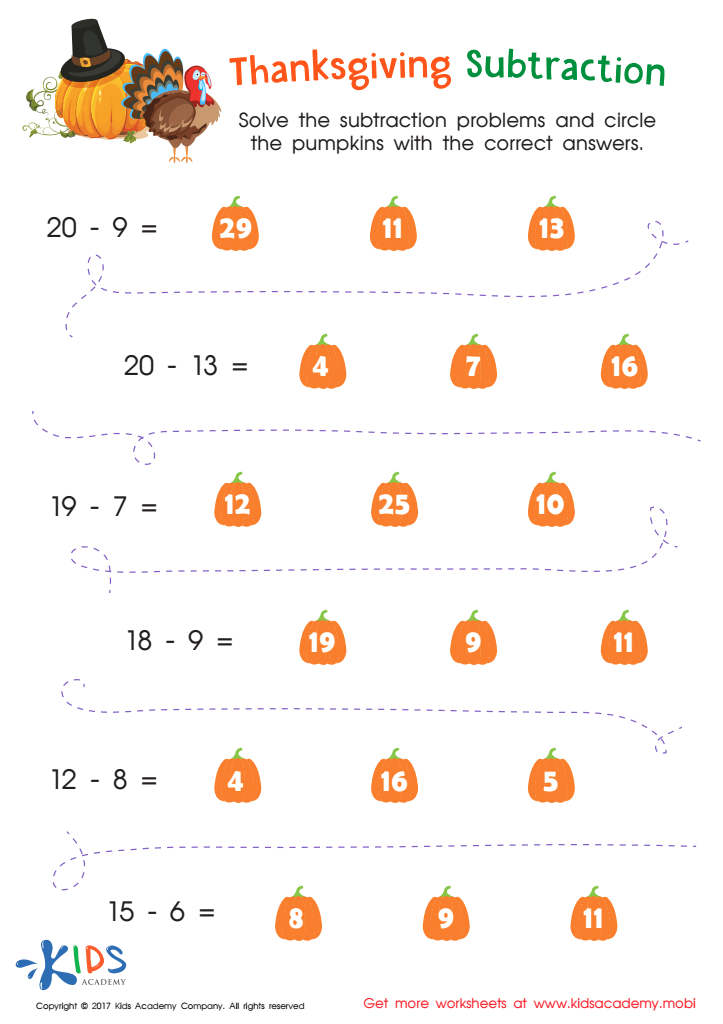
Thanksgiving Subtraction Substraction Worksheet
Enjoy a fun math activity this Thanksgiving! This subtraction worksheet gives kids a great chance to practice math skills while having fun. Solve attractive subtraction problems for a great learning experience.
Thanksgiving Subtraction Substraction Worksheet
Worksheet
Join Kids Academy for Free
Who is primarily going to use this learning content?








Subtraction practice in young children, including 3-year-olds, is crucial for developing foundational math skills and critical thinking. At this age, children are naturally curious and eager to explore concepts like quantity and number. Introducing subtraction through engaging and interactive activities helps them understand the concept of 'taking away,' which lays the groundwork for more complex math later on.
Practicing subtraction alongside normal addition fosters a balanced understanding of arithmetic. It encourages children to grasp the relationship between addition and subtraction, showing them that these operations are inversely related. By incorporating playful activities like counting blocks, using visual aids, or engaging in songs, parents and teachers make learning enjoyable, which boosts confidence and retention.
Moreover, early exposure to subtraction helps sharpen problem-solving skills and logical thinking. It allows children to investigate and manipulate numbers in a casual environment, enabling them to develop persistence when facing challenges.
In summary, subtraction practice for 3-year-olds is vital for cognitive growth, laying the stepping stones for future academic success. By prioritizing these basic concepts, parents and teachers can support children's overall cognitive development and mathematical literacy from an early age.








