Division practice Normal Division Worksheets for 3-Year-Olds
3 filtered results
-
From - To
Introduce your little learner to the concept of division with our engaging and age-appropriate division practice worksheets designed specifically for 3-year-olds. At Kids Academy, we focus on making foundational math skills fun and accessible. Our thoughtfully crafted worksheets use playful illustrations and simple activities to help young children grasp the basics of division. Through interactive formats and appealing visuals, we aim to build confidence and ignite a passion for learning math. Perfect for early learners, these free printables are a valuable resource for parents and teachers looking to support a child's early educational journey. Explore more today at Kids Academy!
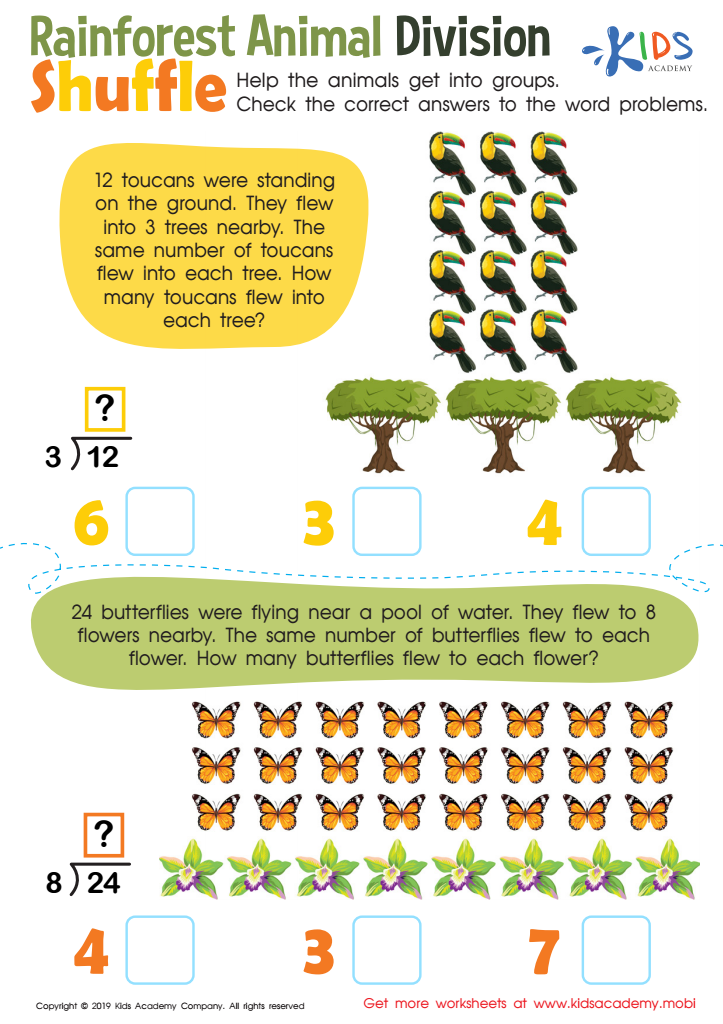
Rainforest Animal Division Worksheet
 Assign to My Students
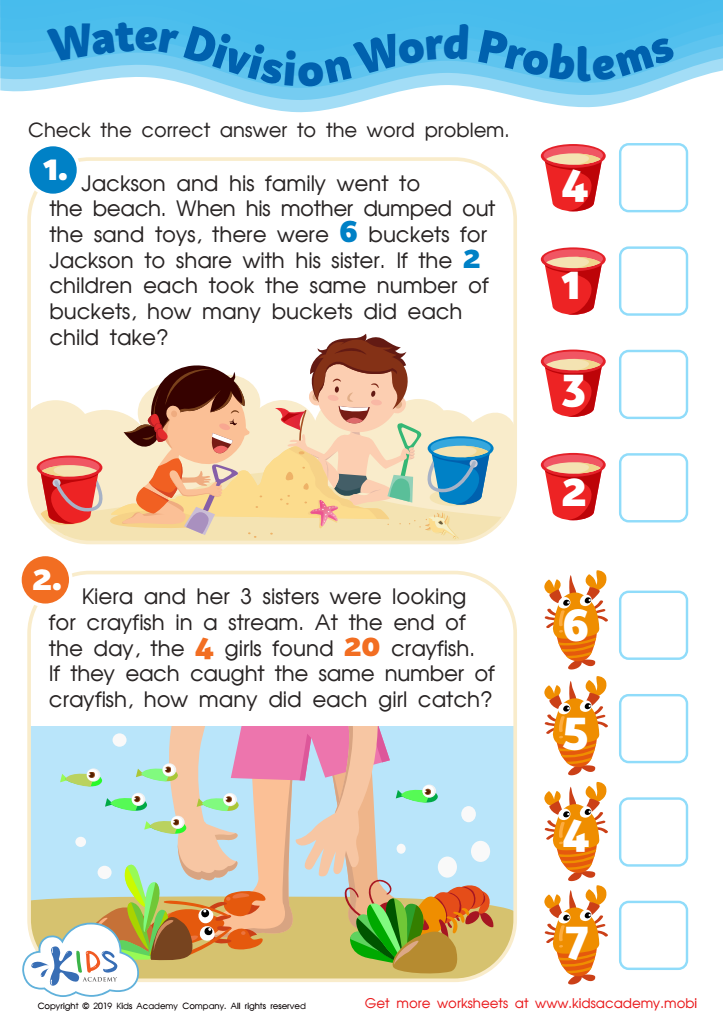
Water Division Word Problems Worksheet
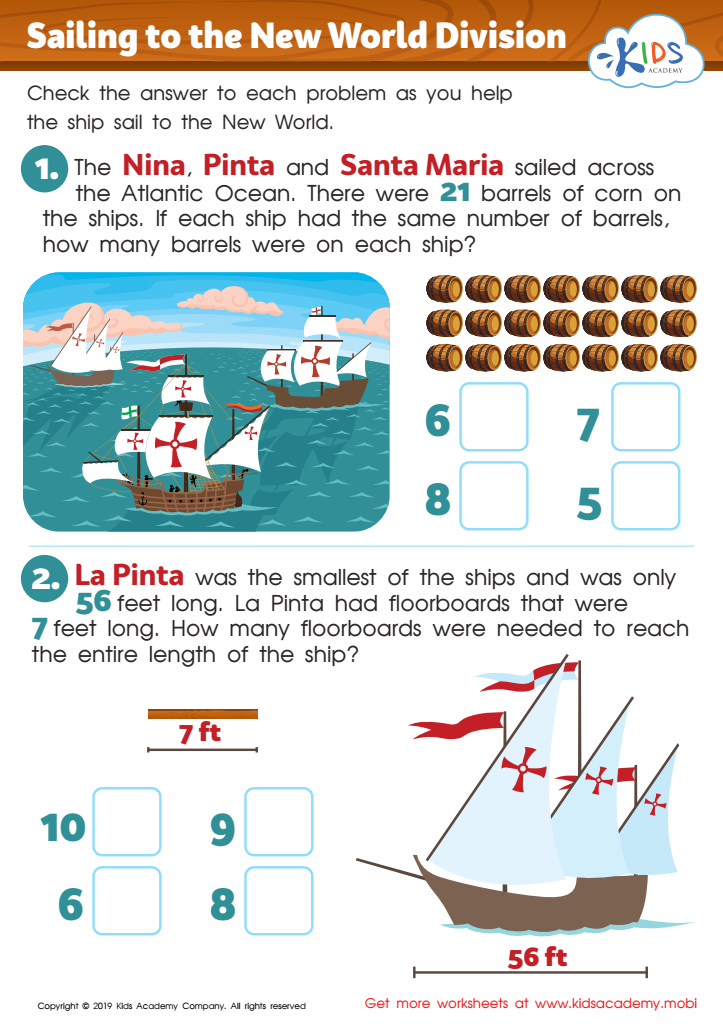
Sailing to the New World Division Worksheet








It is essential to clarify that formal division practice is not appropriate for 3-year-olds due to their developmental stage. Young children at this age are still developing basic cognitive, motor, and social skills, and their understanding of abstract concepts like division is limited.
Instead, parents and teachers should focus on laying the foundation for early math skills through playful, age-appropriate activities. Engaging young children in activities such as sorting objects by color or size, recognizing patterns, and counting helps build the necessary groundwork for future mathematical understanding. These activities foster critical thinking, problem-solving, and spatial awareness in a way that is meaningful and enjoyable for them.
For instance, sharing toys or snacks among friends during playtime introduces the concept of fair distribution, indirectly imparting a sense of division. These interactions teach cooperation, turn-taking, and equality without imposing formal arithmetic structures that are misaligned with their developmental stage.
In summary, while direct division practice is unsuitable for 3-year-olds, parents and teachers should care about fostering early math skills through playful and relatable experiences. These foundational activities nurture a positive attitude towards learning and readiness for more complex mathematical concepts as children grow older.








