Shape identification Normal Geometry Worksheets for 3-Year-Olds
4 filtered results
-
From - To
Introducing our Shape Identification Normal Geometry Worksheets tailored for 3-year-olds. These engaging, printable worksheets from Kids Academy are designed to help young learners recognize, identify, and name basic geometric shapes. They provide fun activities that enhance fine motor skills, hand-eye coordination, and cognitive development through playful learning exercises. Perfect for parents and educators seeking to provide high-quality educational resources, these worksheets ensure a solid foundational understanding of geometric concepts, making early learning enjoyable and effective. Visit our site to download and start discovering the world of shapes with your little ones today!
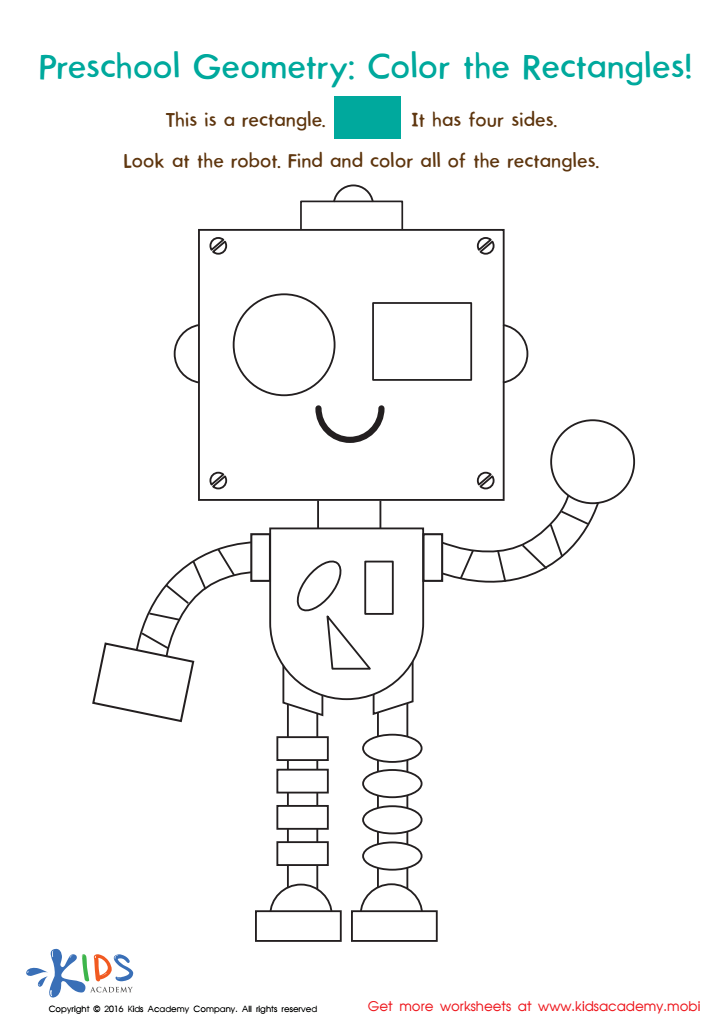
Geometry Worksheet
 Assign to My Students











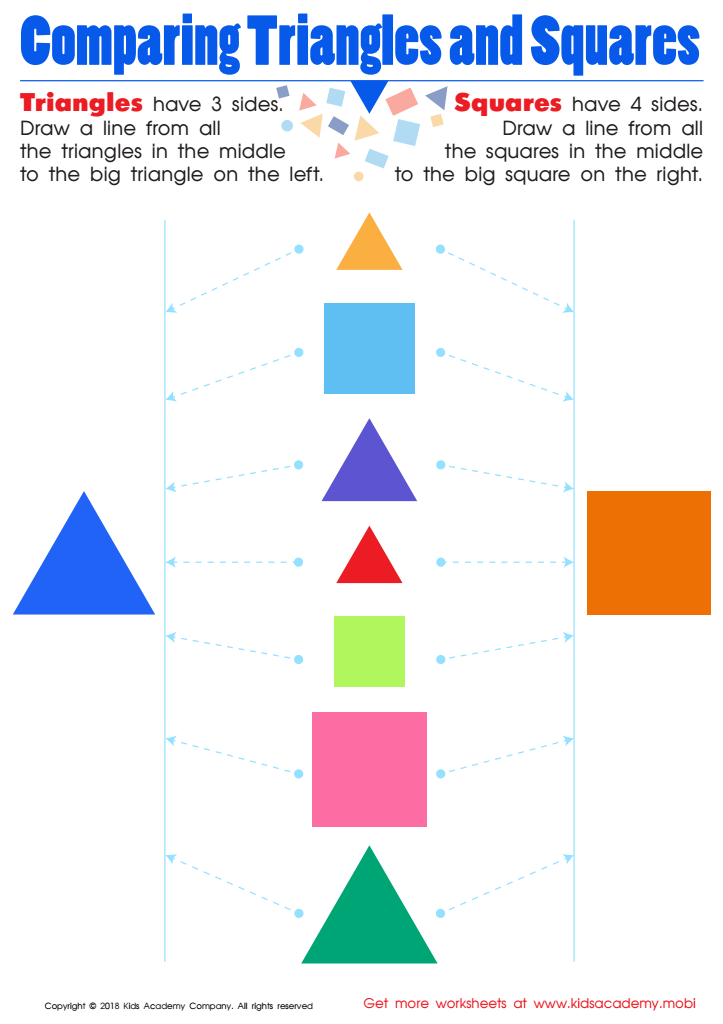
Comparing Triangles Squares Worksheet
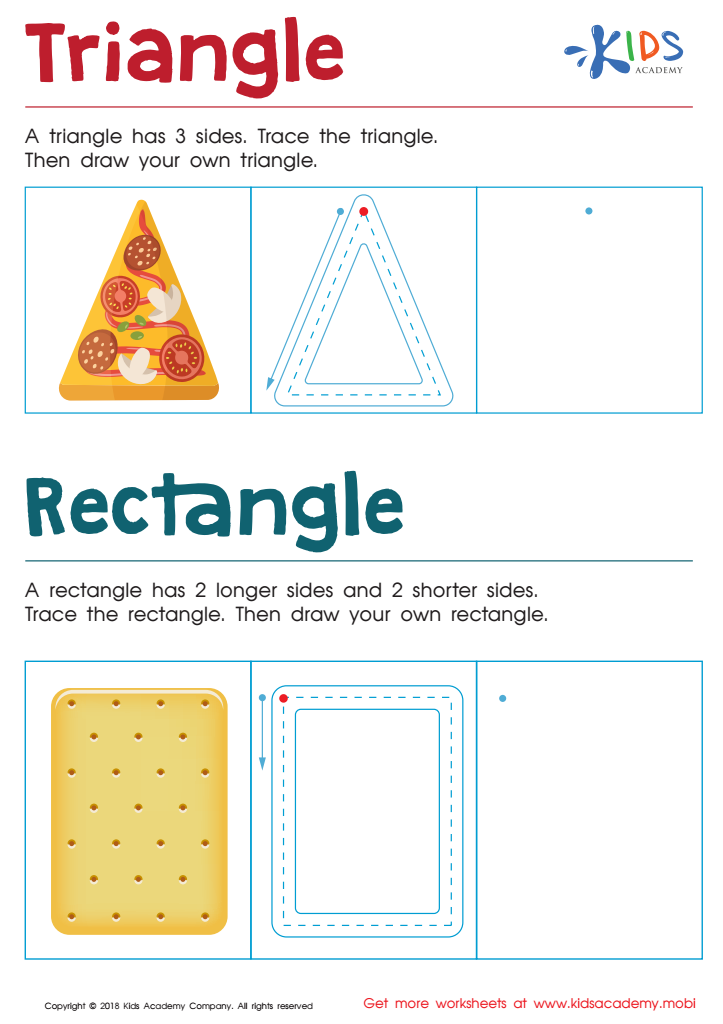
Triangle Rectangle Worksheet
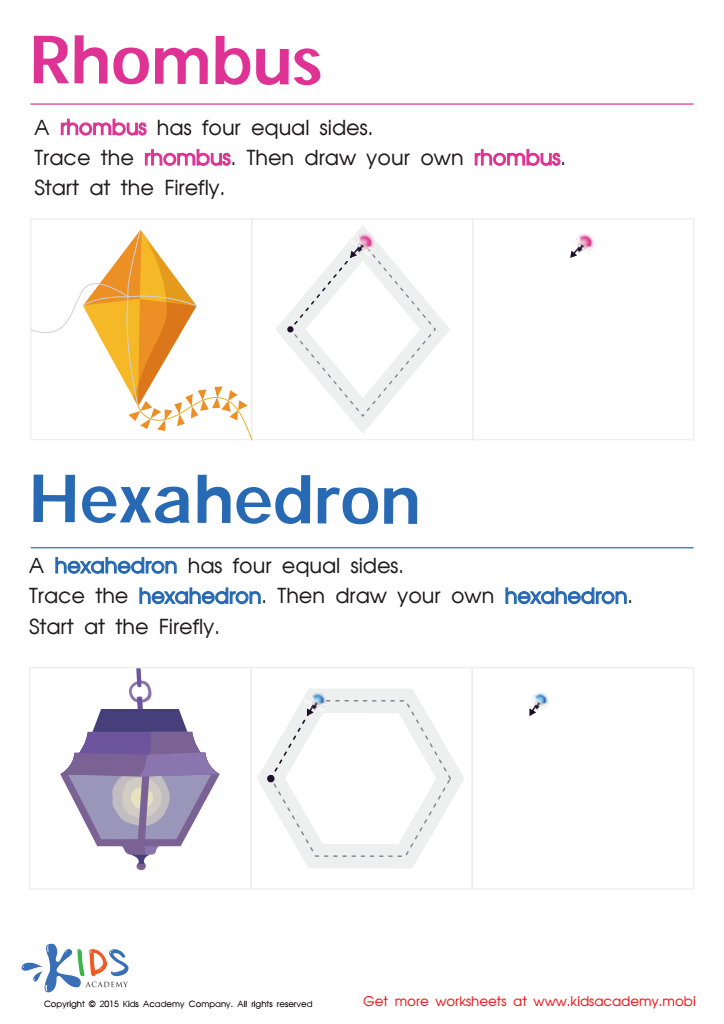
Draw a Rhombus And a Hexahedron Printable








Parents and teachers should prioritize shape identification and basic geometry for 3-year-olds because it is foundational to a child's cognitive development. Learning to recognize shapes like circles, squares, and triangles enhances early math skills, helping children later with more complex mathematical concepts. Shape identification also supports a child's ability to classify and compare objects, reinforcing critical thinking and problem-solving capabilities essential in everyday life.
Moreover, understanding shapes aids in the improvement of a child’s spatial awareness, crucial for tasks such as reading maps, understanding directions, and recognizing patterns. This skill is not limited to mathematics but extends to arts and crafts, play, and building activities, fostering creativity and fine motor skills.
Socially, shape recognition activities provide opportunities for interaction, communication, cooperation, and language development when children describe and discuss the shapes they see and build. For instance, through simple games or songs about shapes, children enhance their vocabulary and ability to articulate ideas.
In summary, teaching shape identification to 3-year-olds is critical not only for their immediate learning milestones but also because it builds a strong educational foundation, cognitive abilities, and social skills, all contributing to well-rounded development.








