
Basic Addition Normal Math Worksheets for 3-Year-Olds
6 filtered results
Difficulty Level
Grade
Age
-
From - To
Subject
Activity
Standards
Welcome to our collection of Basic Addition Normal Math Worksheets designed for 3-year-olds! These engaging worksheets are perfect for introducing early math concepts to your little ones. Featuring colorful graphics and simple, age-appropriate exercises, children will joyfully explore the fundamentals of addition while developing essential cognitive skills. Each worksheet encourages hands-on learning, helping young learners recognize numbers and understand basic addition through fun activities. Whether reinforcing classroom learning or providing at-home practice, our resources are ideal for making math an enjoyable experience. Dive into the world of numbers with our Basic Addition worksheets and watch your child's confidence soar!
Favorites
With answer key
Interactive
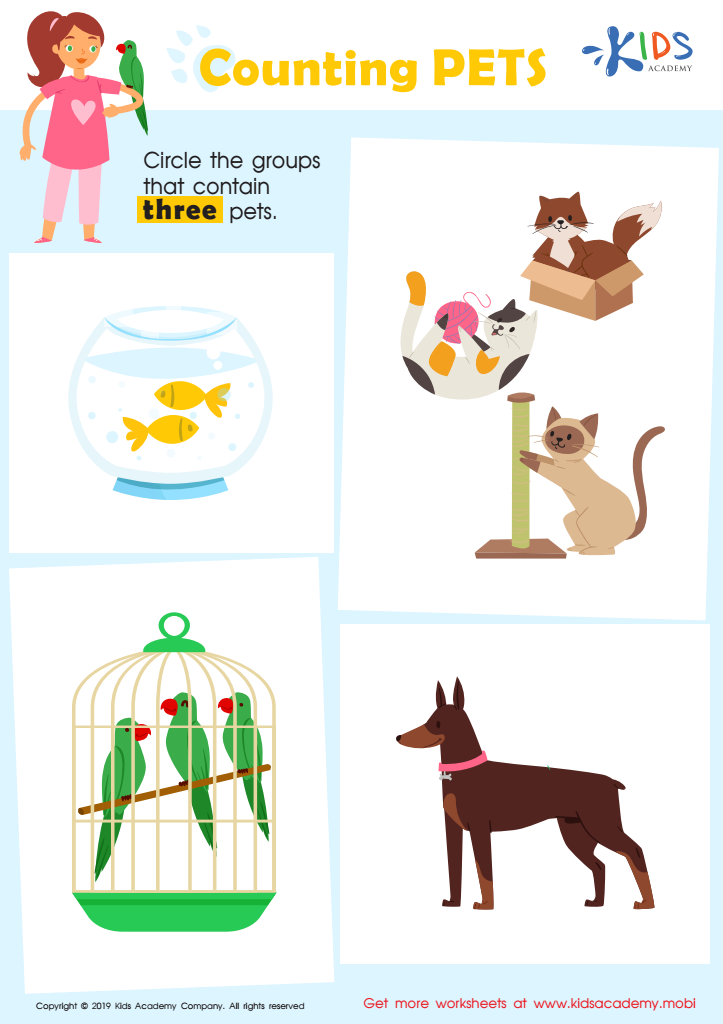
Counting Pets Worksheet
Kids adore their pets, making this free pet counting worksheet the perfect way to combine something they love with math skills. They'll count the number of pets, circle the pictures with three pets, and use one-to-one picture representation to help. This exercise will cultivate their learning and reinforce their love of animals!
 Assign to My Students
Counting Pets Worksheet
Worksheet
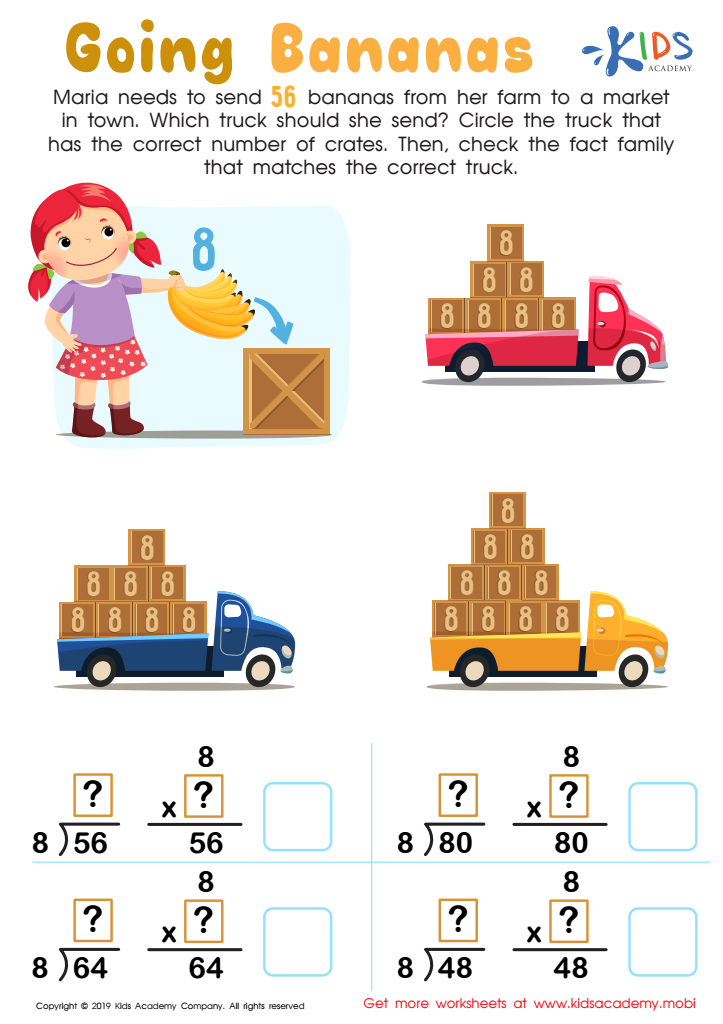
Going Bananas Worksheet
Marla needs to send 56 bananas in batches of 8. Help your child practice division and learn about fact families with this free worksheet. It'll help boost their multiplication skills and increase speed when solving problems.
Going Bananas Worksheet
Worksheet
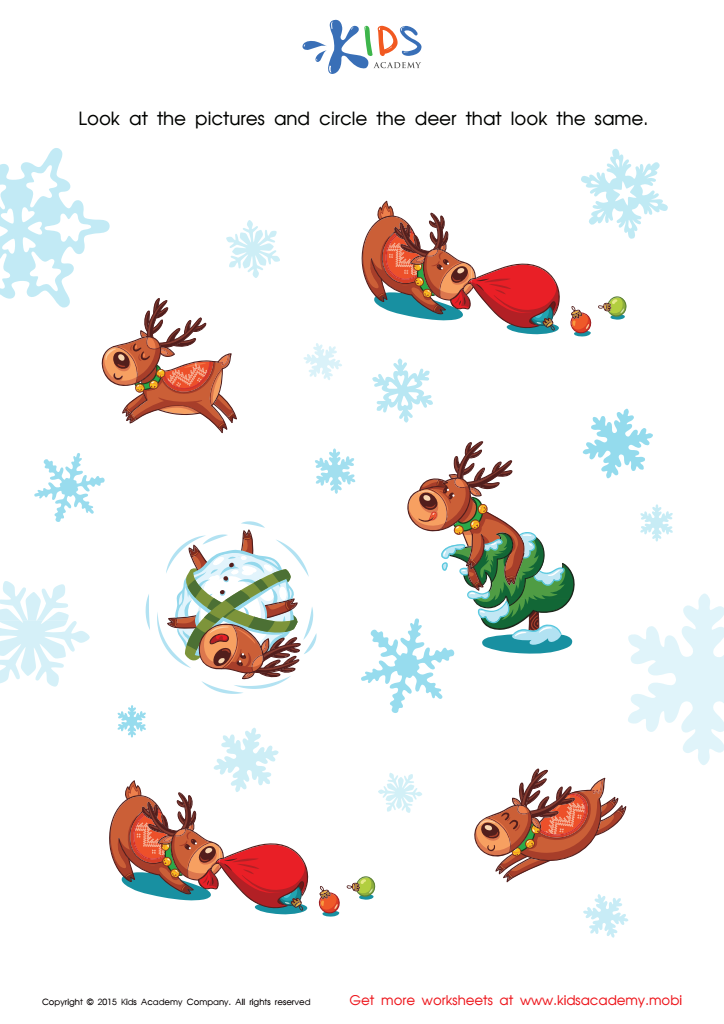
Count the Deer Worksheet
Spread festive cheer this holiday season with Kids Academy's Christmas-themed math worksheet! Your little learner can count and color in the cute deer while reinforcing their counting skills. Get your colorful worksheet now and make Christmas counting fun. For more number worksheets, click here.
Count the Deer Worksheet
Worksheet
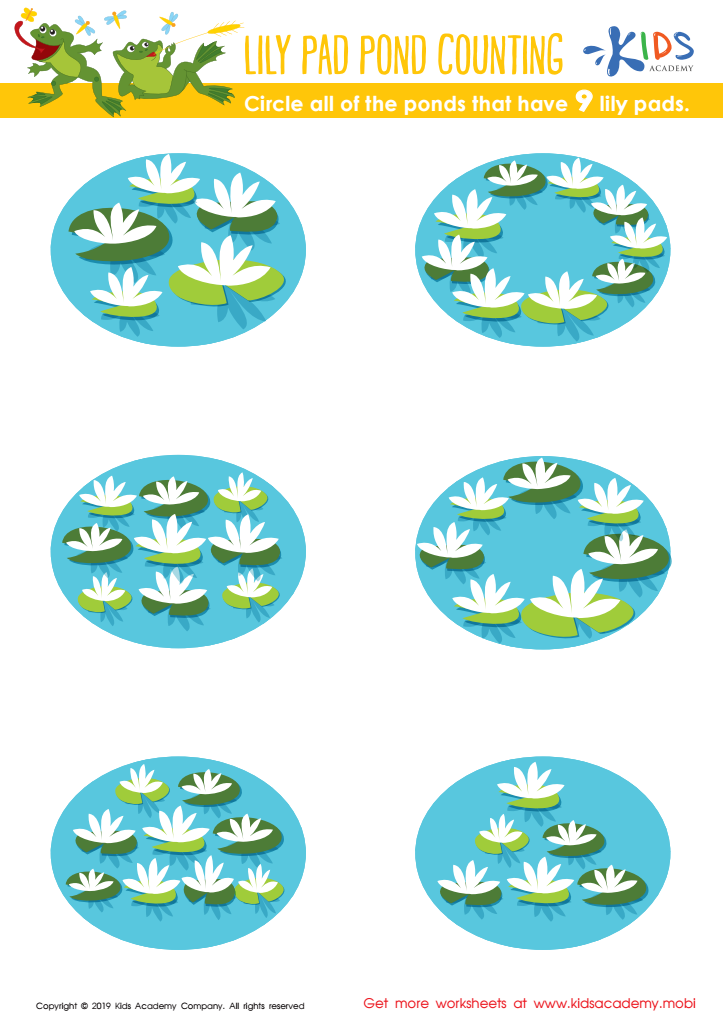
Lily Pad Pond Counting Worksheet
Counting can be fun with this colorful worksheet. Guide and be patient with your kids as they write numbers and count the six groups of lily pads. Help them circle the ponds with 9 lily pads, and watch them learn better and faster.
Lily Pad Pond Counting Worksheet
Worksheet
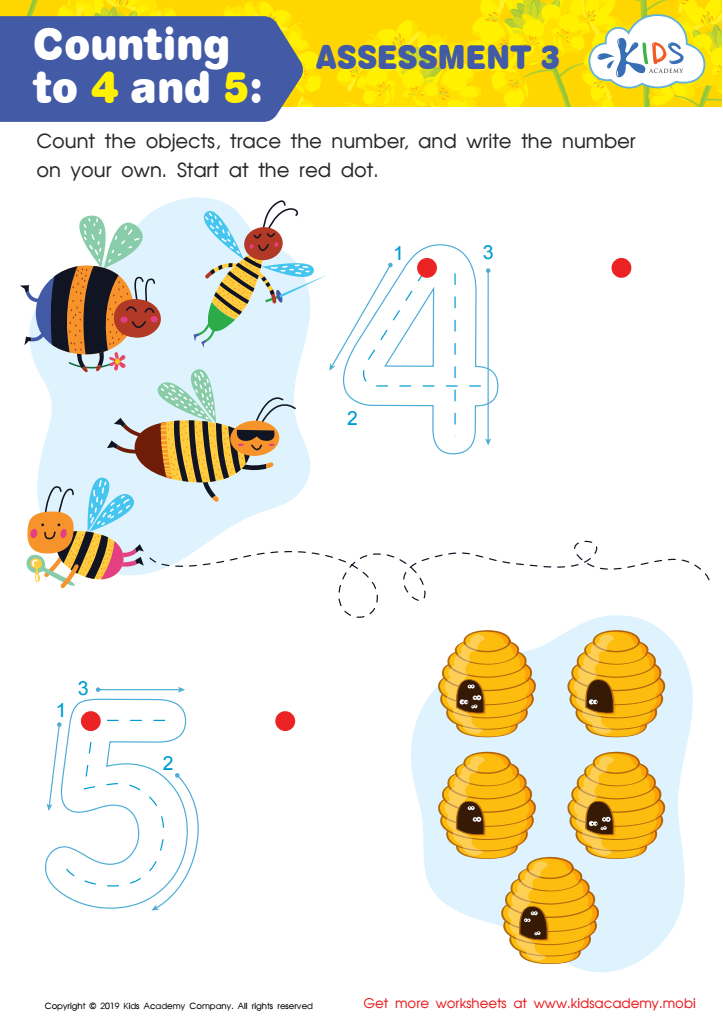
Counting to 4 and 5: Assessment 3 Worksheet
Help your kids learn to count with fun objects and items they like - like the bees in this worksheet. Ask them to count, trace the number, and write it down. Give guidance, starting at the red dot. This is an important first step in math and your kids will love it!
Counting to 4 and 5: Assessment 3 Worksheet
Worksheet
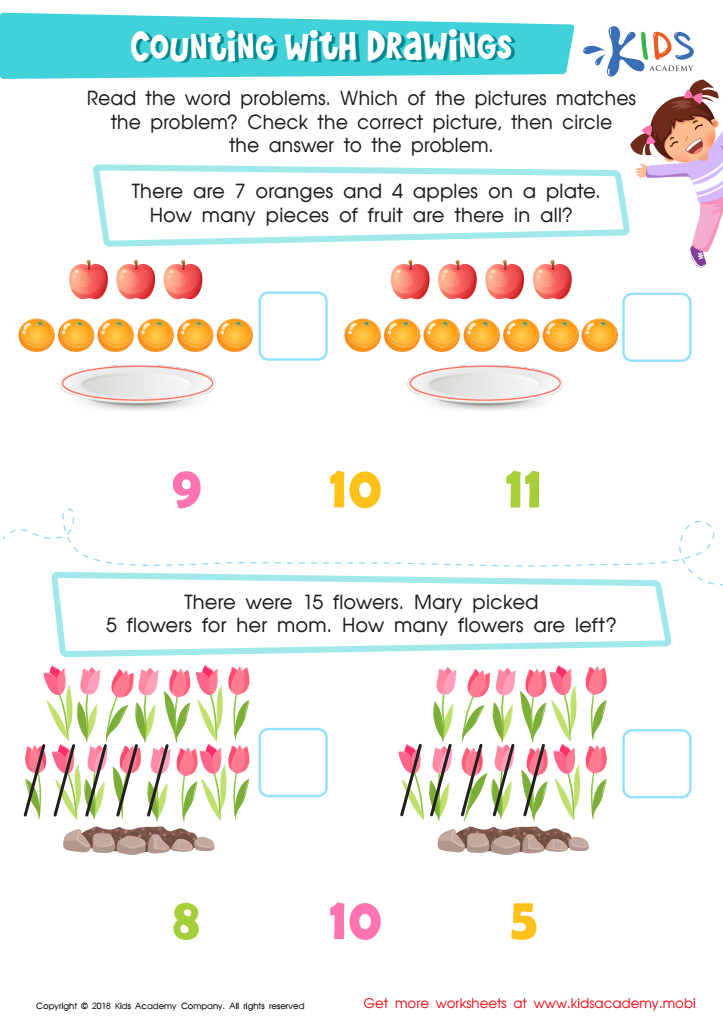
Counting with Drawings:Fruits & Flowers Worksheet
At Kids Academy, we know pictures make math come alive and make sense. This worksheet is perfect for early learners to practice word problems. Kids read each problem and count the images that represent the numbers, then solve the problem with addition or subtraction to get the right answer.
Counting with Drawings:Fruits & Flowers Worksheet
Worksheet
Join Kids Academy for Free
Who is primarily going to use this learning content?





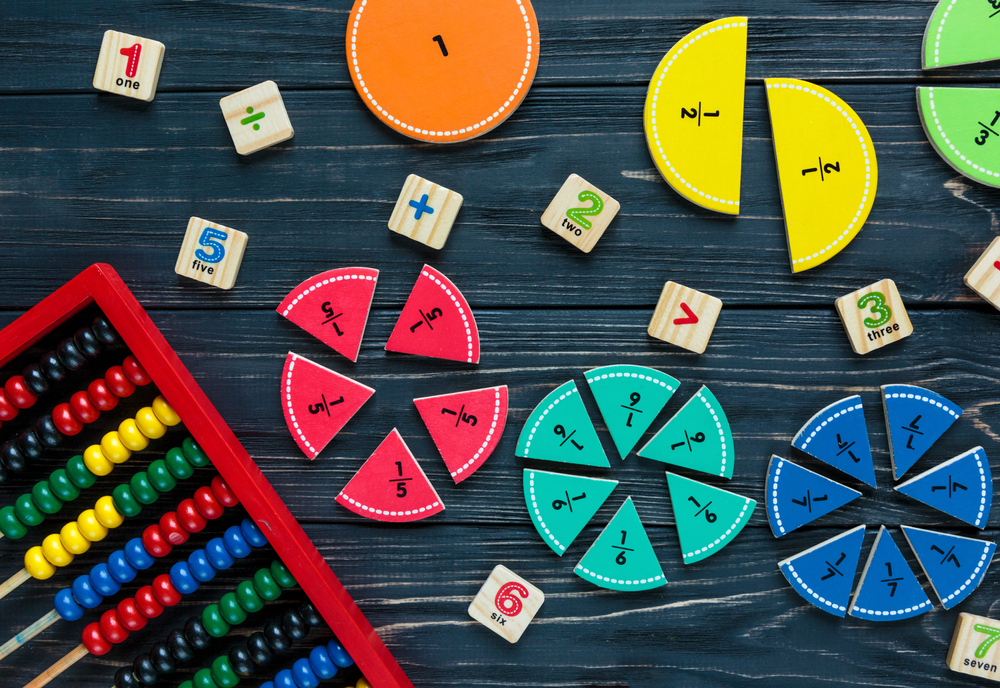
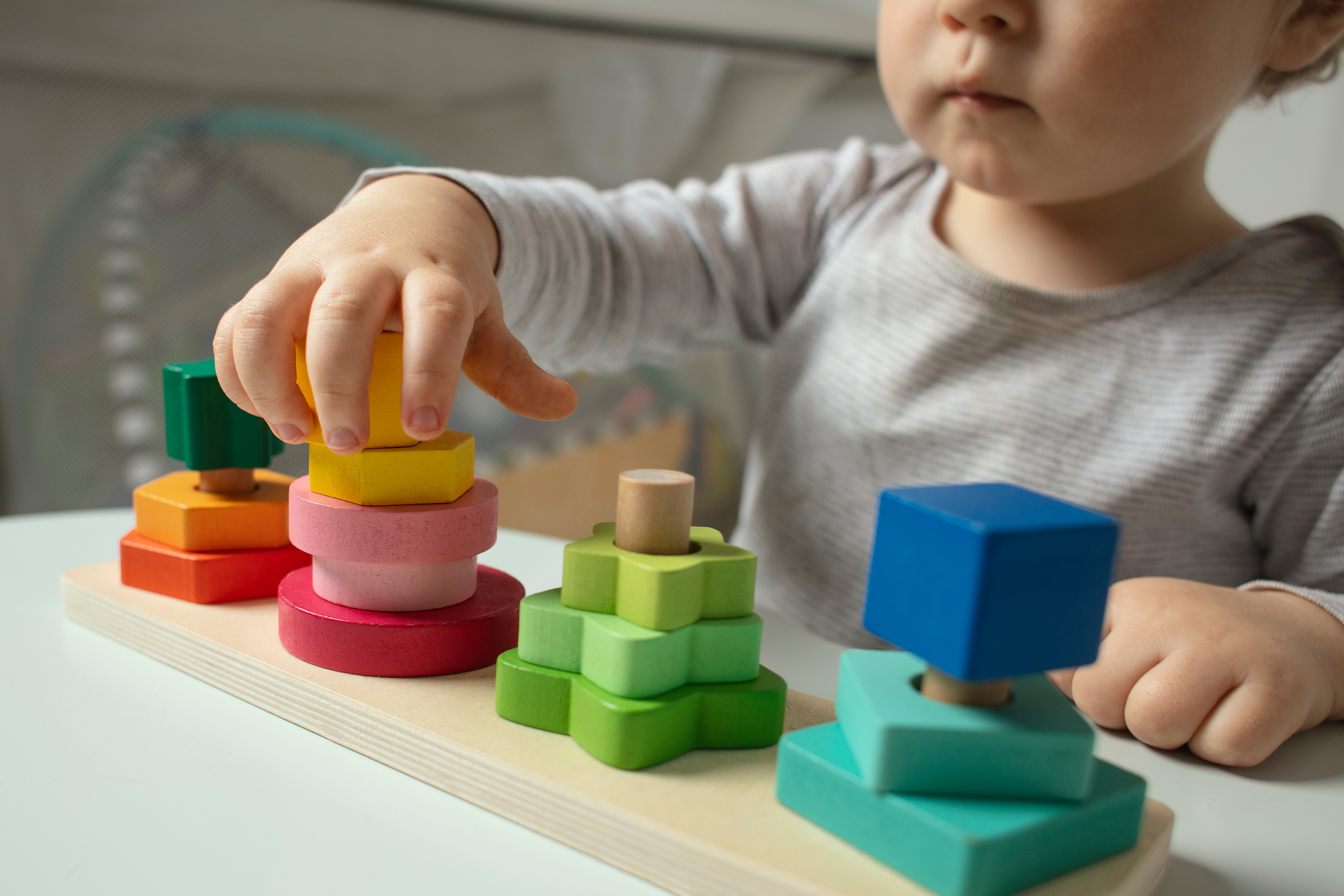

Parents and teachers should care about basic addition concepts for 3-year-olds because early mathematical understanding lays the foundation for future learning. At this age, children are naturally curious and inclined to explore numbers and quantity through play and everyday experiences. Engaging in basic addition helps them develop essential cognitive skills, such as critical thinking and problem-solving, while also enhancing their language and communication abilities.
Moreover, introducing basic addition fosters a positive attitude toward math from an early age. Children who are exposed to mathematical concepts early on are more likely to continue enjoying and pursuing math as they grow. Teaching addition through interactive activities, such as counting toys or snacks, can make learning fun and relatable, making it easier for children to grasp abstract concepts in the future.
Additionally, early math skills are linked to success in various academic areas. Research has shown that children with strong early math abilities often excel in school and show better performance in subjects requiring logical skills. By prioritizing basic addition for preschoolers, parents and teachers create a supportive environment that promotes overall cognitive development, making it an essential component of early childhood education.








