Division practice Normal Math Worksheets for 3-Year-Olds
4 filtered results
-
From - To
Introducing our specially designed division practice worksheets for 3-year-olds! At Kids Academy, we believe in early math exposure with fun, engaging activities. These worksheets feature colorful illustrations and simple division problems tailored for young learners. They offer a gentle introduction to mathematical concepts, aiming to build a solid foundation with age-appropriate exercises. Perfect for little minds, our worksheets inspire confidence, curiosity, and a love for learning. Discover the joy of math and help your child develop critical early skills in an enjoyable and interactive way. Download our division practice worksheets today and see their progress soar!
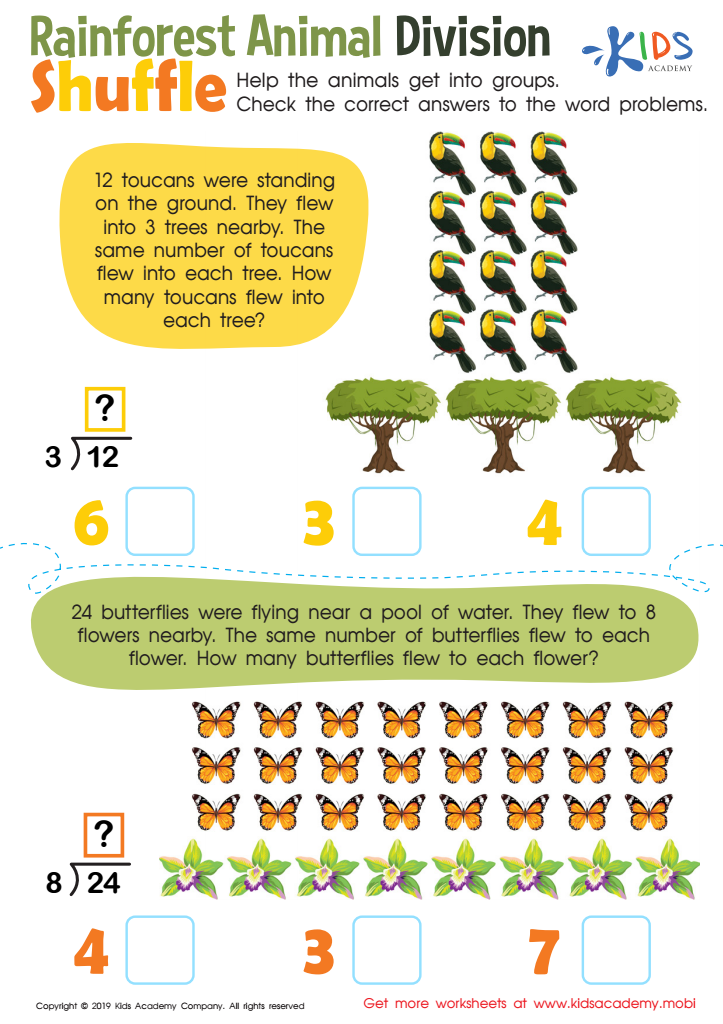
Rainforest Animal Division Worksheet
 Assign to My Students
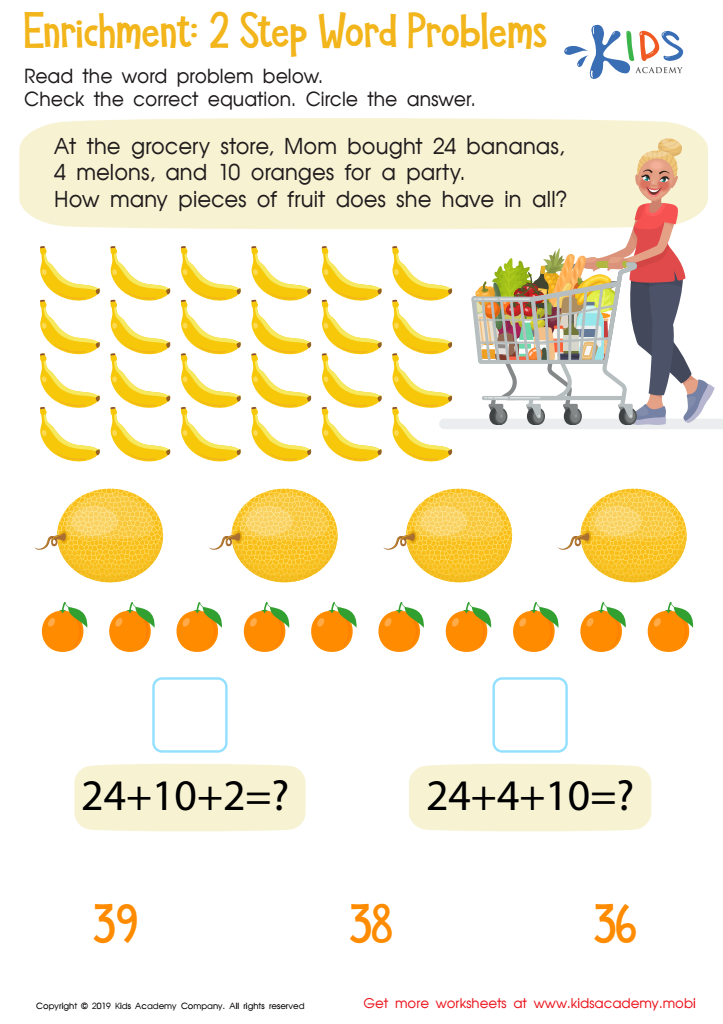
Enrichment -2 Step Word Problems Worksheet
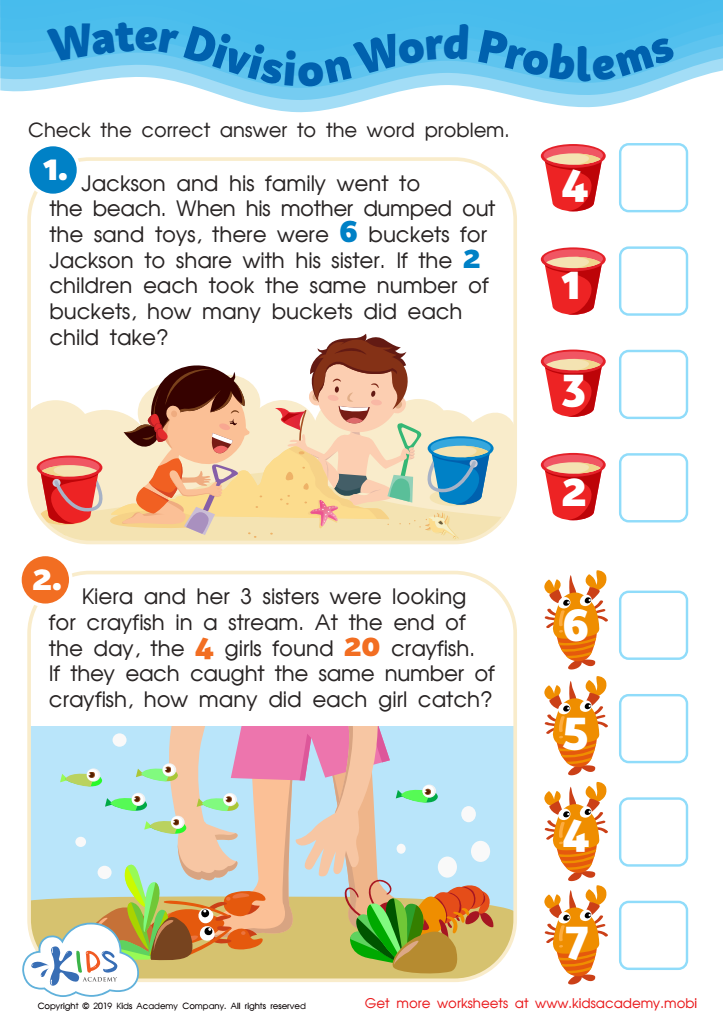
Water Division Word Problems Worksheet
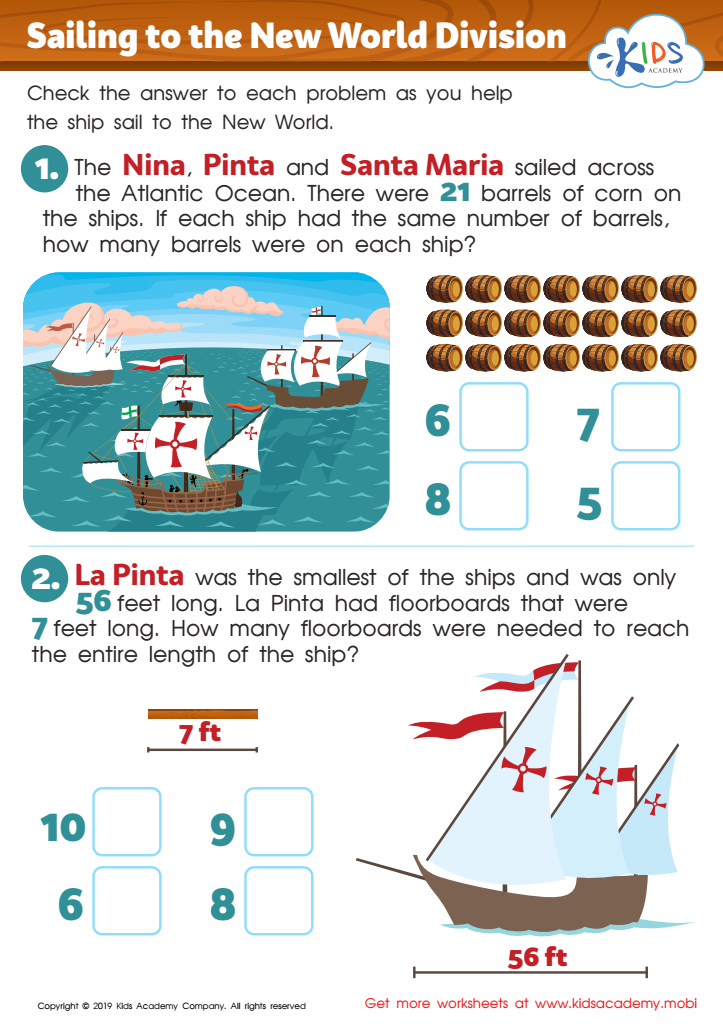
Sailing to the New World Division Worksheet








Introducing division or any formal math concepts to 3-year-olds might not be developmentally appropriate as traditional division involves abstract thinking skills that very young children have yet to develop. Instead, parents and teachers should focus on foundational math understanding through play and simple activities tailored to their developmental stage.
Developmental experts agree that for 3-year-olds, crucial skills include counting, pattern recognition, basic shape identification, and engaging in activities that foster an understanding of number sense. These skills are best developed through play, stories, singing number songs, and practical experiences like sharing toys or snacks, which lay down fundamental numeracy concepts.
However, promoting a math-friendly environment from a young age is essential. Simple activities such as sorting blocks by color, size, or shape, playing with puzzles, or even helping in daily tasks like cooking (e.g., counting out spoons) can significantly benefit a child's early math understanding. Such activities can stimulate curiosity and provide a strong base for more complex math skills, such as division, when the child is developmentally ready.
Fostering positive attitudes toward math and encouraging a child's natural curiosity helps build confidence and motivation, which are critical factors for long-term success in learning mathematics. Early exposure to these foundational concepts in a supportive and playful manner ensures that young children are prepared for more advanced math concepts as they grow.








