Multiplication practice Normal Math Worksheets for 3-Year-Olds
3 filtered results
-
From - To
Welcome to our engaging Multiplication Practice Normal Math Worksheets for 3-Year-Olds! Designed to introduce young learners to basic multiplication concepts, these fun and interactive worksheets foster a love for math. Each worksheet includes colorful visuals and simple exercises that encourage counting and grouping, making multiplication enjoyable and accessible. Children will gain foundational math skills while developing critical thinking and problem-solving abilities. Whether at home or in the classroom, our worksheets provide a perfect platform for early learners to build confidence and familiarity with multiplication concepts. Start your child’s math journey today with our thoughtfully crafted resources!
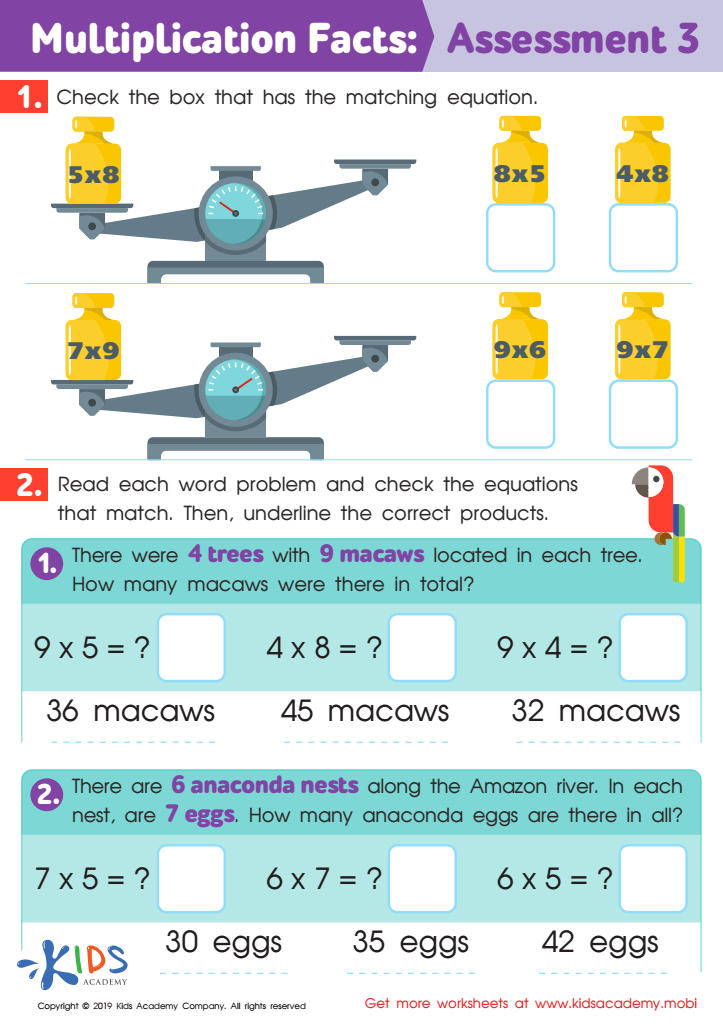
Multiplication Facts: Assessment 3 Worksheet
 Assign to My Students
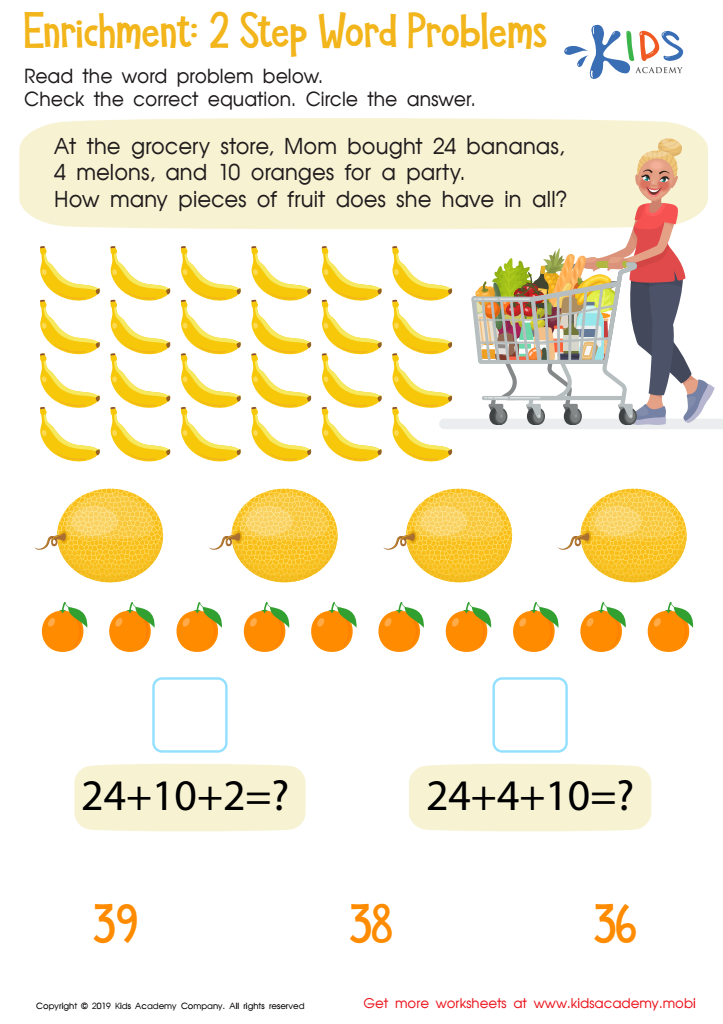
Enrichment -2 Step Word Problems Worksheet
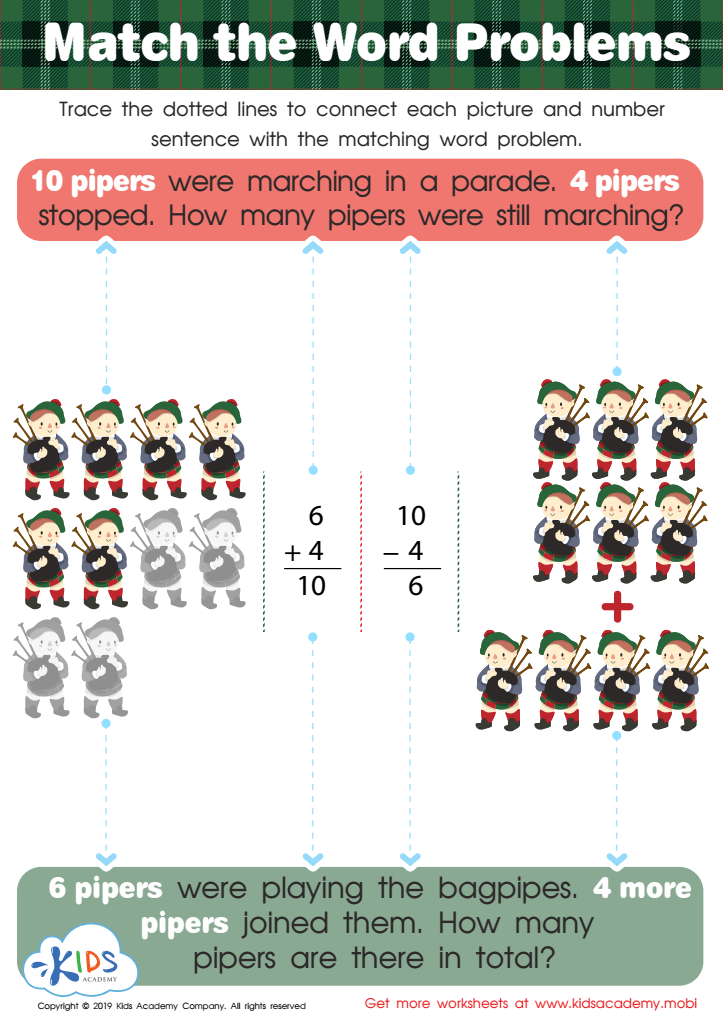
Match the Word Problems Worksheet








Engaging 3-year-olds in early multiplication practice through fun and interactive activities lays a strong foundation for mathematical understanding. Although traditional multiplication might seem advanced for toddlers, introducing the concepts of grouping and counting can be done in a playful manner. This early exposure helps young children develop essential cognitive skills, such as problem-solving, critical thinking, and numerical fluency.
Parents and teachers should care about this early practice because learning basic math principles like multiplication at a young age enhances a child's confidence and interest in math-related subjects. Interactive games that involve grouping objects, such as toys or snacks, can make learning enjoyable while naturally reinforcing counting skills.
Additionally, establishing these mathematical foundations early can help in reducing anxiety around math later on. Children who are comfortable with basic math are more likely to excel as they progress in school. Furthermore, incorporating simple multiplication concepts at home or in the classroom fosters important parent-child and teacher-student interactions that can strengthen relationships and create a positive learning environment. Overall, early introduction to multiplication concepts through normal math promotes cognitive development and a love for learning in young children, setting the stage for future academic success.








