Enhance your 3-year-old's learning journey with our Visual Perception Normal Math Worksheets! Designed specifically for young learners, these engaging worksheets focus on developing essential visual perception skills, which are crucial for early math understanding. Each activity is tailored to promote out-of-the-box thinking and improve visual awareness through fun and approachable exercises. Your child will enjoy sorting, matching, and recognizing patterns, all while building confidence in their foundational math skills. With colorful illustrations and age-appropriate challenges, these worksheets make learning enjoyable and effective. Explore our collection and set the stage for your child's mathematical success today!

Check out this FREE Trial Lesson on Math for age 3!

Describing Objects in the Environment

Favorites
With answer key
Interactive
  • 3
  • Visual perception
  • Math
  • Normal
Top or Bottom Worksheet

Top or Bottom Worksheet

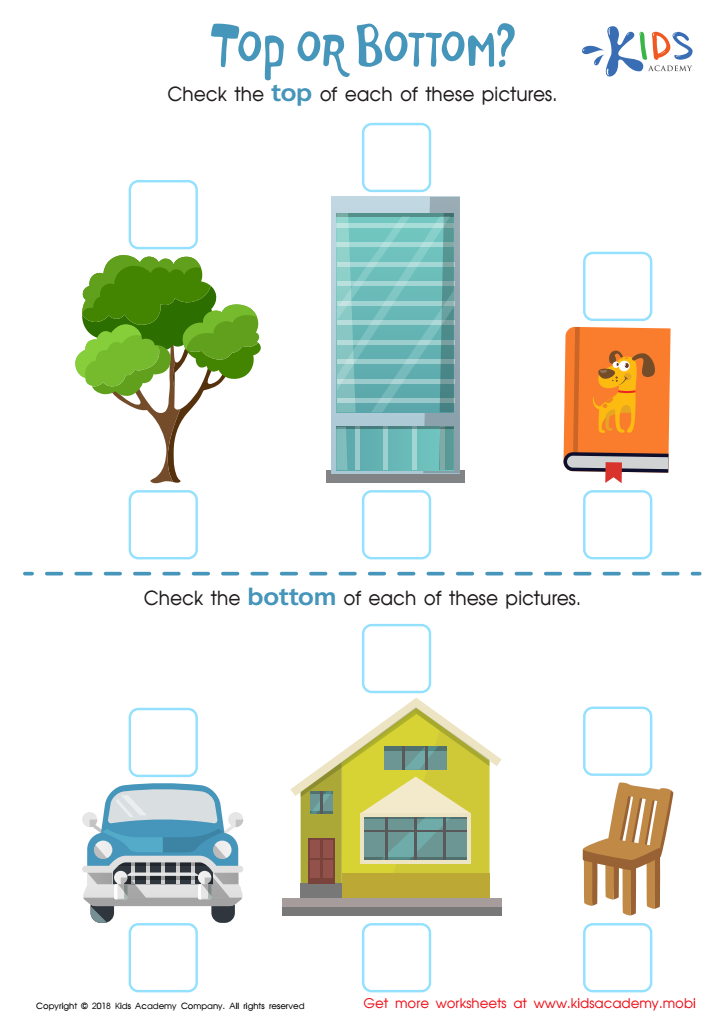
Help your toddler master orientation and early geometry skills with this free printable worksheet. It tasks children with identifying the top and bottom of familiar images, like cars, to help build their mental map of objects. It may be simple for adults and older kids, but toddlers must learn the words to describe objects and their physical orientation.
Top or Bottom Worksheet
Worksheet
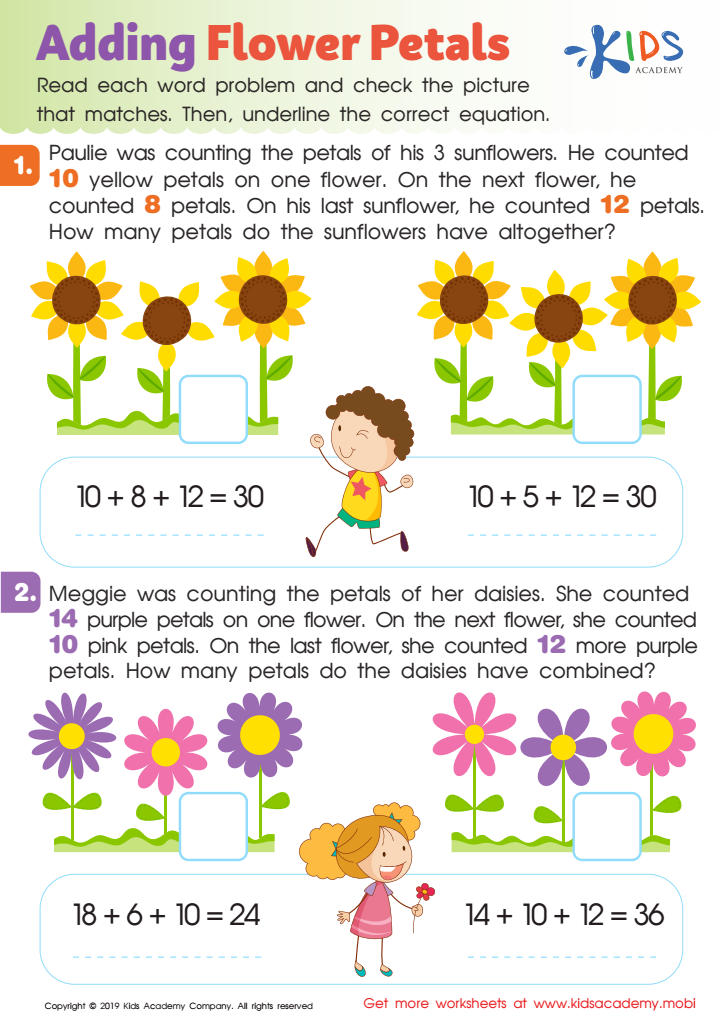
Adding Flower Petals Worksheet

Adding Flower Petals Worksheet

This free worksheet helps little mathematicians learn to understand word problems. They'll read each one and match it to the corresponding picture. Important info is highlighted, teaching kids to look for key info when solving problems. Then they'll underline the correct number equation that matches the picture. A great way to practice problem-solving skills!
Adding Flower Petals Worksheet
Worksheet
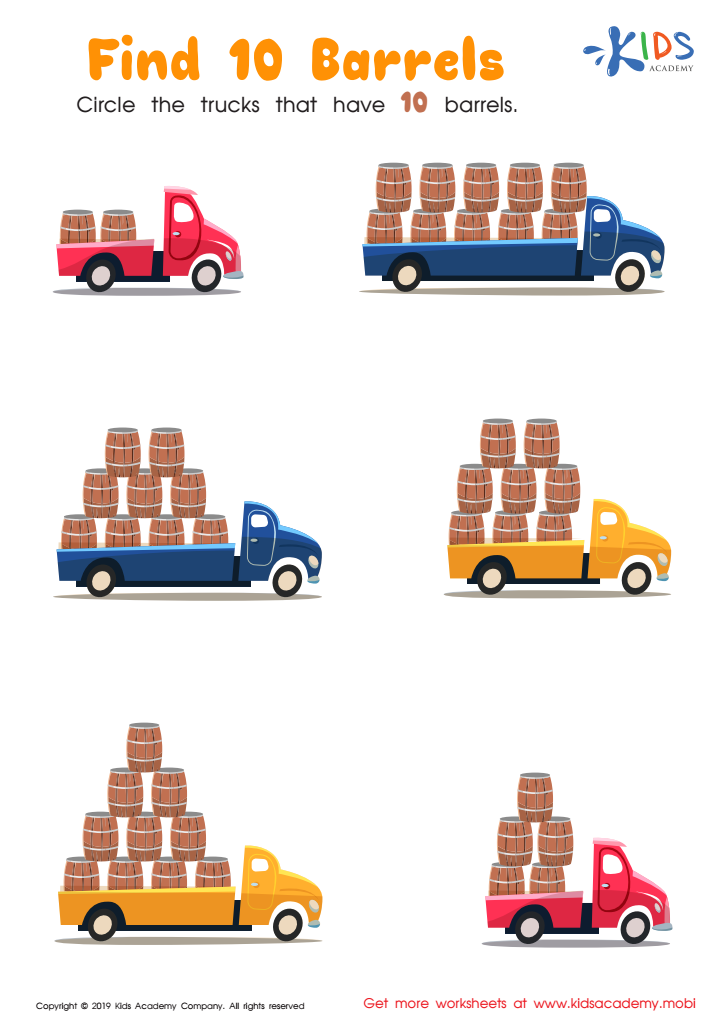
Find 10 Barrels Worksheet
Find 10 Barrels Worksheet

Help your kids learn to count with 1, 2 and 3, then progress to tens and hundreds. Supplied with educational materials and colorful worksheets, they'll be counting as high as they can. Together, count the barrels on the trucks in the printout and encourage them to circle the ones with 10 barrels.
Find 10 Barrels Worksheet
Worksheet
Preschool Geometry Printable Worksheet

Preschool Geometry Match Up Worksheet
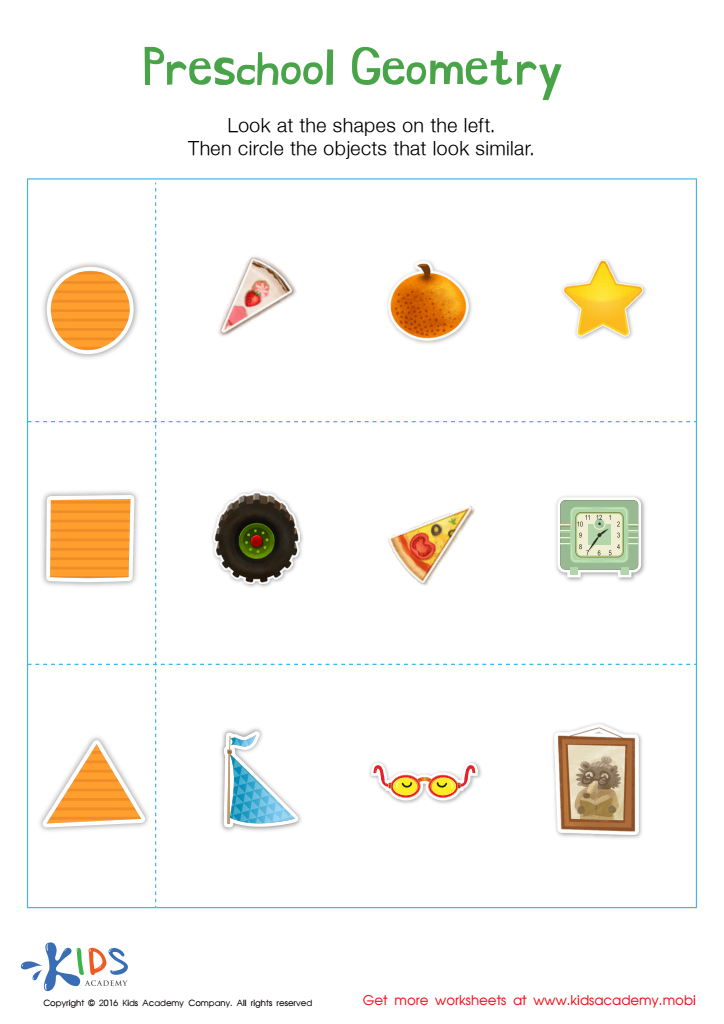
Teach your preschooler geometry using everyday objects. This printable worksheet helps them recognize, match, and follow directions like left and right. Start a conversation to extend their learning and they'll see how shapes appear in the world around them.
Preschool Geometry Match Up Worksheet
Worksheet
Free Math Worksheets for Kids

Classifying Toys by Type and Color Sorting Worksheet
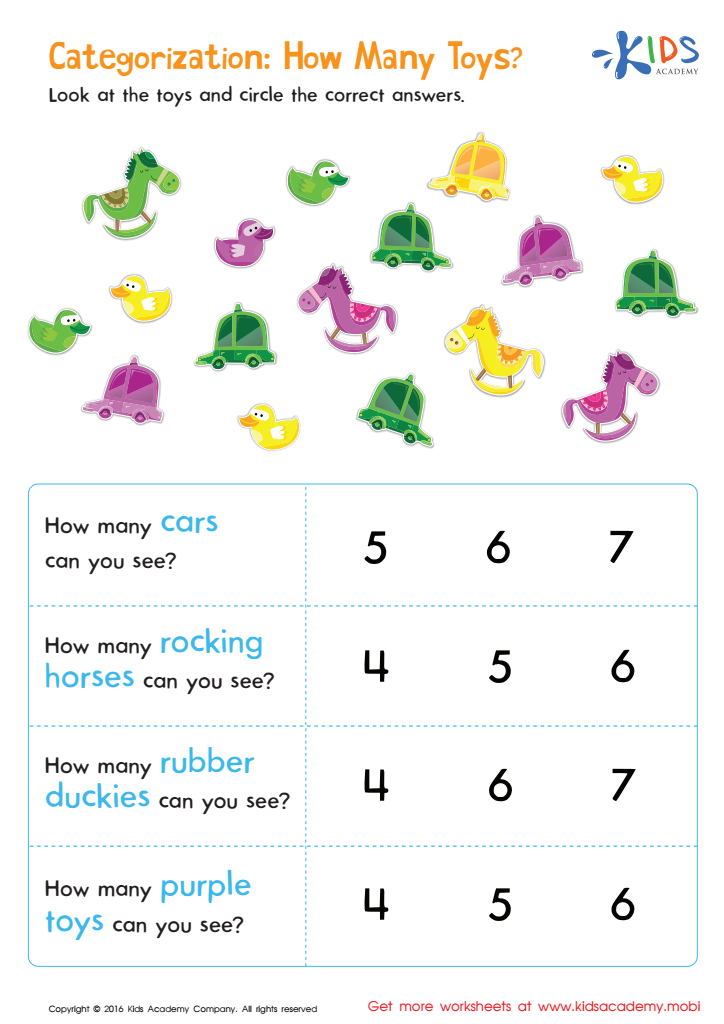
Kids Academy offers free math worksheets to help practice counting, categorization & recognition skills. Kids will enjoy counting by color & type while strengthening problem-solving & literacy skills.
Classifying Toys by Type and Color Sorting Worksheet
Worksheet
2D vs. 3D shapes worksheet

2D vs 3D Shapes Worksheet

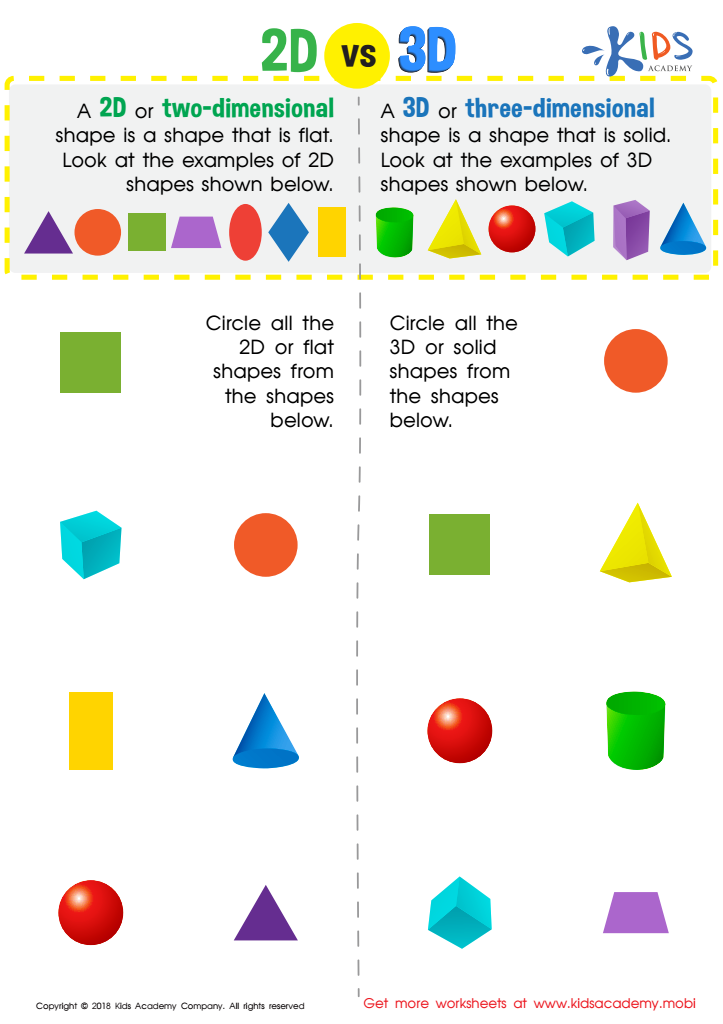
Help your child understand 3D shapes using this engaging worksheet! Read the descriptions at the top and search for 2D and 3D shapes. An ideal activity for toddlers learning shapes. A fun way to understand the tricky concept of 3D shapes!
2D vs 3D Shapes Worksheet
Worksheet
Math PDF Worksheets - Count and Match Vegetables: 1 – 5

Count and Match Vegetables 1 – 5 Math Worksheet

Get your kindergartener to match the same number of vegetables with the boxes using this fantastic math worksheet. Using the Singapore approach, this printable worksheet makes math problems easy and fun for kids. Want more free worksheets? Click here for Kids Academy's selection!
Count and Match Vegetables 1 – 5 Math Worksheet

Worksheet


Visual perception is a critical cognitive skill that forms the foundation for early learning, particularly in subjects like math. For 3-year-olds, understanding visual perception helps them recognize shapes, patterns, and spatial relationships, which are essential in developing foundational math skills. By nurturing these abilities, parents and teachers can enhance a child's ability to count, sort objects, and understand notions of size and quantity.

Early math concepts often rely on visual perception; for instance, recognizing the differences between deep and shallow, more or less, and understanding geometrical shapes. When children engage in activities that boost their visual perception skills, such as puzzles, drawing, or sorting games, they are better prepared for more complex math tasks in the future.

Furthermore, improved visual perception can boost a child’s confidence and interest in math. Engaging in playful, visual activities can make learning fun and less intimidating. This positive engagement sets a tone for their ongoing relationship with math and problem-solving.

In conclusion, parents and teachers should focus on developing visual perception because it not only lays the groundwork for future mathematical understanding but also encourages children to explore, question, and enjoy learning as a lifelong process.