Matching skills Normal Matching Worksheets for 3-Year-Olds
3 filtered results
-
From - To
Discover our "Normal Matching Worksheets for 3-Year-Olds," specially designed to enhance early learning skills through engaging and colorful activities. Perfect for little learners, these worksheets help 3-year-olds develop crucial matching abilities, reinforcing their cognitive skills in a fun way. Each worksheet features age-appropriate illustrations and simple tasks that encourage children to identify and match items based on color, shape, and size. With an emphasis on hands-on learning, our worksheets support children’s growth in observation and concentration. Ideal for both classroom and home settings, these matching activities make learning a delightful experience for your little one. Start exploring today!
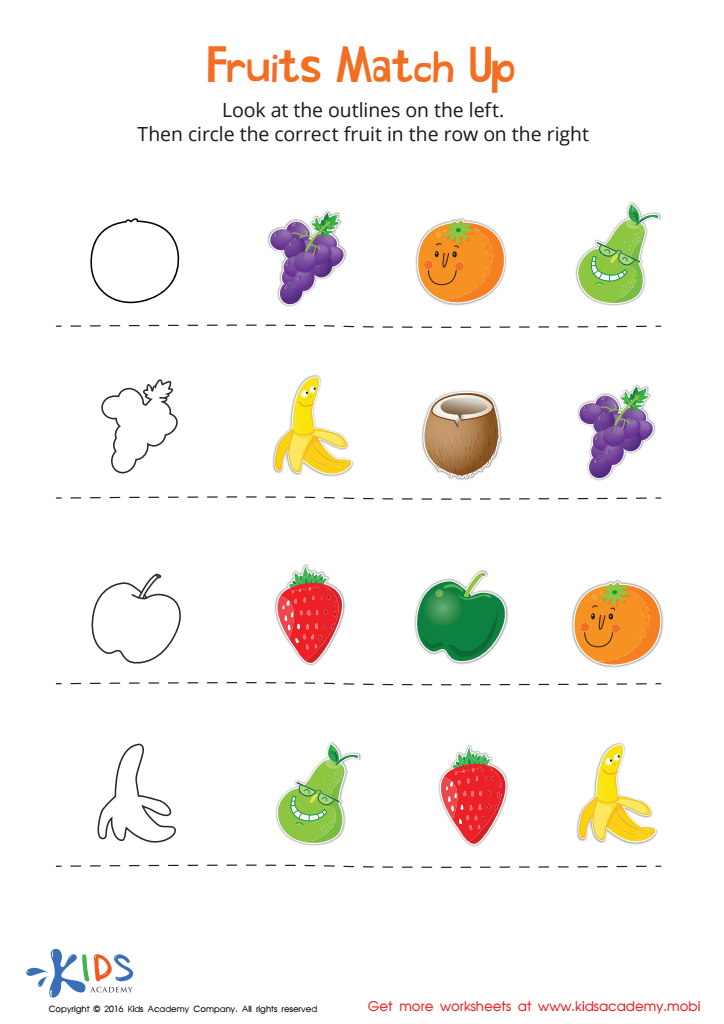
Fruits Match Up Worksheet
 Assign to My Students
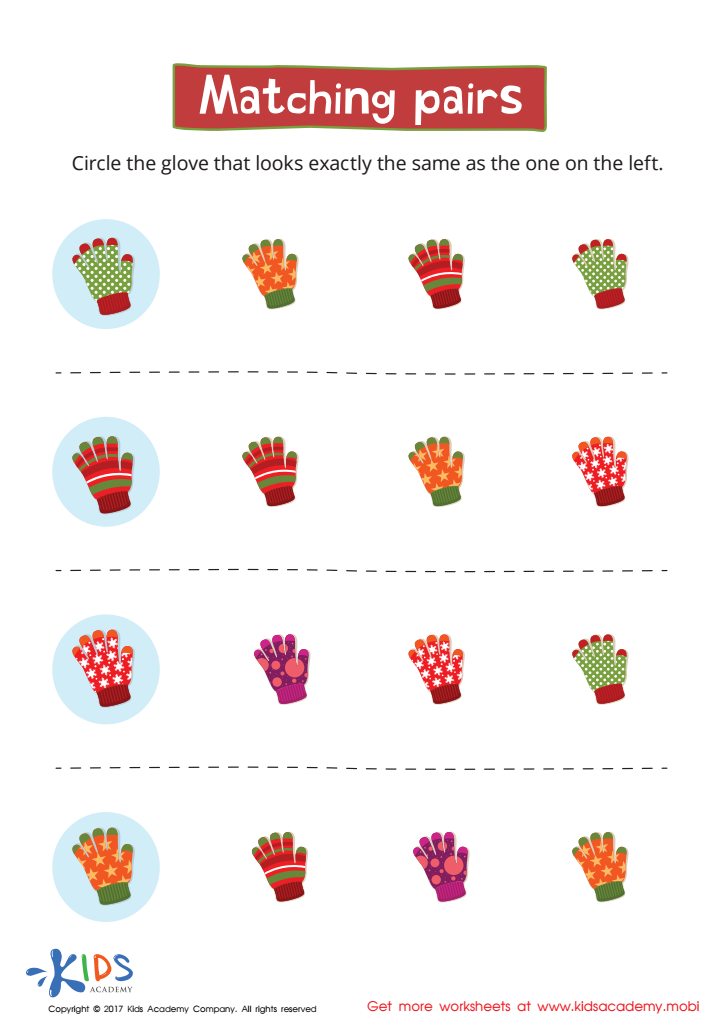
Matching: Matching Pairs Worksheet
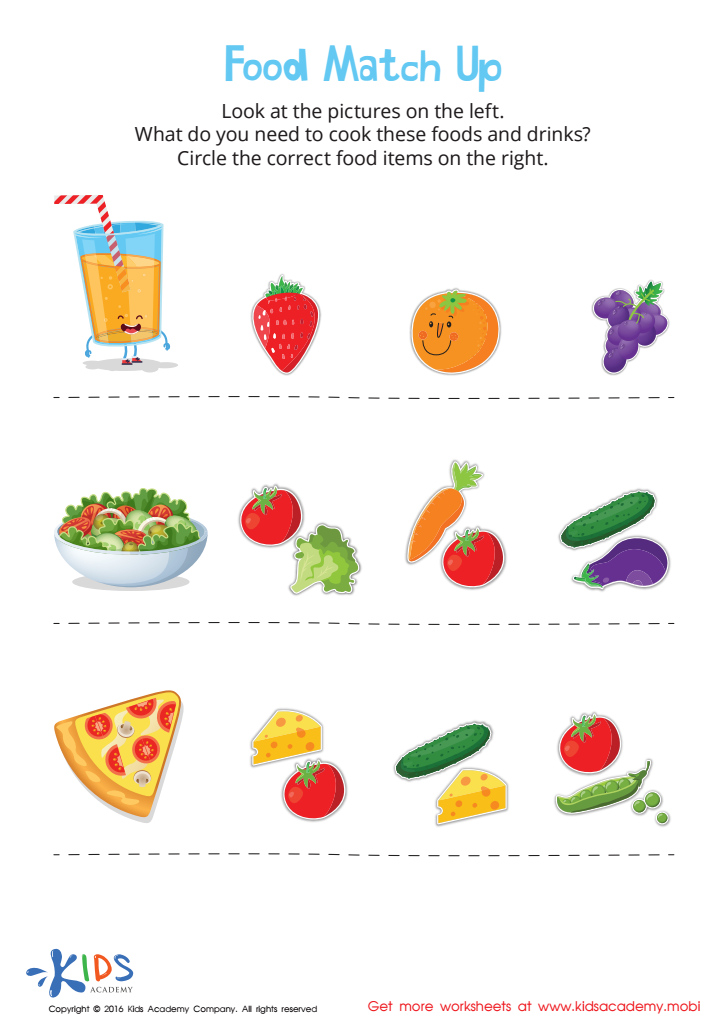
Food Match Up Worksheet






Matching skills are foundational for cognitive development in 3-year-olds and play a crucial role in their early learning. When children practice normal matching—identifying similarities and differences between objects—they enhance essential cognitive processes, including critical thinking and problem-solving abilities. This skill fosters the development of memory, as it encourages children to remember the characteristics of items.
Additionally, matching activities are often used as tools for vocabulary expansion. Through matching games, children learn new words associated with colors, shapes, animals, and everyday objects, enhancing their language skills in a playful manner. This can lead to improved communication abilities, a foundational aspect of social interactions.
Teachers and parents should prioritize fitting matching exercises into daily routines because they also support social skills. As children match items with peers, they learn cooperation, taking turns, and effective communication, which are vital for future relationships.
Finally, mastering matching skills provides a sense of accomplishment, boosting a child’s self-esteem and motivation to engage in further learning activities. By recognizing the importance of matching skills, parents and teachers can foster a rich learning environment that nourishes a child’s growth holistically, cultivating a love for learning from an early age.








